Journal · Sound Healing · In-person training
Sound Healing Certification Online: What Is Missing
Recording and compression reshape the acoustic properties a sound practitioner learns to control. Here is what online training teaches well, what the room adds, and how to judge a program.
Valérie Fabre, Founder & Director, Harmonika Institute · May 28, 2026 · 12 min read

Key takeaways
- The recording chain reshapes the lesson. A gong strike swings roughly 50 dB in under two seconds. Streaming compresses that to about 12 to 20 dB so it stays audible on a phone. The dynamics you are training to control are the first thing thrown away.
- Laptop speakers cannot produce most of what matters. A built-in driver rolls off steeply below 150 to 200 Hz, so the 60 to 120 Hz fundamentals of large bowls and low gongs, the frequencies people feel in the sternum, are absent from your feed.
- Volume is a safety skill, not an aesthetic one. NIOSH sets 85 dBA over eight hours, halving allowed time per 3 dB above. Practitioners work past 100 dB at the instrument. That calibration happens best next to the instrument.
- Rooms are instruments. Standing waves and reverberation decide which notes bloom and which vanish, and they change per venue. Hearing that is learned in real rooms.
- Online is genuinely good at part of this. Theory, screening, session structure, pricing and business setup transfer fine. Roughly the first third of a serious curriculum is teachable at distance.
Here is an experiment worth two minutes of your time. Find a recording of a large gong being played properly, put it on your laptop speakers, and turn it up until it feels like something. Then find someone with an actual 32-inch gong and stand four feet from it. The gap between those two experiences is not a matter of fidelity or budget. It is the entire subject you would be paying an online school to teach you.
This matters more for sound work than for almost any other modality, and for a reason that is physical rather than philosophical. Sound practice is the manipulation of pressure waves in a room, at volumes and frequencies that a recording chain is specifically engineered to remove. The medium of instruction reshapes the material being taught. That is not true of nutrition frameworks, herbal monographs or communication models, which is why we teach programs such as Holistic Naturopathy 100% live online, in cohorts of 15.
What online sound training genuinely does well
Let's concede the real ground first, because the honest version of this argument is more useful than the defensive one.
A well-built online module can teach you instrument history, the difference between a machine-spun and a hand-hammered Himalayan bowl, the physics of harmonic series and beat frequencies on paper, contraindication screening, how to structure a 60-minute session, how to price a group event, and how to handle the awkward parts of a corporate booking. It can do that at two in the morning for a fraction of in-person cost, and if you live three hours from the nearest city, it may be the only way you get that content at all. Recorded video is also better than a live room for anything you need to watch four times: mallet grip, a hand position on a bowl rim, the sequence of a nine-instrument layout.
So the question is not whether online has value. It is which competencies fail to survive the transfer, and whether those are central or peripheral. In sound work they are central, and we can be exact about why.
Compression is not a bug in your training video
Every audio file you have ever streamed passed through two separate processes that both attack the same thing.
The first is dynamic range compression. Live, a gong played from a whisper to a full crescendo covers something like 50 dB of range. Streaming platforms and video conferencing tools normalise loudness so that quiet passages remain audible in a car or on a phone in a kitchen. The practical result is that the quiet strokes get lifted and the loud ones get held down, until the recording sits inside maybe 12 to 20 dB. Zoom is more aggressive still: its automatic gain control is tuned for one person talking, and it will ride a swelling gong down in real time because it reads the sustained energy as background noise.
Think about what that means pedagogically. The skill you are learning is the shape of the crescendo. How fast you build. Where you stop. Whether the room can take another 6 dB. The recording flattens that exact curve before it reaches you, silently, with no indication anything was altered.
The second process is perceptual coding. AAC, Opus and MP3 achieve their file sizes by modelling what human hearing will not notice and discarding it. That model works beautifully on speech and pop music. It works badly on inharmonic metal, because the masking rules assume a loud partial hides quieter ones nearby, and a gong is a dense cloud of closely spaced partials beating against each other. The codec reads that cloud as maskable and throws away a good part of it. What arrives at your ears is a thinner, more orderly gong than the one that was struck.
The beating problem
Two bowls tuned a few hertz apart produce an audible pulse at the difference frequency. Two bowls at 214 Hz and 217 Hz give you a 3 Hz throb, and learning to hear and place that throb is one of the first real skills in the craft. It survives recording only intermittently, because the beat depends on the phase relationship between two sources arriving at your ears from different points in space. Collapse that to a mono or near-mono stream through one small driver and the beat becomes an artefact of the mix rather than of the instruments.
| Property you are training | What happens to it online | Teachable remotely? |
|---|---|---|
| Instrument history, theory, session structure | Unaffected | Yes |
| Mallet grip and hand position | Visible on camera, though angle-dependent | Mostly |
| Dynamic range and crescendo shaping | Compressed from ~50 dB to ~15 dB | No |
| Low fundamentals (40-120 Hz) | Rolled off by laptop and phone drivers | No |
| Inharmonic partials and shimmer | Partly discarded by lossy codecs | No |
| Absolute volume calibration | Replaced entirely by your own volume knob | No |
| Room modes, standing waves, reverberation | Baked into the teacher's room, not yours | No |
| Reading a group's physical state | Hard to observe through a webcam grid | No |
| Business setup, pricing, contracts | Unaffected | Yes |
Volume is the whole skill, and you hold the knob
Ask any practitioner with a few hundred sessions behind them what separates a good sound bath from a bad one, and you will hear some version of the same answer: knowing how loud is too loud for this room, these people, today.
That is a calibration skill. Calibration requires a fixed reference, and online training has none, because the listener controls the output level. Your teacher plays a passage at what she considers a firm but safe level. You hear it at whatever your volume slider happened to be. There is no shared unit. It is like teaching knife skills over video to someone holding an object of unknown weight.
The stakes here are not aesthetic. Sound pressure at the instrument is genuinely loud. Struck hard, a large gong at playing distance can push past 110 dB, and cymbals and some bowls sit in similar territory. NIOSH sets 85 dBA over an eight-hour day as the occupational exposure limit and uses a 3 dB exchange rate, which means every additional 3 dB halves the permitted time. At 100 dB you are into the range of minutes, not hours, and the person most exposed in any session is not the client lying down eight feet away. It is you, standing at the gong, several times a week, for years.
Scope and safety
Sound practice is a wellness practice and should always be presented as one. It also calls for care: intense low-frequency sound and long sustained tones can provoke nausea, disorientation or acute distress in some people, and there are well-recognised cautions around pregnancy, epilepsy, recent surgery, implanted devices such as pacemakers, and severe tinnitus. A responsible practitioner screens for these, positions people accordingly, and refers out. Every programme, in whatever format, should teach screening. Rules on what you may claim and how you may describe your work differ by state and change over time. Check with your own state board before you take a paying client.
The room is an instrument you cannot ship
A rectangular room supports standing waves at frequencies set by its dimensions. A 20-foot dimension puts a strong axial mode near 28 Hz and its multiples; a smaller studio pushes those modes up into the range where bowls actually live. The practical consequence is that in any given room some notes bloom and hang, some die instantly, and there are physical locations on the floor where a given frequency is loud and locations a few feet away where it nearly disappears.
This is why an experienced practitioner walks into a new venue and plays a few strokes before anyone arrives. She is finding the nulls, hearing the decay time, deciding where the mats go and where she stands. Hardwood floors and a high ceiling in a Chicago loft behave nothing like a carpeted hotel conference room in Houston. Neither behaves like a yoga studio holding twenty soft bodies, which absorb high frequencies far more than empty air does. The room you set up in and the room you play in are not the same acoustic space.
A stream carries little of that. What you hear is your teacher's room, convolved with her microphone placement, printed permanently into the file. You end up memorising one room you will never work in, which is why room reading is taught in real venues.
From the training floor
The single most common correction we give in a first month is not about technique. It is proximity. Students consistently place the gong too close to the nearest person, because on a recording distance is inaudible and the inverse square law does not apply to a mix. Move a listener from eight feet to four and the pressure they receive roughly quadruples. The person at the end of the row had a pleasant hour. The person nearest the stand did not, and often will not tell you.
Gong technique is a motor skill with a feedback loop
Striking a large gong properly is closer to a golf swing than to pressing a key. The instrument has to be woken with light strokes before it will accept a heavy one; hit a cold gong hard and you get a crash rather than the slow build of partials that makes the instrument worth owning. Where you strike changes the harmonic content. How you angle the mallet changes it again. Whether you let the mallet rebound or damp it against the face changes the decay.
The feedback that teaches you all of this is acoustic and immediate, and it is delayed by 150 to 300 milliseconds on any video call. That delay is fatal for correction of a timed physical action. By the time your teacher says "too hard", you have played four more strokes. In a room, she says it inside the stroke, or more often just puts a hand on your forearm.
There is also the mundane matter of equipment. Online students train on whatever they own, which usually means one or two mid-range bowls. A cohort sharing a full set means you handle a 32-inch symphonic gong, tuned bowls, tingsha, ocean drum and monochord in your first weeks, and find out which you actually like before spending several thousand dollars.
The honest number
Online sound certifications in the U.S. commonly run $200 to $1,500. In-person practitioner training with observed practice typically runs several thousand. But compare the total, not the tuition: instruments are the larger cost either way. A usable starting set runs roughly $1,500 to $4,000, and a symphonic gong with a stand can be $1,200 on its own. The most expensive outcome available to you is a cheap certificate followed by three thousand dollars of instruments you chose without ever having played the alternatives.
Reading twenty bodies happens in the room
A group sound session is delivered to a room, not to individuals, and the practitioner's job during the hour is to keep reading it. Whose breathing has not slowed. Who has shifted position three times in five minutes. Whose eyes opened when the gong came in and did not close again. That reading is peripheral and continuous, and mostly not visual in a way a camera catches.
You then act on it. Pull the volume back. Stay on bowls another four minutes. Skip the crescendo you had planned. None of that is in a lesson plan, and a grid of thumbnails where twenty people lie out of frame shows very little of it.
The most common failure in new practitioners is not a bad strike. It is running the session they rehearsed instead of the session the room needed.
How to judge a sound programme, whatever the format
If you are weighing options right now, these are the questions that separate a serious programme from a certificate mill. They work on in-person providers too, and a good one will answer all five without hedging.
- 1
Ask whether classes are live, and how many students share one teacher
Live, synchronous classes with a small cohort let a teacher hear your questions and your playing in real time. Recorded modules are useful for theory; practice with feedback is what builds the craft.
- 2
Ask how many hours you will spend playing instruments you do not own
Not watching. Playing, with someone listening. If the answer is vague or the number is under twenty, you are buying content rather than training.
- 3
Ask who assesses your volume, and how
A credible answer involves a person in the room and, increasingly, a sound level meter. An answer that involves uploading a recording tells you the school has not thought about this.
- 4
Ask how many different rooms you will play in
One room teaches you one room. A programme running across multiple venues is teaching you to adapt, which is the actual competence.
- 5
Ask what the screening protocol is
You want a specific list of contraindications and a specific script for what you say to a group before you begin. If the programme has neither, it is not preparing you to work with real people.
We teach sound healing 100% in person, in cohorts of 10, across 32 U.S. cities, over 4 teaching days of 8 hours (32 hours). It asks for travel and fixed dates, and it is the format in which a teacher can tell you that you played four decibels too loud for the room you were standing in. The full decision guide across modalities, including the seven programs we teach 100% live online, is in online vs in-person holistic training.
Questions on this topic.
Is an online sound healing certification worth it?+
It can be, if you are clear about what you are buying. An online certificate can give you a solid theoretical grounding, session structure, screening knowledge and business setup, and it is a reasonable way to test whether the field interests you before committing real money. Calibrated volume judgement, room reading, and corrected instrument technique come from in-person hours. Think of it as a first third rather than a qualification, and plan for in-person hours afterwards. Nobody will stop you practising with an online certificate. The limitation is competence, not permission.
Can I learn Himalayan bowls online if I already own a set?+
Better than you can learn gong online, yes. Bowls are quieter, more forgiving, and their fundamentals sit higher in the frequency range, so more of the sound survives a stream. You can make real progress on rim technique and striking with recorded instruction. What still fails is the multi-instrument work: layering four or five sources, hearing beat frequencies in a physical space, and managing the total level of the room. Those need a room.
Do I need a licence to run sound sessions in the United States?+
No state licenses sound practice as such, and no private certification is a licence. Exposure comes from two directions instead. First, claims: describing your work in medical terms can put you inside unlicensed practice of medicine. Second, touch: if you place instruments directly on a clothed body, some states may read that as bodywork requiring a massage licence. Rules differ by state and change, so verify with your own board rather than relying on any article.
How long does in-person sound training take?+
Programmes worth the money give you many hours of playing with feedback, because the variable is practice rather than lecture content. Our sound healing program runs 4 in-person teaching days of 8 hours (32 hours), plus about 26 hours of personal study between sessions (on average). A two-day workshop can teach you what the instruments are. It cannot put enough strokes in your hands for the corrections to stick.
Will clients ask whether my certification was online?+
Rarely, and that is exactly why it matters. Clients do not audit your training. They notice when a session is uncomfortable, when the gong is too loud, when a room feels wrong, and they simply do not rebook. You never find out why. Since repeat clients are the whole business model in this field, the cost of thin practical training shows up as a retention problem months later rather than as a question at the door.
Tags:
Sound HealingIn-person trainingCertification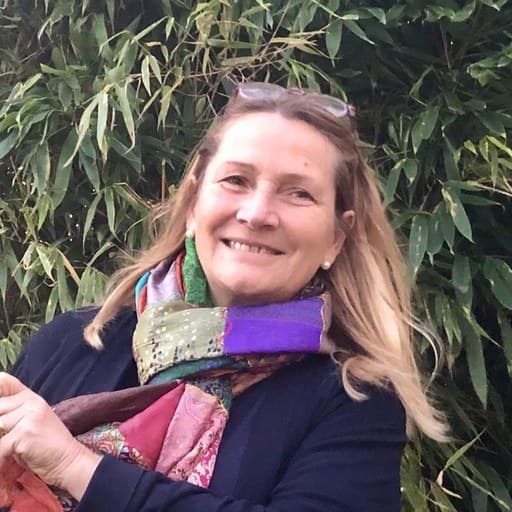
About the author
Valérie Fabre · Founder & Director, Harmonika Institute
Valérie Fabre founded Harmonika Institute in 2025, after a decade seeing clients in private kinesiology practice and, before that, thirteen years in international trade. A French-born polyglot who now splits her time between Dallas and Miami, she sets the school's curriculum and editorial standards and champions ethical, in-person training.
Read more about Valérie Fabre →