Journal · Sound Healing · Geographic strategy
What Cities Have the Highest Demand for Sound Healing Practitioners?
A practical city-by-city ranking of U.S. markets for sound healing practitioners — based on our graduate-tracking data and demand patterns we've observed over five years.
Valérie Fabre, Founder & Director, Harmonika Institute · March 11, 2026 · 3 min read

Sound healing is one of the modalities where geographic location matters enormously. A working sound healing practitioner in Austin or Boulder can fill weekly community sound baths within months of certification; the same practitioner in Indianapolis or Philadelphia may take a year to build the same client volume. The U.S. market has clear hot spots and cooler regions, and choosing where to practice (or where to focus your marketing) is a real strategic decision.
Tier 1: highest demand
Austin, Texas. The Austin sound healing scene is unusually mature. The metro hosts dozens of established practitioners, weekly community sound baths in most major yoga studios, and a steady pipeline of music-and-creative-class students seeking certification. Pricing for community sound baths ranges from $25-$45 per attendee; one-on-one sessions run $130-$200.
Denver/Boulder. The Front Range has the highest density of yoga teachers per capita in the U.S., and the sound healing scene has grown alongside. Boulder specifically has a unique concentration of Naropa University-influenced contemplative practice that supports sound healing as a serious modality. Pricing is similar to Austin, with retreat opportunities (Aspen, Vail, Crested Butte) supporting higher-end events.
Los Angeles. LA has the largest absolute market for sound healing practitioners in the U.S. Sound baths run nightly across the metro. Pricing varies enormously: community sound baths $35-$75, premium retreat-style sessions $150-$300. The market is competitive but also large enough to support specialization (women's circles, athletic recovery, corporate workplace work).
Tier 2: strong demand
New York City. Mature wellness market with strong willingness-to-pay. One-on-one sound healing sessions in Manhattan and Brooklyn typically command $180-$280. Community sound baths in studio partners run $35-$65. The NYC market rewards specialization and partnership-building over generic marketing.
San Francisco/Bay Area. The Silicon Valley mindfulness culture has produced substantial demand for sound healing as an adjunct to corporate wellness programs. Pricing is among the highest nationally — $200-$300 per one-on-one session, $50-$85 per attendee at community baths.
Seattle. The Pacific Northwest's contemplative-practice tradition supports sound healing well. Naropa-adjacent and Bastyr-adjacent client populations create strong demand. Slightly lower pricing than coastal California ($150-$220 per one-on-one session) but lower cost of living offsets.
Portland, Oregon. Smaller market than Seattle but disproportionately engaged. The local-economy ethos shapes a market unusually loyal to local practitioners.
Tier 3: moderate demand
Atlanta. Fast-growing market with strong representation in Black wellness communities. Pricing is below coastal markets ($120-$180 per one-on-one session) but the rapid growth means demand is rising faster than supply.
Nashville. Music industry concentration creates a unique sound-healing-meets-musician practitioner pipeline. The metro is small enough that established practitioners can become local anchors.
Miami. Bilingual EN/ES market creates opportunity for practitioners who can serve both populations. Spa industry adjacency adds revenue streams.
Boston. Smaller sound healing market than other coastal metros — Boston's wellness culture is more research-oriented and slower to embrace newer modalities. But the willingness-to-pay among interested clients is high.
Tier 4: building markets
Chicago, Philadelphia, Washington DC, Phoenix, Detroit, San Diego, Minneapolis, Tampa, Charlotte, Pittsburgh, Indianapolis, Cincinnati, San Antonio, San Jose, Sacramento, Houston, Las Vegas, Baltimore, St. Louis, Orlando.
These markets have real demand but more dispersed practitioner communities. Building a practice typically takes 18-30 months rather than 12-18 months. The practitioner who arrives first and builds early relationships with yoga studios and wellness centers can become the dominant local sound healer.
These markets also tend to have less competition, so established practitioners face less downward pricing pressure. A sound healer in Indianapolis charging $130 per one-on-one session faces less competitive pressure than the same practitioner in Austin.
How to use this for your career planning
If you have flexibility about where to practice, the Tier 1 cities offer the fastest path to a full practice — but also the most competition. The Tier 4 cities offer slower starts but stronger local positioning over time.
If you are committed to a specific city, the question becomes how to position yourself within that local market. In Tier 1 cities, specialize early (women's circles, athletic recovery, corporate workplace work, retreat partnerships). In Tier 4 cities, generalize first to build a foundation, then specialize once you have local recognition.
Most importantly: visit the city before you commit. The texture of local sound healing scenes varies enormously even within the same tier, and a 2-3 day visit during which you attend community sound baths and meet local practitioners will tell you more about market fit than any external research can.
Questions on this topic.
Can I run a sound healing practice in a Tier 4 city sustainably?+
Yes — but plan for 18-30 months to reach full practice density rather than 12-18 months. The trajectory is slower; the long-term economics can be just as strong because of lower competition and lower cost of living.
Should I move to Austin or Denver to start my practice?+
Only if you would otherwise be happy living there. The fastest market access does not justify moving away from your existing relationships and home if those are what ground you. Practitioners who relocate just for market access typically struggle with retention; practitioners who relocate because they wanted to live there anyway thrive.
Where is sound healing demand growing fastest?+
Atlanta, Nashville, Charlotte, and Miami have shown the fastest demand growth in the past 24 months. These markets are still building infrastructure — first-mover practitioners can establish strong positions.
Tags:
Sound HealingGeographic strategyMarket research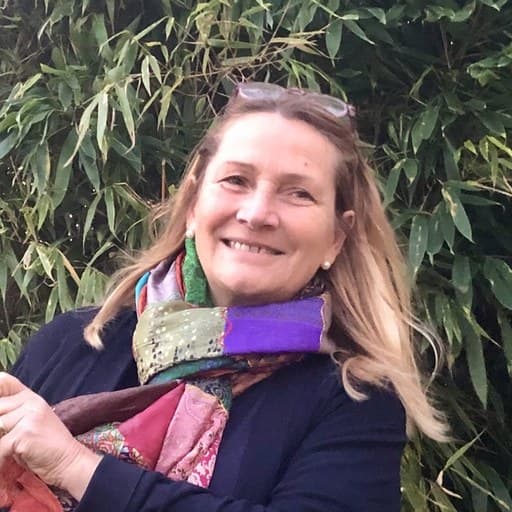
About the author
Valérie Fabre · Founder & Director, Harmonika Institute
Valérie Fabre founded Harmonika Institute in 2025, after a decade seeing clients in private kinesiology practice and, before that, thirteen years in international trade. A French-born polyglot who now splits her time between Dallas and Miami, she sets the school's curriculum and editorial standards and champions ethical, in-person training.
Read more about Valérie Fabre →