

harmonikaInstitute
Contact us
Certified Reiki Practitioner

Reiki training and certification

Reviewed byKaren S., Reiki Master · Harmonika FacultyLast updated

Reiki is a Japanese energy practice rooted in the work of Mikao Usui. At Harmonika Institute, we honor the lineage while teaching it with the rigor of a modern practitioner certification. Over 15 days of intensive in-person work, you progress through the three classical levels — Shoden, Okuden, and Shinpiden — receiving each attunement in a small cohort of ten. You'll learn how to read the energetic body, manage your own energy through self-treatment, and run a complete one-on-one Reiki session for a paying client. The program is grounded in real practice: you'll log clinical hours with peer partners and supervised members of the public, building a confident, ethical practice from the very first weeks.

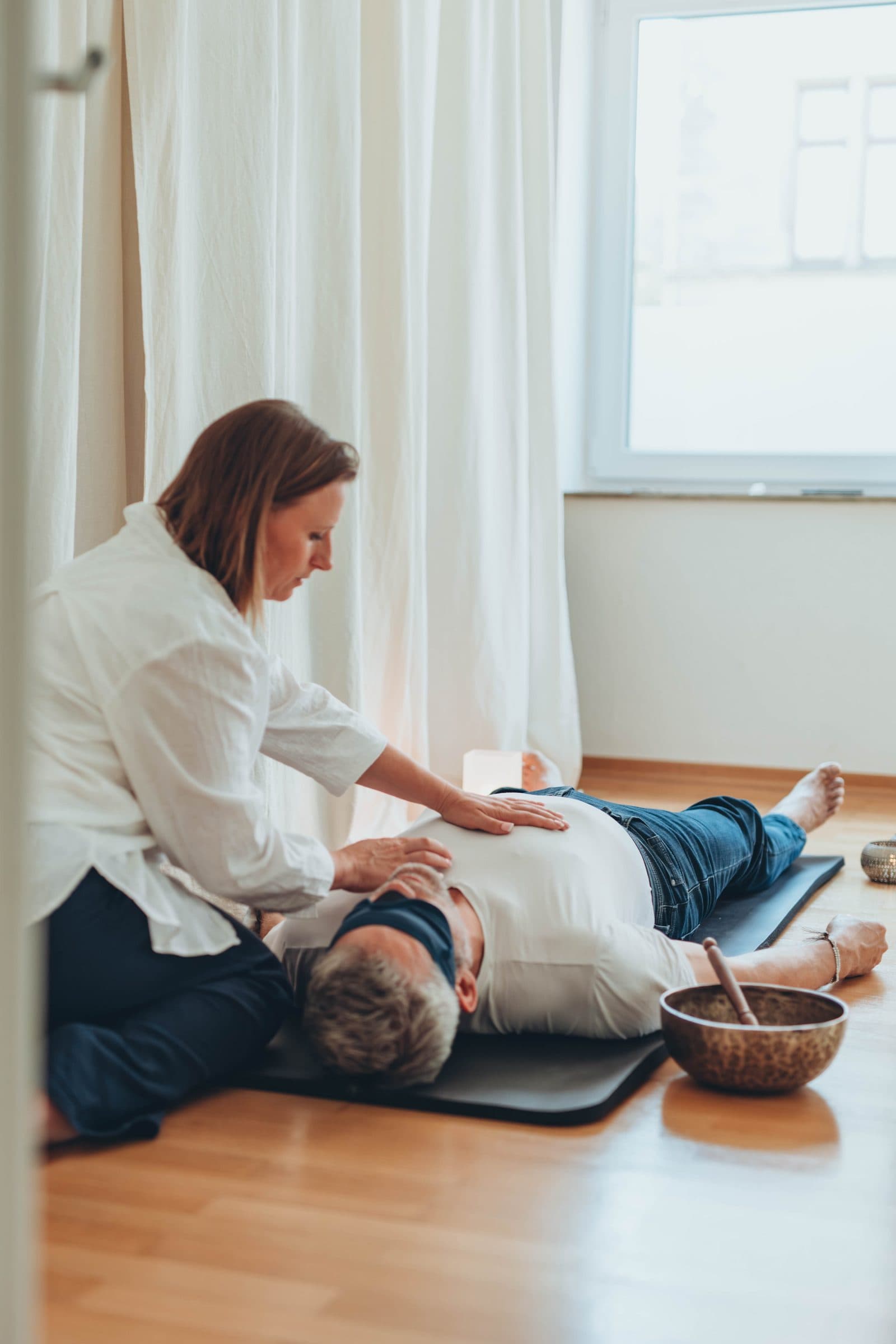
Reiki training in person at Harmonika Institute

Program at a glance

Credential
CRP
Tuition
$1,500
In-person training
4 days · 32h
Live cohort calls
1 day · 4h
Supervised practice
50h
Total
86h · ~11 day-eq.
Cohort size
10 students
Format
In person + live cohort calls
Includes
Table-based work
Download detailed program (PDF)

PDF — modules, hours, faculty notes, and a typical week's schedule.

Reiki training in the U.S.

Looking for a serious Reiki training in the United States? Harmonika Institute's Reiki certification course is designed for adults who want more than a weekend workshop — a structured, in-person Reiki training program that takes you from absolute beginner to confidently running paid one-on-one sessions. Across 15 days, our Certified Reiki Practitioner (CRP) course covers all three traditional Usui levels — Reiki 1 (Shoden), Reiki 2 (Okuden), and Reiki Master (Shinpiden) — taught the way the lineage was meant to be transmitted: in person, in small cohorts, with hours of hands-on practice. Whether you are searching for a Reiki master training, a Reiki healing course you can actually build a career on, or simply a Reiki certification near you in New York, Los Angeles, Chicago, Miami, Houston, Boston, Atlanta, Seattle, Denver, or Austin, this is the program for you.

The modality

What is Reiki?

Reiki is a Japanese energy practice developed in the early twentieth century by Mikao Usui. The word combines two characters: rei (universal, spiritual) and ki (life force energy). In a Reiki session, the practitioner places their hands lightly on or above specific positions on the recipient's body, intending to channel a steady, balanced flow of life-force energy that supports the recipient's own self-regulation and recovery.

What sets Reiki apart from many other energy modalities is its lineage transmission. A Reiki practitioner is not self-trained — they receive a series of attunements (sometimes called placements or reiju) from a Reiki Master who themselves received the same lineage. This is a meaningful distinction: in a properly run Reiki training, you are not just learning techniques, you are joining a living tradition that has been transmitted teacher-to-student for nearly a hundred years.

Modern Reiki practice has split into many lineages: traditional Usui Shiki Ryoho, Western Usui Reiki, Holy Fire, Karuna, Jikiden, and others. Harmonika Institute teaches in the Western Usui tradition with respect for the Japanese roots, and graduates leave with a clean, well-documented lineage they can communicate to clients.

Outside of any specific lineage, what makes Reiki popular among career-changers is that it is genuinely accessible. The technique itself is simple to learn; what takes time and practice is the inner work — learning to ground yourself, hold a calm, neutral state, and stay present with another person who may be going through something difficult. That is the heart of what we teach in our Reiki course.

History & lineage

Where this work comes from.

Reiki was systematized by Mikao Usui in 1922 in Kyoto, Japan, after a long retreat on Mount Kurama. Usui taught it as a method of self-development as much as a healing practice — he saw the daily attunement to ki as something that would change the practitioner first, and only secondarily benefit the people around them. The system was carried to the West primarily by Hawayo Takata, who trained the first generation of American Reiki Masters in the 1970s. Today, the Western Reiki tradition has its own distinct flavor — more emphasis on session protocols, more open about teaching publicly — but the core remains the same. Harmonika Institute's faculty teach within this Western lineage, with explicit acknowledgment of the Japanese sources, and graduates can trace their attunements back to Usui through a documented lineage chart provided at certification.

Why structured training matters

Beyond books and weekend workshops.

It is genuinely possible to read a book about Reiki and try the hand positions on yourself. It is not possible to receive Reiki attunements from a book — those happen in person, from a Master to a student. That alone makes Reiki a modality where structured training matters more than self-study. Beyond the attunements, the real reason to invest in a serious Reiki training program is the practice container: the dozens of supervised sessions you log with peers and members of the public, the feedback you get from a Reiki Master watching your hands and your energy, and the slow, patient development of the inner state that distinguishes a good Reiki practitioner from someone who has memorized hand positions. A weekend workshop can give you Reiki 1; it cannot turn you into a practitioner who can hold a paying client through a difficult session. That requires hours, supervision, and time.

What you'll learn

Skills you'll leave with.

The 86 hours of this program are built around the following competencies. Most are practiced rather than lectured.

  • The full Usui Reiki lineage from Shoden (Level 1) through Shinpiden (Master)
  • Hand positions, energetic scanning, and full-body session protocols
  • Self-treatment and personal energy hygiene as the foundation of any practice
  • How to set up a Reiki room: lighting, sound, intake, aftercare
  • Working ethically with clients in distress, grief, or chronic pain
  • Distance Reiki techniques and how to integrate them respectfully
  • Building a sustainable practice: pricing, scheduling, scope of practice
Curriculum

Module by module.

Module 1 — Shoden (Reiki I)

Origins, lineage, first attunement, hand positions, daily self-practice.

Module 2 — Energetic anatomy

Chakras, meridians, the aura — Eastern frameworks compared with Western somatic models.

Module 3 — Okuden (Reiki II)

Second attunement, the three sacred symbols, mental/emotional and distance practice.

Module 4 — Clinical practice

Intake forms, session structure, contraindications, working with vulnerable populations.

Module 5 — Shinpiden (Master)

Master attunement, teaching ethics, lineage transmission.

Module 6 — Practice & business

Setting up a practice, ethics, supervision, ongoing professional development.

Program highlights

Specifics that distinguish the Reiki cohort.

01

Three classical attunements, in person

Each Shoden, Okuden, and Shinpiden attunement is delivered in a small ceremonial setting by a Master who themselves received the same lineage. You receive a documented lineage chart at certification.

02

Daily self-treatment from week one

The 21-day self-treatment cycle that traditionally follows attunement is built into the curriculum. Faculty support you through each week with brief check-ins.

03

Supervised paid sessions during training

Members of the public book sessions through Harmonika at student-rate; faculty observes, provides direct feedback after each session, and ensures scope-of-practice clarity.

04

Dedicated practice room

A simple, private practice room with massage table, intake desk, and ambient sound is yours during cohort weekends. You learn to set up a working Reiki space.

05

Lineage chart at graduation

At certification you receive a document tracing your attunements through your faculty Master back to Mikao Usui. This lineage clarity becomes a real career asset with sophisticated clients.

Why this program

What makes our Reiki training different.

Three traditional levels in one program

Most U.S. Reiki schools sell Levels 1, 2, and Master separately — often as weekend intensives — so you accumulate fragmented attunements over years. We combine all three into a single coherent curriculum, with proper integration time between attunements.

Real client hours, supervised

Every student logs supervised Reiki sessions on members of the public during the program — not just on classmates. That is the difference between knowing the technique and being able to charge for it.

Cohorts of ten, in person

Reiki is a relational practice. We cap cohorts at ten so that each student gets direct feedback on their hand positions, energy quality, and session flow — every single class.

Documented lineage

At graduation you receive a lineage chart tracing your attunements back through your faculty Master to Mikao Usui. This matters when you start practicing professionally and clients ask about your training.

Practice-building from week one

Setting up a Reiki practice — pricing, intake, scope of practice, ethics, marketing — is woven through the curriculum, not tacked on at the end. Most students take their first paying client before graduation.

Trauma-informed pacing

Energy work often surfaces strong material in clients. Our faculty teach explicit trauma-informed pacing, scope-of-practice boundaries, and clear referral pathways so that graduates run safer practices than the field average.

A day in the practice

What working as a CRP actually looks like.

A typical day in the life of a working Reiki practitioner from our program looks something like this. You wake early, run through your own self-treatment for thirty minutes — the first and most important Reiki session of every day. By mid-morning you are in your studio space (a rented room in a wellness center, or a dedicated room at home, or a peripatetic setup in a yoga studio you partner with). Your first client arrives at 10am for a sixty-minute session: ten minutes of intake conversation, forty-five minutes on the table, five minutes of integration and aftercare notes. You break for lunch, walk, and a brief journaling session. Two more clients in the afternoon. Between clients, you spend ten or fifteen minutes grounding — every Reiki practitioner has their own routine. By 5pm, you have run three paid sessions, taken notes, sent follow-up emails to two of those clients, and quietly closed the studio. Mondays you teach a community Reiki share. Fridays you offer a free Reiki I introduction at a partner studio, which is both your marketing and one of your favorite teaching moments. Most Harmonika graduates run somewhere between fifteen and twenty-five paid sessions a week within their first year of practice.

Career outcomes

After graduation.

  • Open a private Reiki practice as a Certified Reiki Practitioner (CRP)
  • Add Reiki sessions to an existing wellness, yoga, or coaching practice
  • Offer Reiki in spas, retreat centers, hospices, or community wellness programs
  • Lead Reiki I and II workshops and shares as a Master practitioner
  • Continue toward advanced study, including Holy Fire and Karuna lineages
Career path

Trajectory and income for Reiki practitioners.

Reiki is one of the more flexible holistic credentials in terms of career path. In the first year, most graduates focus on building a private one-on-one practice — typically twelve to twenty-five paid sessions per week at $90 to $180 per session, depending on the city. Year two often brings group offerings: weekly community Reiki shares, monthly Reiki I introduction workshops, and partnerships with yoga studios, spas, or retreat centers. By year three, many graduates are teaching Reiki I and II themselves, multiplying their reach. A smaller number specialize: pediatric Reiki, oncology-supportive Reiki, end-of-life Reiki, equine Reiki, or distance Reiki for remote clients. The income range is wide and depends heavily on city, marketing skill, and willingness to teach as well as practice — but a full-time practice grossing $80,000 to $150,000 within three to five years is realistic for graduates who put in the work.

How it compares

Reiki compared to adjacent modalities.

Reiki vs. Energy Healing (general)

Reiki is a specific lineage with attunements; general energy healing is a non-denominational umbrella term. Reiki gives you a clear tradition and method; general energy healing gives you a flexible vocabulary. Many practitioners do both.

Reiki vs. Therapeutic Touch

Therapeutic Touch was developed in the 1970s by a nurse and is taught primarily within nursing-adjacent contexts. Reiki has a longer lineage and is more often offered in private practice. The hand positions and intent are similar; the cultural context is different.

Reiki vs. Pranic Healing

Pranic Healing, developed by Master Choa Kok Sui, is more diagnostic and protocol-driven — practitioners scan the energy field, identify imbalances, and apply specific point-by-point cleansing techniques. Reiki is gentler and more open-ended.

Evidence & research

What the research says about Reiki.

We teach with intellectual honesty. Where the evidence is strong, we say so. Where it is weak, we say that too. Our credibility — and our graduates' — depends on it.

The research base for Reiki is mixed and worth understanding honestly. A 2017 systematic review in the Journal of Evidence-Based Complementary & Alternative Medicine examined thirteen randomized controlled trials and found Reiki was "better than placebo" for some outcomes (pain, anxiety, depression) but the overall evidence quality was rated as low. Several smaller studies in oncology supportive care and surgical pre/post-op contexts have shown modest effects on patient-reported anxiety and pain. A 2015 Cochrane review found insufficient evidence to draw conclusions about Reiki for anxiety or depression specifically. We teach Reiki at Harmonika Institute with intellectual honesty about this evidence base: Reiki is not pharmacology and the research literature does not support strong medical claims, but the consistent client-reported benefits and the modality's century-long sustained practice support its place as a meaningful wellness practice. Graduates leave knowing how to speak about Reiki with credibility, distinguishing what the evidence supports from what it does not, and avoiding the over-claiming that has historically damaged the field's reputation with sophisticated buyers.

Common misconceptions

What people get wrong about Reiki.

Myth

Reiki is a religion.

Reality

Reiki was developed by a practicing Buddhist (Mikao Usui) but has been taught explicitly as a non-religious practice since at least the 1970s. Practitioners and clients across all faiths and no faith use Reiki without conflict.

Myth

I can learn Reiki online.

Reality

You can learn about Reiki online. The attunements that make you a Reiki practitioner can only be received in person from a Reiki Master, by lineage tradition. Online "Reiki certifications" either skip this step or claim distant attunements that most traditional Masters do not endorse.

Myth

Reiki replaces medical care.

Reality

It does not. We teach Reiki explicitly as a wellness practice that works alongside (never in place of) licensed medical care, with clear referral pathways for anything outside our scope.

Myth

Reiki Master means you're a master of Reiki.

Reality

"Reiki Master" simply indicates that you have received the third (Master) attunement and are authorized to attune others. It does not mean you have mastered the practice — that takes years of subsequent work.

Can I learn this on my own?

Self-study vs. structured Reiki training.

A question we get from many applicants. Here is the honest answer.

Can you learn Reiki on your own? Partly, and not really. The Reiki literature is open and accessible — Mikao Usui's basic principles, Hawayo Takata's transmission to the West, the canonical hand positions, and the three-level structure are all well documented in books and online. You can absolutely study Reiki theory by yourself, and many of our students do exactly that before enrolling. What you cannot do alone is receive the attunements that, in the lineage tradition, make you a Reiki practitioner — those happen in person, from a Master to a student, with the understanding that something is being transmitted that cannot pass through a screen. Equally, you cannot develop the felt sense, the calm neutral state, and the relational steadiness that characterize a working Reiki practitioner without supervised hours on real bodies. Self-study can give you the vocabulary; structured training gives you the lineage, the practice container, and the supervised hours that turn an interest in Reiki into a credible practice. The honest argument for our 15-day program over a stack of Reiki books is exactly this: the books contain everything we teach in the curriculum and almost nothing we teach in the supervised practice, and the practice is what makes a practitioner. We have students who arrive having read everything — Diane Stein, William Lee Rand, Frans Stiene — and who tell us, six months in, that what they actually needed was the hours.

What graduates carry forward

Beyond the certification.

What graduates of our Reiki program tend to carry forward, beyond the technique itself, is a particular relationship to time and presence. Reiki practice is unhurried in a way that most modern professional life is not — sessions take the time they take, attention rests where it rests, and the practitioner has to learn to hold steady through whatever the client brings. That capacity to be present without rushing transfers to other areas of life: parenting, partnership, the rest of one's professional work. Many of our Reiki graduates report that the most surprising outcome of their training is not the practice they build but the person they become. The career it opens — paid sessions, teaching opportunities, the slow accumulation of a regular client base — is real and valuable. The change in the practitioner is often the deeper gift.

Key concepts & people

The Reiki vocabulary you'll learn.

These are the lineages, named teachers, frameworks, and technical terms our curriculum draws on. By graduation, you'll know each of them in depth.

Lineage

Mikao Usui
1865–1926. Founded Reiki in 1922 after retreat on Mount Kurama.
Chujiro Hayashi
Usui's senior student. Refined the hand-position protocol.
Hawayo Takata
Brought Reiki to the West (Hawaii, 1930s) and trained the first 22 American Masters.

Levels

Shoden (Reiki I)
First attunement; self-treatment and basic hand positions.
Okuden (Reiki II)
Second attunement; the three sacred symbols and distance work.
Shinpiden (Master)
Master attunement; teaching and lineage transmission.

Modern adaptations

Usui Shiki Ryoho
Western Reiki tradition; the most widely taught lineage.
Holy Fire
William Lee Rand's modernization with additional energetic activations.
Karuna Reiki
Advanced Reiki with additional symbols, taught after Master.
Jikiden Reiki
Japanese-tradition Reiki preserved through Tadao Yamaguchi.
Books & further reading

Recommended reading on Reiki.

These are the books our faculty actually recommend to enrolled students — not a comprehensive bibliography, but a practical starting point.

Reiki: The Healing Touch

William Lee Rand

The most widely-used Western Reiki textbook. Foundational reference for Levels 1-3, with clear hand-position photography and lineage discussion.

Light on the Origins of Reiki

Frank Arjava Petter and Tadao Yamaguchi

The most rigorous Western book on Reiki's Japanese roots, with primary-source documentation of Mikao Usui's life and teachings.

Modern Reiki Method for Healing

Hiroshi Doi

Doi was one of the first Japanese teachers to share the system internationally. Offers a Japanese-tradition perspective that balances Western Usui Reiki literature.

The Spirit of Reiki

Walter Lübeck, Frank Petter, and William Lee Rand

Three senior teachers writing together on the subtler dimensions of practice. Best read after Levels 1 and 2.

The Reiki Sourcebook

Bronwen and Frans Stiene

Comprehensive reference encyclopedia. Useful for practitioners building their own teaching materials.

The right student

Is this program for you?

Career-changers and wellness professionals who want a deeply traditional, hands-on energy practice and the confidence to run paid sessions ethically.

Prerequisites

What we expect on day one.

No prior energy training is required. An openness to a lineage-based practice and a willingness to commit to regular self-treatment between modules.

Tuition & financing

$1,500 for the full 11-day program.

Tuition covers 4 days of in-person teaching, 1 live cohort intervisions, 50h of supervised practice, and one year of post-graduation support. Interest-free monthly installments. A 25% deposit confirms your cohort spot.

$1,500

86h total · 4 in-person days · cohort of 10

People also ask

Common questions about Reiki training.

How long does it take to complete the Reiki certification course?

15 days from start to graduation. The program runs two weekends per month plus a final intensive week, with self-treatment and peer-practice hours logged between modules.

Is this Reiki training accredited?

Harmonika Institute issues a private Reiki certification (CRP — Certified Reiki Practitioner). It is not a state license — Reiki is not a state-licensed profession in the United States — and it is not affiliated with a single international Reiki body. Our lineage chart documents your attunements clearly so any future Reiki organization or employer can verify your training.

Do I need any prior experience to enroll in the Reiki course?

No prior energy training is required. Most of our students come in with curiosity but no formal Reiki experience. We do ask that you commit to daily self-treatment between modules — it is the foundation of a real Reiki practice.

More questions

Will I receive Reiki attunements during the program?+

Yes — three classical Usui attunements, one for each level (Reiki 1 / Shoden, Reiki 2 / Okuden, and Master / Shinpiden), spaced across the program for proper integration.

Can I run paid Reiki sessions after graduating?+

Yes. Reiki is not a state-regulated profession in the United States, so as a Certified Reiki Practitioner you can offer paid sessions immediately. Most graduates take their first paying client during the program itself, supervised by faculty.

How much does the Reiki training program cost?+

Total tuition is $4,500 for the 15-day program, with monthly payment plans available. This is comparable to or below the cost of accumulating three separate Reiki Master weekends in major U.S. cities, and includes substantially more practice and supervision hours.

What is the difference between this Reiki course and online Reiki certifications?+

Reiki attunements have to be received in person — that is the lineage's own boundary, not ours. Online Reiki certifications either skip the attunements (which makes them not really Reiki) or claim to send them remotely (which most traditional Masters do not endorse). Our program is fully in-person, in your city.

Can I add Reiki to an existing yoga, massage, or coaching practice?+

Yes — and many of our students do exactly that. Reiki integrates well with adjacent practices, and adding it to an existing practice is one of the fastest ways to start charging for sessions immediately after certification.

Do you offer Reiki training in my city?+

We currently run Reiki cohorts in ten U.S. cities: New York, Los Angeles, Chicago, Miami, Houston, Boston, Atlanta, Seattle, Denver, and Austin. Each city has its own start dates throughout the year.

What happens after graduation?+

All Harmonika graduates have access to a year of post-graduation supervision: monthly small-group calls with faculty, quarterly in-person practice circles, and ongoing access to our practitioner directory. Building a Reiki practice takes time, and we stay with you through the first year.

Where it's taught

Reiki is offered in 32 cities.

Next step

Become a Certified Reiki Practitioner.

Talk with our admissions team about the next Reiki cohort starting in your city.