harmonikaInstitute
Contact us
Certified Holistic Naturopathic Practitioner

Holistic Naturopathy training and certification

Reviewed byDr. Aisha L., CHNP · Harmonika FacultyLast updated

This is a private certification in holistic naturopathy. It is not a Naturopathic Doctor (ND) program — graduates are not authorized to use that or any other state-protected medical title. Florida, South Carolina, and Tennessee specifically prohibit non-licensed naturopathy practice; the program is therefore not offered or marketed in those states. Within the proper scope, the training is rich: 15 days of intensive in-person work covering nutrition, herbalism, lifestyle counseling, and the consultation craft that makes a holistic practitioner credible, useful, and ethically grounded.

Holistic Naturopathy training in person at Harmonika Institute

Program at a glance

Credential
CHNP
Tuition
$4,200
In-person training
14 days · 112h
Live cohort calls
3 days · 12h
Supervised practice
130h
Immersion stage
5 days · 40h
Portfolio + jury
85h
Total
379h · ~47 day-eq.
Cohort size
10 students
Format
In person + live cohort calls
Not offered in
FL, SC, TN
Download detailed program (PDF)

PDF — modules, hours, faculty notes, and a typical week's schedule.

Holistic Naturopathy training in the U.S.

Looking for naturopathy courses, naturopathic certification online alternative, or a serious holistic naturopathy training in the United States? Harmonika Institute's Certified Holistic Naturopathic Practitioner (CHNP) program is a 15-day in-person training across ten U.S. cities, designed for adults who want a deep, well-bounded foundation in holistic naturopathy without committing to the four-year, $150K+ ND (Naturopathic Doctor) graduate pathway. We are explicit: this is a private certification, not an ND degree. Graduates do not use the title "Doctor," do not diagnose or treat medical conditions, and the program is not offered or marketed in Florida, South Carolina, or Tennessee (which prohibit non-licensed naturopathy practice). Within the proper scope, the training is rich: 15 days covering nutrition, foundational herbalism, lifestyle counseling, and the consultation craft that makes a holistic naturopathic practitioner credible, useful, and ethically grounded.

The modality

What is holistic naturopathy?

Naturopathy is a tradition of wellness practice grounded in the principle that the body, given proper conditions — food, rest, movement, environment — has substantial capacity for self-regulation. Naturopathic practice supports those conditions through individualized lifestyle, dietary, and herbal recommendations, alongside conversational support around stress, sleep, and the broader life context.

In the United States, naturopathy lives at a specific regulatory edge. Twenty-two states plus DC license "Naturopathic Doctors" (ND) — a four-year, post-graduate medical credential through accredited schools (Bastyr, NUNM, NUHS, SCNM). NDs in those states can diagnose, prescribe certain substances, and operate as licensed primary-care practitioners. Three states (Florida, South Carolina, Tennessee) specifically prohibit non-licensed naturopathy practice. The remaining states allow non-licensed naturopathic practitioners to operate within a non-medical wellness scope.

Harmonika Institute's CHNP credential is explicitly non-medical and non-doctoral. We do not train Naturopathic Doctors — that pathway requires accredited graduate medical education. We train Certified Holistic Naturopathic Practitioners who offer wellness consultations grounded in nutrition, herbalism, and lifestyle counseling within a clear non-medical scope. Graduates use the title "Certified Holistic Naturopathic Practitioner (CHNP)" — never "Doctor," never "Physician," never "ND."

What a working CHNP does: you offer 60- to 90-minute one-on-one wellness consultations, develop multi-session client arcs (typically 3 to 6 sessions over 3 to 6 months) that pair lifestyle and dietary recommendations with foundational herbalism, and teach community workshops on holistic lifestyle topics. You refer anything that belongs in licensed medical care — and your scope-of-practice clarity becomes one of your most marketable assets.
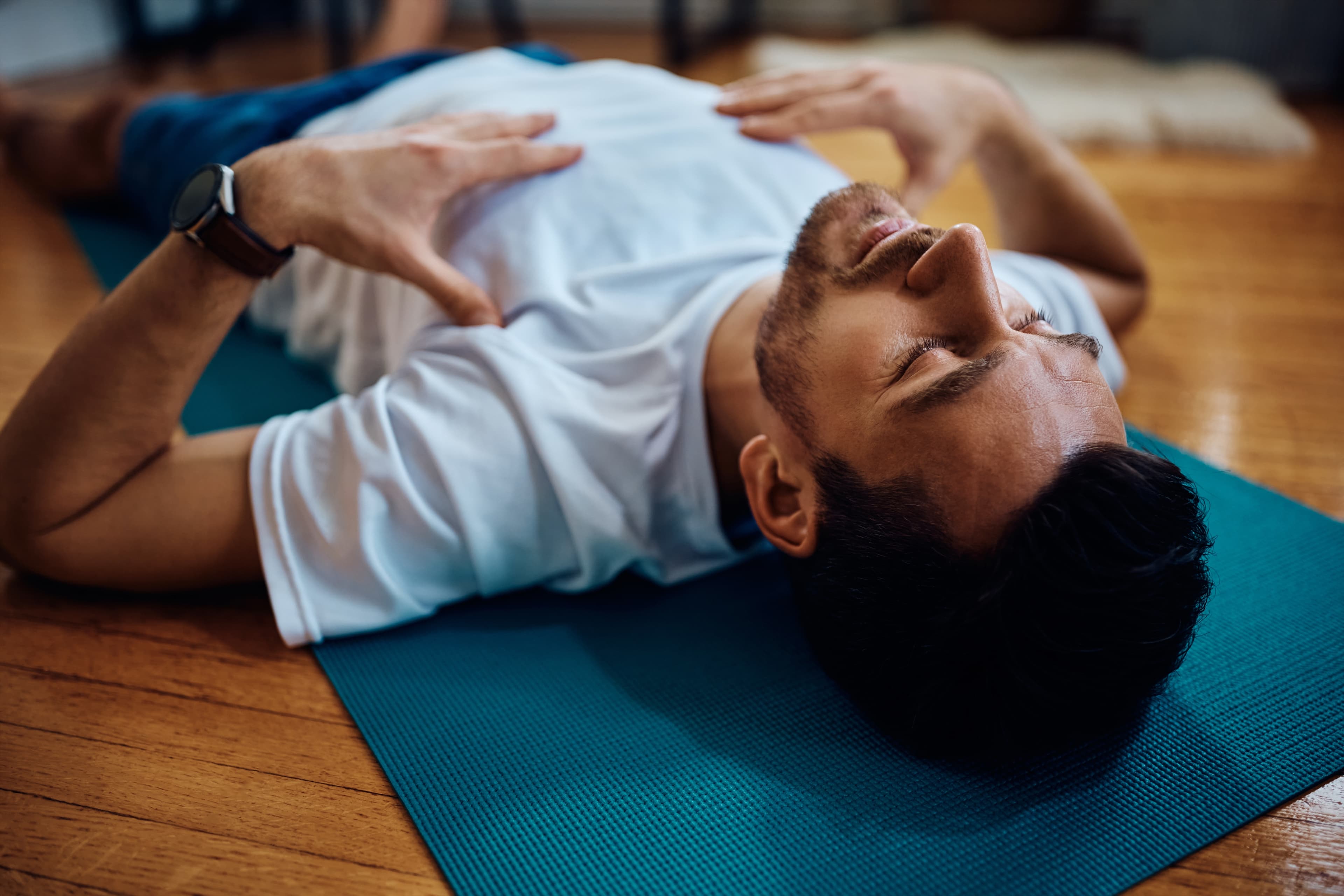
History & lineage

Where this work comes from.

Naturopathy as a recognizable tradition emerged in late-nineteenth-century Europe (German nature-cure traditions, Sebastian Kneipp's water-cure systems) and was formalized in the United States by Benedict Lust around 1900. The American naturopathic profession went through a long period of decline in the mid-twentieth century, then a substantial revival from the 1970s onward through the founding of accredited graduate programs (Bastyr 1978, NUNM, others). The non-licensed traditional naturopathy tradition runs in parallel with significant ecosystem of practitioners, schools, and credentialing bodies (American Naturopathic Certification Board, others). Harmonika Institute's CHNP draws on the broader holistic-wellness tradition with explicit acknowledgment of the licensed ND profession as a distinct, more demanding pathway.

Why structured training matters

Beyond books and weekend workshops.

Holistic naturopathy is unusually vulnerable to under-trained practice. The field has too many practitioners offering wellness consultations without a structured foundation — recommending herbs they don't understand, making dietary recommendations beyond their scope, blurring the line between wellness counseling and medical advice. The reason a serious 15-day training matters is that holistic naturopathy done well requires breadth (nutrition, herbalism, lifestyle, consultation craft, scope of practice) and that breadth cannot be developed through weekend workshops or online certificates. Our program is built around the depth and the scope-of-practice clarity that the field needs more of.

What you'll learn

Skills you'll leave with.

The 379 hours of this program are built around the following competencies. Most are practiced rather than lectured.

  • Holistic nutrition principles and dietary frameworks
  • Foundational herbalism and safe wellness recommendations
  • Lifestyle counseling: sleep, movement, stress, environment
  • Consultation craft: intake, listening, summarization, follow-up
  • Holding a clear, non-medical scope across every conversation
  • Working ethically alongside licensed medical care
  • Building a holistic naturopathy practice with sustainable margins
Curriculum

Module by module.

Module 1 — Foundations

History of naturopathy; the holistic frame; U.S. regulation.

Module 2 — Holistic nutrition

Frameworks, common dietary protocols, individualization.

Module 3 — Foundational herbalism

Common Western herbs and safe wellness use.

Module 4 — Lifestyle counseling

Sleep, movement, stress, circadian, environment.

Module 5 — Consultation craft

Intake, summarization, planning, follow-up.

Module 6 — Scope & referrals

Working alongside licensed medical care; clear boundaries.

Module 7 — Specific topics

Energy, digestion, women's wellness, stress — within scope.

Module 8 — Practice & business

Pricing, packages, ethics, ongoing supervision.

Program highlights

Specifics that distinguish the Holistic Naturopathy cohort.

01

15 days, fully in person

Holistic naturopathy is broad — nutrition, herbalism, lifestyle counseling, consultation craft. We cover all four pillars in 15 days of intensive in-person work, with supervised consultations.

02

FL/SC/TN exclusions handled

Three states specifically prohibit non-licensed naturopathy practice. We don't enroll students from these states — our regulatory transparency is itself a marketing asset.

03

Nutrition, herbalism, lifestyle integrated

All three core domains taught together with the consultation craft that integrates them into client-specific recommendations.

04

Working alongside licensed care

We teach the explicit ethics of working alongside (never in place of) licensed medical care, with clear referral pathways.

05

Path to licensed ND if you want it

Graduates who fall in love with the field can use CHNP as a foundation before applying to accredited four-year ND programs. Several have.

06

Consultation craft module

Intake, summarization, planning, follow-up — the relational consultation skill that turns knowledge into useful client work.

Why this program

What makes our Holistic Naturopathy training different.

15 days — uniform program structure

Holistic naturopathy is broad enough to require the full 15-day program. Anything shorter produces practitioners with gaps that show up in client work.

Clear non-medical scope

We are explicit about scope from week one. Graduates use the title CHNP, never Doctor, and our curriculum builds the scope-of-practice clarity that distinguishes credible practitioners.

Nutrition, herbalism, and lifestyle integrated

We teach all three core domains together, with the consultation craft that integrates them into client-specific recommendations.

FL/SC/TN exclusions clearly handled

We do not enroll students into the program from these three states, and we do not market the program there. Our regulatory transparency is itself a marketing asset.

Pathway to licensed ND if you want it

Graduates who fall in love with the field and want to pursue licensed ND practice can use our program as a foundation before applying to accredited four-year ND programs. Several of our graduates have done exactly that.

Working alongside licensed medical care

We teach the explicit ethics of working alongside (never in place of) licensed medical care, with clear referral pathways for anything outside our scope.

A day in the practice

What working as a CHNP actually looks like.

A working CHNP two years out: morning routine and 30 minutes reading. First client at 10am, 75-minute returning consultation, $180 — an established client mid-arc, working on sleep, digestion, and stress. You spend 30 minutes after the session writing detailed notes and a follow-up plan. Second client is a 90-minute new-client first session, $250, including extensive intake. Lunch break. Afternoon: one more 75-minute returning consultation, plus an hour preparing for a Saturday community workshop you are teaching on "Foundations of Holistic Eating." By 5pm you have grossed $610 for three clients. Saturday's workshop: $400 for a 3-hour community session, fifteen attendees at $35, $525 net. Most weeks: ten to fifteen one-on-one consultations plus one to two community workshops, grossing $2,500–$4,500.

Career outcomes

After graduation.

  • Open a private holistic naturopathy consultation practice (CHNP)
  • Combine consultations with herbalism, aromatherapy, or coaching
  • Specialize in stress, sleep, women's wellness, or lifestyle
  • Continue toward an accredited ND program if you wish to practice medically
  • Lead public workshops on holistic lifestyle topics
Career path

Trajectory and income for Holistic Naturopathy practitioners.

CHNPs typically build private one-on-one consultation practices specializing in stress and sleep, women's wellness, digestive support, or general lifestyle/wellness. Pricing for one-on-one work is typically $150–$280 per 75–90 minute session in major U.S. cities, with multi-session arcs at $800–$2,500 per client. Many CHNPs combine consultations with herbalist credentials (Phytotherapy, in our catalog) for a more comprehensive practice. Some specialize in workshop teaching or write books. A smaller number eventually pursue licensed ND practice through four-year accredited programs. Annual gross income for full-time CHNPs ranges from $60,000 to $130,000 within three to five years.

How it compares

Holistic Naturopathy compared to adjacent modalities.

CHNP vs. Naturopathic Doctor (ND)

ND is a four-year, post-graduate medical credential through accredited schools, leading to state licensure in 22 states plus DC. CHNP is a 15-day non-medical wellness credential. Graduates use different titles, work in different scopes, and enter different markets. Some CHNPs eventually pursue ND credentialing.

CHNP vs. Holistic Nutritionist

Holistic Nutritionist credentials focus specifically on nutrition; CHNP integrates nutrition with herbalism, lifestyle, and consultation craft. Many CHNPs hold both.

CHNP vs. Functional Medicine practitioner

Functional medicine is a clinical practice approach used by licensed practitioners (MDs, DOs, NDs, often nurse practitioners). CHNP is non-clinical and uses some of the same conceptual framing within a wellness scope.

Evidence & research

What the research says about Holistic Naturopathy.

We teach with intellectual honesty. Where the evidence is strong, we say so. Where it is weak, we say that too. Our credibility — and our graduates' — depends on it.

The research base for naturopathic interventions is heterogeneous. The licensed-ND profession (in the 22 states plus DC where it is regulated) has a growing research literature on integrative-medicine outcomes — Bastyr University, NUNM, and the National Center for Complementary and Integrative Health support multiple research programs. Specific naturopathic interventions vary in evidence support: holistic nutrition recommendations have substantial general nutrition-research support; specific botanical recommendations vary widely (some herbs are well-studied, others have only traditional support); lifestyle interventions are well-supported by broad behavioral-medicine research. Non-licensed traditional naturopathy has a smaller specific research base but draws on the same underlying evidence streams. We teach holistic naturopathy at Harmonika Institute with full reference to this evidence landscape, with explicit honesty about which recommendations have strong research support and which are more traditional, and with non-medical scope clarity. Graduates leave able to speak about their recommendations with intellectual integrity and to recognize when a client's needs exceed what the evidence supports them offering.

Common misconceptions

What people get wrong about Holistic Naturopathy.

Myth

Naturopathy means anti-medicine.

Reality

Real naturopathic practice — both licensed ND and non-licensed CHNP — works alongside (never against) conventional medical care. We teach this explicitly.

Myth

Holistic Naturopathy and Naturopathic Medicine are the same.

Reality

Naturopathic Medicine (ND) is a four-year accredited graduate medical credential leading to state licensure in 22 states plus DC. Holistic Naturopathy (CHNP) is a non-medical wellness credential. Different scopes, different titles.

Myth

Natural means safe.

Reality

Many botanicals interact with medications; some have meaningful contraindications. We teach safety thoroughly because "natural" is not a synonym for "safe."

Myth

I can practice anywhere as a CHNP.

Reality

Three states (FL, SC, TN) specifically prohibit non-licensed naturopathy practice. We do not enroll students from these states and we do not market the program there.

Can I learn this on my own?

Self-study vs. structured Holistic Naturopathy training.

A question we get from many applicants. Here is the honest answer.

Can you learn holistic naturopathy on your own? Conceptually, yes — there is substantial literature on holistic nutrition, foundational herbalism, and lifestyle medicine that you can study independently. What self-study cannot give you is the consultation craft (the integrative skill of taking a client's full picture and translating it into specific, actionable recommendations within a clear non-medical scope), the depth of cross-domain knowledge (nutrition plus herbalism plus lifestyle plus referral pathways), and the supervised practice on real clients that distinguishes a holistic naturopath from someone with strong personal wellness habits. Holistic naturopathy is genuinely broad — that breadth is precisely why our 15-day program is structured around dense, supervised consultation hours. We do not believe a weekend workshop or a self-paced online certificate produces a credible practitioner in this field. Graduates leave with both the cross-domain knowledge and the consultation craft, plus the explicit scope-of-practice clarity (CHNP, never "Doctor," non-medical wellness work) that keeps a practice legally clean. Self-study cannot replace 15 days of supervised integrative consultation practice.

What graduates carry forward

Beyond the certification.

Graduates of our Holistic Naturopathic Practitioner program carry forward an unusually broad consultation craft — nutrition, foundational herbalism, lifestyle counseling, scope-of-practice clarity — that compounds in value over years. Five years out, our CHNPs are running practices with strong client retention, often combining their CHNP credential with additional training (Phytotherapy, Aromatherapy, NAMA Ayurveda) for a comprehensive holistic-consultation offering.

Key concepts & people

The Holistic Naturopathy vocabulary you'll learn.

These are the lineages, named teachers, frameworks, and technical terms our curriculum draws on. By graduation, you'll know each of them in depth.

Two U.S. professions

Naturopathic Doctor (ND)
Four-year accredited graduate medical credential; state-licensed in 22 states + DC.
Holistic Naturopathic Practitioner (CHNP)
Non-licensed wellness credential; private certification.

Accredited ND schools

Bastyr University
Founded 1978 in Washington; foundational accredited program.
NUNM
National University of Natural Medicine, Portland.
NUHS
National University of Health Sciences, Illinois.
SCNM
Southwest College of Naturopathic Medicine, Arizona.

Naturopathic principles (Tolle Causam)

Vis medicatrix naturae
The healing power of nature.
Tolle causam
Treat the cause, not just the symptom.
Primum non nocere
First, do no harm.

Restricted states

Florida / South Carolina / Tennessee
Specifically prohibit non-licensed naturopathy practice.
Books & further reading

Recommended reading on Holistic Naturopathy.

These are the books our faculty actually recommend to enrolled students — not a comprehensive bibliography, but a practical starting point.

The Encyclopedia of Natural Medicine

Michael Murray and Joseph Pizzorno

Comprehensive reference from two senior NDs. Useful as background even though our scope is non-medical.

Textbook of Natural Medicine

Joseph Pizzorno and Michael Murray (eds.)

The professional-level reference text used in licensed-ND programs. Read selectively for non-medical applications.

The Whole Health Diet

Mark Mincolla

Holistic-nutrition framework with specific consultation craft.

The Wahls Protocol

Terry Wahls MD

Modern functional-medicine-informed approach to diet. Complements our nutrition module.

Holistic Health Coaching

Hilary McClafferty

A practitioner manual oriented to non-medical scope. Useful for CHNP graduates building consulting practices.

The right student

Is this program for you?

Career-changers, nurses, nutritionists, and herbalists who want a deep, well-bounded holistic practice without committing to medical school.

Prerequisites

What we expect on day one.

None. A genuine appetite for the breadth of material this program covers — it is the most demanding in the catalog.

Tuition & financing

$4,200 for the full 47-day program.

Tuition covers 14 days of in-person teaching, 3 live cohort intervisions, 130h of supervised practice, a 5-day immersion stage with a senior practitioner, portfolio review and a final jury evaluation, and one year of post-graduation support. Interest-free monthly installments. A 25% deposit confirms your cohort spot.

$4,200

379h total · 14 in-person days · cohort of 10

People also ask

Common questions about Holistic Naturopathy training.

How long does the holistic naturopathy training take?

15 days from start to graduation, in person, in your city.

Will I be a Naturopathic Doctor (ND) after the program?

No. The ND credential requires a four-year accredited graduate medical program. Our CHNP is a non-medical wellness credential. Graduates use the title "Certified Holistic Naturopathic Practitioner," never "Doctor."

Can I practice in Florida, South Carolina, or Tennessee?

No. These three states specifically prohibit non-licensed naturopathy practice. We do not enroll students from these states into the program and we do not market the CHNP there.

More questions

What can I legally do as a CHNP?+

Offer non-medical wellness consultations focused on nutrition, foundational herbalism, lifestyle, sleep, stress, and general well-being. You do not diagnose medical conditions, prescribe medications, or provide medical advice. You refer anything that belongs in licensed medical care.

Do I need a prior background in nutrition or herbalism?+

No. The program teaches from foundations.

How much does the naturopathy course cost?+

Total tuition is $4,500, with monthly payment plans available across the 15 days of the program.

Is the program in person or online?+

Fully in person. Holistic naturopathy is fundamentally a relational consultation practice that cannot be developed online.

Can I combine this with herbalism (phytotherapy)?+

Yes — and many graduates do. Pairing CHNP with our Phytotherapy program produces a more comprehensive practice with stronger herbal depth.

Can this lead to licensed ND practice?+

Yes — for graduates who fall in love with the field and want to pursue clinical naturopathic medicine. The CHNP is a strong foundation; the ND credential requires a separate four-year accredited program.

Where it's taught

Holistic Naturopathy is offered in 28 cities.

Northeast

New York

New York

Holistic Naturopathy in New York

West

Los Angeles

California

Holistic Naturopathy in Los Angeles

Midwest

Chicago

Illinois

Holistic Naturopathy in Chicago

South

Houston

Texas

Holistic Naturopathy in Houston

Northeast

Boston

Massachusetts

Holistic Naturopathy in Boston

South

Atlanta

Georgia

Holistic Naturopathy in Atlanta

Pacific Northwest

Seattle

Washington

Holistic Naturopathy in Seattle

Mountain West

Denver

Colorado

Holistic Naturopathy in Denver

South

Austin

Texas

Holistic Naturopathy in Austin

Mid-Atlantic

Philadelphia

Pennsylvania

Holistic Naturopathy in Philadelphia

Mid-Atlantic

Washington

District of Columbia

Holistic Naturopathy in Washington

Southwest

Phoenix

Arizona

Holistic Naturopathy in Phoenix

Midwest

Detroit

Michigan

Holistic Naturopathy in Detroit

West

San Francisco

California

Holistic Naturopathy in San Francisco

West

San Diego

California

Holistic Naturopathy in San Diego

Midwest

Minneapolis

Minnesota

Holistic Naturopathy in Minneapolis

Southwest

Las Vegas

Nevada

Holistic Naturopathy in Las Vegas

Mid-Atlantic

Baltimore

Maryland

Holistic Naturopathy in Baltimore

Midwest

St. Louis

Missouri

Holistic Naturopathy in St. Louis

Pacific Northwest

Portland

Oregon

Holistic Naturopathy in Portland

South

San Antonio

Texas

Holistic Naturopathy in San Antonio

West

Sacramento

California

Holistic Naturopathy in Sacramento

West

San Jose

California

Holistic Naturopathy in San Jose

Midwest

Indianapolis

Indiana

Holistic Naturopathy in Indianapolis

Northeast

Pittsburgh

Pennsylvania

Holistic Naturopathy in Pittsburgh

Midwest

Cincinnati

Ohio

Holistic Naturopathy in Cincinnati

Southeast

Charlotte

North Carolina

Holistic Naturopathy in Charlotte

South

Dallas

Texas

Holistic Naturopathy in Dallas

Next step

Become a Certified Holistic Naturopathic Practitioner.

Talk with our admissions team about the next Holistic Naturopathy cohort starting in your city.