Journal · Naturopathy · Career evaluation
Is Holistic Naturopathy a Good Career? An Honest Look
Holistic naturopathy is one of the most-requested modalities among career-changers. Here is the honest analysis: U.S. regulation, income range, market demand, and who actually thrives.
Valérie Fabre, Founder & Director, Harmonika Institute · April 1, 2026 · 3 min read
Holistic naturopathy is consistently among the top three modalities prospective students ask about during admissions conversations. The interest makes sense — the field is broad, intellectually rich, and combines knowledge across nutrition, herbalism, lifestyle, and consultation craft. But it also has the most-misunderstood regulatory landscape of any modality in our catalog. Here is the honest evaluation.
Two distinct U.S. naturopathy professions
First, the most important distinction. There are two separate naturopathy professions in the United States, and confusing them is the source of nearly every problem in the field.
The first is licensed Naturopathic Doctor (ND), regulated in 22 states plus DC. NDs hold four-year accredited graduate medical degrees from one of the four U.S. ND programs (Bastyr, NUNM, NUHS, SCNM). They diagnose, prescribe within scope, and operate as primary-care practitioners in licensed states. Becoming an ND requires undergraduate prerequisites, four years of post-graduate medical school, plus state licensure.
The second is non-licensed Holistic Naturopathic Practitioner (CHNP, in our credential framework), which is what we train. This profession operates in non-medical wellness scope, typically through private certification programs like ours. Practitioners cannot diagnose, prescribe, or use protected medical titles. They offer wellness consultations grounded in nutrition, foundational herbalism, and lifestyle counseling.
What CHNPs actually do day-to-day
A working CHNP runs 60-90 minute one-on-one wellness consultations, typically in 3-6 session arcs over 3-6 months. The client comes in with a wellness concern (stress, sleep, digestion, energy, women's wellness). The practitioner takes a thorough intake, then partners with the client over several sessions to develop and refine a lifestyle, dietary, and herbal plan within clear non-medical scope.
The work is conversational and slow. Sessions don't deliver dramatic moments; they accumulate small adjustments over weeks. Successful CHNP practices have unusually high client retention — clients often come back over years for periodic recalibration as life circumstances change.
Income range and market demand
CHNP graduates typically build practices charging $150-$280 per 75-90 minute session in major U.S. cities, with 3-6 session arcs at $800-$2,500 per client. Annual gross income for full-time graduates ranges from $60,000 to $130,000 within 3-5 years. Specialists in women's wellness, sleep and stress, or digestive support tend to cluster at the high end.
Market demand is genuinely high and growing. The U.S. wellness market reached an estimated $1.8 trillion in 2024, and the holistic-consultation segment is one of the fastest-growing components. Many CHNPs combine consultations with herbalist credentials (our Phytotherapy program) for a more comprehensive practice.
Demand varies by region. The Pacific Northwest (Portland, Seattle), the Northeast (Boston, NYC), and California have the strongest demand. Florida, South Carolina, and Tennessee, where non-licensed naturopathy is prohibited, are the obvious gaps in the market.
Who thrives in this field
CHNP graduates who build successful practices share several traits. They tend to be older (40-55 typical), having lived enough life to appreciate the value of long-arc lifestyle change. They tend to have strong existing professional networks (former nurses, midwives, family-medicine staff, health-conscious consultants) that produce referral pipelines from Day One.
They tend to enjoy reading and continuous study — the materia medica is genuinely vast and the best practitioners keep learning for decades. They tend to be patient — the work is slow, and impatient practitioners burn out within 2-3 years.
They are unambiguous about scope. The graduates who get into trouble (legal trouble, professional reputation trouble, ethical trouble) are almost always the ones who blur the line between non-medical wellness consultation and medical practice. The successful ones know exactly what they may say, recommend, and offer — and they refer everything else cleanly.
Should you pursue CHNP or full ND?
If you want to practice medicine — diagnose conditions, prescribe substances within scope, work as a primary-care practitioner in a licensed state — pursue full ND through one of the four accredited graduate programs. Plan on 4-5 years of post-graduate study, $150,000-$250,000 in tuition, and substantially higher income potential ($150,000-$400,000+ in established licensed-state practice).
If you want to practice within a non-medical wellness scope — consultation, lifestyle, foundational herbalism, the soft side of integrative wellness — pursue CHNP or equivalent. Plan on 8 live online teaching days (64 hours, plus about 51 hours of personal study between sessions on average), $3,000 in tuition, and the income range described above.
Some graduates start with CHNP and pursue full ND later, having tested the field in a less-committed format. Some practice as CHNPs for life. Both paths are legitimate; both produce real careers.
Questions on this topic.
Can CHNPs work alongside MDs?+
Yes — many do, particularly in integrative-medicine clinics where the MD or DO handles diagnosis and treatment, and the CHNP handles lifestyle, nutrition, and stress consultation as part of a coordinated team.
Is CHNP a path toward becoming an ND?+
It can be a foundation. Several of our graduates have used CHNP as a 'is this field really for me' test before applying to full ND programs. The CHNP curriculum gives you a strong sense of whether you genuinely want the field before committing to the medical pathway.
What about online naturopathy programs?+
We are skeptical of self-paced online holistic naturopathy training. Consultation craft is fundamentally relational — the live conversation hours with faculty feedback that build practitioner skill need a faculty member watching and correcting in real time. That is why our own holistic naturopathy program is taught fully live online, in synchronous video sessions with faculty and a cohort of fifteen, with no recorded or self-paced video. Programs built on recorded lessons typically produce graduates with knowledge but without the practitioner skill that paying clients require.
Tags:
NaturopathyCareer evaluationRegulation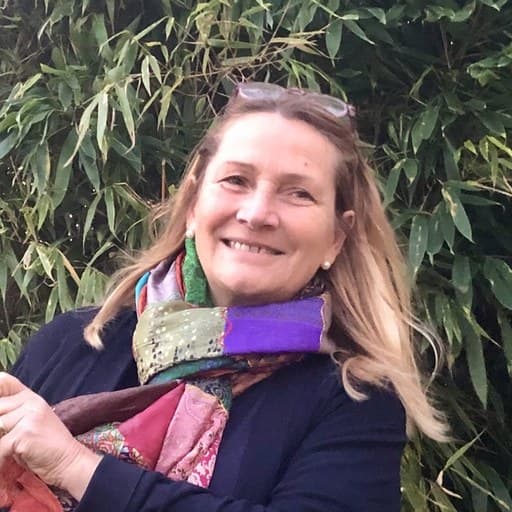
About the author
Valérie Fabre · Founder & Director, Harmonika Institute
Valérie Fabre founded Harmonika Institute in 2025, after a decade seeing clients in private kinesiology practice and, before that, thirteen years in international trade. A French-born polyglot who now splits her time between Dallas and Miami, she sets the school's curriculum and editorial standards and champions ethical, in-person training.
Read more about Valérie Fabre →