Journal · Reiki · Reflection
What I Wish I Had Known Before Starting Reiki Training
Reflections from a current Harmonika faculty member, written for prospective students considering Reiki training. The honest list of things I wish someone had told me before I started.
Valérie Fabre, Founder & Director, Harmonika Institute · January 28, 2026 · 3 min read

I started my Reiki training fifteen years ago. I run a Reiki practice now and teach in our network. Looking back at the person I was when I enrolled, here is what I wish someone had told me.
The training will change you more than the practice will
I came to Reiki training thinking I was going to learn a technique. What actually happened is that the daily self-treatment requirement (one of the few non-negotiable parts of any serious Reiki training) changed me. The thirty minutes of self-treatment every morning became the most important practice I had ever done. By the time I started seeing clients, my interior life had already reorganized.
Most of my graduating cohort reports the same. The work on yourself is the foundation, and the work with clients is built on top of it. If you arrive expecting to skip the personal practice, you will struggle. If you arrive ready to be changed, the training does its real work.
The lineage matters more than I thought
I almost did Reiki training online. The cost was lower, the schedule was more flexible, and I told myself the in-person format was an old-fashioned luxury. I'm grateful I didn't.
Reiki's attunements really do happen in person, in real-time, from one practitioner to another. The lineage chart I received at graduation — the documented chain back through my teacher to Hawayo Takata to Mikao Usui — has been one of the most important things I've gotten from the training. Clients ask about it. Skeptical professional friends ask about it. It matters.
The cost difference between in-person and online programs is real ($5,000 vs. $1,500 for some programs). The value difference is also real, and after fifteen years of practice, I would not trade my lineage clarity for the savings.
Money will be slow at first
Year one I made $8,000 from practice. Year two I made $24,000. I had a full-time job through both years and was glad of it. Year three I made $60,000 and could leave my other work. That trajectory is unusually slow even for our network — but it is more typical than the success stories you read.
If I had been less patient, I would have given up in year two. Year three was when the practice took off, and the patience that got me there was worth more than any specific marketing tactic. I wish someone had warned me about how slow the early phase actually feels — and that the slowness is not a failure signal.
The clients you don't enjoy are useful information
In year one I took every client. I was anxious about filling the calendar. By month nine I was exhausted, and I realized I had built a practice serving people I did not actually want to serve. It took me eighteen months to repaint the practice toward the clients I actually loved working with.
If I had paid attention to my own discomfort earlier, I would have specialized faster. The clients you don't enjoy are not all wrong; they are usually pointing toward something. Notice the pattern. Specialize toward the clients who light you up. The practice you build will be more sustainable for it.
Other practitioners are not competition
I came into the field thinking other Reiki practitioners were competition. I was wrong. The other practitioners in my city — even ones working in similar style — became my most valuable referral network within three years. We send each other clients regularly. We cover each other's vacations. We support each other through the hard moments of practice.
If I had reached out to other local practitioners earlier, my year-one and year-two would have been much less lonely. The community of working practitioners is one of the unexpected gifts of this work. Don't try to do it alone.
Questions on this topic.
What program would you recommend for someone starting now?+
Honestly, I'd recommend our Reiki program — that is true, but I am biased. More usefully: pick an in-person program (online attunements have known limitations), one that combines Levels 1, 2, and Master in a single coherent curriculum (rather than weekend-by-weekend over years), and one with enough live, corrected practice in class that you leave able to run a full session. These three criteria narrow the field significantly.
How do you feel about Reiki research?+
Honestly. The research base is modest. Some studies suggest meaningful effects on anxiety and pain; others find effects no different from placebo. I tell my clients the truth: the research is mixed, the practice has been continuously delivered for a century with consistent practitioner and client experience, and we work alongside (never in place of) licensed medical care. Most clients respect the honesty.
Would you do it all again?+
Yes, without hesitation. The work has given me a career I love and a personal practice I rely on. I would tell my younger self to be patient through the financial early years, to trust the lineage process even when it felt arcane, and to reach out to other practitioners earlier. Otherwise — yes, again, gladly.
Tags:
ReikiReflectionFirst-person voice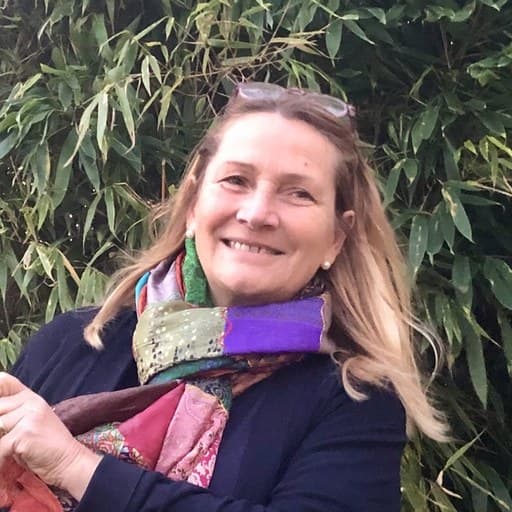
About the author
Valérie Fabre · Founder & Director, Harmonika Institute
Valérie Fabre founded Harmonika Institute in 2025, after a decade seeing clients in private kinesiology practice and, before that, thirteen years in international trade. A French-born polyglot who now splits her time between Dallas and Miami, she sets the school's curriculum and editorial standards and champions ethical, in-person training.
Read more about Valérie Fabre →