Journal · Life Coaching · Career path
How to Become a Life Coach in the U.S.: 7 Steps, Costs and Timelines
How to become a life coach in 7 steps with the cost and time of each: niche, training ($400 to $16,000), practice hours, credential, business, first clients.
Valérie Fabre, Founder & Director, Harmonika Institute · September 13, 2026 · 8 min read

Key takeaways
- No licence exists, so the path is yours to build. Seven steps: niche, training, practice hours, credential decision, business setup, first clients, ongoing education. Most people do them in the wrong order.
- Training costs $400 to $16,000 and 60 to 350 hours. Self-paced online sits at the bottom; ICF Level 2 in-person programs at the top. Our May 2026 survey found the average ICF Level 1 program at about $7,500.
- Budget 12 to 18 months from first class to first paying client. Six months of training, 100 hours of practice (most of it unpaid), then three to six months of finding people who will pay.
- The ICF question is a separate decision. An ICF ACC credential needs 60+ training hours, 100+ coaching hours and 10 mentor hours on top of any program; decide after training, not before.
- Most people who quit do so in months 4 to 9. The reason is rarely the training. It is the 100 practice hours, and the discovery that finding clients is a second job.
About 600 training programs hold ICF accreditation worldwide, several hundred of them in the United States, and none of them is required. You can call yourself a life coach this afternoon, legally, in all fifty states. That freedom is the problem. With no licensing board to set the sequence, most people start by buying a course, and only later discover that the course was step two of seven, and that steps three and six are the ones that decide whether anyone pays them.
This article gives the seven steps in order, with what each costs in money and months. It does not compare specific programs; for that read how to choose a life coach certification that holds up. And it keeps the ICF decision to two paragraphs, because we cover it fully in ICF vs private life coach certification.
What are the seven steps to becoming a life coach?
Niche first, training second, practice third, credential fourth, business fifth, clients sixth, continuing education seventh. Here is each with its price tag and its clock.
- 1
1. Choose a niche before you choose a school
Cost: $0. Time: 2 to 6 weeks of honest conversations. 'Life coach' is the most commoditized label in the U.S. coaching market, per our survey. Career transitions, new parents, mid-life health changes, wellness professionals: pick a population you already know, because your first ten clients will come from it.
- 2
2. Train, in a program whose format you will finish
Cost: $400 to $16,000. Time: 6 weeks to 13 months. Self-paced online is cheapest and has the highest abandonment; in-person cohorts cost more and finish more people. Look for live practice with feedback, not video hours.
- 3
3. Log practice hours, most of them unpaid
Cost: $0 to $500 (recording tools, a scheduling link). Time: 3 to 6 months for 100 hours. This is where the skill forms and where most people stall. In our program that practice starts in class, in a cohort of ten with live feedback, so that it is not left to willpower.
- 4
4. Decide on a credential
Cost: $0 (private certificate only) to about $1,500 (ICF ACC application, exam and mentor coaching). Time: 3 months for the mentor-coaching requirement. Decide after training, once you know your niche's buyers.
- 5
5. Set up the business
Cost: $300 to $1,500 (entity filing, insurance, contract template, booking tool). Time: 2 to 4 weeks. Sole proprietor or LLC, a coaching agreement, liability insurance, a bank account. Nothing fancy.
- 6
6. Find the first ten paying clients
Cost: mostly time. Time: 3 to 6 months. Discovery calls, referrals from practice clients, one channel done consistently. The first ten come from people who already know you; the second ten are the real test.
- 7
7. Keep learning, on a schedule
Cost: $500 to $2,000 a year. Time: 20 to 40 hours a year. ICF credentials renew every three years with 40 continuing education hours; even without one, supervision or peer groups are what keep a solo coach honest.
How much does life coach training cost by path?
Between $400 and $16,000, and the price tracks format and accreditation more than quality of teaching. Our May 2026 survey of U.S. providers found the market shifted heavily online after 2020, with about 70 percent of programs online or hybrid, and fully in-person residential training now rare.
| Path | Typical cost | Contact hours | Duration | What you hold |
|---|---|---|---|---|
| Self-paced online certificate | $400 to $1,500 | 20 to 60 | 6 to 12 weeks | A private certificate; rarely enough hours for an ICF credential |
| ICF Level 1 online cohort | $3,900 to $4,600 (CTA, Holistic Coach Training Institute) | 60 to 125 | 5 to 13 months | ICF-accredited hours toward ACC |
| In-person practitioner program (ours) | $5,040 | 126 teaching hours over 18 classroom days | About 10 months | Private certification; live teaching in cohorts of ten |
| ICF Level 2 hybrid (iPEC, Erickson) | $6,000 to $12,000 | 125 to 200 | 6 to 12 months | ICF-accredited hours toward PCC; mentor coaching often included |
| Premium in-person or somatic (CTI, Strozzi) | $12,000 to $16,000 | 150 to 250 | 12 months | ICF-accredited; strong alumni network; the price is the format |
The honest number
Training is the smaller cost. Add 100 practice hours at an opportunity cost of $2,000 to $5,000 in lost income, business setup of $300 to $1,500, and three to six months of client-finding before revenue covers a month of expenses. A realistic all-in figure for a career-changer is $8,000 to $15,000 and one year of reduced earnings. Our full breakdown of life coach certification cost itemizes it.
Do you need an ICF credential to be a life coach?
No, and about half of working U.S. coaches do not hold one. The International Coaching Federation is a private membership body, not a government one. Its entry credential, the ACC, requires at least 60 hours of coach-specific training, at least 100 hours of coaching experience (75 of them paid) with at least eight clients, 10 hours of mentor coaching spread over three months, and an exam; the PCC raises those to 125 training hours and 500 coaching hours. Details and fees are on the ICF site at coachingfederation.org.
Whether it matters depends on who buys from you. Corporate and executive clients often ask for it; individuals in a wellness niche almost never do. That is why the credential is step four, after training and practice, and why I built our program around ICF core competencies (presence, listening, contracting, direct communication) while leaving the credential decision to the graduate. The hours transfer either way.
How long does it take to get your first paying client?
Twelve to eighteen months from your first day of training, for most people. The training itself takes six to ten months if it includes practice hours. The gap between finishing and the first paid session is three to six months, and it is the gap nobody prices in. Coaches who shorten it share one habit: they start charging a small fee for practice sessions in the second half of training, so that 'paid client' is a continuation rather than a new event.
For what the income looks like once clients arrive, and how wide the gap is between the median and the top decile, read our piece on life coach income. The short version: the median is modest, the top is real, and the difference is almost entirely client acquisition, not coaching skill.
Why do most people who start never finish?
Because the drop-out point is the practice hours, not the classes. In our cohorts the pattern is consistent: enthusiasm through the classroom days, a dip when the first unpaid practice clients cancel, and a quiet exit somewhere between month four and month nine for those who go. Three reasons account for most of it.
- The second job. Coaching is one job; finding people to coach is another, and nobody told them the second one takes as many hours as the first for the first two years.
- The wrong niche. 'Anyone who wants to grow' is not a market. People who chose a population they already belonged to find practice clients in weeks; people who chose 'everyone' find nobody.
- Unsupervised practice. A hundred hours alone with a recorder and no feedback feels like failure even when it is not. Programs that build supervision into the hours keep more people; ours is taught live in cohorts of ten, with feedback in the room.
From the training floor
The students who reach paid clients fastest are almost never the most natural coaches on day one. They are the ones who booked their first three practice sessions before the second classroom weekend, while the rest were still deciding what to call themselves.
What does training in person change?
It changes step three. Practice in a cohort of ten, with an instructor in the room and personal study between sessions, is practice that gets done. Our in-person holistic life coach program runs 18 classroom days (126 teaching hours), plus about 115 hours of personal study between sessions, for $5,040 in total. That price sits between the online ICF Level 1 cohorts and the premium in-person schools, and the reason to pay it rather than $4,000 for an online cohort is entirely whether you would keep practising alone.
Scope of practice
A life coach works with functioning adults on goals, decisions and habits. A coach does not diagnose, treat mental health conditions, or give medical or regulated financial advice, and 'therapist', 'counselor' and 'psychologist' are protected titles in most states. If a client describes symptoms, the coaching skill is a referral. No state licenses life coaches as of this writing; confirm your own state's rules on titles and business registration before taking clients.
What should you do this month?
Step one, for free. Write down the population you know best, the problem they bring up when you are not selling anything, and three people in it who would take a free session next week. If you cannot fill that page, the course you were about to buy will not fill it either. If you can, the rest of the seven steps have somewhere to start, and the business side is covered in our guide to starting a life coaching business.
Questions on this topic.
Do you need a degree to be a life coach?+
No. No U.S. state requires a degree, a licence or any specific training to use the title life coach. Training matters for skill and for credibility with certain buyers, and the ICF's credentials require documented training hours, but a college degree is not part of any of it. Many coaches come from unrelated fields; what transfers is the population they know.
How long does it take to become a certified life coach?+
Six weeks to thirteen months for the training itself, depending on format, and twelve to eighteen months from first class to first paying client once practice hours and client-finding are included. A self-paced online certificate can be finished in six weeks; an ICF Level 1 cohort typically runs five to thirteen months; our in-person program runs about ten months.
How much does it cost to become a life coach?+
Training runs from about $400 for self-paced online to $16,000 for premium in-person ICF Level 2 programs, with the average ICF Level 1 program near $7,500 in our May 2026 survey. Add business setup of $300 to $1,500, an optional ICF credential of roughly $1,500 including mentor coaching, and the lost income of 100 practice hours. A realistic all-in figure is $8,000 to $15,000.
Can you be a life coach without certification?+
Legally, yes, in every state. Practically, most clients never ask, but the training is where the skill comes from, and the practice hours a good program requires are the difference between a coach and a person with a website. If you skip certification, do not skip supervised practice; find a mentor coach and log at least 100 hours before charging full rates.
What is the difference between a life coach and a certified life coach?+
A certificate from a training program, and sometimes a credential from a body such as the ICF. 'Certified' is not a legal status; any school can issue a certificate. What it signals is that the coach completed a set number of training and practice hours and was evaluated. Ask what the evaluation was: an exam, a recorded session, or a jury tells you more than the word certified.
Is life coaching a good career?+
For a minority, yes, and for many it becomes a part-time practice alongside other work. Income is bimodal: a modest median and a well-paid top decile, separated mostly by client acquisition rather than coaching skill. It suits people who already have a population and enjoy the selling side. It disappoints people who expected the certificate to bring clients.
What niche should a new life coach choose?+
One you already belong to or have left. Career changers coach career changers; former nurses coach healthcare workers in transition; new parents coach new parents. The niche is the source of your first ten clients, and a niche you have to research from scratch will take a year longer to sell into. Choose the population first, then the problem they talk about, then the school.
Can you become a life coach online?+
You can complete the classes online, and about 70 percent of U.S. programs are online or hybrid. What is hard to get online is supervised practice with feedback in the room, which is where most people stall. If you choose an online program, arrange in-person or live supervised practice separately, and expect to be responsible for finding your own practice clients.
Tags:
Life CoachingCareer pathCertification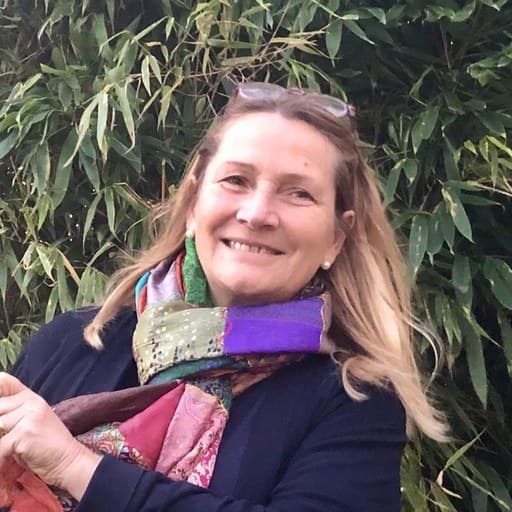
About the author
Valérie Fabre · Founder & Director, Harmonika Institute
Valérie Fabre founded Harmonika Institute in 2025, after a decade seeing clients in private kinesiology practice and, before that, thirteen years in international trade. A French-born polyglot who now splits her time between Dallas and Miami, she sets the school's curriculum and editorial standards and champions ethical, in-person training.
Read more about Valérie Fabre →