harmonikaInstitute
Contact us
Certified Access Bars Practitioner

Access Bars training and certification

Reviewed byTara N., CABP · Harmonika FacultyLast updated

Access Bars® is a gentle hands-on technique that targets thirty-two points on the head, said to release stored mental and emotional patterns. Harmonika Institute teaches it as a complete practitioner certification, with hours of paired practice, supervised public sessions, and a strong foundation in trauma-informed touch. You'll graduate able to offer the full 90-minute Bars session confidently and to integrate it with other modalities you may already practice.

Access Bars training in person at Harmonika Institute

Program at a glance

Credential
CABP
Tuition
$440
In-person training
1 day · 8h
Supervised practice
30h
Total
38h · ~5 day-eq.
Cohort size
10 students
Format
100% in person
Includes
Table-based work
Download detailed program (PDF)

PDF — modules, hours, faculty notes, and a typical week's schedule.

Access Bars training in the U.S.

Looking for an Access Bars practitioner certification, an Access Bars course, or training in the 32-point Access Consciousness Bars technique? Harmonika Institute's Certified Access Bars Practitioner (CABP) program is a structured, in-person training across ten U.S. cities. Over 15 days you learn the full 32-point protocol with hours of supervised practice, develop the trauma-informed touch that makes Access Bars work safely with real clients, and build the practice-craft to charge for the work. The program is independent of Access Consciousness LLC and offers a private certification that prepares you to run paid sessions; graduates who wish to pursue Access Consciousness's own credentialing pathway can do so as a complement to our program.

The modality

What is Access Bars?

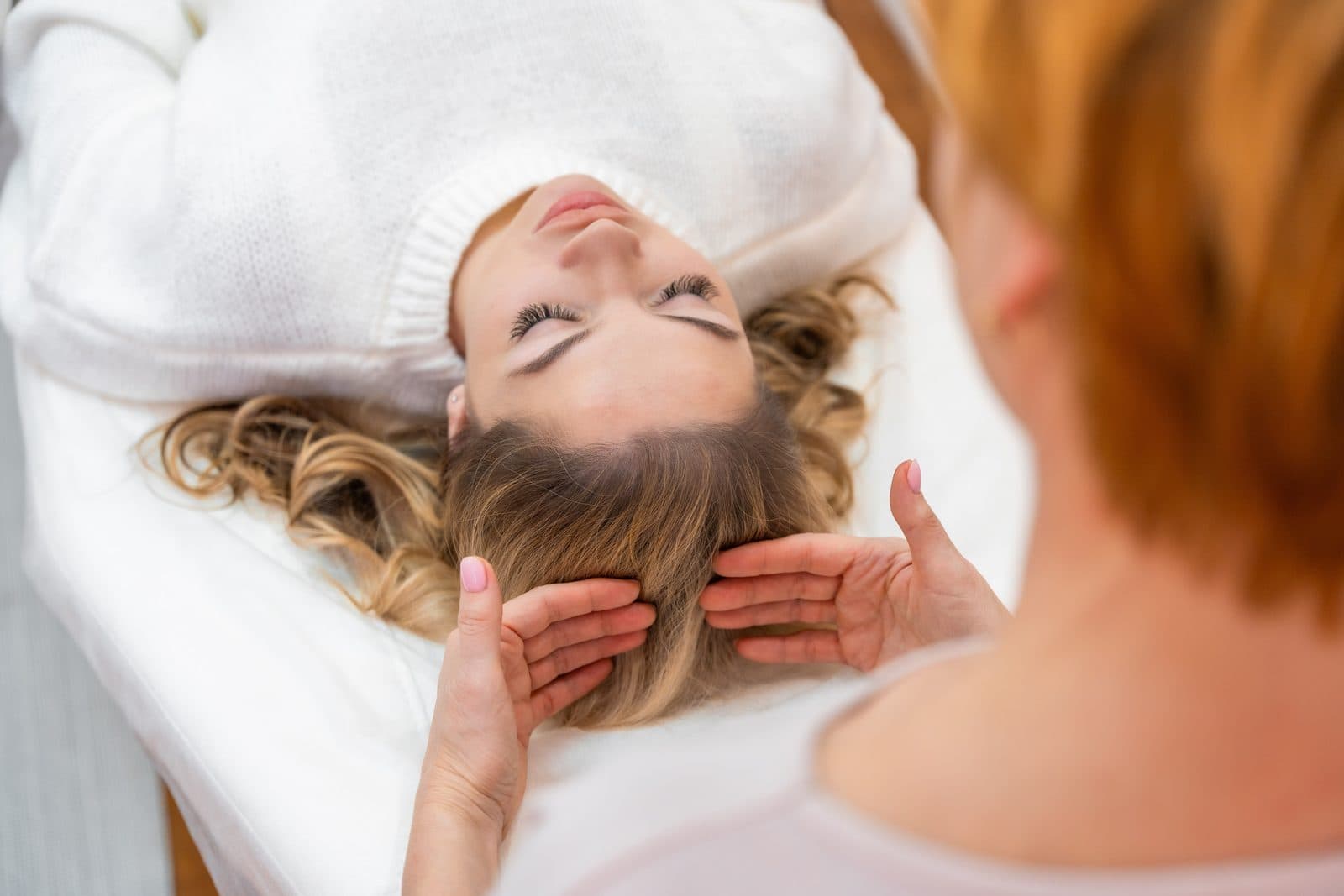
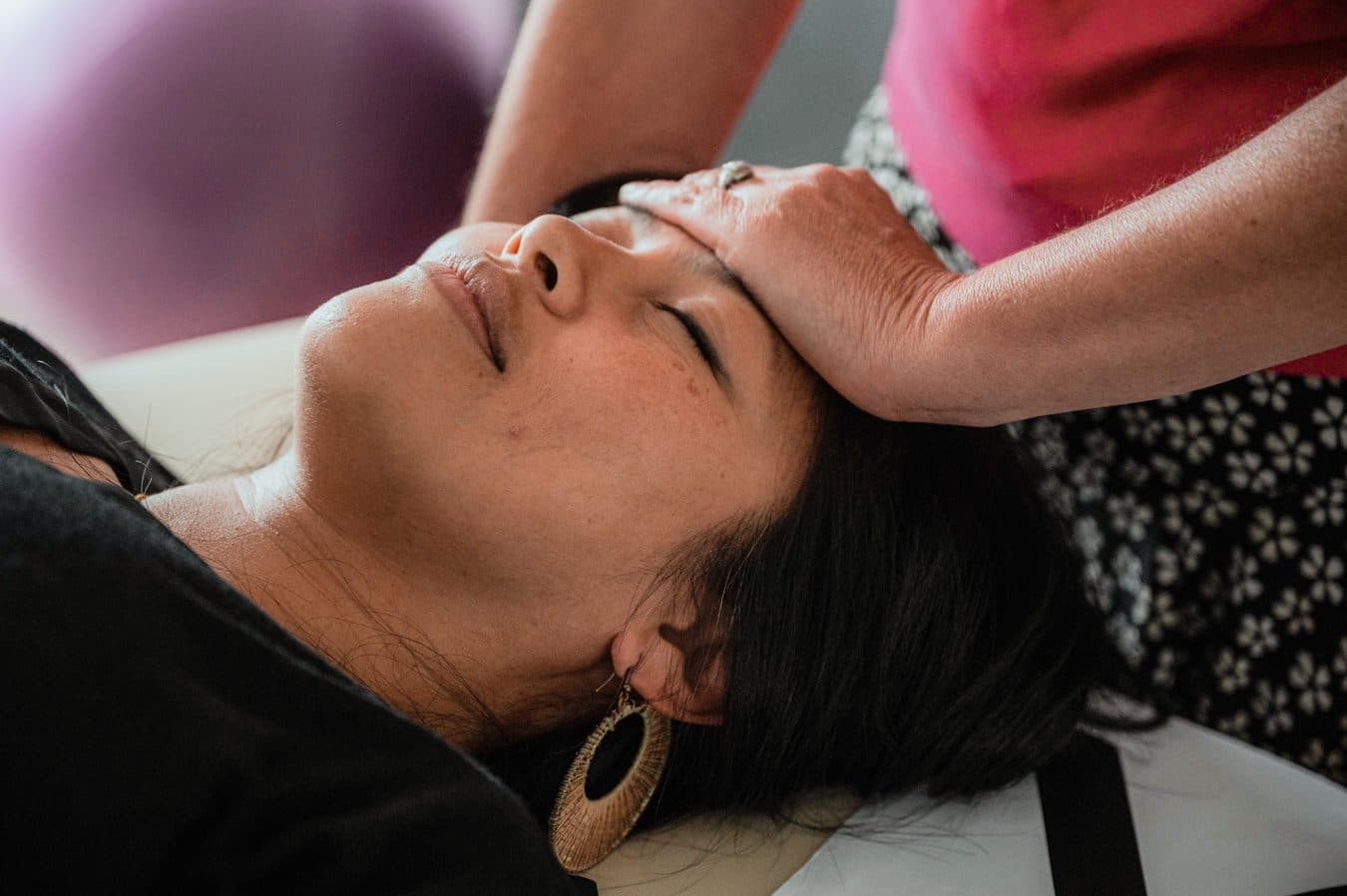
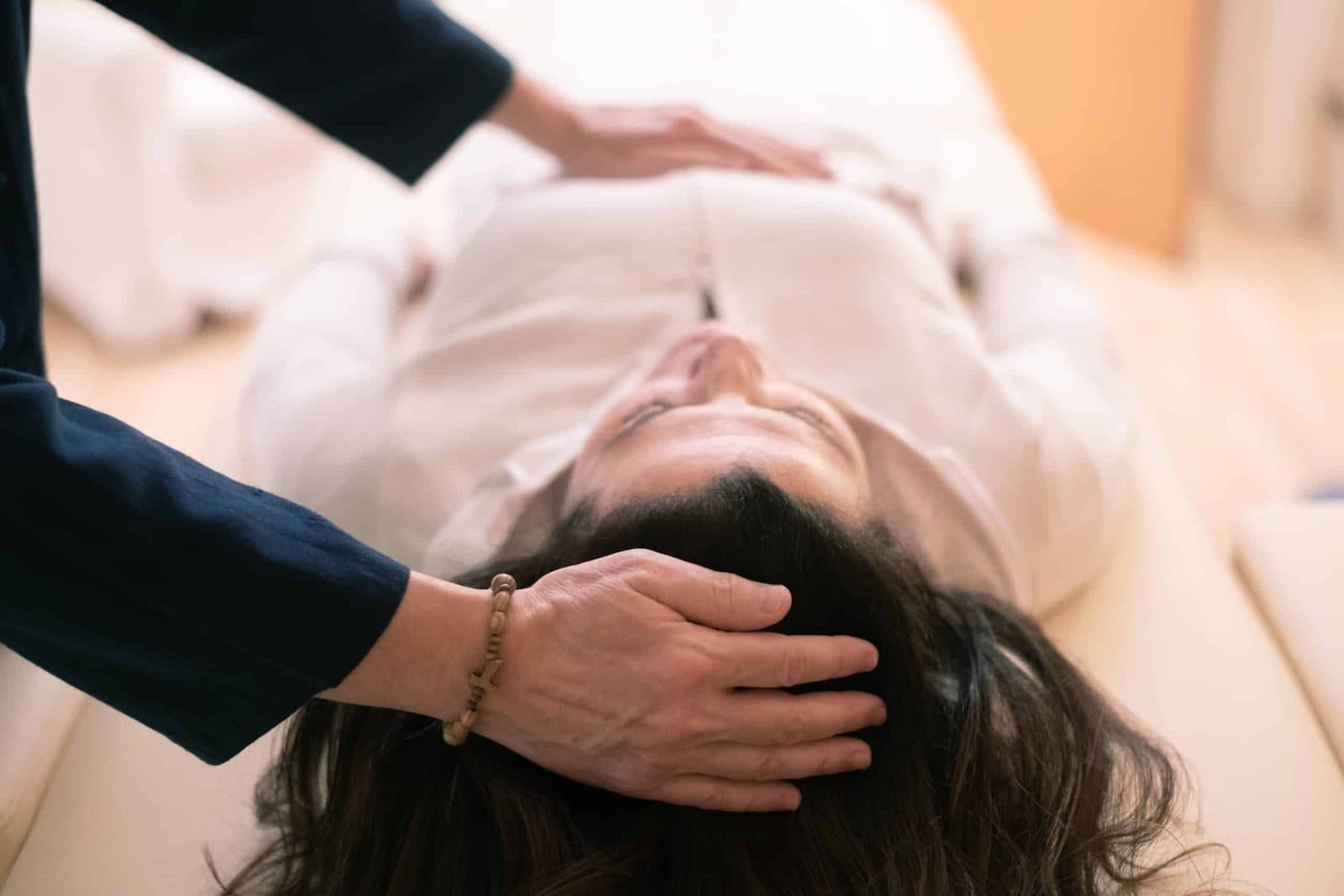
Access Bars® is a gentle hands-on technique developed by Gary Douglas in the early 1990s and now practiced by hundreds of thousands of people worldwide. The practitioner places their fingertips lightly on thirty-two specific points on the recipient's head — points said to correspond to different categories of stored thought, emotion, and pattern (money, control, creativity, awareness, time, and others). The recipient lies fully clothed on a massage table, eyes closed, while the practitioner moves through the points in sequence over a 60 to 90 minute session.

What recipients typically describe is something between deep meditation and a particularly restorative nap. Access Bars sessions are unusually gentle — there is no pressure, no manipulation, no conversation during the session itself — which makes the technique accessible to people who would never come to a more intense form of bodywork or energy practice. It is one of the most popular hands-on modalities in the U.S. wellness market.

Access Bars sits in an interesting position in the broader hands-on field. It is more structured than generic energy healing (you have a defined protocol of 32 points to work) and more accessible than Reiki (no attunements required, anyone can learn it). It is sometimes taught as a one-day workshop, which works for personal use but does not produce confident practitioners. A real Access Bars practitioner training requires hours of supervised practice, work with members of the public, and the development of a calm neutral state that holds steady through long sessions.

Harmonika Institute's program is designed for students who want to actually practice Access Bars professionally — to charge for sessions, run a business, and build a sustainable practice over years.

History & lineage

Where this work comes from.

Access Bars was developed by Gary Douglas in the United States in the early 1990s, as part of a broader Access Consciousness body of work. Today it is practiced in over 170 countries and remains one of the most rapidly-growing hands-on modalities in the global wellness market. The Access Consciousness organization itself runs a structured one-day class format that gives a basic introduction; it does not, on its own, prepare students for professional client work. Harmonika Institute's program is independent of Access Consciousness LLC. We teach the 32-point protocol with full attribution to Gary Douglas's original system, and we add the practice-hours, supervision, and business curriculum that turn an interest into a profession. Graduates may pursue Access Consciousness's own facilitator pathway as a complement to our certification.

Why structured training matters

Beyond books and weekend workshops.

Access Bars has a particular training problem. The classical Access Consciousness one-day workshop format is excellent for getting introduced to the work and giving sessions to friends and family. It is not, on its own, sufficient to run a paid practice. Most Access Bars practitioners who try to professionalize from a one-day class find themselves under-supported in scope of practice, intake protocol, contraindications, marketing, and the business of running an actual wellness practice. Our 15-day program closes that gap. We assume you want to practice professionally and we build the curriculum around that assumption.

What you'll learn

Skills you'll leave with.

The 38 hours of this program are built around the following competencies. Most are practiced rather than lectured.

  • All 32 Bars points and the order in which to work them
  • Trauma-informed touch and consent throughout the session
  • How to hold a relaxed, neutral state while running Bars
  • Combining Bars with breath, conversation, and aftercare
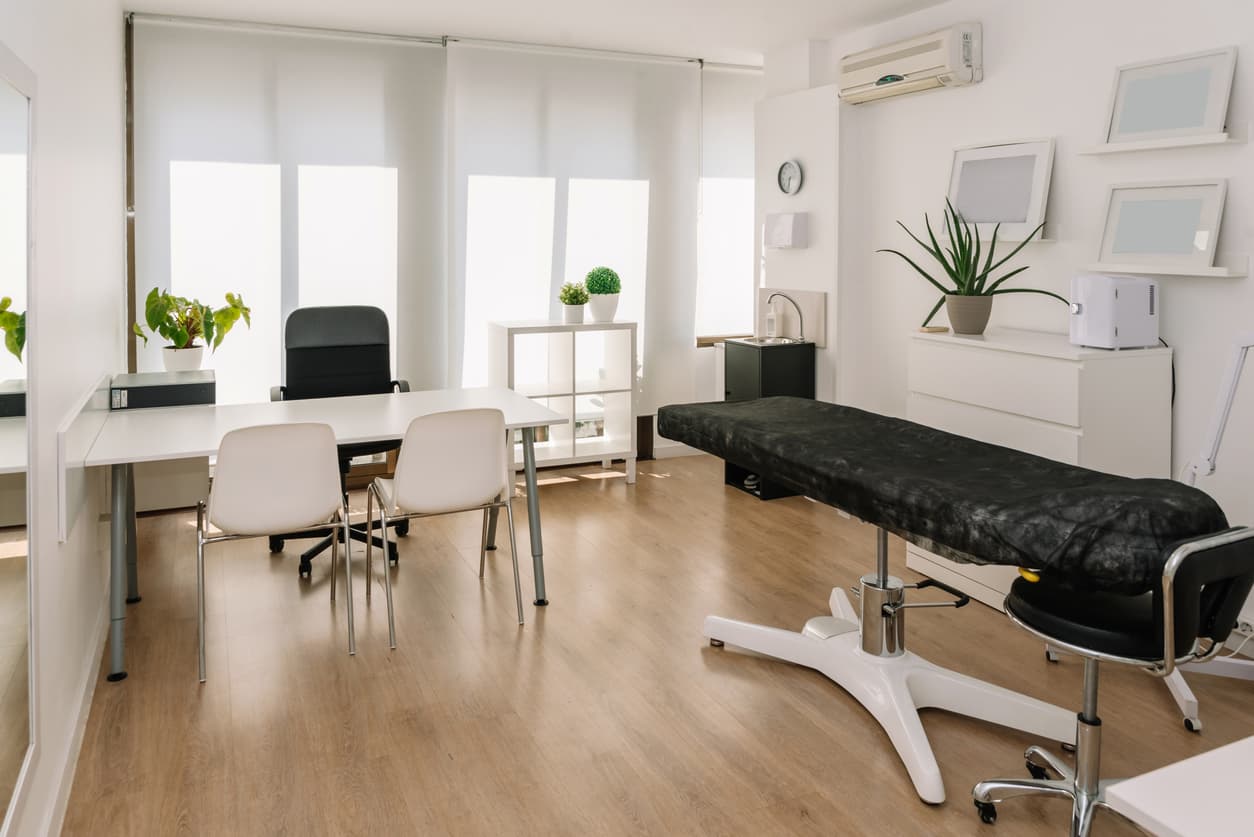
  • Setting up a comfortable, safe Bars table environment
  • Pricing and scheduling a Bars-centered practice
Curriculum

Module by module.

Module 1 — The 32 points

Anatomy, sequencing, depth and quality of contact.

Module 2 — Session container

Intake, consent, scope, and aftercare.

Module 3 — Integration

Working with emotion, fatigue, and difficult sessions.

Module 4 — Practice & business

Pricing, marketing, building referral networks.

Program highlights

Specifics that distinguish the Access Bars cohort.

01

32 points walked through individually

Each of the 32 Bars points gets dedicated attention with peer practice. By the end of the foundation weekend, you know every point by feel.

02

Independent of Access Consciousness LLC

Our CABP credential is a private Harmonika certification. Graduates who want Access Consciousness's facilitator pathway can pursue it separately; nothing in our program blocks that.

03

Trauma-informed touch as core

Even gentle modalities surface strong material in clients with trauma history. We give explicit pacing, consent, and referral training.

04

Supervised paid client work

Members of the public book Bars sessions during the program at student-rate; faculty observes, gives feedback after each session.

05

Practice-building from week one

Pricing, intake, marketing, and partnering with local studios are part of the curriculum. Most graduates have first paying client within weeks of certification.

Why this program

What makes our Access Bars training different.

Hours of supervised practice

You log dozens of supervised sessions on classmates and members of the public — not just the few that fit into a one-day format.

Trauma-informed touch

Even Access Bars's gentle protocol can surface strong material in clients. We teach explicit pacing, consent, and how to hold a session ethically when emotion comes up.

Independent certification

Our CABP credential is independent of Access Consciousness LLC. Graduates can pursue Access's own facilitator pathway separately if they wish; nothing in our program blocks that.

Practice-building included

Pricing, intake forms, marketing, scope of practice, and the legal boundaries of running an Access Bars practice in the U.S. are part of the curriculum.

Cohort of ten, in person

Touch is a craft. Our cohort size keeps every student under direct faculty observation through the full program.

A day in the practice

What working as a CABP actually looks like.

A working Access Bars practitioner two years out of our program: morning self-care, journaling, your own meditation. First session at 10am is a long-time client coming in for a 90-minute Bars session, $140. The session itself is mostly silent — the recipient drifts in and out of sleep — but the after-conversation runs another 15 minutes. You take a longer-than-usual lunch break: Bars sessions are gentle on the recipient but they ask for sustained calm presence from you, which is its own kind of work. Afternoon brings two more sessions, plus 30 minutes of admin. By 5pm you have run three sessions, grossed $420, and feel pleasantly tired in the way that good slow work makes you tired. Saturdays you sometimes run four-hour Access Bars practice exchanges with other practitioners — keeping your own work refined while building a referral network. Most weeks: ten to fourteen paid sessions, with steady demand because Access Bars sessions are unusually accessible to first-time wellness clients.

Career outcomes

After graduation.

  • Open a private Access Bars practice (CABP)
  • Offer Bars in spas, retreats, and wellness centers
  • Add Bars to a coaching, energy, or massage practice
  • Lead small-group practitioner exchanges
  • Continue toward advanced Access modalities
Career path

Trajectory and income for Access Bars practitioners.

Access Bars graduates often build practices faster than graduates of more demanding modalities, simply because Access Bars is unusually accessible to first-time wellness clients — people who would not come to a deep tissue massage or an energy healing session will often try a Bars session because it sounds gentle. This produces a steady client pipeline. Graduates typically combine private sessions ($90 to $160 for 60–90 minutes in major U.S. cities) with practitioner-exchange networks, occasional public introductions, and partnerships with spas or wellness retreats. A smaller number go on to teach the basic Access Bars one-day class themselves, after pursuing Access Consciousness's own facilitator credentialing. Annual gross income for full-time graduates ranges from $55,000 to $115,000 within three to five years.

How it compares

Access Bars compared to adjacent modalities.

Access Bars vs. Reiki

Access Bars works only on the head with a defined 32-point protocol; Reiki works the full body with positional flexibility. Bars is more accessible to first-time wellness clients; Reiki has deeper lineage and more breadth of application.

Access Bars vs. Cranial-Sacral Therapy

Both are gentle, head-focused, and table-based, but cranial-sacral is rooted in osteopathic anatomy and works with subtle skull and dural movements; Access Bars is rooted in the Access Consciousness energetic framework and works with the 32 specified points.

Access Bars vs. Energy Healing

Access Bars is a more specific, protocol-driven technique with a defined session arc; generic Energy Healing is open-ended and felt-sense-led. Many practitioners offer both.

Evidence & research

What the research says about Access Bars.

We teach with intellectual honesty. Where the evidence is strong, we say so. Where it is weak, we say that too. Our credibility — and our graduates' — depends on it.

Access Bars has been the subject of two preliminary research studies, both published in 2018 and 2019 by researchers affiliated with Access Consciousness. One study (Bradshaw et al., 2018) found measurable improvements in self-reported anxiety and depression in 60 participants after a single Bars session. A second small study examined EEG changes during Bars sessions and reported shifts toward relaxation-associated brainwave patterns. These studies are preliminary, were conducted by researchers with ties to the modality, and have not been replicated by independent researchers. The broader research on gentle touch as a category — well-studied across modalities including hand-holding, gentle massage, and similar — supports the kinds of outcomes Bars practitioners and clients report (lowered cortisol, increased parasympathetic activation, reduced subjective anxiety). We teach Access Bars at Harmonika Institute with intellectual honesty: the modality-specific evidence is preliminary, the broader gentle-touch evidence is solid, and graduates speak about the work with credibility rather than over-claiming.

Common misconceptions

What people get wrong about Access Bars.

Myth

One day of training is enough to practice Access Bars professionally.

Reality

The classical Access Consciousness one-day class introduces the technique. It is not enough to run a paid practice with confidence. Real practice requires hours of supervised work — exactly what our 15-day program provides.

Myth

Access Bars is a religion or cult.

Reality

The Access Consciousness organization has its own broader teachings beyond Bars, some of which are controversial. Bars itself is a hands-on technique that we teach independently of those broader teachings. Our CABP credential is independent of Access Consciousness LLC.

Myth

Access Bars works on everyone the same way.

Reality

Like any hands-on modality, results vary between individuals. Some clients respond strongly; others find the work pleasant but unremarkable. We teach honest expectation-setting as part of the practitioner craft.

Myth

Bars doesn't require trauma-informed pacing because it's so gentle.

Reality

Even gentle touch can surface strong material in clients with trauma history. We teach explicit trauma-informed pacing and consent as core curriculum.

Can I learn this on my own?

Self-study vs. structured Access Bars training.

A question we get from many applicants. Here is the honest answer.

Can you learn Access Bars on your own? Not really — the technique requires the 32 specific points to be located accurately, and learning the points reliably from a book or video is significantly harder than it sounds (the points overlap, the head's anatomy varies between people, and the touch quality matters). The classical Access Consciousness one-day class is the standard introduction and remains a useful starting point. What that one-day format does not provide is the supervised practice hours, the trauma-informed pacing, and the practice-building curriculum that turn an introduction into a working practice. Some students attend a one-day class and successfully add Bars to an existing wellness practice; many find that they cannot confidently run a paid 90-minute Bars session on a member of the public without further training. Our 15-day program closes that gap. We assume you want to charge for sessions and we build the curriculum around the supervised hours, the scope-of-practice clarity, the contraindications, and the marketing skill that supports a real practice. The classical one-day class gives you the protocol; we give you the practitioner.

What graduates carry forward

Beyond the certification.

Graduates of our Access Bars program carry forward a specific kind of accessibility in their practice. Bars sessions are unusually approachable to first-time wellness clients — people who would not come to a deep-tissue massage, an intense breathwork session, or an energy healing appointment will often try Bars because the technique sounds gentle and the experience matches the description. That accessibility translates into a steady client pipeline that grows quickly relative to more demanding modalities. Many of our Access Bars graduates use the practice as the doorway through which they introduce clients to broader holistic work over time. The career builds on the gentle entry point.

Key concepts & people

The Access Bars vocabulary you'll learn.

These are the lineages, named teachers, frameworks, and technical terms our curriculum draws on. By graduation, you'll know each of them in depth.

System

Gary Douglas
Founder of Access Consciousness; developed the 32-point Bars system in the early 1990s.
32 Bars points
Specific points on the head said to correspond to thought categories.
Access Consciousness
The broader body of work that Bars sits within.

Point categories

Money / Control
Two of the 32 thought-category points.
Creativity / Awareness
Two further category points along the head.
Time / Space
Pair of points related to temporal experience.
Books & further reading

Recommended reading on Access Bars.

These are the books our faculty actually recommend to enrolled students — not a comprehensive bibliography, but a practical starting point.

Access Consciousness Foundation Manual

Gary Douglas et al.

The official Access Consciousness foundation text, available through Access Consciousness LLC. Complement to our independent CABP curriculum.

The Body Keeps the Score

Bessel van der Kolk

Essential reading on trauma-informed touch. Not Access-specific, but the framework should inform every practitioner working with bodies.

Waking the Tiger

Peter Levine

Foundational somatic-experiencing text. Builds the framework for the trauma-informed work that gentle modalities like Bars require.

Touch in Psychotherapy

Edward Smith and Pauline Clance

Academic but essential. Frames consent and ethical touch in ways every Bars practitioner needs.

The right student

Is this program for you?

People drawn to structured, gentle hands-on work who want a calm, low-pressure modality to anchor their practice.

Prerequisites

What we expect on day one.

None.

Tuition & financing

$440 for the full 5-day program.

Tuition covers 1 days of in-person teaching, 30h of supervised practice, and one year of post-graduation support. Interest-free monthly installments. A 25% deposit confirms your cohort spot.

$440

38h total · 1 in-person days · cohort of 10

People also ask

Common questions about Access Bars training.

How long does the Access Bars training take?

15 days from start to graduation, in person, in your city.

Is this Access Bars certification recognized by Access Consciousness?

Our CABP credential is an independent Harmonika Institute certification. It is not issued by Access Consciousness LLC. Graduates who wish to pursue Access Consciousness's own facilitator pathway can do so separately; the two credentials are complementary, not competing.

Do I need any prior training to enroll?

No. Access Bars is an accessible technique to learn; what we teach beyond the technique is the practice craft.

More questions

Can I run paid Access Bars sessions after the program?+

Yes. As a CABP you run paid wellness sessions immediately. Most students take their first paying client during the program itself.

How much does the program cost?+

Total tuition is $4,500, with monthly payment plans available across the 15 days of the program.

Is this in-person or online?+

Fully in person — Access Bars cannot be effectively learned online.

Will I be able to teach Access Bars classes after this?+

Teaching Access Bars itself requires Access Consciousness's facilitator credentialing, which is separate from our program. We focus on preparing you to practice; many of our graduates pursue facilitator credentialing afterwards.

Are sessions usually 60 or 90 minutes?+

Both are common. We teach both formats and let students develop their own preference. Most working practitioners settle on 75 or 90 minutes for paid sessions.

Who is Access Bars right for?+

Practitioners drawn to gentle, structured, low-pressure work. It is particularly popular among practitioners who already do coaching, energy work, or yoga teaching and want an accessible body-based modality to add to their offering.

Where it's taught

Access Bars is offered in 32 cities.

Northeast

New York

New York

Access Bars in New York

West

Los Angeles

California

Access Bars in Los Angeles

Midwest

Chicago

Illinois

Access Bars in Chicago

South

Miami

Florida

Access Bars in Miami

South

Houston

Texas

Access Bars in Houston

Northeast

Boston

Massachusetts

Access Bars in Boston

South

Atlanta

Georgia

Access Bars in Atlanta

Pacific Northwest

Seattle

Washington

Access Bars in Seattle

Mountain West

Denver

Colorado

Access Bars in Denver

South

Austin

Texas

Access Bars in Austin

Mid-Atlantic

Philadelphia

Pennsylvania

Access Bars in Philadelphia

Mid-Atlantic

Washington

District of Columbia

Access Bars in Washington

Southwest

Phoenix

Arizona

Access Bars in Phoenix

Midwest

Detroit

Michigan

Access Bars in Detroit

West

San Francisco

California

Access Bars in San Francisco

West

San Diego

California

Access Bars in San Diego

Midwest

Minneapolis

Minnesota

Access Bars in Minneapolis

South

Tampa

Florida

Access Bars in Tampa

Southwest

Las Vegas

Nevada

Access Bars in Las Vegas

Mid-Atlantic

Baltimore

Maryland

Access Bars in Baltimore

Midwest

St. Louis

Missouri

Access Bars in St. Louis

Pacific Northwest

Portland

Oregon

Access Bars in Portland

South

San Antonio

Texas

Access Bars in San Antonio

West

Sacramento

California

Access Bars in Sacramento

South

Orlando

Florida

Access Bars in Orlando

West

San Jose

California

Access Bars in San Jose

Midwest

Indianapolis

Indiana

Access Bars in Indianapolis

Northeast

Pittsburgh

Pennsylvania

Access Bars in Pittsburgh

Midwest

Cincinnati

Ohio

Access Bars in Cincinnati

Southeast

Charlotte

North Carolina

Access Bars in Charlotte

Southeast

Nashville

Tennessee

Access Bars in Nashville

South

Dallas

Texas

Access Bars in Dallas

Next step

Become a Certified Access Bars Practitioner.

Talk with our admissions team about the next Access Bars cohort starting in your city.