Journal · Training · Choosing a program
Online vs In-Person Holistic Training: What Actually Works
A balanced decision guide to online and in-person holistic training: which modalities fit each format and why, how to evaluate a live online program, and how to choose for your situation.
Valérie Fabre, Founder & Director, Harmonika Institute · December 10, 2025 · 6 min read

Online holistic training has grown fast, and the quality range is wide. Some programs are live, small and demanding; others are a video library with a certificate attached. In-person training shows the same spread. So the useful question is rarely online or in person in the abstract. It is which format fits the core skill of the modality you want to learn, and how to recognise a strong program in that format.
This guide walks through what each format does best, modality by modality. We cover what live online training excels at, where in-person training earns its place, how Harmonika Institute assigns one format to each of its programs, how to evaluate an online program honestly, and how to make the format choice that fits your situation.
The decision matters financially and educationally. Matching the format to the modality gives you stronger skills for the same budget, and it often lowers total cost through less travel or fewer days away from work. Walk through this decision deliberately rather than defaulting to whatever feels most convenient.
What live online training does well
Live online formats excel at: theory taught in real time with questions answered on the spot, consultation practice by video, geographic reach, lower travel cost, and schedules that fit around a working week. Many clients now prefer to meet practitioners by video, so practising consultations on video trains the exact setting many graduates will work in.
Subjects that work especially well live online: nutrition and lifestyle frameworks, herbal monographs and preparations, essential-oil chemistry and blending logic, emotional-state systems such as the Bach Flower Remedies, personality and communication frameworks, ethics and scope of practice, business and marketing.
The delivery mode matters more than the label. Live, synchronous classes with a small cohort let faculty watch you run a consultation, stop you mid-question and ask you to try again. Recorded modules deliver information; live cohorts deliver practice with feedback.
Online formats also suit continuing education once you hold a certification: short courses in adjacent topics, case discussion groups, and theoretical deepening, with little travel and little time away from clients.
What in-person training does best
In-person formats are strongest wherever the skill lives in the body or in the room: quality of touch, pressure and hand position, energy work at the table, instrument technique and volume, reading a group's physical state, and responding calmly to strong emotions as they surface.
Specific skills that benefit most from a shared room: grading pressure in reflexology, correcting hand height and posture in Reiki, calibrating a gong to a room, reading trance depth from small physical cues, and holding a group that is making art with real materials.
These skills sit at the heart of hands-on modalities. A school serious about them teaches them where a teacher can see, hear and sometimes feel the work, and correct it in the moment.
In-person cohorts also create a strong rhythm: fixed dates, classmates expecting you, and practice partners outside your circle of friends. That structure supports steady practice between teaching days.
Modality-by-modality breakdown
Touch-based practices (reflexology, acupressure, Chi Nei Tsang, kinesiology): in person. Pressure, contact and body mechanics are learned with an instructor beside the table.
Energy work (Reiki, energy healing, magnetism, crystal healing, Access Bars): in person. Lineages hold different views on distance attunement, and the correction of posture, pacing and contact happens best at the table.
Sound healing: in person. Volume, low frequencies and room acoustics change through a recording chain, so calibration happens next to the instruments.
Hypnosis, NLP, EFT and breathwork: in person at Harmonika. The verbal craft travels well online, and reading physical cues and strong emotional responses benefits most from a room.
Coaching, facilitation and contemplative practices (holistic life coaching, nonviolent communication, expressive arts, mandala, creative journaling, mindfulness instruction): both formats exist in the wider market. We teach these in person because each blends conversation with somatic, group or material-based work. Ayurveda is also taught in person, where observation skills and self-practice benefit from a shared room.
Communication and personality frameworks (Transactional Analysis, Enneagram): live online works very well. The work is conversational, and typing interviews and coaching conversations practise naturally by video.
Consultation and knowledge-based practices (Holistic Naturopathy, Aromatherapy, Phytotherapy, Bach Flower Remedies, Bioresonance): live online works very well. Intake, listening, recommendation and follow-up are conversational skills, and the knowledge base is substantial and well suited to live teaching with a small cohort.
One format per program: how Harmonika decides
Each of our 28 programs is taught in one format, 100% in person or 100% live online. 21 programs are taught in person, in cohorts of 10, across 32 U.S. cities. 7 programs are taught 100% live online, in cohorts of 15, through live synchronous classes held in weekend sessions: Holistic Naturopathy, Aromatherapy, Phytotherapy, Bach Flower Remedies, Transactional Analysis, Bioresonance and Enneagram.
Program length is counted in teaching days of 8 hours, run as two 4-hour half-days. Among the online programs, Bach Flower Remedies runs 3 teaching days (24 hours) and leads to the Certified Flower Remedies Practitioner (CFRP) credential; Aromatherapy, Phytotherapy, Transactional Analysis and Enneagram run 6 teaching days (48 hours); Bioresonance runs 7 (56 hours); Holistic Naturopathy runs 8 (64 hours). Every certification we award is a private certification.
Many schools run hybrid programs, with theory online and practice in person. A hybrid works well when its in-person block is substantial and spent on practice. We chose a single format per program so that each one is designed end to end for the setting where its core skill is best learned.
The practical upshot: if the core skill is touch, energy at the table, sound in a room or group work with materials, choose in person. If the core skill is consultation, framework knowledge or conversation, a live online cohort is a strong and convenient choice.
How to evaluate an online program honestly
Live or recorded. Ask what share of teaching hours is live and synchronous, with faculty present. Recorded material is useful for review; live classes are where questions, practice and correction happen.
Cohort size. Ask how many students share one instructor in live sessions. A cohort of around fifteen lets every student practise and be seen; a class of a hundred works more like a webinar.
Practice with feedback. Ask how many times you will run a consultation or an exercise while faculty watch, and how the feedback reaches you. A clear number is a strong sign of a well-designed program.
Scope and credential. Ask what the certificate is (a private certification, a licence, or a membership) and what the program teaches about scope of practice, referral and the language you can use with clients. Strong programs answer these questions in writing.
Self-assessment for the format choice
Start with the modality. Touch, energy at the table, sound and group work with materials point to in person. Consultation, frameworks and conversation point to live online.
Then look at your situation. Live online suits people far from a cohort city, working professionals, caregivers, and anyone who prefers to learn from home on weekends. In person suits people who want a shared room, fixed dates and a local cohort.
Consider how you learn best. Some learners thrive on video and focus well at home. Others learn fastest with classmates around them. Both are valid, and knowing which describes you helps you choose well within the format that suits the modality.
Be concrete about constraints: travel time, weekends available, budget and career timeline. Then compare programs against those constraints and the evaluation questions above.
Finally, compare total cost, not tuition alone. In-person training adds travel; live online training asks for a quiet space, a reliable connection and a camera. Both are real costs worth planning for.
What strong programs look like in each format
Strong in-person programs give you many hours of practice with an instructor in the room, frequent correction, and practice partners who are not your friends. Graduates leave with calibrated hands, a steady presence and the confidence to run a full session.
Strong live online programs give you real-time teaching, a small cohort, regular consultation practice with feedback and a solid knowledge base. Graduates leave comfortable running consultations by video, which is how many clients prefer to meet.
Strong hybrid programs combine both when the in-person time is substantial and dedicated to practice.
Weaker programs exist in every format. Program design, cohort size and faculty attention predict quality far better than the delivery channel does.
Questions on this topic.
Can I get fully certified online?+
Yes, for modalities whose core skill is consultation or conversation. At Harmonika, Holistic Naturopathy, Aromatherapy, Phytotherapy, Bach Flower Remedies, Transactional Analysis, Bioresonance and Enneagram lead to a private certification taught 100% live online, in cohorts of 15. Hands-on modalities such as Reiki, reflexology and sound healing are taught 100% in person, in cohorts of 10, because their core skills are best corrected in a room.
Is hybrid better than fully online or fully in person?+
It depends on the modality and the design. A hybrid works when its in-person block is substantial and dedicated to practice. A single-format program designed end to end for its modality can be just as strong. Compare live hours, cohort size and practice with feedback rather than the format label.
How do I evaluate an online program's quality?+
Check four things: the share of live, synchronous teaching; the cohort size in live sessions; how often you practise with faculty feedback; and what the program teaches about scope and referral. Programs that give clear answers on all four are usually well designed.
What about programs that offer 'certification' after watching videos?+
Recorded courses can be a good introduction and a low-cost way to test your interest. For a certification you plan to use with clients, choose a program with live teaching and practice with feedback, in the format that suits the modality.
Can I do online theory then add in-person hands-on later?+
Some schools offer staged paths. For hands-on modalities, the in-person practice is the part that builds the skill, so plan for it from the start. For consultation-based modalities, a live online program can be complete on its own.
Tags:
TrainingChoosing a programOnline learningEducation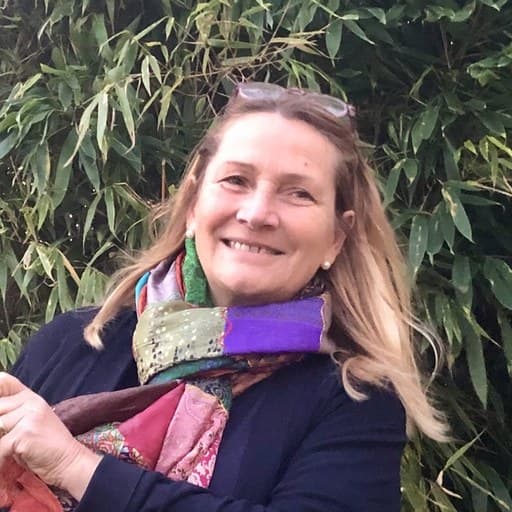
About the author
Valérie Fabre · Founder & Director, Harmonika Institute
Valérie Fabre founded Harmonika Institute in 2025, after a decade seeing clients in private kinesiology practice and, before that, thirteen years in international trade. A French-born polyglot who now splits her time between Dallas and Miami, she sets the school's curriculum and editorial standards and champions ethical, in-person training.
Read more about Valérie Fabre →