Journal · Scope of practice · Certification
How Practice Hours Are Logged and Why They Decide Your Competence
In a field with no accreditation, logged practice hours are the only honest proof of competence. What a logbook must record, and who will ask to see it.
Valérie Fabre, Founder & Director, Harmonika Institute · April 15, 2026 · 10 min read

Key takeaways
- Hours are a proxy, not a guarantee. The least dishonest measure available in a field with no national accreditation, and only when supervised, documented, and varied.
- Classmate hours are worth a fraction of a stranger hour. Classmates are forgiving, already convinced, and share your vocabulary. None of that holds in your treatment room.
- Insurers ask. Liability underwriters and the venues that rent you a room want training hours and supervised session counts before they sign. A certificate with no hours behind it is a weak document.
- A usable logbook records eight fields per session. Date, duration, relationship to you, the presenting reason in their words, what you did, what you noticed, supervisor initials, and whether you referred out.
- Around 40 to 60 supervised sessions is where most practitioners stop reciting a protocol and start responding to the person in front of them. Below 20, almost nobody is there.
A graduate emailed us last spring with a problem she hadn't expected. A yoga studio in Denver was ready to rent her a room two days a week, and the studio's insurer wanted, in writing, the number of client sessions she had completed. She had done the work, roughly fifty sessions. What she didn't have was a record anyone else could read, because she'd tracked them in a notes app with entries like "Tues, went well." Three weeks of reconstructing dates from her calendar. She got the room. She very nearly didn't.
This is the unglamorous centre of a question people ask us constantly on admissions calls: how do you know your graduates are any good? In a field with no state licensure, no board exam, and no accrediting body with teeth, the honest answer isn't a claim about our philosophy. It's a number, and the record behind it.
Why hours became the fallback measure
In regulated professions, competence is certified by an external body that sets a curriculum, examines candidates, and can strike people off. Nursing has that. Physical therapy has that.
Holistic practice mostly doesn't. Reiki has no licensing board anywhere in the United States. NLP has several competing certifying organisations with no common standard between them. Hypnosis certification is issued by dozens of private bodies whose requirements range from a two-day course to several hundred hours. Reflexology and naturopathy are the exceptions where some states have built real credentialing structures, and even there it varies enormously by state.
So what's left? Four candidate proxies, and three are close to worthless.
| Proxy | How easy to fake | What it actually measures | Verifiable by a third party? |
|---|---|---|---|
| The certificate itself | Trivial | That you paid and attended | No |
| "Accredited" badge | Easy: many bodies were school-created | Usually a membership fee | Sometimes |
| Written or online exam | Moderate | Recall of theory, not conduct | Partially |
| Contact hours taught | Moderate: padded with lecture | Exposure to material | Sometimes |
| Supervised, documented hours | Hard, if the log names a supervisor | Repetitions with real people, corrected | Yes |
The bottom row isn't good because hours are magic. Someone can sit through 200 hours and learn very little. It's good because it is the only row that produces an artefact another party can inspect and cross-check. A document a sceptical insurer can pick apart is worth more than a badge a school designed for itself.
The three conditions that make an hour count
An hour on its own means nothing. Three qualifiers turn it into evidence.
Supervised
Someone experienced sat in the room, watched a recording with consent, or debriefed the session with you in enough detail to catch what you missed. Unsupervised practice builds fluency, but it also builds your errors into muscle memory. You can spend eighty unsupervised hours getting better at doing something slightly wrong.
The corrections that matter are almost never technical. They're things like: you talked over her three times in the first ten minutes. You promised a result. You didn't notice he stopped breathing normally when you moved to his left shoulder.
Documented
Written at the time, in a consistent format, with enough detail that you could reconstruct the session two years later and someone else could audit the pattern. Memory is not documentation. Neither is a spreadsheet with dates and nothing else.
Varied
Across different people, presenting reasons, levels of scepticism, bodies, ages. Forty sessions with the same four willing friends is four sessions of learning repeated ten times.
The month-three tell
Ask any faculty member which students worry them and you'll get the same profile: the technically excellent one whose logged hours are all with people who like her. She has never had someone fold their arms, ask what the evidence is, and wait. The first time it happens she is in her own rented room with a paying client and nobody to debrief with.
Why practising on classmates is a weak substitute
Every school does peer practice, including us. It's how you learn a sequence without terrifying a stranger, and it's the only ethical way to make your first fifteen mistakes. But peer hours have four structural problems, and schools that fill an entire hours requirement with them are quietly selling a much smaller education than the number suggests.
Your classmate wants you to succeed, and won't tell you the session felt rushed, because she has to sit next to you tomorrow. She already accepts the premise of the modality, so you never practise explaining yourself to someone who doesn't. She speaks your new vocabulary, so you never discover that "let's work with what's held in the tissue" means nothing to a 54-year-old warehouse supervisor. And she is, statistically, a woman in her forties considering a career change: one narrow slice of the people who will walk through your door.
Practitioners describe their first non-classmate session as the moment the training stops being a course. That discomfort is the curriculum. A school that lets you avoid it until after you've certified has handed you the discomfort and taken away the supervision.
| Hour type | What it builds | What it can't build | Sensible share of your log |
|---|---|---|---|
| Peer practice, unobserved | Sequence, hand position, timing | Anything about the person | 15–25% |
| Peer practice, observed | Habit correction before it sets | Doubt or resistance | 15–20% |
| Faculty demo you assisted | How a practitioner opens and closes | Your own nerve | 10% |
| Stranger sessions, supervised | Intake, boundaries, referral, closing | Pricing and rebooking | 35–45% |
| Paid, post-certification | Economics and follow-through | Nothing you needed earlier | Comes after |
What a logbook should actually record
Most student logs fail the same way: they record that a session happened and nothing about what was in it. Here is the minimum set of fields that produces a record with evidential weight, at about four minutes per session.
- 1
Date, start time, duration
Actual duration, not scheduled. Consistent overruns mean you can't close a session, and that's a skill you can be taught.
- 2
Client identifier and relationship
Initials or a code, never a full name. Then: classmate, friend, family, referred stranger, walk-in. This is what lets anyone assess whether your hours were varied or cosy.
- 3
Presenting reason, in their words
Quote them. "Neck's been bad since I changed desks" is data. "Client sought balance" is you writing about yourself.
- 4
What you did
Technique, sequence, adaptations, anything you skipped and why. Enough that a supervisor can picture the session.
- 5
What you noticed
In them and in yourself. Students skip this field and supervisors read it first. "I got anxious when she cried and started talking to fill it" is the most useful sentence a trainee ever writes.
- 6
Scope and referral
Did anything come up outside what you do, what did you say, and did you refer? A log with zero referrals across sixty sessions is a warning sign, not a clean record.
- 7
Supervisor initials and date of debrief
The field that converts a private diary into third-party evidence. Unsigned entries still help you. They just aren't proof to anyone else.
- 8
Consent noted
That the person knew you were a student, knew the session was supervised training, and agreed to a record being kept.
Records and privacy
A logbook contains information about identifiable people, so treat it accordingly: initials or codes rather than names, no health details you don't need, storage that isn't a shared phone, and explicit consent. Do not describe your entries as clinical notes or medical records, and do not write in diagnostic language. You are recording a session you delivered, not a condition you assessed. Rules on personal data and record-keeping differ by state and by setting, and they change. Check yours.
Who asks to see your hours, and when
Students assume the logbook is a school formality that dies at graduation. Four different parties come looking for it.
Professional liability insurers. Underwriters want your training hours, sometimes your supervised session count, and always the modality described precisely. With a signed log, a quibble becomes a formality. With only a certificate and no hours on it, you may be quoted a higher premium or declined for the activity you intend to do. We've covered this in our guide to liability insurance for holistic practitioners.
Venues renting you space. Yoga studios, shared wellness suites, chiropractic offices with a spare room, corporate wellness programmes. Their own insurance often obliges them to document the credentials of anyone practising on their premises.
Membership and professional bodies. Voluntary registers exist across most modalities, and the credible ones set an hours threshold for entry and a continuing-practice requirement to stay on.
Yourself, two years later. When you're deciding whether to raise your price, add a modality, or narrow your specialty, sixty logged sessions tell you what you're good at, who comes back, and where you run over. Most practitioners guess at this. The ones with records don't have to.
What supervision costs
This is the real reason cheap certification is cheap. Teaching thirty people in a lecture room costs almost nothing per head. Watching one student work and debriefing her costs an experienced practitioner's hour, every time, and cannot be scaled. Across the U.S. market, programmes with genuine supervised hours generally sit in the low thousands where weekend certificates sit in the hundreds. You aren't paying for better information. You're paying for someone's attention while you work.
Where our programs fit
Our own path has four steps. Apply. Train live with faculty, in person or fully live online depending on the program. Study and practise between sessions, about four hours for every five teaching hours on average. Certify and practice.
The teaching hours are the only hours we quote for our programs. The log this article describes is your own record, and it is worth starting while you train, because a certificate on its own is a claim about attendance and a readable record of your sessions is a claim about conduct.
Our in-person cohorts of ten (fifteen in our live online programs) exist for this reason and no other. One faculty member cannot meaningfully observe thirty people working and debrief them individually, and a school that says it can is describing a group discussion. At ten, a student can be watched properly, more than once.
Reading another school's hours claim
You'll see hour counts on every programme page in this field. Most are close to meaningless as written. Four questions separate a real number from a marketing one, and you can ask all four on a fifteen-minute call.
How many of those hours are supervised, and by whom? If the answer is a total with no breakdown, the breakdown is unflattering. How many are with people who are not enrolled students? That one produces the longest pause: some excellent programmes answer "eight" and explain why, while expensive ones say "peer practice is very rigorous" and never give a number.
Who signs the log, and what do they check? A supervisor who initials a stack of forms at the end of term is not supervising. And finally: will I leave with a record I can show an insurer? If the school has never been asked this, that tells you something. Our 12-point checklist for evaluating training programmes covers the rest, and the admissions-call questions gives you the exact phrasing.
On the number itself
Be careful with anyone who quotes a precise threshold. No published research establishes how many supervised sessions produce a competent holistic practitioner: nobody has run that study, and the outcome would be hard to define. The 40 to 60 range here is a pattern faculty observe, not a finding. Treat it as a working figure for comparing programmes, and be suspicious of any school that presents a magic number as established.
Keeping records that hold up
Three habits, learned from graduates who wished they'd started earlier.
Write the entry within an hour. Not that evening. Detail decays fast, and the field that matters most, what you noticed in yourself, is gone by dinner.
Keep one continuous log across your practising life, not a training log and then a separate practice log. Insurers renew annually and registers ask for recent activity. One running record answers both without archaeology.
Back it up somewhere that isn't your phone, and keep the format boring. A spreadsheet with one row per session and the eight fields as columns will still open in ten years. Proprietary wellness apps come and go.
Questions on this topic.
Do practice hours count if the client didn't pay?+
Yes, and unpaid stranger sessions are often better training than paid ones because you can concentrate on the work rather than on justifying a fee. What matters is that the person was outside your course, knew you were a student, consented to supervised training, and that the session was documented and debriefed. Insurers and venues ask about supervised session counts, not revenue. Keep the unpaid status noted, because it explains the arc of your early practice.
Can I log hours from a modality I trained in previously?+
Keep them in the same running record, but don't present them as hours in your new modality. They're not interchangeable. A yoga teacher with 900 teaching hours brings real transferable skill in reading a room, and none of it substitutes for supervised one-to-one hours in reflexology or hypnosis. Log them under their own heading, count them separately, and be precise when an insurer asks. Blurring the two is the kind of thing that voids a policy.
What if my school doesn't require a logbook at all?+
Keep one anyway, starting on day one. You lose the supervisor signature, which is the part that makes it third-party evidence, but you keep the record of variety, the pattern of what you noticed, and dates you can prove against a calendar. If any faculty member will debrief sessions with you informally, ask whether they'd initial the entries afterwards. Most will, and it materially improves the document you leave with.
How many hours do insurers typically want to see?+
It varies by carrier, by modality, and by what you're doing in the room, so no single figure holds. Hands-on work is scrutinised more heavily than conversation-based work. What's consistent is the shape of the question: training hours, a supervised session count, a precise description of your activity, all in a form somebody signed. Get a quote before you finish training rather than after, while you can still do something about the answer.
Is a logbook the same thing as client notes?+
No, and keep them separate in your filing. A training logbook records your own development, written for you and your supervisor, focused on what you did and noticed about your own conduct. Client records are about the person, held for their benefit, and carry different privacy expectations. Once practising, you'll keep both. Never write in diagnostic language in either, and never describe your records as clinical notes.
Tags:
Scope of practiceCertification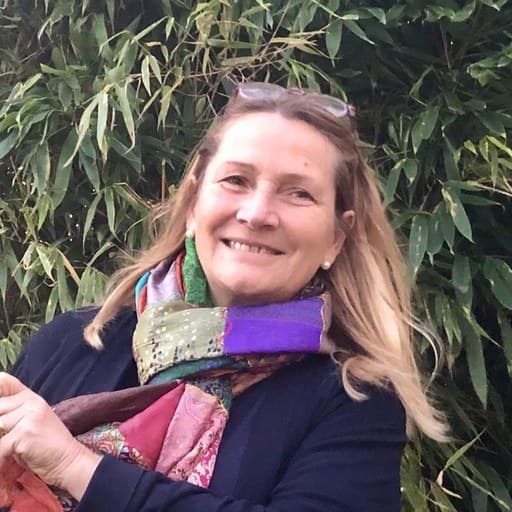
About the author
Valérie Fabre · Founder & Director, Harmonika Institute
Valérie Fabre founded Harmonika Institute in 2025, after a decade seeing clients in private kinesiology practice and, before that, thirteen years in international trade. A French-born polyglot who now splits her time between Dallas and Miami, she sets the school's curriculum and editorial standards and champions ethical, in-person training.
Read more about Valérie Fabre →