Journal · Scope of practice · Holistic practice
Can You Practice Without a License? A State-by-State Answer
Three tests decide whether you can legally practise a holistic modality without a license in your state, and the third one catches almost everybody.
Valérie Fabre, Founder & Director, Harmonika Institute · April 18, 2026 · 10 min read
Key takeaways
- Most holistic modalities are licensed nowhere. Reiki, sound work, breathwork, mindfulness, coaching, EFT and NLP have no state board, no exam, and no legal title anywhere in the United States. That is the starting point, not the finish line.
- Four modality families carry real licensure risk. Soft-tissue massage, needle acupuncture, dietetics and nutrition counselling, and anything resembling mental health treatment. If your technique touches one of those four, your answer changes.
- Roughly 45 states license massage. That single statute is the most common way an unlicensed holistic practitioner meets a regulator, because massage definitions are written broadly and exemption language varies enormously.
- Your claims matter more than your technique. Nearly every enforcement action we're aware of in this field started with a sentence on a website, not with a complaint about hands. You can be swept into a licensed activity by wording alone.
- Nobody can give you a fifty-state answer, including us. Anyone publishing a tidy fifty-row table of current law is either out of date or guessing. Call your own board. It's a twenty-minute phone call.
A woman in Houston finished a 220-hour training, printed business cards, and put up a one-page website. Six weeks later she got a letter from a state board. Not about her hands, her table, or her certificate. About one line of copy on her homepage that said she helped clients with chronic pain and digestive issues. She had never touched a needle, never called herself anything protected, and never claimed a degree. The wording alone was enough to open a file.
That's the shape of the problem. People training in holistic work spend months worrying about whether their modality is legal and almost no time on the thing that actually generates complaints. So here is the framework we teach, in the order the questions matter.
Three tests, in order
Forget the fifty-state table for a moment. Whether you can practise without a license comes down to three sequential questions, and you have to answer all three for your own situation.
- 1
Is the modality itself licensed anywhere?
A small number of holistic practices are regulated professions in their own right. Most are not. This tells you whether you're in a high-risk or low-risk family before you look at any state law at all.
- 2
Does your state's massage or medical practice act sweep it in?
Even an unlicensed modality can fall inside a broadly written statute about something else. This is where state variation lives, and where the categories below apply.
- 3
Do your claims put you inside a licensed activity regardless of technique?
You can perform a completely lawful technique and still be practising medicine without a license, because of what you told the client it would do. This is the one that catches people.
Test three is the answer to most of the mail we get. We'll spend the most time on it. But work through them in order, because a failure at test one or two is structural and can't be written around.
Test one: is the modality licensed anywhere at all?
This is a yes-or-no question about the technique itself, and it's the easiest of the three. Four families of practice are licensed professions somewhere in the U.S. Everything else, broadly, is not.
| Family | Licensed profession involved | What crosses the line | Risk |
|---|---|---|---|
| Soft-tissue bodywork | Massage therapy (licensed in roughly 45 states) | Manipulating soft tissue for compensation, however you name it | High |
| Needle work | Acupuncture and Oriental medicine | Any insertion of a needle. Digipressure and acupressure are a different activity | High |
| Food and supplements | Dietetics and nutrition (licensed or title-protected in most states) | Individualised diet prescription, especially for a named condition | Medium |
| Mind and emotion work | Psychology, counselling, clinical social work | Treating a diagnosed condition, or presenting sessions as psychological treatment | Medium |
| Naturopathy | Naturopathic medicine in licensing states; prohibited outright in FL, SC, TN | Practising at all in a prohibition state, or using ND titles anywhere | High |
| Energy work, sound, breath, mindfulness, coaching, EFT, NLP, expressive arts | None | Nothing at technique level. Risk arrives via tests two and three | Low |
Read the bottom row carefully, because it's where most people reading this actually sit. No state licenses Reiki. No state licenses sound work, breathwork, mindfulness instruction, life coaching, EFT, NLP, or expressive arts facilitation. There's no board to register with and no exam to fail.
That fact gets misread constantly in both directions. It doesn't mean the field is a legal free-for-all. It means the statute that will govern you is about something else, and you have to find out which one.
Test two: how your state writes its statutes
Now the state variation. Rather than pretend to publish current law for fifty jurisdictions, it's more useful to know which of four patterns your state follows, then confirm the detail with the board.
| Pattern | What it means for you | What to check |
|---|---|---|
| Explicit exemption | The massage practice act names energy work, reflexology, or similar and carves it out of the definition of massage | Whether the exemption has conditions attached: client clothed, no soft-tissue manipulation, registration or disclosure required |
| Broad definition, no carve-out | Massage is defined widely enough that hands-on work for money could fall inside it, and nothing exempts you | The exact statutory wording of "massage". Look for phrases like structures of the body, pressure, or by any means |
| Separate regulation | The state regulates a modality in its own right, most often reflexology, with its own hours and registration | Hours required, whether your training qualifies, and whether the requirement is a license or a registration |
| Unregulated or silent | No massage license at state level, or no statute that reaches your work | City and county rules. This is where local licensing actually bites |
Two things surprise people here. The first is that a state with no massage licensure isn't automatically the safest place to practise, because municipalities often fill the gap with their own establishment permits and zoning rules. The second is that health-freedom or safe-harbour statutes exist in a number of states, giving unlicensed complementary practitioners a defined space to work in provided they make specific written disclosures to clients. Where one exists, it's genuinely useful and it comes with conditions you must actually meet.
We've written the underlying scope analysis at length elsewhere. If you're working out where your own line sits, read scope of practice for non-licensed holistic practitioners alongside this. For the massage question specifically, which is the single most consequential one in the field, there's a dedicated guide to massage licensure for energy and bodywork practitioners.
Read this one twice
Nothing on this page is legal advice, and no article anywhere can tell you what is lawful in your state today. Practice acts get amended, boards reinterpret definitions, and a rule that held for a decade can change in one legislative session. Two specific cautions that are well established and worth stating plainly: needles require acupuncture licensure everywhere, and holistic naturopathy is prohibited in Florida, South Carolina and Tennessee. Beyond that, verify with your own state board before you accept payment from a client, and check your city as well as your state.
A private certification, ours included, is not a license. It never becomes one, no matter how many hours it took.
Test three: the one that actually catches people
Here's the part most training programmes skip.
Practising medicine without a license is not defined by what you do with your hands. It's defined by function: diagnosing, treating, prescribing, or offering to do any of those for a human ailment. You can perform a technique that no state regulates and still land inside a medical practice act, purely through what you said the session was for.
The mechanism is offering. In most states the statute reaches anyone who holds themselves out as able to diagnose or treat, whether or not they ever did it. A sentence on your website is a holding-out. So is a line in a brochure, a caption on a post, a phrase in an intake form, and an answer you gave a client in the room.
Where complaints start
In our experience the sequence is almost always the same, and it rarely begins with an unhappy client. A licensed professional in the area sees the website. Or a client mentions their sessions to a physician, who asks what exactly is being claimed. Or a competitor with a license files. The board then reads your public copy, which you wrote in an afternoon two years ago and haven't looked at since. Audit that page before you audit anything else.
Rewriting the sentences that get you in trouble
The fix is not vagueness. Vague copy sells nothing. The fix is describing what happens in the session and what people report, rather than what the session does to a condition.
| What people write | Problem | Safer version |
|---|---|---|
| "Helps with anxiety and depression" | Names diagnosable conditions. Reads as treatment | "A quiet, structured hour. Most clients report feeling calmer afterwards" |
| "Relieves chronic pain" | Therapeutic claim about a medical condition | "Clients often describe feeling more at ease in their body" |
| "Therapeutic massage for muscle tension" | Puts you inside the massage definition in most states | Describe the actual technique and whether the client stays clothed |
| "Personalised protocol for your gut health" | Reads as individualised nutrition prescription for a condition | General education about food, with a referral for anything clinical |
| "Heals trauma at the root" | Treatment claim inside the mental health space | "I work with people alongside, not instead of, their licensed care" |
| "Hypnotherapist" | Restricted or regulated as a title in a number of states | "Certified Hypnosis Practitioner", which is safe everywhere |
Notice what survives the rewrite. You can still say what you do, who you work with, and what people tell you afterwards. You lose nothing except the promise you couldn't legally make. Clients who are actually going to book you were never converted by the word "heals".
Titles deserve their own sweep. Doctor, physician, clinician, nurse, therapist, counsellor, dietitian, patient. Some are outright protected, some are protected in particular combinations, and all of them signal a licensed activity to a board reading your page. Say practitioner and say client. If hypnosis is your modality, the state-by-state guide to hypnosis title restrictions covers the specifics.
What verifying with your board actually looks like
People treat this as a bureaucratic ordeal. It isn't. It's usually one email and one phone call, and it produces the only answer that matters for you.
Start with your state's massage therapy board, since that's the statute most likely to reach you. If your state has no massage board, go to the department that houses professional licensing. Ask two precise questions rather than a general one, because a general question gets a general non-answer.
Ask: does the definition of massage in our practice act include what I've described, and is there an exemption that applies to it? Describe your technique in plain physical terms, not by its brand name. A board employee has no obligation to know what your modality is called. They know what their statute says about pressure applied to the human body for compensation.
Then put the same question in writing, by email, and keep the reply. It isn't a legal shield on its own, but a documented good-faith enquiry changes the tone of any conversation that follows. Repeat the exercise with your city or county clerk about local business and establishment permits, which catch more practitioners than most people expect.
The cost of getting it right
Board enquiries are free. Professional liability insurance for an unlicensed holistic practitioner commonly runs somewhere between $150 and $400 a year, which is the cheapest risk reduction available to you. An hour with an attorney who knows your state's health licensing statutes typically runs $250 to $500, and is worth it once, before you launch, if your work sits anywhere near the bodywork or nutrition lines. Compare that with the cost of a cease-and-desist arriving in month four of a practice you've already spent tuition on.
The posture that works in every state
There's a way of practising that holds up almost anywhere, and it's not complicated. Work over clothing where your modality allows it. Describe experiences rather than outcomes. Use practitioner and client as your only nouns. Keep a written client agreement that states in plain language what you do and do not do, and that your work doesn't replace medical care.
Build a referral relationship with at least one licensed professional before you need it, so that when something surfaces in a session that isn't yours to hold, you have a name to give rather than an apology. If you're unsure where that boundary sits, the guide to when to refer out is the practical version.
Carry insurance. Re-read your own website every six months, because copy drifts and the claim you added during a slow quarter is the one a board will find.
And accept the limit honestly. This posture keeps you lawful. It doesn't get you paid by insurers, recognised by a hospital, or protected as a title. Those things come with licensure, and if you want them, the answer is a licensed profession rather than a private certification. That's a real fork in the road and it deserves a straight look, which is what the piece on what counts as a real credential is for.
Questions on this topic.
Is there any state where I need a license just to practise Reiki?+
No state licenses Reiki as a profession. But that's not the same as saying it's unregulated everywhere. In states with a broadly written massage practice act and no energy-work exemption, hands-on work for compensation can be read as falling inside the massage definition, which means the licensing requirement reaches you through a statute that never mentions your modality. Check the exemption language in your state's massage act specifically, not general articles about Reiki.
Does my certificate protect me if a board investigates?+
Not in the way people hope. A private certification shows training and good faith, which matters in tone and sometimes in outcome, but it grants no legal authority and never becomes a license. What actually protects you is staying outside the regulated activity in the first place: your technique, your claims, and your titles. A 500-hour certificate makes no difference if your website says you treat a medical condition.
What if I only work online or by donation?+
Both change less than people assume. Compensation includes donations, barter, and gifts in many statutes, and some reach unpaid practice where a professional relationship exists. Working online generally puts you under the law of the state where your client sits, not where you sit, which means a multi-state practice can expose you to several regimes at once. It doesn't make the claims analysis go away either. Test three applies identically.
Can I say a client's condition improved if it genuinely did?+
Be careful. A truthful individual outcome, published as marketing, functions as a claim about what your work does. A single testimonial saying pain resolved can be read as holding yourself out as treating pain. If you use client feedback, keep it to the experience of the session rather than a clinical result, and get written permission. Truth isn't a complete defence when the issue is unlicensed practice rather than false advertising.
Should I just move to a state with fewer rules?+
Rarely worth it as a strategy. States with no massage licensure often have active city and county permit regimes, and your practice depends far more on having a client base in a place you actually know than on the statute. The exception worth taking seriously is prohibition: holistic naturopathy is not lawful to practise in Florida, South Carolina or Tennessee, and no amount of careful wording fixes that.
My state has a health freedom law. Am I covered?+
Possibly, and only if you meet its conditions exactly. These statutes typically require specific written disclosures to every client, covering your training, the fact that you're unlicensed, and the nature of the services offered. They usually exclude anything resembling diagnosis, prescription, surgery, or the practice of a licensed profession. They're a defined safe space with a door you have to walk through properly, not a general permission slip.
Tags:
Scope of practiceHolistic practice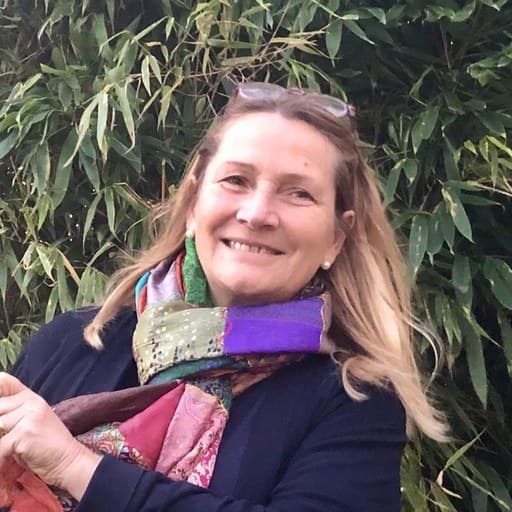
About the author
Valérie Fabre · Founder & Director, Harmonika Institute
Valérie Fabre founded Harmonika Institute in 2025, after a decade seeing clients in private kinesiology practice and, before that, thirteen years in international trade. A French-born polyglot who now splits her time between Dallas and Miami, she sets the school's curriculum and editorial standards and champions ethical, in-person training.
Read more about Valérie Fabre →