Journal · Training · Credentials
What Counts as a 'Real' Credential in the Holistic Field?
The U.S. holistic credentialing landscape is fragmented and confusing. Here's what credentials actually matter for client trust, referrals, and legal protection.
Valérie Fabre, Founder & Director, Harmonika Institute · December 2, 2025 · 6 min read

The U.S. holistic credentialing landscape is more fragmented than most prospective practitioners realize. Some modalities have well-established national credentials that genuinely matter; others have many competing certificates of varying quality; some have essentially no meaningful credentialing structure at all.
This guide walks through what credentials actually matter and why. We'll cover the three types of credentials, when state licensure matters, the major national certifications worth pursuing, how to evaluate a credentialing body, what program-specific certificates mean, when credentials don't matter much, continuing education requirements, and how to build a credential stack over your career.
The credentialing question is often more confusing than it needs to be because programs and certifying bodies have incentives to make their credentials sound impressive. The reality is that some credentials genuinely affect practice success and others don't. Knowing the difference matters when you're investing thousands of dollars and years of time in training.
Three types of credentials
Credentials in the holistic field fall into three categories. Type one: state licensure. Granted by state professional licensing boards, typically requiring specific training hours and exam passage. Examples: state massage license, state naturopathic doctor license, state acupuncture license.
Type two: national professional certification. Granted by national professional bodies, recognized across state lines, typically requiring training hours, exam, and ongoing continuing education. Examples: ARCB national reflexology certification, NGH (National Guild of Hypnotists) certification, IICT (International Institute for Complementary Therapists) credentials.
Type three: program-specific certificates. Granted by individual training programs upon completion. Quality varies enormously; the certificate is only as meaningful as the program issuing it.
Each type serves different purposes and has different value. State licensure provides legal scope; national certification provides cross-state recognition and professional credibility; program-specific certificates document training completion. The strongest practitioners typically hold credentials in multiple categories.
When state licensure matters
State licensure is required for some modalities (massage in 46 states, naturopathic medicine in licensed states, acupuncture nationally) and optional for others. When required, it is essential and supersedes any other credential.
When optional but available (naturopathic medicine in registration states, reflexology in regulated states), licensure provides legal scope protection, professional credibility, and access to specific practice settings.
When not available for your modality, focus on national professional certification and program-specific credentials. The absence of state licensure for most holistic modalities does not diminish the legitimacy of practice but does mean the practitioner must demonstrate credibility through other credentials.
Specific licensed modalities by state count. Massage therapy: 46 states. Acupuncture: all 50 states. Naturopathic medicine: 24 states. Reflexology: approximately 10 states. Other modalities (Reiki, Energy Healing, Hypnosis, EFT, NLP, most coaching modalities) are typically not state-licensed.
Major national certifications worth pursuing
Modality-specific national bodies that genuinely matter: NGH (National Guild of Hypnotists) for hypnosis, ABH (American Board of Hypnotherapy) for hypnosis, ICBCH (International Certification Board of Clinical Hypnotherapists) for hypnosis, ARCB (American Reflexology Certification Board) for reflexology, NCBTMB (National Certification Board for Therapeutic Massage and Bodywork) for massage and bodywork, NANP (National Association of Nutrition Professionals) for nutrition, AANP (American Association of Naturopathic Physicians) for licensed NDs.
These bodies have established standards, conduct meaningful assessments, and produce credentials that practitioners and employers recognize.
Multi-modality bodies of varying quality: International Association of Reiki Professionals, International Yoga Federation, various coaching certification bodies. Quality varies; research the specific body before pursuing its credential.
Specific characteristics of strong credentialing bodies. Established history (10+ years of operation). Substantial membership (typically 500+ active practitioners). Meaningful credentialing requirements (specific training hours, exam, demonstration of competence). Ongoing continuing education requirements. Ethical standards and complaint procedures. Recognition by adjacent professional bodies and employers.
How to evaluate a credentialing body
Six factors that distinguish meaningful credentialing bodies from weak ones. (1) Established history (10+ years operating), (2) substantial membership (typically 500+ active practitioners), (3) meaningful credentialing requirements (specific training hours, exams, demonstration of competence), (4) ongoing continuing education requirements, (5) ethical standards and complaint procedures, (6) recognition by adjacent professional bodies and employers.
Bodies that lack most of these factors are typically credential mills — issuing certificates without meaningful evaluation. The credential adds little to the practitioner's actual standing.
Strong bodies usually publish their standards, member counts, and credentialing requirements transparently. Bodies that obscure these signals often do so for reasons.
Specific red flags to watch for in credentialing bodies. Founded recently with no track record. Membership numbers not published. Certification requirements vague or minimal. No continuing education requirements. No ethical complaint process. Recognized only by themselves rather than by adjacent professional networks.
Program-specific certificates
The certificate from your training program is meaningful in proportion to the quality and recognition of the program. A certificate from a respected long-running program in a specific modality carries weight; a certificate from a unknown program carries little.
What gives a program-specific certificate weight: faculty recognition in the modality, program duration and depth, alumni outcomes, accreditation by external bodies, recognition by professional associations.
Stack credentials thoughtfully. A program-specific certificate plus relevant national certification produces stronger positioning than either alone.
How to evaluate program credibility. Faculty backgrounds (visible professional histories, recognition in their field). Alumni outcomes (graduates actively practicing, building successful careers). External recognition (accreditation, professional association approval, recognition by adjacent bodies). Program longevity (decade-plus operation typically signals stability and quality).
When credentials don't matter much
Some practice contexts care little about credentials. Long-established practices serving repeat clients via word of mouth often grow on reputation rather than credentials. Specialty work in some areas relies more on personal track record than formal credentialing.
But these contexts emerge over time, not from the start. New practitioners need credentials to overcome the initial trust gap with clients and referral partners.
Even practitioners who reach the 'credentials don't matter much' stage typically maintained credentials throughout their early careers. The credentials enabled the trajectory; the trajectory eventually outgrew the credentials' importance.
The strategic implication. Don't skip credentialing because you've heard 'credentials don't matter.' They matter substantially for the first 5-10 years of practice, when you're building reputation and referral relationships. Once those are established, the credentials matter less for client acquisition but still matter for insurance, professional positioning, and continued professional development.
Continuing education and credential maintenance
Most meaningful credentials require ongoing continuing education for renewal. Typical requirements: 12-30 hours per year of approved continuing education, ethics training periodically, membership dues, updated insurance documentation.
Credential maintenance is not optional. Allowing a credential to lapse requires re-credentialing in many cases, which is more difficult than ongoing maintenance.
Build continuing education into your annual rhythm: one or two workshops per year, ongoing reading, periodic peer consultation. Most strong practitioners exceed minimum CE requirements substantially.
Specific approaches to CE. Annual depth workshop in your primary modality (40-60 hours typically). Periodic adjacent-modality workshops to broaden skills (16-24 hours). Ethics and scope-of-practice workshops as required. Supervision sessions that count toward CE in many credentialing bodies. The total CE investment typically runs $1,000-$3,000 annually and is essential professional infrastructure.
Credential stacking strategy
Most established practitioners hold multiple credentials. Typical year-five stack: one strong program-specific certification (foundation), one or two national-body certifications (broader recognition), state license if applicable, multiple workshop completion certificates in specialty areas.
Build the stack deliberately. Foundation in years 1-2 (program completion, first national certification). Specialty credentials in years 3-5 (workshops, advanced trainings, additional certifications). Mature stack by year 5 reflects both breadth and specific expertise.
Don't over-stack. Five strong credentials are more impressive than fifteen weak ones. Quality over quantity.
Match credentials to your actual practice positioning. A practitioner specializing in fertility doesn't need credentials in every adjacent area — they need depth credentials in fertility-relevant specialties. Generic credential collecting often produces less impressive positioning than focused credentialing aligned with specialty.
Questions on this topic.
Do I need national certification if I'm already program-certified?+
Generally yes for the most-recognized modalities. National certification adds broader recognition, supports referral building, and provides credibility independent of any specific program.
What if my modality has no national certification body?+
Focus on strong program credentialing, professional association membership, and demonstrated practice track record. Some emerging modalities don't have established national bodies; this is the situation, not a failure.
Can I list multiple certifications on my website?+
Yes — list your meaningful credentials. Don't pad with workshop completion certificates that imply more than they deliver. Quality is more credible than quantity.
How long do credentials remain valid?+
Most credentials require ongoing continuing education to remain valid. Typical requirement is 12-30 hours annually plus periodic ethics training. Allowing credentials to lapse usually requires partial re-credentialing to restore.
Are international credentials recognized in the U.S.?+
Some are, some aren't. International credentialing bodies like EFT International or international hypnosis associations are often recognized. Non-mainstream international credentials may not be recognized by U.S. insurance providers or professional associations. Verify before relying on international credentials for U.S. practice.
Tags:
TrainingCredentialsCareer pathRegulation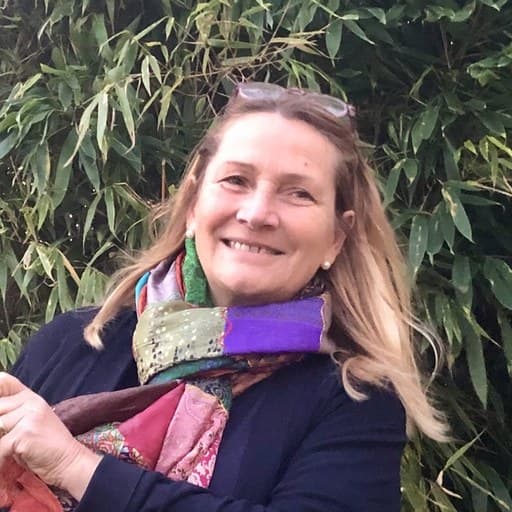
About the author
Valérie Fabre · Founder & Director, Harmonika Institute
Valérie Fabre founded Harmonika Institute in 2025, after a decade seeing clients in private kinesiology practice and, before that, thirteen years in international trade. A French-born polyglot who now splits her time between Dallas and Miami, she sets the school's curriculum and editorial standards and champions ethical, in-person training.
Read more about Valérie Fabre →