Journal · Scope of practice · Holistic practice
What to Ask a Holistic School on the Admissions Call: 15 Questions
Fifteen questions to put to any holistic training school on the phone, what a good answer sounds like, what a bad one sounds like, and how we score on each.
Valérie Fabre, Founder & Director, Harmonika Institute · April 16, 2026 · 10 min read

Key takeaways
- Four questions do most of the work. How many graduates are working two years on, how you know that, who exactly teaches me, and how many hours someone watches me work. Everything else is detail.
- "We don't track that" is an acceptable answer once. Twice, it is a pattern. Three times, you are talking to a sales operation with a curriculum attached.
- Get the refund policy in writing before the call ends. A three-day cooling-off window and nothing after that is common in this field, and it is worse than it sounds when programs run eight months.
- Observed practice hours separate real programs from expensive ones. Ask for a number. Ten to twenty observed sessions is a serious program; two is a demonstration.
- Price is the least informative question you can ask. Tuition in this field runs roughly $1,500 to $12,000 and correlates weakly with whether anyone will correct your hands.
The admissions call is designed to make you feel good. That is not a conspiracy, it is simply what happens when the person answering the phone is measured on enrolments. They will be warm, they will ask about your story, and they will reflect it back to you in language that sounds like recognition. Forty minutes later you will have a start date and no idea what you actually bought. The fix is not suspicion. It is a list.
What follows is fifteen questions we think you should put to any holistic school in the United States, including this one. For each, what a credible answer sounds like and what an evasive one sounds like. Some of these are questions we find uncomfortable to answer. That is why they are on the list.
Print the table. Have it open on the call. Write down the answers as you get them, because the ones that are missing will matter more than the ones that are given.
The fifteen, in the order worth asking them
| # | Ask this, in these words | A good answer sounds like | A bad answer sounds like |
|---|---|---|---|
| 1 | How many people finished this program in the last two years, and how many are seeing paying clients now? | A number, a method, and a caveat: "Eleven of the fourteen from spring, we surveyed them at twelve months, four are part time." | "Our graduates go on to do amazing things." Or a percentage with no denominator. |
| 2 | How do you know that? Who did you ask and when? | Named method. Follow-up survey, response rate stated, honest about who did not reply. | "We stay in touch with everybody." Nobody stays in touch with everybody. |
| 3 | Who exactly will teach my cohort, and what did that person train in? | A name, their lineage or training, years in practice, and how many clients they see now. | "All our faculty are highly experienced." Assigned instructor unknown until week one. |
| 4 | How many hours will someone watch me work with a real person and correct me? | A specific count of observed sessions and who does the observing. | Confusing contact hours with observed hours, or counting classmate practice as clinical work. |
| 5 | What is your refund policy after week three, in writing? | A written schedule with pro rata tiers, sent by email before you pay. | "We handle that case by case." Case by case means no policy. |
| 6 | What percentage of a cohort typically drops out, and at what point? | A real figure and a reason. Most attrition in this field happens around month three. | "Almost nobody drops out." Then they are not tracking it. |
| 7 | Is this certification a licence, and can I practise this in my state? | Clear no on the licence, plus a push to check your own state board. | Any use of "accredited", "licensed", or "nationally recognised" without naming the body. |
| 8 | What can I not legally say or do after I certify? | Straight scope talk: no diagnosis, no treatment claims, title limits, referral duty. | "You can help people with anything that comes to you." |
| 9 | How many students are in a cohort, and what is the ceiling? | A hard number and what happens if demand exceeds it. | "Small groups." Small is not a number. |
| 10 | What is the total cost including materials, exam, insurance and travel? | An itemised all-in figure, including the things that are not tuition. | A monthly payment quoted before the total. |
| 11 | Can I sit in on a session, or speak to two graduates you did not pick for me? | Yes, and a route to alumni they do not control. | Three hand-picked testimonials and a scheduling problem. |
| 12 | What happens if I miss a weekend, and what does the make-up cost? | A stated policy, a real make-up mechanism, a price if there is one. | Vagueness. This is where surprise fees live. |
| 13 | What does your program teach about running the business side? | Named hours on pricing, client agreements, insurance, record keeping. | "That comes naturally once you start." |
| 14 | Who is a bad fit for this program, and who have you turned away? | A real answer with an example. Good schools decline people. | "It suits everyone." Then admission is a payment, not a decision. |
| 15 | What is the weakest part of your program right now? | Something specific they are working on and have not fixed yet. | A humblebrag. "We care too much, honestly." |
Question one is the whole call
If you only get one question in before the conversation slides back into your story, make it the graduate one. Not "what is your success rate", which invites a marketing number. Ask for the raw shape of it: how many people finished the last two cohorts, how many are seeing paying clients now, and how the school found that out.
The reason this question is decisive is that almost nobody in the unaccredited holistic field has a legal obligation to track outcomes. Title IV degree programs report completion and earnings data because federal funding requires it. Private certification schools report nothing to anyone. So the presence of a tracking habit tells you something about the institution that no brochure can.
Listen for the follow-up. A school that surveys graduates at twelve months and gets a 60% response rate should tell you it got a 60% response rate, and should be uneasy about the missing 40%. That uneasiness is the sound of an honest answer.
Where we sit
Since we are asking you to put this question to us: we run in-person cohorts of ten across 32 cities and live online cohorts of fifteen, and our follow-up is by city and by cohort rather than a single institution-wide figure we could quote at you. When you call, ask for the numbers for your city and your modality. Refuse a national average from us or anyone else. An aggregate across 28 modalities tells you nothing about whether Tuesday's breathwork group in Denver produced working practitioners.
The teaching question people forget to ask
"Who will teach me" gets asked. "What did that person train in, and when did they last work with a client who was not a student" mostly does not.
This field has a structural problem: teaching pays better per hour than practice and is easier to fill. So a predictable share of instructors across every school in the country have drifted out of client work and into full-time training. They can still teach technique competently. What they cannot teach is what happened last week with a difficult client, because nothing happened last week.
Ask for the instructor's lineage or training path, the year they qualified, and roughly how many client sessions they delivered in the last month. If the school cannot tell you who your instructor will be until orientation, that is a real answer and a bad one. It means faculty are assigned by availability.
What "lineage-aware" should mean when a school says it
Plenty of schools, us included, describe faculty as lineage-aware. Make them cash the phrase. It should mean the instructor can name who trained them, in what tradition, and where their approach departs from it. If it just means the school likes the word, you will hear a pause.
Refunds, attrition and the things schools hate quantifying
Money questions get answered smoothly because they are rehearsed. Refund questions do not, because refunds are where a school's incentives and yours point in opposite directions.
Many states have consumer protection rules for private postsecondary and vocational schools, and some of them mandate pro rata refunds up to a defined point in the program. Coverage varies a lot by state and by how the school is classified, so do not assume you are protected. Ask for the written policy, read the part that applies after the first month, and check whether your state has a private occupational school board with its own rules.
The all-in number
Serious in-person certification programs in this field generally run somewhere between $3,000 and $12,000 in tuition, with weekend and short-course routes well below that. Tuition is rarely the total. Add materials, a table or kit, exam or assessment fees, professional liability insurance from your first practice client, and travel if the training city is not yours. Budget an extra 15% to 25% over the tuition figure and ask the admissions person to itemise it with you on the call.
Then ask about attrition. A school that tells you almost nobody drops out is either unusually good or not counting. In practice, people leave holistic programs for three reasons: money changed, the practice hours collided with a job, or month three arrived and the excitement wore off. A school that has thought about attrition will say which of the three it sees most and what it does about it.
Observed hours: the number that predicts competence
Contact hours measure how long you sat in a room. Practice hours measure how long you worked. Observed hours measure how many times somebody qualified watched you work and told you what you were doing wrong. Only the third one reliably changes what you can do.
So ask for it as a count, not a proportion. "How many times, over the whole program, will an instructor be in the room while I work with someone, and give me feedback afterwards?" Then ask the second half: is that person a classmate or a member of the public? Classmates are a forgiving test population. They believe in the work, they want you to do well, and they will not tell you that you talked too much.
Two answers that should end the call
First, any claim that a private certificate is a licence, a degree, or a government credential. It is not, ours included, and a school that blurs this is either careless or willing to mislead you about something that could put you in front of a regulator.
Second, any suggestion that you will be able to diagnose, treat, or cure. Say client, not patient. If you are looking at hypnosis, the safe title is Certified Hypnosis Practitioner. If you are looking at expressive arts, an art therapy credential is a separate licensed path through the ATCB that no certification school grants. If you are looking at holistic naturopathy, note that practice is prohibited in Florida, South Carolina and Tennessee, and that "naturopathic doctor" is never a title you may use from a certificate. Rules differ by state and change. Confirm with your own state board.
Turn the questions on us
An article like this is easy to write when you leave yourself out of it, so here is the part that costs us something.
Our cohort ceiling of ten in person (fifteen online) is a real constraint and it means we sometimes cannot take you when you want to start. For our in-person programs, if you live two hours from one of our 32 cities, the travel cost is yours and it is not trivial. We do not publish a national placement rate, and you should read that as a limitation rather than a modesty. We hold no accreditation from a federal or state education body, because a private certification school in this field generally cannot obtain one, and we would rather say that than dress up a membership badge as accreditation.
Ask us question fifteen. If the person on our phone cannot name something about our program that is genuinely weaker than it should be, you have caught us doing exactly what this article warns you about.
- 1
Before the call: write down your two dealbreakers
Money ceiling and travel radius, usually. Decide them cold, before anyone is warm at you.
- 2
During: ask questions one to four first
Attention degrades after twenty minutes. Spend the sharp part of the call on outcomes, faculty, observation and refunds.
- 3
During: write the answers verbatim
Especially the vague ones. "We stay in touch with everybody" reads differently in your notes two days later than it sounds on the phone.
- 4
After: request the refund policy and syllabus by email
Anything a school will not put in writing is not a commitment. This single step filters more programs than the entire call.
- 5
Before you pay: call your state board
Ten minutes. Ask whether the modality you intend to practise is regulated, title-protected, or prohibited where you live.
Questions on this topic.
Is it rude to ask a school for graduate outcome numbers?+
No, and the reaction is diagnostic. You are considering spending several thousand dollars and up to ten months on something with no external quality control. Asking what happened to the last two cohorts is the minimum diligence. A school that treats the question as an insult has told you how it thinks about students. A school that answers with a number, a method and a caveat has told you something better.
What if the school says it cannot share outcomes for privacy reasons?+
Aggregate figures do not identify anyone, so privacy does not prevent a school from saying "nine of fourteen are practising". Privacy is a legitimate reason to decline to hand over a graduate list, which is why the better version of the question is to ask for an introduction to alumni who consent, rather than for contact details. If both routes are refused, you are being managed.
Should I ask about accreditation?+
Ask, but know what you are listening for. Most private holistic certification in the United States is not accredited by any recognised education body, because there is no applicable accreditor for this category. The right answer is a plain statement of that, possibly alongside membership of a professional association. The wrong answer is the word "accredited" used loosely. If a school claims it, ask for the accrediting body by name and look it up while you are still on the phone.
How many schools should I actually call?+
Three is the useful number. One call gives you no baseline, and by the fourth you stop hearing differences. Use the same fifteen questions in the same order each time and score them roughly. The pattern that emerges is usually clear: one school will answer the uncomfortable questions specifically, one will answer them warmly and vaguely, and one will redirect to price and start dates.
What if I like the person on the call more than the program?+
That is the most common way people enrol in the wrong place, and it is worth naming. Rapport is what the admissions role selects for. It tells you very little about who will be standing behind you in month five when you have a client in tears and no idea what to do. Judge the program on the answers in your notes, not on how the call felt. If the notes are thin, that is the finding.
Tags:
Scope of practiceHolistic practice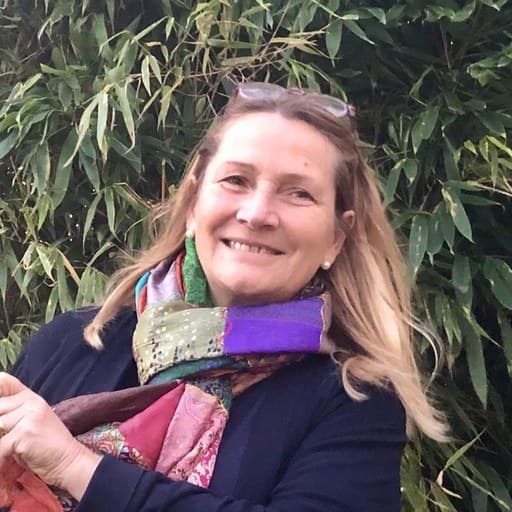
About the author
Valérie Fabre · Founder & Director, Harmonika Institute
Valérie Fabre founded Harmonika Institute in 2025, after a decade seeing clients in private kinesiology practice and, before that, thirteen years in international trade. A French-born polyglot who now splits her time between Dallas and Miami, she sets the school's curriculum and editorial standards and champions ethical, in-person training.
Read more about Valérie Fabre →