Journal · Nonviolent Communication · Choosing a program
Nonviolent Communication Training: From Practice to Facilitation
The two routes into teaching NVC, why the official certification takes years, what facilitators actually get paid to do, and where the legal line sits.
Valérie Fabre, Founder & Director, Harmonika Institute · June 21, 2026 · 10 min read

Key takeaways
- Two routes exist, and they are not equivalent. The Center for Nonviolent Communication runs a mentored, assessed certification that commonly takes three to six years. Everyone else trains, practises, and facilitates without it. Both are legal. Only one is slow.
- Certified trainers are rare. Worldwide the certified population sits in the high hundreds across sixty-plus countries. Most people teaching NVC workshops in U.S. cities are not among them, and most say so openly.
- The model takes an afternoon to learn and years to embody. Four components, one page. The gap between reciting them and using them while someone is shouting at you is the entire training problem.
- The revenue is organisational, not one-to-one. Practice-group facilitation pays almost nothing. Workplace sessions, parenting programmes, and school restorative-practice contracts pay between roughly $800 and $3,500 a day, and take two years of unpaid reps to reach.
- NVC is not a mediation credential. It has no standing in court-annexed mediation rosters, no state recognition, and calling yourself a mediator on the strength of it will eventually cause you a problem.
A woman in a Chicago workshop once told the room she had read Rosenberg's book four times, could recite the four steps in order, and still could not use any of it during an argument with her sister. That is the most honest sentence anyone has said about Nonviolent Communication. The model is genuinely simple. Every serious practitioner will tell you it took them years to make it work under pressure, and a good number of them are still not certain it does.
So this article covers the two things people search for and rarely find together. What NVC training actually consists of, including the official certification route and its unusual demands. And whether there is a living in facilitating it, which is a separate question with a less flattering answer.
Where the model came from
Marshall Rosenberg developed NVC in the 1960s and 1970s. He trained as a psychologist, studied under Carl Rogers, and spent the civil rights era doing school desegregation mediation work in the American South. The method came out of that: he was trying to find language that let people in genuine conflict keep talking.
He founded the Center for Nonviolent Communication in 1984. The book, Nonviolent Communication: A Language of Life, has sold in the millions and been translated into dozens of languages. Rosenberg died in 2015. The Center continues, and it remains the only body that certifies trainers in the method.
That history explains the model's shape. It was built for high-stakes conflict, not for pleasant conversation, which is why it can feel oddly formal in ordinary use. It was also built by one man with a specific temperament, and the field has spent a decade since his death arguing about what should be preserved and what should be updated. You will walk into that argument at some point.
The four components, functionally
Most descriptions of NVC list the four components and stop. That is useless for someone deciding whether to train. Here is what each one is actually for, and where each one fails.
| Component | Function | Sounds like | Common failure |
|---|---|---|---|
| Observation | Separate what a camera would record from your interpretation of it | "You arrived at 8:40 for a 8:00 start" | Smuggling a judgement in: "You were disrespectfully late" |
| Feeling | Name your own internal state, not the other person's behaviour | "I felt anxious" | Fake feelings: "I feel ignored" is an accusation wearing a feeling's clothes |
| Need | Point to the universal human need underneath the feeling | "I need some reliability around timing" | Naming a strategy as if it were a need: "I need you to text me" |
| Request | Ask for one concrete, present-tense, refusable action | "Would you be willing to message me if you're running late?" | A demand with a question mark on it, revealed the moment they say no |
Read the failure column again. Every one of those is a mistake you make in the first month and keep making for a year. Learning the components is a lesson. Catching yourself smuggling a judgement into an observation, live, mid-sentence, with your heart rate at 110, is a skill, and skills need reps with feedback.
The other half of the model gets less attention and matters more in facilitation: empathic listening. Guessing out loud at what another person is feeling and needing, without agreeing, defending, advising, or fixing. Most people find this harder than the expressive side, because everything in ordinary conversation trains you to respond with your own story.
The jackal problem
Rosenberg used giraffe and jackal puppets to distinguish the two languages. It works beautifully with children and lands badly in a boardroom. New facilitators inherit the whole aesthetic of the tradition, puppets included, and then wonder why an engineering team stops taking them seriously in the first fifteen minutes. Learn the model in its own idiom. Then translate it into the vocabulary of the room you are being paid to stand in.
Route one: the official CNVC certification
The Center's certification process is unusual among holistic credentials, and it is worth understanding even if you decide not to pursue it, because it sets the standard everything else gets measured against.
Broadly, it runs like this. You register as a candidate. You are paired with a certified assessor who works with you over an extended period. You attend an International Intensive Training, typically nine or ten residential days, which is treated as close to non-negotiable. You accumulate hours of practice, teaching, and being observed. You do considerable inner work on your own reactivity, because the assessment is about how you are when you are triggered, not about what you know. Eventually, when your assessor judges you ready, you are certified.
Times vary widely by candidate and assessor. Three to six years is the ordinary range people report. Some take longer. Some register and quietly never finish, which is common enough that it should not embarrass anyone.
The honest number
The certification fee itself is modest by U.S. training standards. The real cost is everything around it: residential intensives at roughly $1,500 to $3,000 each including travel, ongoing assessor sessions, and years of workshops you attend as a participant. People who complete the path have usually spent somewhere between $8,000 and $20,000 across half a decade, spread thin enough that they never quite notice. Budget the time, not the tuition. The time is the expensive part.
What does it buy? Real things. The right to use the CNVC certified-trainer designation and appear on its listing. Access to a genuinely serious peer community. And, most usefully, several years of somebody skilled watching how you handle your own defensiveness, which nothing else in this field replicates.
What it does not buy: any legal standing whatsoever. It is a private designation from a nonprofit. No state recognises it, no insurer requires it, and no employer is obliged to care.
Route two: everyone else
Here is the part the field is sometimes coy about. The large majority of people running NVC workshops, practice groups, parenting courses, and workplace sessions in the United States are not CNVC-certified. They have trained extensively, often with certified trainers, and they facilitate under their own name.
This is not a scandal and it is not prohibited. NVC is not a protected term, the model is published in a book anyone can buy, and Rosenberg spent his life trying to spread it rather than fence it off. But the two routes produce different positions in the market, and you should choose deliberately rather than by drift.
| Dimension | CNVC certification | Independent facilitator route |
|---|---|---|
| Typical time to readiness | 3-6 years, sometimes longer | 1-2 years of serious practice |
| Structured feedback on your own reactivity | Central to it | Only if you build it |
| Can you charge for workshops | Yes | Yes |
| Legal standing in any U.S. state | None | None |
| Weight with a corporate buyer | Helpful, rarely decisive | Depends entirely on references |
| Weight inside the NVC community | Substantial | Variable |
Notice the row that matters commercially. A school district procurement officer or an HR director buying a two-day session has almost never heard of CNVC. What moves them is a reference from a peer organisation, a clear proposal, and evidence you have stood in front of a hostile room before. The independent route is not a shortcut around quality. It is a different place to invest the same seriousness.
Where facilitators actually work
Four settings account for most paid NVC work in the U.S., and they behave very differently.
Workplace and organisational
The best-paying and the hardest to enter. Teams in conflict, managers who cannot give feedback, post-restructure repair work. Day rates for an experienced independent facilitator commonly run $1,200 to $3,500, higher through an established consultancy. The catch is that nobody buys this from a stranger. It arrives through networks, and the first two contracts usually come from someone you already know.
Parenting groups
The most reliable entry point. Six to eight week evening courses, eight to fourteen parents, often hosted by a community centre, a preschool, or a faith organisation. Per-head pricing lands around $180 to $400 for the series. It will not pay a mortgage on its own, and it will teach you more about facilitation in one term than a year of reading.
Restorative practice in schools
Growing, and genuinely funded in some districts. NVC sits adjacent to restorative practice rather than being identical to it, and districts usually procure the restorative-justice framework with communication training folded in. Expect long sales cycles, purchase orders, background checks, and real budgets.
Practice groups and the community
Weekly or fortnightly groups, often donation-based or $10 to $25 a head. Treat these as your rehearsal space rather than income. Every credible facilitator ran or attended one for years.
What NVC is not, legally
This is the section to read twice, because the drift happens gradually and nobody warns you.
Scope of practice
NVC training is not mediation certification. Court-connected and family mediation rosters set their own requirements, typically a specified number of hours in an approved mediation programme plus observed cases. NVC training does not satisfy those, and describing yourself as a mediator on the strength of it is the mistake most likely to attract attention.
It is not counselling, and it does not treat anything. A communication workshop that starts processing a participant's trauma has left its scope. Facilitators need a referral relationship with licensed mental health professionals and the willingness to use it in the room, out loud, mid-session.
Domestic and coercive-control situations need specialists. Empathic language is not a tool for negotiating with someone dangerous, and a facilitator who implies otherwise can do serious harm. Know your local domestic violence services by name before you teach a parenting or couples group.
None of this is regulated at state level today, which means the discipline has to come from you. Rules and interpretations differ by state and change; check anything specific with the relevant state authority.
What the evidence supports
What the research shows
The published research on NVC specifically is modest: mostly small studies, often on nursing students, prisoners, or teachers, with pre-post designs, self-reported outcomes, and few controls. Reviews generally report encouraging results alongside real cautions about study quality and sample size. Meanwhile the underlying ingredients, particularly reflective and empathic listening in the Rogerian tradition, rest on a much older and broader base.
The defensible claim is therefore narrow. Structured empathic listening and non-blaming language reliably change how conversations go. Whether the four-step model outperforms other structured communication training has not been convincingly established. Say that, and you will never be caught out.
Should you train in it
NVC fits people who can tolerate slow, unglamorous skill-building and who are comfortable being the calmest person in a hostile room. It stacks unusually well onto something else: coaching, mindfulness teaching, expressive arts facilitation, HR work, teaching. As a standalone offering it is a hard sell to individuals, because almost nobody books a private communication session. Groups and organisations buy it. Individuals rarely do.
It fits you badly if you want a protected title, a fast credential, or work you can start charging for in three months.
- 1
First six months: use it on yourself
Journal your own observations, feelings, needs, and requests after difficult conversations. Everyone skips this and everyone regrets it. You cannot facilitate a process you have not run on your own life.
- 2
Months 6-18: get watched
Join or start a practice group and facilitate rounds in it. Ask someone competent to observe you and be specific about what went wrong. Being watched is the whole mechanism.
- 3
Months 12-24: run a real series for cheap
A six-week parenting or community group, priced low, promoted honestly. Two or three cycles of this teaches you sequencing, difficult participants, and what to cut when you are behind.
- 4
Year 2 onward: pick the organisational door
Schools, workplaces, or community mediation programmes. Choose one, learn its procurement language, and build two references inside it before chasing a third setting.
If the organisational route appeals, our in-person NVC facilitation program is built around exactly that: small cohorts, live rounds you are watched in, and practice between sessions rather than a certificate for attendance.
Questions on this topic.
Can I teach NVC without being certified by CNVC?+
Yes. NVC is not a protected term and the Center does not hold exclusive rights over teaching the model. What you cannot do is describe yourself as a CNVC certified trainer without having completed their process, which is a straightforward misrepresentation and the community will notice. Most independent facilitators state their training history plainly, name the certified trainers they studied with, and let that stand on its own. It is an honest and widely accepted position.
How long does NVC certification take?+
Through the Center for Nonviolent Communication, three to six years is the ordinary range, and longer is common. The process is mentored rather than scheduled: you progress when your assessor judges you ready, not when you have logged a fixed number of hours. Shorter facilitator trainings from independent providers run anywhere from a weekend to nine months. Those are real training, but they are not the same credential and should not be presented as one.
Is NVC the same as mediation?+
No, though they overlap and Rosenberg did a great deal of mediation work. Mediation as a profession has its own training requirements, roster rules, and in many jurisdictions a court-approved programme you must complete. NVC gives you a language and a listening discipline that is genuinely useful inside mediation. It does not qualify you to hold the mediator role in any formal setting, and you should not market yourself as if it does.
Does NVC work in a corporate setting?+
The skills do. The presentation often does not. Teams respond well to observation-versus-evaluation work, needs-based framing, and clean requests, because those solve visible problems in meetings and feedback. They respond badly to giraffe puppets, spiritual framing, and being asked to name feelings in front of a manager on day one. Successful workplace facilitators keep the mechanics and rebuild the vocabulary around the organisation's own language.
What does an NVC facilitator earn?+
Wide range, and mostly determined by setting rather than skill. Community practice groups and donation-based work are effectively unpaid. Parenting series produce a few hundred dollars per participant across six to eight weeks. Organisational day rates for experienced independents commonly run $1,200 to $3,500, with school district contracts sitting between the two but arriving in larger blocks. Almost nobody earns a full living from NVC alone in the first two years.
Tags:
Nonviolent CommunicationChoosing a program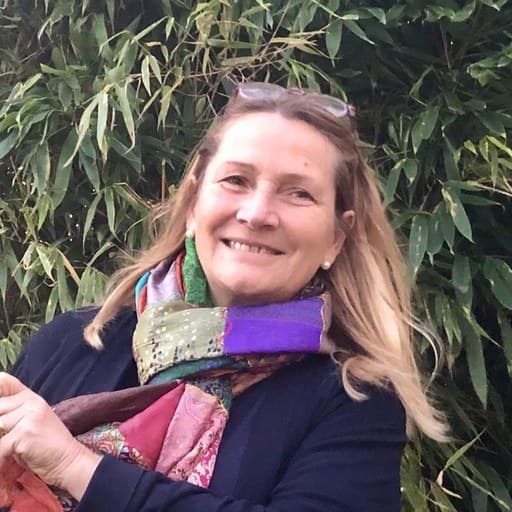
About the author
Valérie Fabre · Founder & Director, Harmonika Institute
Valérie Fabre founded Harmonika Institute in 2025, after a decade seeing clients in private kinesiology practice and, before that, thirteen years in international trade. A French-born polyglot who now splits her time between Dallas and Miami, she sets the school's curriculum and editorial standards and champions ethical, in-person training.
Read more about Valérie Fabre →