Journal · Mindfulness · Training near you
Mindfulness Classes Near Me: Attending vs Learning to Teach
Five different things show up when you search for local mindfulness classes. Here is how to tell them apart, and what the path to teaching actually asks of you.
Valérie Fabre, Founder & Director, Harmonika Institute · June 16, 2026 · 9 min read

Key takeaways
- One search, five different products. Drop-in sittings, studio classes, eight-week MBSR courses, retreat-centre programs and teacher trainings all rank for the same phrase. Only one of them is training you to teach.
- MBSR is the only format with a fixed shape. Eight weekly sessions of roughly 2 to 2.5 hours plus a day of practice, taught the same way in Boston and in Austin. Community-rate seats often run $200 to $500; hospital-affiliated courses can reach $700.
- The teaching gap is bigger here than in any other modality. The field's own competence standards ask for a daily personal practice measured in years, silent retreat time, and teaching observed by someone qualified. Most short certifications skip all three.
- A cheap weekend certificate is not a shortcut, it's a different object. Sixteen hours can teach you a script. It cannot teach you what to do when a participant opens their eyes in distress at minute nine.
- Attend before you enroll. Sitting through a full eight-week course as a participant is the cheapest, most reliable test of whether you want to spend a year or more training to lead one.
Type "mindfulness classes near me" and your local results will mix a free Tuesday sitting in a church basement, a $28 drop-in at a yoga studio, an eight-week hospital course with an intake interview, a residential weekend two hours out of town, and somebody's 20-hour teacher certification. Those five things share a word and almost nothing else. The distance between showing up to one and being qualified to lead one is measured in years, and this particular search term hides that completely.
So let's separate them. What you'll actually find in a mid-sized U.S. market, what each format is for, what it costs in money and evenings, and what changes if the reason you're searching isn't stress at all but a suspicion that you'd like to be the person at the front of the room.
What actually turns up in your city
Local supply varies less than you'd expect. In New York, Chicago, Seattle or Atlanta you'll find all five categories within a reasonable drive. In a market of 200,000 people you'll typically find three of them, and the missing ones are usually the hospital-affiliated course and the residential retreat.
Drop-in sittings. Often free or donation-based, frequently attached to a meditation group with a Buddhist or secular-Buddhist framing. Twenty to forty-five minutes of silent practice, sometimes a short talk. No instruction for beginners in many cases, which catches people out.
Studio classes. Sold like a fitness class, single price or class pack, usually 45 to 60 minutes, often guided the whole way through with music. Comfortable entry point. Light on the actual training of attention.
Eight-week structured courses. MBSR and its relatives. Weekly sessions, daily home practice assignments of 30 to 45 minutes, a full day of practice around week six, and often a pre-course conversation with the teacher. This is the format everything else is measured against.
Retreat-centre programs. Weekend to nine days, silent or partly silent, residential. This is where the practice deepens and also where it gets difficult. Sliding-scale pricing is common at older centres.
Teacher trainings. The listing that looks like the others but isn't. Ranges from a 16-hour weekend certificate to multi-year mentored pathways with observed teaching and assessment.
| Format | Typical commitment | Typical U.S. price | Beginner-friendly? | Counts toward teaching? |
|---|---|---|---|---|
| Drop-in sitting group | 30-60 min, weekly | Free to $15 donation | Sometimes | No |
| Studio or gym class | 45-60 min, drop-in | $15-$35 per class | Yes | No |
| Eight-week MBSR course | 8 evenings + 1 full day + daily home practice | $200-$700 | Yes | Usually required |
| Residential retreat | 2-9 days, silent or partly silent | $100-$200 per day, sliding scale common | With preparation | Usually required |
| Teacher training | 16 hours to 2+ years | $300 to five figures | No | Depends entirely on hours |
How to read a listing before you pay
Four details in the listing tell you which category you're looking at, and they're usually visible without contacting anyone.
Look for a stated home-practice expectation. If the description asks you to commit 30 minutes a day between sessions, you're looking at a structured course. If it doesn't mention practice outside the room at all, you're looking at a class you attend.
Look for an intake step. Serious eight-week courses and good teacher trainings screen. A page that lets you pay instantly with no conversation is telling you something about how it handles the person who arrives with untreated panic.
Look at how the teacher describes their own training. "Certified mindfulness teacher" on its own is close to meaningless in the United States. There is no state licensure and no single national body. What has content is a named training pathway, a named teacher they trained with, and a stated number of retreat days.
Look at group size. Twelve to twenty-five is normal for an eight-week course. Sixty in a studio room means you're getting a guided sit, not instruction.
Ask this question
"How many days of silent retreat have you completed, and when was the most recent one?" It is not rude and it is not mystical. It is the closest thing this field has to a verifiable measure of whether someone has been where they're proposing to take you. A teacher with a real practice answers it in about four seconds.
Why the eight-week course is the reference point
Mindfulness-Based Stress Reduction was developed at a university medical centre in the late 1970s and has been delivered in more or less the same shape since. Eight weeks, a defined curriculum, body scan, sitting practice, gentle movement, and a day of extended practice near the end. Its cousin, Mindfulness-Based Cognitive Therapy, is a clinical adaptation delivered inside mental-health services by licensed professionals, and that distinction matters if you're thinking about your own credentials later.
What makes the eight-week format the reference isn't prestige. It's that the curriculum is fixed enough that two teachers in two cities are doing something comparable, which is not true of anything else on the list. Nearly every credible teacher-training pathway will want you to have completed one as a participant before you apply. Some want two.
Where the evidence sits
Mindfulness-based programs have a substantially larger and better-controlled research base than most practices in this field, with reviews generally reporting modest improvements in self-reported stress, anxiety and depressive symptoms. The caveats are real: many trials compare against waitlists rather than active alternatives, effects shrink as study quality rises, and long-term follow-up is thin.
That is a genuinely respectable position, and it still doesn't license you to describe what you offer as treatment for any condition.
The gap between practising and teaching
In most modalities you can be a competent practitioner within a year of starting. Mindfulness doesn't work that way, for a reason that sounds soft and isn't: you can only guide someone through territory you've been through yourself, and the territory takes time to cross.
Here's what that means concretely. A participant asks why they keep falling asleep during the body scan. A teacher with a daily practice of several years has fallen asleep during the body scan several hundred times and knows the three or four things that usually cause it. A teacher with a weekend certificate has a script and a guess.
Or harder: someone starts crying in week four, quietly, and doesn't leave. What you do in the next ninety seconds is the whole job, and there is no script for it. That's why observed teaching exists in serious pathways. Somebody sits at the back, watches you handle it, and tells you afterwards what you missed.
We've written the full breakdown of what a credible program must contain in our guide to mindfulness teacher certification. The short version is below.
- 1
Attend a full eight-week course as a participant
Not as a scout. Do the daily home practice for the whole eight weeks. Roughly half of people who intend to teach discover during this that they don't want to, and that discovery is worth more than the tuition.
- 2
Build a daily practice you actually keep
Twenty to forty-five minutes, most days, for at least a year before you apply anywhere serious. This is the requirement people try hardest to skip and the one that shows most obviously from the front of a room.
- 3
Sit at least one silent retreat
Five days minimum, teacher-led. Many pathways want more, and want it recent. Budget for it separately from tuition.
- 4
Train in person, with observation
Curriculum, group facilitation, inquiry, and screening. The measure that matters is how many hours you spend teaching while someone qualified watches and corrects you.
- 5
Teach small, supervised, and documented
Your first groups should be six to ten people, logged, and debriefed with a mentor. Log the hours from session one. Insurers and venues ask.
Screening, and the part nobody advertises
Intensive attention practice is not neutral for everyone. A minority of people experience anxiety, dissociation, intrusive memories or destabilisation during sustained meditation, and the risk is higher for people with trauma histories or certain psychiatric conditions. This is documented, not fringe, and it's the single strongest argument for training in a room with an experienced teacher rather than off a screen.
Scope of practice
Mindfulness instruction is not licensed in any U.S. state, and no private certification changes that in either direction. What creates legal exposure is claims. Offering a secular attention-training course is education. Telling a participant your course treats their depression, or running what amounts to group processing of trauma material, moves you toward activity that mental-health licensure covers.
Say client or participant, never patient. Keep a referral relationship with at least one licensed mental-health professional, and use it. Rules differ by state and change, so confirm your own position with the relevant state board before you take enrollments.
A responsible teacher screens before the course, states plainly what the course is and is not, tells participants they may stop or open their eyes at any point, and knows what to do when someone needs more than a class. If the local training you're considering doesn't cover screening, that tells you what kind of training it is.
What in-person actually costs you
Time, mostly. An eight-week course is eight evenings plus a Saturday, plus roughly 25 to 40 hours of home practice, plus the drive. A teacher pathway adds retreat days that mean time off work, and residential fees on top of tuition.
Travel is the line people underestimate. If the nearest credible eight-week course is 40 minutes away, that's over ten hours of driving across the course. Worth checking before you commit, because the week you skip because of traffic is the week the material builds on.
Harmonika teaches mindfulness fully in person, in cohorts of ten, across 32 U.S. cities including New York, Los Angeles, Chicago, Miami, Houston, Boston, Atlanta, Seattle, Denver and Austin. You can check whether we run near you on the locations page, and see what the mindfulness track covers on the program page.
If you're deciding this month
Attend first. Whatever your longer intention, the sequence that works is: find the most structured eight-week course within reasonable driving distance, do it properly including the home practice, and only then decide about teaching.
If no eight-week course exists near you, the workable substitute is a regular sitting group plus a five-day residential retreat within the year. Studio drop-ins are pleasant and they will not build the practice a teacher needs.
And if you already know you want to teach, the honest timeline from first class to leading your own group is two to four years for most people. Anyone selling you a shorter version is selling a certificate, not a competence.
Questions on this topic.
Are free mindfulness classes near me as good as paid ones?+
For sitting practice, often yes. Donation-based groups attached to long-running meditation communities are frequently led by people with far more retreat time than a studio instructor charging $30. What free groups usually don't offer is beginner instruction, screening, or a curriculum that builds week on week. Use them to sustain a practice, not to start one. If you're brand new, pay for the structured course, then use the free group to keep going.
Do I need to be Buddhist to take a mindfulness class?+
No. The eight-week structured formats are deliberately secular and were designed to be delivered in hospital settings to people of any faith or none. Sitting groups vary, and some are explicitly Buddhist in framing. Neither is a problem as long as you know which you're walking into. Read the listing for words like sangha, dharma talk, or lineage, which signal a religious or semi-religious context.
How much daily practice do I need before I can train to teach?+
Credible pathways generally want at least a year of near-daily practice before you apply, and some want two, with a stated minimum of retreat days. That's a floor, not a target. The practical test is different from the paperwork one: can you sit for thirty minutes on a day you don't feel like it, without making a drama of it? If not, you're not ready to ask a room of strangers to do the same thing.
Can I teach mindfulness at my workplace without certification?+
Legally, in most places, yes, since the activity isn't licensed. Practically, most corporate buyers and every insurer will want documented training hours, and running a group without knowing how to screen or when to refer is a genuine risk to the people in the room. Corporate and school settings often add their own requirements, including background checks when minors are involved.
What's the difference between a mindfulness class and a meditation class?+
They overlap heavily and are often the same thing sold under two names. Broadly, meditation names the wider family of practices including concentration, mantra and visualisation, while mindfulness names a specific style of open, non-judging attention. We've unpacked it properly in our article on the difference . For choosing a class locally, the format and the teacher's training matter far more than which of the two words is on the flyer.
Tags:
MindfulnessTraining near you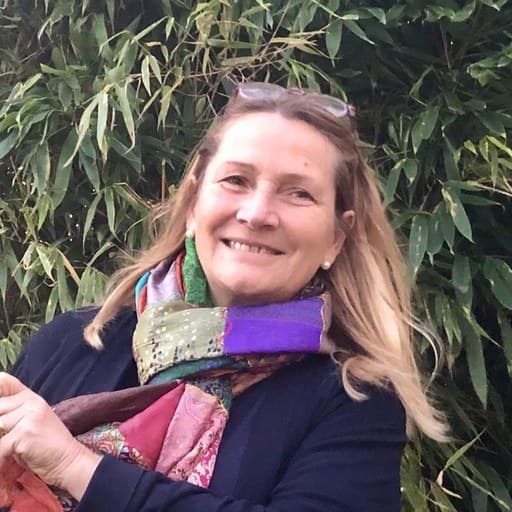
About the author
Valérie Fabre · Founder & Director, Harmonika Institute
Valérie Fabre founded Harmonika Institute in 2025, after a decade seeing clients in private kinesiology practice and, before that, thirteen years in international trade. A French-born polyglot who now splits her time between Dallas and Miami, she sets the school's curriculum and editorial standards and champions ethical, in-person training.
Read more about Valérie Fabre →