Journal · Mindfulness · Career path
How to Become a Meditation Teacher: Hours, Credentials and Pay
How to become a meditation teacher: the 7 steps, credential paths from $5,000 to $14,225, why personal practice is the real prerequisite, where the work is.
Valérie Fabre, Founder & Director, Harmonika Institute · September 13, 2026 · 10 min read

Key takeaways
- No state licenses meditation teachers. Anyone may teach; what a credential does is get you hired by studios, companies, schools and clinics that ask for one.
- Personal practice is the real prerequisite. Serious programs expect 1 to 2 years of daily practice and at least one multi-day silent retreat before you apply. That is where most people's timeline actually sits.
- Credential paths run from 12 days to 2 years. Our May 2026 survey of U.S. providers puts the full MBSR teacher pathway at Brown at 398 instruction hours and $14,225 over 2+ years; private certifications such as ours run 12 in-person days, 84 teaching hours, $5,000.
- The paid work is mostly not in studios. Corporate sessions, school programs and healthcare wellness contracts pay several times what a drop-in class does; app work is rare and poorly paid.
- Expect 18 to 36 months from first retreat to first paid course. Faster is possible; it usually shows.
In our cohorts, the first paid class typically arrives three to four years after a person starts sitting, and about a year after she finishes training. The years before training are not wasted time; they are the qualification. Nobody checks a certificate at the door of a meditation class, but everybody can tell within ten minutes whether the person at the front has a practice of her own. This guide is the sequence, the credential options with their real prices, and where the money actually is.
If you are a yoga teacher, the shortest route is described in our article on moving from yoga teacher to mindfulness instructor. If you want to know what a serious program must contain before you compare any, read what a mindfulness teacher certification must include. This page is the career map.
Do you need a credential to teach meditation in the U.S.?
Legally, no. Meditation and mindfulness instruction is unregulated in every state; there is no board, no licence and no protected title for “meditation teacher”. Two things narrow that freedom in practice. The first is the market: corporate wellness buyers, school districts and hospital employee-wellness programs increasingly ask for documented training hours, liability insurance and a recognisable certificate. The second is a small set of specific names. MBSR (Mindfulness-Based Stress Reduction) is a defined eight-week curriculum with its own teacher-qualification pathways, and MBCT (Mindfulness-Based Cognitive Therapy) is a clinical program delivered by licensed clinicians. You may teach mindfulness without either; you may not call your course MBSR or MBCT without the corresponding qualification.
Scope of practice
A meditation teacher teaches a practice. She does not treat anxiety, depression, trauma or pain, does not screen for them, and does not advise on medication. If a participant describes symptoms that sound clinical, the teacher's role is to say the practice is not a treatment and to refer to a licensed professional. Working inside a hospital or school adds that institution's rules on supervision and background checks; ask before you offer sessions there.
What is the real prerequisite?
A practice you have kept when it was boring. Every credible teacher-training program in our May 2026 survey requires an established personal practice before admission: the Brown and UC San Diego MBSR pathways expect years of daily sitting plus at least one silent retreat of five days or more, and the completion of an eight-week MBSR course as a participant, before the teacher track opens. On our own info session it is the first thing we ask about, and a candidate with no practice yet is advised to start there rather than enrol.
The reason is not gatekeeping. Guiding a room through a difficult sit, fielding “I felt worse afterwards”, sitting with someone who is crying at the end of a body scan: none of that is technique. It is what you have learned from your own cushion. Our course manual's Module 3, “leading a class, holding a room, fielding inquiry”, assumes you bring the practice and teaches the holding.
What are the steps to become a meditation teacher?
Seven, and they overlap. The order below is the one our faculty recommends to people who ask on the admissions call; steps one and two are where most of the calendar goes.
- 1
Sit daily for at least a year
Twenty minutes, most days, one method. Keep a plain log. Programs will ask how long and how often, and the honest answer is the only useful one.
- 2
Take an 8-week course as a participant
MBSR, or a secular equivalent, in person if you can. You need to have been the person in the chair before you are the person at the front. Cost: typically $300 to $600.
- 3
Do one silent retreat of 3 to 7 days
Most teacher pathways require it; all of them should. It is where you find out whether your practice holds without a teacher's voice.
- 4
Choose the credential path that matches the work you want
MBSR teacher qualification for clinical and academic settings; a private certification for studios, corporate and community work; an educator-focused program for schools. The table below gives hours and prices.
- 5
Lead practices under supervision
Guide real people, get feedback, log the hours. In our program that happens live in class, with the cohort as your group and feedback after every pass; other paths call it a practicum or mentorship.
- 6
Get insured and pick a first setting
General and professional liability for a meditation teacher costs roughly $150 to $350 a year. Then choose one setting to start in, not four.
- 7
Teach a full 8-week arc, then price it
Your first course will be underpriced or free. Run it, keep the feedback, and price the second one against the ranges in the work table below.
Which credential paths exist, and what do they cost?
Four families, with a wide price spread. Our May 2026 survey of U.S. providers found the MBSR teacher market “the most academically gatekept” of the mind-body modalities, with a full-certification average around $10,500 and two years, and a separate low-cost tier of online “mindfulness coach” certificates that rarely include supervised teaching.
| Path | Provider examples | Duration and hours | Price | Best suited to |
|---|---|---|---|---|
| MBSR teacher qualification | Brown University Mindfulness Center (inheritor of the UMass lineage); UC San Diego MBPTI | 2+ years; Brown: 398 instruction hours plus 4 silent retreats; UCSD: 6-day intensive, 10-week practicum, advanced intensive | Brown $14,225 plus retreat and prerequisite costs; UCSD about $11,190 excluding room and board | Clinical, hospital and academic settings; anyone who wants to teach MBSR by name |
| Regional apprentice-style programs | Mindfulness Northwest (Bellingham and Seattle) | 2-year hybrid program | $9,900 | Practitioners who want depth and a regional community without the university price |
| Educator-focused certification | Mindful Schools | Year-long, about 300 hours, with 2 residential retreats | $5,800 to $6,500 | Teachers and school staff; K-12 programs |
| Workplace-focused short courses | Mindful Leader Foundations | 8 weeks, live online | About $1,800 to $2,400 | Corporate trainers adding mindfulness to an existing role |
| Private in-person certification | Harmonika Certified Mindfulness & Meditation Instructor | 12 in-person days, 84 teaching hours | $5,000 | Studio, corporate and community teaching; people who want live teaching with feedback in a small cohort |
| Online self-paced certificates | Various | 10-60 hours of video | $100 to $800 | Personal interest; rarely accepted by institutional buyers |
The honest number
Add the prerequisites. An 8-week course as a participant ($300 to $600), one retreat ($400 to $1,500 with lodging), insurance and a first year of continuing practice put $1,000 to $2,500 on top of any tuition in the table. For the MBSR pathways, budget $16,000 to $18,000 all in over two to three years. For a 12-day private certification at $5,000 tuition, count on $6,500 to $7,500 all in, including travel to the training city.
Where is the paid work, and what does it pay?
Mostly in rooms that are not meditation studios. The drop-in class is where new teachers start and where almost nobody earns a living; the money is in contracts with organisations that need a defined program delivered to a group, and in courses you sell yourself. The ranges below are what our faculty and alumni report across the ten primary cities in 2026; they vary by city and by how you are introduced.
| Setting | Format | Typical pay | How the work is found |
|---|---|---|---|
| Corporate wellness | 45-60 minute session, or a 4-8 week series | $300 to $1,500 per session depending on company size; series priced per employee or flat | HR and benefits contacts; one good client refers the next |
| Schools and districts | Staff training days; classroom programs | $500 to $2,000 per training day; classroom programs by contract | Educator-focused credentials open the door; districts want insurance and background checks |
| Healthcare employee wellness | Recurring sessions for staff; sometimes for outpatients | $75 to $200 per hour; MBSR-qualified teachers command the top of the range | Hospital wellness coordinators; MBSR name recognition matters here |
| Your own 8-week course | 8 to 15 participants, in person or hybrid | $300 to $600 per participant, so $3,000 to $8,000 per course | Your own list; venue partnerships; word of mouth from the first cohort |
| Studios and community centres | Drop-in class, 30-60 minutes | $40 to $100 per class, or a share of $15-$25 entry fees | Easy to get, hard to live on; useful as visibility |
| Apps and recorded content | Guided recordings by contract | Small flat fees; a handful of teachers earn well, most earn little | Rarely available to new teachers |
Two patterns from the table. First, the settings that pay best all ask for a credential and insurance, and several ask for the MBSR name specifically. Second, the course you run yourself is the only line where income scales with your own effort rather than someone else's budget, which is why our Module 5 spends two days on “designing programs, pricing, ongoing supervision”. For context across the field, see our session rate benchmarks across 29 modalities.
From the training floor
The people who build a teaching income fastest in our cohorts are not the most experienced meditators. They are the ones who already stand in front of groups for a living: teachers, nurses, HR trainers, yoga instructors. They add the practice to a room they can already hold. The deep practitioners who have never taught take a year longer, and the year is spent learning to speak.
How long does it take to become a meditation teacher?
Eighteen to thirty-six months from your first retreat to your first paid eight-week course, in our experience, whichever credential path you take. The MBSR pathways are two years by design. A private certification like ours takes four to six months of classroom and practice time, but the year of daily practice before it and the months of supervised teaching after it do not compress. People who try to skip the first year tend to stall at step five, when they are asked to guide real people and discover they have nothing underneath the script.
What does our program cover, and who is it for?
Secular mindfulness, taught in a room of ten, for people who want to lead groups in studios, workplaces and community settings and who are not aiming at the MBSR title. Our in-person Mindfulness and Meditation Instructor program runs 12 classroom days (84 teaching hours) for $5,000, plus about 77 hours of personal study between sessions. The manual's five modules are foundations and the eight-week arc; core practices (body scan, sitting practice, mindful movement, RAIN); teaching craft; workplace mindfulness; and practice and business.
I chose not to call it MBSR teacher training, because it is not, and because the Brown pathway does that job properly for people who need it. What we do is put you in front of nine other people, with an instructor listening, from day two. If you want to hear what that sounds like, our 15-minute body scan script is the first practice students lead.
- Good fit: a daily practice of a year or more, at least one retreat, and a setting in mind (a studio, an employer, a school, a community).
- Poor fit: no practice yet, or a goal of clinical MBSR delivery, or the expectation that a certificate alone brings clients.
- What you leave with: a full eight-week program you have led parts of, with feedback from instructors and a cohort of ten.
Questions on this topic.
How much do meditation teachers make?+
It depends almost entirely on setting. Drop-in studio classes pay $40 to $100 each. Corporate sessions run $300 to $1,500 depending on company size, and a self-run 8-week course with 10 participants at $400 each brings in $4,000. Full-time teachers in our experience combine two or three of these; part-time teachers with one corporate client and one course a quarter commonly earn $10,000 to $25,000 a year from it.
Can you become a meditation teacher without certification?+
Yes. No U.S. state regulates meditation teaching, so anyone may lead a class. In practice, corporate buyers, schools and healthcare wellness programs ask for documented training and liability insurance before they contract you, and studios increasingly do the same. Certification is a market requirement, not a legal one, and it matters most in the settings that pay most.
What is the difference between a mindfulness teacher and a meditation teacher?+
Mostly the tradition and the vocabulary. “Mindfulness teacher” usually means secular, present-moment awareness practices in the MBSR lineage, taught in workplaces, schools and clinics. “Meditation teacher” is broader and may include concentration practices, mantra, loving-kindness or a religious tradition. The training paths overlap heavily; the names matter to buyers, who search for “mindfulness” in corporate and healthcare settings.
How long does it take to become a certified meditation teacher?+
From four months to two years for the training itself, and eighteen to thirty-six months in total once you count the personal practice programs require beforehand and the supervised teaching afterwards. The MBSR teacher pathways at Brown and UC San Diego take two or more years. Our in-person program runs 12 classroom days (84 teaching hours) over a few months, after at least a year of daily practice.
Do you need to be MBSR certified to teach mindfulness?+
Only if you want to call your course MBSR or work in settings that require that name, typically hospitals and academic clinics. MBSR is a specific eight-week curriculum with its own teacher-qualification pathways, now anchored at Brown University. Mindfulness in general is not owned by anyone; a secular mindfulness instructor with a different credential can teach in studios, companies, schools and community settings without MBSR qualification.
What qualifications do you need to teach meditation in schools?+
A background check and the district's own requirements first, then a credential the district recognises. Educator-focused certifications such as Mindful Schools (about 300 hours over a year, $5,800 to $6,500) are built for this. Existing teachers can often add mindfulness to their classroom with a shorter training; outside providers usually need insurance, a defined curriculum and a contract with the district.
Is being a meditation teacher a full-time job?+
For a minority. Most meditation teachers combine teaching with another role: a related practice such as yoga, coaching or nursing, or an unrelated day job. Full-time teachers typically hold one or two corporate or institutional contracts plus their own courses, and they took two to five years to get there. Starting part-time, with one setting, is the path our faculty recommends.
What insurance does a meditation teacher need?+
General and professional liability, which for a meditation or mindfulness teacher costs roughly $150 to $350 a year from the providers that cover holistic practitioners. Corporate clients, schools and studios almost always ask for a certificate of insurance before you start. Some also ask for proof of training hours. Get the policy before your first paid session, and check whether it covers teaching in workplaces and online.
Tags:
MindfulnessCareer pathCredentials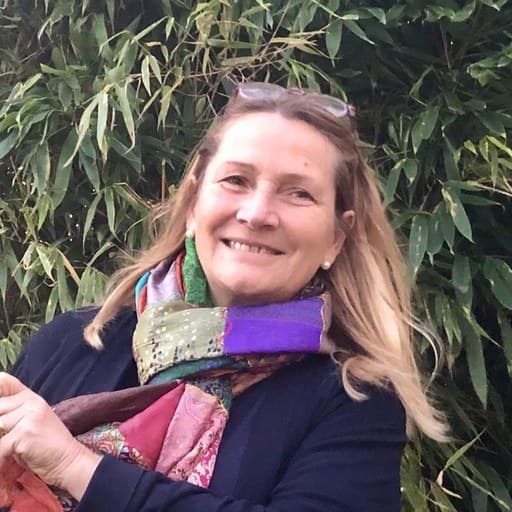
About the author
Valérie Fabre · Founder & Director, Harmonika Institute
Valérie Fabre founded Harmonika Institute in 2025, after a decade seeing clients in private kinesiology practice and, before that, thirteen years in international trade. A French-born polyglot who now splits her time between Dallas and Miami, she sets the school's curriculum and editorial standards and champions ethical, in-person training.
Read more about Valérie Fabre →