Journal · Practitioner income · Holistic practice
Session Rate Benchmarks Across 28 Holistic Modalities
A modality-by-modality reference to U.S. session rates, lengths and formats across all six families, plus the three factors that decide where you sit in the range.
Valérie Fabre, Founder & Director, Harmonika Institute · May 12, 2026 · 11 min read

Key takeaways
- The whole field sits between roughly $60 and $300 a session. Every one of the 28 modalities we train falls inside that band. Most of them cluster between $80 and $160.
- Three things set your position in the range. Whether the work is hands-on or conversational, how long a session runs, and whether the modality carries an implied problem to solve.
- Group formats break the hourly ceiling. Sound, breathwork, expressive arts and facilitation work earn per head, which is why a $35 ticket can beat a $140 private session.
- Gross rate is not income. Room rental, insurance, no-shows, self-employment tax and unbillable admin routinely take 35 to 50 percent of a headline rate.
- These are market characterisations, not survey data. They describe what practitioners commonly advertise in U.S. metros. No one runs a wage census on this field, and anybody who tells you otherwise is selling something.
Two practitioners certified in the same month, in the same city, charge $70 and $180 for what is nominally the same hour. Neither is wrong. One works over a table in a shared wellness suite on a Saturday, the other runs a four-session package out of a private room in a medical building and books three weeks out. The gap between them is not skill, and it is not luck. It is a set of structural factors that you can actually read off the modality itself, before you ever enrol.
This article is the reference table for our Income cluster. It covers all 28 modalities across the six families we teach, with the session length and format each one conventionally uses, and the rate band you will typically see advertised in U.S. markets. Then it explains what generates the spread, because a number without a mechanism is useless to you.
Where these numbers come from, and what they are not
Nobody surveys this field. Holistic practitioners are overwhelmingly sole traders, most bill under a personal name or a single-member LLC, and there is no licensing body collecting fee schedules. Bureau of Labor Statistics categories capture licensed massage therapists and some counselling roles, but they do not describe a certified Reiki practitioner or an Enneagram facilitator at all.
So what follows is a characterisation of an advertised market: the rates practitioners publish on their own booking pages, the prices wellness centres list, and what our faculty and graduates report seeing in the ten primary markets we run cohorts in. That is a real and useful signal. It is not a statistic, and we are not going to dress it up as one by attaching a decimal place to it.
Two consequences follow. First, treat every band below as a range you can sit anywhere inside, not a going rate you must match. Second, expect your own city to shift the whole table. New York, Boston, Seattle and coastal California run 20 to 40 percent above the mid-band. Much of the Midwest and the South runs below it, though the cost of a room drops too, so net position is closer than the gross rates suggest.
How to read these bands
The low end is not the beginner rate and the high end is not the expert rate. Both ends are occupied by working practitioners. The low end is usually a shorter session, a shared or spa setting, a lower-cost market, or a deliberately accessible price. The high end is usually a longer session, a private room, a defined specialism, and a client base that arrived by referral rather than by search.
The three factors that set the range
1. Hands-on versus conversational
Hands-on modalities have a hard physical ceiling. You can deliver perhaps five or six table sessions in a day before your hands and your attention degrade, and most practitioners settle at twelve to twenty sessions a week across five days. That scarcity supports a decent per-session rate but caps weekly volume, and it caps your career length if you do not manage load.
Conversational modalities carry no such physical limit, and they inherit pricing habits from coaching and consulting, which are considerably higher. A holistic life coach charging $200 an hour is not charging more because the work is harder. They are charging more because the adjacent market they are compared against is business coaching, not massage.
2. Session length and what the client thinks they bought
Rates scale with duration, but not proportionally. A 90-minute session almost never costs 50 percent more than a 60-minute one, because the client is pricing an appointment, not a unit of time. Modalities with a conventional 90-minute format therefore look expensive per session and are often weaker per hour than a tight 50-minute conversational format.
The intake session is the other length effect. Ayurveda, holistic naturopathy, herbal consultation and Bach flower work all begin with a long first appointment that carries a premium, followed by shorter, cheaper follow-ups. If you model your income off the intake price you will overshoot badly.
3. Whether the modality promises to solve something
This is the biggest single lever, and the most legally dangerous one. Modalities that clients approach with a specific complaint support higher rates than modalities clients approach for general wellbeing. Someone who wants to stop smoking, or who has a presentation in nine days that terrifies them, will pay two or three times what a relaxation client will pay, and will book a package without negotiating.
The trap is obvious once stated. The rate premium comes from a problem-solving promise, and a non-licensed practitioner must not make one. You can describe your work, your structure, and what clients commonly report. You cannot say you treat anxiety or cure a habit. Practitioners who charge at the top of the hypnosis or EFT band without crossing that line do it by defining a narrow audience and a clear process, not by claiming outcomes.
Price is not the risk. Claims are.
Charging $250 for a session is not a regulatory problem. Describing that session as treatment for a condition is, and it is the fastest route to a complaint. The same applies to titles: say Certified Hypnosis Practitioner, not the clinical variant; say holistic naturopathy, never doctor or ND, and note that naturopathy practice is prohibited outright in Florida, South Carolina and Tennessee. Hands-on modalities carry a second question, which is whether your state's massage practice act sweeps in soft-tissue work for compensation. Verify with your own state board before you publish a price list.
Session rate benchmarks across all six families
Rates below are per session for a solo private practice in a U.S. metro, unless the row says otherwise. Where a modality is conventionally delivered to groups, the per-head figure is given, because that is how the money actually arrives.
| Modality | Family | Typical length | Usual format | Rate band |
|---|---|---|---|---|
| Reiki | Energy | 60–75 min | 1:1, table, clothed | $70–140 |
| Energy healing (eclectic) | Energy | 60–90 min | 1:1, table or seated | $70–150 |
| Magnetism | Energy | 45–60 min | 1:1, standing or seated | $60–120 |
| Crystal healing | Energy | 60–75 min | 1:1, table, layouts | $60–120 |
| Access Bars | Energy | 60–90 min | 1:1, table, light touch to head | $80–150 |
| Bioresonance | Energy | 45–60 min | 1:1, device-assisted | $75–150 |
| Sound healing | Energy | 45–75 min 1:1 / 60 min group | 1:1 table, or group sound bath | $85–160 1:1 · $25–45 per head |
| Hypnosis | Mind-Body | 60–90 min | 1:1, usually sold as a package | $100–250 · packages $400–1,200 |
| NLP | Mind-Body | 60–90 min | 1:1, conversational | $90–200 |
| EFT | Mind-Body | 60 min | 1:1, seated · group borrowing-benefits | $75–160 · $20–40 per head |
| Mindfulness instruction | Mind-Body | 60 min 1:1 / 8-week course | Mostly group course, some 1:1 | $80–150 1:1 · $250–500 per course seat |
| Breathwork | Mind-Body | 60–90 min | 1:1 facilitated, or group | $90–180 1:1 · $25–45 per head |
| Kinesiology (muscle testing) | Mind-Body | 60–75 min | 1:1, table, hands-on | $80–150 |
| Reflexology | Movement & Bodywork | 45–60 min | 1:1, chair or table, feet and hands | $60–110 · spa employment far lower |
| Acupressure (no needles) | Movement & Bodywork | 60 min | 1:1, clothed, manual pressure | $70–130 |
| Chi Nei Tsang | Movement & Bodywork | 60–75 min | 1:1, table, abdominal | $90–160 |
| Expressive arts facilitation | Expressive Arts | 90–120 min | Predominantly small group | $30–60 per head · $80–150 1:1 |
| Mandala work | Expressive Arts | 2–3 hr workshop | Group workshop, materials included | $35–70 per head |
| Creative journaling | Expressive Arts | 90 min / 6-week series | Group series, often community venue | $25–50 per head · $150–300 per series |
| Holistic life coaching | Communication & Coaching | 50–60 min | 1:1, packages standard | $100–300 · packages $600–3,000 |
| Enneagram facilitation | Communication & Coaching | 90 min 1:1 / half-day team | 1:1 typing session or team workshop | $150–300 1:1 · $1,200–3,500 per team session |
| Nonviolent Communication | Communication & Coaching | 2 hr group / full-day org | Group practice or organisational | $30–60 per head · $800–2,500 day rate |
| Transactional analysis (non-clinical) | Communication & Coaching | 60 min | 1:1 educational, or team session | $90–180 |
| Ayurvedic lifestyle consultation | Holistic Consultation | 75–90 min intake | 1:1 intake plus follow-ups | $120–250 intake · $60–120 follow-up |
| Holistic naturopathy | Holistic Consultation | 60–90 min intake | 1:1 intake plus follow-ups | $100–200 intake · $60–110 follow-up |
| Aromatherapy consultation | Holistic Consultation | 60 min | 1:1, blend often billed separately | $70–140 · blends $15–40 |
| Phytotherapy / herbal consultation | Holistic Consultation | 60–75 min intake | 1:1 intake plus follow-ups | $75–150 · follow-up $50–90 |
| Bach flower consultation | Holistic Consultation | 45–60 min | 1:1, remedy blend included or extra | $60–120 |
What the table shows once you stop reading it row by row
Look at the columns rather than the rows and three patterns come out.
The energy family is the tightest band in the whole field. Almost every row sits between $60 and $160, regardless of how different the techniques are, because clients buy the format rather than the method. An hour on a table in a quiet room prices at an hour on a table in a quiet room. If you are choosing between Reiki, magnetism and crystal work on income grounds, you are choosing on the wrong grounds. Choose on temperament and on what you can honestly say.
The coaching and facilitation family carries the highest ceiling and the widest spread. That is where a certified practitioner can plausibly bill $250 an hour and also where the majority earn very little, because the acquisition problem is harder and the market is crowded with people who bought a $199 certificate online.
The expressive arts and group formats look cheapest per person and are frequently the strongest per hour worked. Ten people at $45 for a 90-minute session, in a community room costing $60, is $390 for two hours including setup. That beats almost every 1:1 row in the table, and it is the reason facilitation-capable practitioners tend to out-earn table-based ones by year three.
From rate to actual income
Take the middle of the Reiki band, $105, and a solid fifteen sessions a week. That is $1,575 gross, or roughly $75,000 across 48 working weeks, which sounds like a career.
Now subtract. Room rental at two days a week in a shared suite, commonly $250 to $600 a month. Professional liability insurance, a few hundred a year. Linens, laundry, a table, a booking system, a website. A no-show and late-cancellation rate that runs 5 to 12 percent even with a policy. Self-employment tax on the remainder. Unbillable hours spent on marketing, notes, rebooking and bookkeeping, which for a solo practitioner routinely equals half of billable time.
The realistic take-home from that gross is somewhere between $38,000 and $48,000. That is a real living in Austin or Atlanta and a difficult one in Manhattan, and it assumes you actually hold fifteen sessions a week, which most practitioners do not reach until year two or three.
The number that actually matters
Not your rate. Your filled-slot count. Raising a $90 session to $110 adds $20. Going from six filled slots a week to eleven adds $450 at the old rate. Almost every practitioner we meet wants to talk about pricing when their problem is a half-empty calendar, and pricing is the easier conversation, which is precisely why it happens instead.
The rates that are not session rates
Three revenue lines sit outside the table and matter more than any of its rows.
Packages. Selling five sessions at a modest discount changes your economics twice: it front-loads cash and it removes the rebooking decision from every appointment. Hypnosis and coaching are sold this way as standard. Energy and bodywork modalities usually are not, and that is a habit rather than a rule.
Corporate and organisational work. A 90-minute sound session for a company offsite, an NVC day for a leadership team, a mindfulness series delivered to staff. Day rates in the $800 to $3,500 area are ordinary here and the buyer is a budget holder, not an individual paying from after-tax income. Nearly all of it arrives through personal contact rather than search, which is why practitioners with a prior corporate life get there faster.
Teaching. Once you have the hours, running introductory classes pays better per hour than client work in most modalities. Be careful with this one. A teacher with no current client practice degrades quickly, and students can tell.
Choosing a modality on income grounds, honestly
You should not pick based on this table, and we would rather say so than pretend the numbers are decisive. The bands overlap heavily, the spread inside any single modality is wider than the gap between most modalities, and the practitioners at the top of every band got there through positioning and retention rather than through their choice of technique.
What the table is genuinely good for is eliminating a fantasy. If you were expecting $200 sessions in the energy family, now you know. If you assumed group work was small money, now you know it usually is not. And if you were choosing between two modalities you like equally, the format column is a fair tiebreaker, because a practice built on groups behaves very differently from one built on a table.
Our 28 programs sit across all six families, each taught in one format, in cohorts of ten in person and fifteen online: 21 in person across 32 U.S. cities, 7 fully live online, with 1 to 18 teaching days depending on the program. If you want to see how the families differ in what they actually train you to do, start with the programs overview.
Questions on this topic.
What should I charge for my very first paying session?+
Start at the lower-middle of your modality's band, not the bottom. A rate far below market signals inexperience more loudly than a plain sentence saying you are newly certified, and it attracts clients who are shopping on price and will leave the moment someone undercuts you. A common structure is to complete your unpaid or low-cost practice hours at a clearly labelled introductory rate, then move to a real price and hold it. Discount by making the session shorter or bundling, not by shaving the hourly figure.
How often should I raise my rates?+
Most practitioners under-adjust. A reasonable pattern is a modest increase once you are consistently booked above roughly 70 percent of your available slots, applied to new clients first and to existing regulars at a later date with several weeks of notice. Raising a rate almost always loses a few clients and almost never loses enough to reduce income. If nobody objects at all, you moved too little.
Do rates differ much between cities?+
Yes, by roughly 20 to 40 percent between the highest-cost coastal metros and lower-cost markets. But so does the cost of a treatment room, so the net difference is much smaller than the gross gap suggests. Market density matters more than rate: a mid-size city with fewer practitioners and a steady referral network often produces a better income than a saturated expensive one where you spend your first two years invisible.
Why is spa reflexology paid so much less than the band shows?+
Because you are buying clients rather than finding them. Spa and resort employment typically pays a fraction of the private rate per session, sometimes as an hourly wage plus gratuity, and the spa keeps the client relationship. In exchange you get a full book from day one, no marketing, no room cost and no admin. For a new practitioner it is a genuinely reasonable first two years. It becomes a trap only if you stay long enough that you never build your own list.
Can I charge more because my certification took longer?+
Not directly, no. Clients do not price your hours and will not read your certificate. What longer training buys is the thing that lets you charge more indirectly: you can hold a difficult session, you know when to refer out, you have a defined specialism, and your clients rebook. Rate follows retention. It does not follow tuition.
Tags:
Practitioner incomeHolistic practice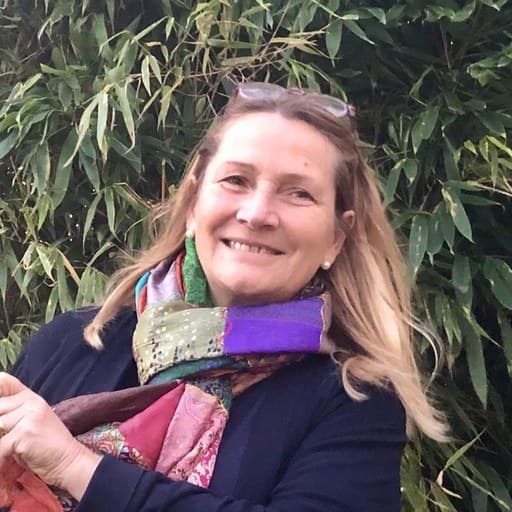
About the author
Valérie Fabre · Founder & Director, Harmonika Institute
Valérie Fabre founded Harmonika Institute in 2025, after a decade seeing clients in private kinesiology practice and, before that, thirteen years in international trade. A French-born polyglot who now splits her time between Dallas and Miami, she sets the school's curriculum and editorial standards and champions ethical, in-person training.
Read more about Valérie Fabre →