Journal · Holistic Naturopathy · Practitioner income
Naturopathy Practitioner Salary: The Real U.S. Numbers
Published naturopathy salary figures describe a licensed profession you will not be entering. Here is the arithmetic for an unlicensed holistic naturopathy practice.
Valérie Fabre, Founder & Director, Harmonika Institute · May 19, 2026 · 9 min read

Key takeaways
- The figure you found is for someone else. Published salary data in the $70,000–$120,000 band describes licensed naturopathic physicians holding a four-year residential doctorate and a state licence. Holistic naturopathy practitioners are a different, unlicensed group, and none of that data applies to them.
- There is no salary, because there is almost no employment. Nearly everyone in this work is self-employed. The honest question is revenue minus overhead minus self-employment tax, not a wage.
- Consultation rates sit roughly in the $75–$180 band depending on the city and the session length, with initial consultations at the top and follow-ups well below it.
- Year one gross is commonly under $20,000. A practice that reaches 12–15 consultations a week by year three can gross $70,000–$85,000, and keep perhaps two-thirds of it before income tax.
- Florida, South Carolina and Tennessee remove the market entirely. Unlicensed naturopathic practice is prohibited in those three states, which is a geographic constraint before it is a financial one.
Type "naturopathy practitioner salary" into a search box and the first answer is usually a number somewhere between $70,000 and $120,000, presented with the confidence of census data. That number is real. It also has nothing to do with the career most people reading this are considering, because it describes a licensed medical profession with a four-year residential doctorate behind it, practising in the roughly two dozen jurisdictions that license it. If you are looking at a private holistic naturopathy certification, you are entering a different occupation with different economics, and copying the wrong number into your household budget is how career changes go wrong.
So this article does two things. It separates the two groups clearly, then builds an income model from the ground up for the unlicensed one, using arithmetic you can check rather than a headline figure you have to trust.
Two occupations, one search term
The confusion is baked into the vocabulary, and search engines make it worse by collapsing everything into a single query.
On one side sits a licensed profession. Its members complete a four-year residential doctoral program at an accredited institution, sit a national board examination, and hold a state licence in a jurisdiction that grants one. In those states they may diagnose, order laboratory work, and in some cases prescribe within a defined formulary. Their titles are protected. The published wage data belongs to them.
On the other side sits holistic naturopathy: private certification, no state licence anywhere in the country, no diagnostic authority, no prescribing, no protected title. This is the path Harmonika Institute trains for, and we are direct about what it is. A holistic naturopathy practitioner works with clients on food, sleep, hydration, movement, stress load, and general lifestyle patterns. Nothing in that description is medical care, and the moment a practitioner describes it as medical care, the legal exposure changes completely.
| Dimension | Licensed naturopathic physician | Holistic naturopathy practitioner |
|---|---|---|
| Training | Four-year residential doctorate | Private certification, months not years |
| State licence | Yes, in licensing states | None exists |
| May diagnose | Yes, within scope | No |
| Insurance reimbursement | Sometimes, state dependent | Effectively never |
| Typical employment | Clinic, group practice, integrative center | Self-employed, solo |
| Income basis | Salary or clinic draw | Fee per consultation, cash pay |
Read the last two rows again, because they are the whole reason a salary figure is the wrong instrument here. You are not applying for a post. You are opening a very small business whose only product is your time, and whose customers pay out of pocket every single time.
Check your state first
Florida, South Carolina and Tennessee prohibit unlicensed naturopathic practice, and those prohibitions are long-standing rather than recent or ambiguous. If you live in Miami, Charleston or Nashville, this modality is not available to you as a business, and no amount of careful wording around it makes it available. Elsewhere the picture divides into states that license the medical profession and are therefore strict about the title, and states that regulate nothing in this area at all. Never call yourself a naturopathic doctor, an ND, a physician or a doctor on the basis of a private certification anywhere in the country. Rules differ by state and change; confirm your own position with the relevant state board before you enrol.
We have written a fuller treatment of the state picture in our map of naturopathy regulation by state. Read it before you read the rest of this one, because geography decides whether the arithmetic below is even relevant to you.
What a consultation actually bills
Fees in this work cluster more tightly than people expect, because clients are paying cash and comparing you against every other wellness service in their neighbourhood.
An initial consultation typically runs 75 to 90 minutes and prices between $110 and $180 in a dense coastal market such as New York, Boston, Los Angeles or Seattle. In Houston, Atlanta or Denver the same session more commonly sits between $85 and $140. Follow-ups run 45 to 60 minutes and price between $65 and $110 nearly everywhere. Those are ranges we are characterising from how practices in these markets publish their fees, not survey findings, and any individual practice can sit outside them.
The number that matters more than the rate is the number of consultations you can realistically hold in a week. This is where most projections break. New practitioners model 25 sessions a week because 25 times $120 makes a satisfying number. In practice, consultation work carries a heavy load of unpaid time: intake review, food-log reading, follow-up notes, rescheduling, and the emotional weight of hearing about people's lives all day. Twelve to sixteen consultations a week is a full workload for most people. Above twenty, quality drops and so does retention.
A three-year model, with the arithmetic shown
Here is what those inputs produce when you multiply them out honestly. This is a model of a solo practice built part-time at first, in a mid-sized market, by someone who does the business work as well as the client work.
| Year 1 | Year 2 | Year 3 | |
|---|---|---|---|
| Consultations per week | 4 | 9 | 14 |
| Blended fee | $95 | $105 | $120 |
| Working weeks | 44 | 46 | 46 |
| Gross revenue | $16,720 | $43,470 | $77,280 |
| Room or suite rental | $2,400 | $5,400 | $9,600 |
| Insurance, software, accounting | $1,800 | $2,400 | $3,200 |
| Marketing, website, continuing education | $1,900 | $3,000 | $4,400 |
| Pre-tax net | $10,620 | $32,670 | $60,080 |
| Self-employment tax at 15.3% | $1,625 | $4,998 | $9,192 |
| Before income tax | $8,995 | $27,672 | $52,110 |
Three things in that table are worth sitting with.
The first is year one. Under $11,000 pre-tax is not a failed practice; it is a normal first year, and it is why most people build this alongside other income rather than replacing a salary on day one. The second is that overhead scales with you. More clients means more room hours, and the shared wellness suite that costs $50 a day starts to matter once you are there three days a week. The third is the self-employment tax line, which employed people never see and consistently forget. It arrives whether or not you set money aside for it.
The honest number
A practitioner three years in, working near a full consultation load in a decent market, is looking at something in the region of $50,000 to $60,000 before income tax. Reaching $90,000 or more is possible and it does happen, but almost never through one-to-one consultations alone. It happens through group programs, workplace contracts, or teaching. If your financial plan requires six figures from individual sessions, the plan is wrong before you start.
Packages, and why they change the arithmetic
The single largest income difference between two practitioners with identical skills is usually the sales unit. One sells a consultation. The other sells a twelve-week program.
Selling by the session means you re-sell every fortnight, forever, and your revenue is a direct function of how many people happened to book that month. Selling a structured program of, say, an initial consultation plus five follow-ups over twelve weeks at $650 does three things at once. It fixes your revenue for a quarter, it raises the effective value of each client from roughly $200 to roughly $650, and it dramatically improves outcomes, because dietary and lifestyle change is a months-long process that a single session cannot deliver anyway.
It also transfers risk to you, which is the honest trade. If someone pays $650 upfront and disappears after session two, you keep the money and you have a difficult relationship. Write a refund policy before you need one.
- 1
Set one program price, not a menu
Three tiers paralyse buyers. One clearly described program with a stated length and a stated price converts far better than a price list.
- 2
Quote the whole thing, then the monthly
"$650 for twelve weeks, or three payments of $225." Both numbers in the same breath. Never lead with the monthly figure alone.
- 3
Hold a low-cost entry point
A paid 20-minute fit call at $25–40 filters out people who want free advice and converts far better than a free one, because paying anything at all signals intent.
- 4
Track one number: repeat rate
What share of clients buy a second program. Below 25%, the problem is your work or your fit, not your marketing spend.
The supplement question
Every income projection you find for this field somewhere includes product revenue, usually presented as easy margin. It deserves more caution than it usually gets.
Reselling supplements to your own clients does add revenue, typically at 25 to 40 percent margin through practitioner dispensary platforms. It also creates a conflict of interest that a client can see immediately, and it moves you toward territory where recommending a specific product for a specific complaint can look like practising medicine without a licence. In states that license the naturopathic medical profession, that line is watched more closely, not less.
From the training floor
The practitioners who build durable practices tend to keep product revenue under about 15% of the total, and say so openly to clients. The ones who get into difficulty are usually the ones whose product income overtook their consultation income without them noticing, at which point the incentive quietly reshapes the advice. Watch that ratio yourself. Nobody else will.
If you do stock or recommend products, keep three habits: never suggest anything as a treatment for a named condition, always ask what prescribed medication the client takes and tell them to check interactions with their prescriber, and refer out early. Our guidance on when to refer out covers the boundary in more detail.
What actually separates the top of the range
Across the modalities we train, the income spread within a single certification is far wider than the spread between certifications. Two people finish the same program in the same city. Three years later one grosses $22,000 and the other grosses $95,000.
The gap is almost never technical knowledge. It is four things, in roughly this order of impact. A defined client group, so that referrals have somewhere to point: perimenopausal women managing fatigue, or endurance athletes, or new parents. A program-based sales unit rather than a session. A second revenue line that is not one-to-one, usually a small group program of six to ten people running six weeks, which is the single fastest way to break the hourly ceiling. And a referral relationship with two or three licensed professionals locally, which supplies clients and keeps your scope honest at the same time.
None of that is taught by a certificate. All of it is learnable, and it is the part of the work most training programs skip entirely.
Questions on this topic.
Can I earn a full-time income from holistic naturopathy alone?+
Yes, but usually not in the first two years and rarely from individual consultations alone. A practitioner at a full consultation load in a mid-sized market lands somewhere around $50,000–$60,000 before income tax by year three. Getting meaningfully above that generally requires group programs, corporate or studio contracts, or teaching. Most people we train build it alongside part-time work for the first eighteen months, which is a sensible plan rather than a compromise.
Why is the salary figure I found online so much higher?+
Because it describes licensed naturopathic physicians, who complete a four-year residential doctorate and hold a state licence permitting diagnosis and, in some states, prescribing. They are employed in clinics and integrative centers, so a salary figure makes sense for them. It does not describe a private-certification holistic naturopathy practitioner, who is self-employed, paid per consultation in cash, and cannot diagnose anything.
Does health insurance ever reimburse my clients?+
Effectively no. Reimbursement flows to licensed providers, and private certification does not create that status. Some clients can use HSA or FSA funds in limited circumstances, usually only with documentation from a licensed provider, and you should not build a business plan on it. Assume every dollar arrives from the client's own pocket, and price accordingly.
What if I live in Florida, South Carolina or Tennessee?+
Then this specific modality is closed to you as a business, and that is worth accepting quickly rather than trying to word your way around. Those three states prohibit unlicensed naturopathic practice. Practitioners in those markets who want adjacent work generally move toward nutrition-focused coaching, mindfulness, or another family of modality entirely. Talk to your state board, then choose a different path rather than a different vocabulary.
How much should I budget before the practice supports me?+
Plan for training cost plus roughly $4,000–$6,000 of first-year operating expense, and assume the practice contributes little for twelve months. The commonest financial mistake is not overspending on setup but underestimating how long the ramp takes, then abandoning a practice in month nine that was six months from working.
Tags:
Holistic NaturopathyPractitioner income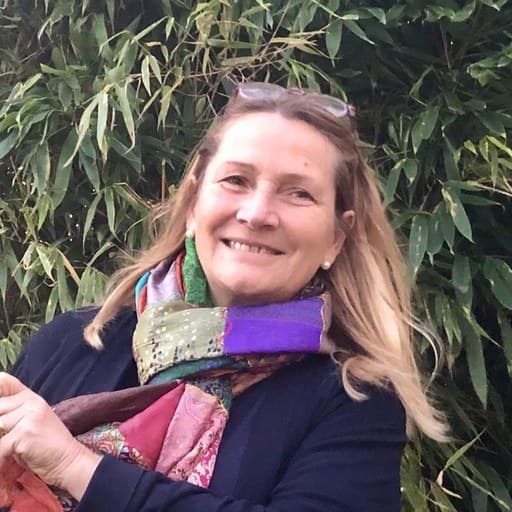
About the author
Valérie Fabre · Founder & Director, Harmonika Institute
Valérie Fabre founded Harmonika Institute in 2025, after a decade seeing clients in private kinesiology practice and, before that, thirteen years in international trade. A French-born polyglot who now splits her time between Dallas and Miami, she sets the school's curriculum and editorial standards and champions ethical, in-person training.
Read more about Valérie Fabre →