Journal · Mindfulness · Choosing a program
Mindfulness Teacher Certification: What a Program Must Include
The field's own teaching standards ask for daily practice, silent retreat and supervised teaching. Most mindfulness certifications skip all three. Here is what to check.
Valérie Fabre, Founder & Director, Harmonika Institute · July 1, 2026 · 11 min read

Key takeaways
- Three requirements separate real training from a certificate. A sustained daily personal practice, time in silent retreat, and teaching observed by someone competent. Most programs selling "mindfulness certification" for under $500 include none of them.
- The lineage programs are long on purpose. Full teacher qualification in the MBSR tradition typically takes two to four years and runs into five figures once retreats and supervision are counted. A 40-hour online certificate is a different product wearing the same word.
- You cannot teach a practice you don't do. The one thing students detect instantly is a teacher reading instructions they have never followed at 6am on a bad week.
- Intensive meditation destabilises some people. Adverse experiences are documented in the research literature, not rare, and a responsible teacher screens for risk and knows where to refer.
- Nobody licenses this. No U.S. state regulates mindfulness teaching, which means the burden of proving competence sits entirely on you and on the record you can show.
A woman in a Seattle cohort put it better than any brochure could. She had finished a 50-hour online mindfulness certification eighteen months earlier, started a Tuesday evening group at her church, and by week four a participant had sat down after a body scan and quietly said she was having a panic response every time she closed her eyes. The teacher had no idea what to do. She had a certificate, a script, and nothing behind either of them.
That gap is the whole subject of this article. Mindfulness has the widest distance in the entire holistic field between what a certification costs and what teaching competently actually requires. Not because the practice is complicated. Because the practice is simple and holding a room of people while they do it is not.
What the field's own standards ask for
Mindfulness is unusual among unregulated modalities in that it has developed reasonably serious internal standards. The teaching-competence frameworks that grew up around Mindfulness-Based Stress Reduction, and the assessment tools used to rate teacher skill in research settings, converge on a short list of prerequisites that appear again and again.
A personal meditation practice of some years, not months, maintained daily. Attendance at teacher-led silent retreats, usually measured in total days rather than events. Completion of the eight-week course yourself, as a participant, before you attempt to lead it. Supervised teaching, where an experienced teacher watches you run sessions and gives you feedback you probably won't enjoy. Ongoing supervision after qualification rather than a certificate that closes the file.
Now compare that against what the market sells. Search "mindfulness certification" and the first page will offer you a self-paced course of twenty to sixty hours, a downloadable manual of scripts, and a PDF at the end. No retreat. No observation. No requirement that you meditate at all, before or after.
Both are called certification. Only one of them corresponds to any recognised standard, and there is no regulator anywhere in the United States who will tell a prospective student the difference.
The question that sorts it
Ask any program: "How many hours will someone experienced watch me teach, and will they give me written feedback?" If the answer is zero, or vague, or "you'll record yourself and self-assess", you are buying content, not training. The number can be small and still honest. It cannot be absent.
The MBSR and MBCT lineage, described plainly
The structured lineage most credible programs trace back to is Mindfulness-Based Stress Reduction, developed by Jon Kabat-Zinn at the University of Massachusetts Medical Center from 1979. The format is durable: eight weekly sessions of roughly two and a half hours, a full day of practice around week six, and daily home practice of forty-odd minutes. Body scan, sitting practice, mindful movement, informal practice woven into ordinary life.
Mindfulness-Based Cognitive Therapy came later, adapting that structure for people with a history of recurrent depression. It matters here for a reason that is easy to miss: MBCT is a clinical intervention, delivered by licensed mental-health professionals to a defined population, and teaching it is not something a private certification confers. If you are not licensed, MBSR-style secular mindfulness instruction is your territory and the cognitive-therapy adaptation is not.
Between those poles sits a large secular teaching market. Workplace programs, schools, community groups, athletic settings, one-to-one instruction. That is where most certified mindfulness teachers actually work, and the training that prepares you for it is closer to the MBSR curriculum than to anything clinical.
| Tier | Typical duration | Retreat required? | Observed teaching? | Market cost range |
|---|---|---|---|---|
| Online self-paced certificate | 20–60 hours | No | No | $50–$600 |
| Weekend or week-long intensive | 16–40 hours | Rarely | Sometimes | $600–$2,500 |
| Cohort teacher training | 4–12 months | Often | Yes | $3,000–$8,000 |
| Full lineage qualification | 2–4 years | Yes, multiple | Yes, plus supervision | $8,000–$20,000+ |
Those ranges characterise the U.S. market as we observe it, not any single provider. The point of the table is the middle two columns. Price tracks retreat and observation more reliably than it tracks anything else, and if you find an expensive program with neither, you have found a marketing operation.
Why the retreat requirement is not mysticism
The silent retreat requirement is the one prospective students argue with most, and it sounds like gatekeeping until you understand what it produces.
Five or seven days of silence does something a weekly sit does not. Around day two or three, most people hit a stretch of genuine unpleasantness. Boredom that curdles into irritation. Old material surfacing. The specific misery of having nothing to distract yourself with. Sitting through that, without leaving, is the experience you draw on when a participant in week five of your course tells you they hate this and it isn't working and they want to stop.
You are not going to help that person with a technique. You are going to help them because you recognise exactly where they are, having been there yourself, and you can say so without alarm in your voice. That recognition cannot be transferred by a manual.
Retreat also does something less romantic. It calibrates your honesty. Teachers who have not sat long silent periods tend to describe the practice in a way that oversells calm and underplays difficulty, which sets participants up to conclude they are failing at meditation when they are simply meditating.
Screening and contraindications: the part nobody advertises
Intensive meditation is not risk-free, and the field spent a long time pretending otherwise. Research on meditation-related adverse experiences has documented anxiety spikes, dissociation, depersonalisation, intrusive imagery, sleep disturbance and re-emergence of traumatic material in a non-trivial minority of practitioners. This is not fringe reporting; it appears in peer-reviewed work by researchers who practise and teach.
What the evidence shows
Reviews of mindfulness-based programs generally find modest but real effects on stress, anxiety symptoms and rumination in general and clinical populations, with the usual caveats about small samples, weak control conditions and self-report outcomes. The same literature increasingly documents adverse effects. Surveys of meditators have reported unpleasant meditation-related experiences in a substantial minority, with a smaller fraction describing lasting functional impairment.
Both findings are real. A program that teaches you the first and not the second has not prepared you to teach.
A responsible program teaches you to screen. That means an intake conversation before someone joins a group, not a waiver form. You want to know about current or recent psychiatric care, trauma history in general terms, dissociative experiences, active substance use, and whether anything has changed sharply in their life in the last few months. You are not assessing anyone. You are deciding whether a group closed-eye body scan is the right room for this person right now, and whether you should be talking to them about a referral instead of a registration.
You also need in-session skills. Shortening a practice. Offering eyes-open alternatives and anchoring in sound or the feet rather than the breath, which is a common trigger. Noticing someone go still in the wrong way. Knowing how to end a session with someone who has become distressed, and having the name and number of a licensed professional you can hand them.
Scope of practice
Mindfulness instruction is not mental-health treatment. A private certification does not permit you to assess, diagnose, or treat any psychological condition, and describing your groups as treatment for anxiety, depression, PTSD or addiction can put you inside activity your state reserves for licensed professionals. Teach the practice, describe the experience, and refer out when material exceeds what an educational setting can hold. No U.S. state currently licenses mindfulness teaching itself, but claims are what regulators respond to. Confirm your own position with the relevant state board.
The daily practice problem
Here is the awkward part of this article.
Most people who buy a mindfulness certification do not have a daily practice. They have an intermittent one, kept up in good weeks and abandoned in bad ones, which is entirely human and entirely disqualifying for teaching. The certification does not fix this and, in a self-paced format, does not even notice.
The reason it matters is not purity. It is that mindfulness instruction is transmitted almost entirely through the teacher's manner. Your pacing, the length of your silences, whether you sound anxious when nothing is happening, how you respond when someone reports something strange. All of that comes from your own hours on the cushion and nowhere else. Participants read it instantly, even when they could not name what they are reading.
So before you spend anything, run a private test. Sit thirty minutes a day for six weeks, including the weeks you don't want to. If you can't hold that without external structure, a certificate will not create it, and you may be better served by a long teacher-led program that builds practice accountability in, or by waiting.
What a defensible curriculum contains
Set aside marketing language and look for content. A program worth its price teaches practice, pedagogy, and the boundary between them.
- 1
The practices themselves, taught from the inside
Body scan, sitting with breath, sound and open awareness, mindful movement, walking practice, loving-kindness. Not as scripts to read but as things you do daily for the length of the program while someone asks you what happened.
- 2
Inquiry, which is the actual craft
Guiding a practice is easy. The skill is what you do afterwards, when a participant says "nothing happened" or "I felt terrible". Inquiry is open questioning that stays with direct experience and does not slide into counselling. It takes the longest to learn and gets the least airtime in cheap programs.
- 3
Group dynamics and holding a room
The dominant talker. The silent one. The person who wants to debate Buddhism. The couple who came together and are having an argument in front of you. Pacing eight weeks so people don't drop out at week three, which is when they always drop out.
- 4
Screening, contraindications and referral
Covered above. If it appears as one slide, that tells you something.
- 5
Supervised teaching with real feedback
You teach, someone competent watches, you get told what you did badly. Repeatedly. Nothing else in a curriculum produces competence at the same rate.
- 6
Ethics, scope and the business of it
What you may say in marketing, what you must not, how to write a participant agreement, insurance, and how mindfulness teaching is actually sold to workplaces and schools.
The hidden line item
Retreat costs are usually excluded from advertised tuition. A five to seven day teacher-led silent retreat in the U.S. commonly runs $600 to $1,600 including accommodation, before travel, and full lineage qualification may ask for several across the training. Budget for it separately. A program that requires retreat and does not mention this before you enrol is being careless with your money.
Where mindfulness teachers actually earn
The income shape here is different from hands-on modalities, and it is worth knowing before you choose.
One-to-one mindfulness instruction is a weak business. Sessions are hard to price above $70 to $120, and unlike bodywork, clients do not tend to book indefinitely; the point of the practice is that they stop needing you. The money is in groups and contracts. An eight-week course of ten to fourteen participants at $250 to $500 a head. Workplace programs sold as a series to an HR or people team, which is the highest-rate work in this modality and typically won by referral rather than advertising. Schools, which pay less and take longer to close but produce steady multi-year relationships. Retreat co-facilitation, once you are established.
Most working teachers stack this on top of something else in year one and two. Yoga teaching, coaching, an existing profession. That is not failure, it is the normal shape, and anyone selling you a single-modality full-time income in twelve months is guessing.
If you are coming from a teaching or facilitation background, this modality rewards you more than most. We've written about that route in moving from yoga teaching to mindfulness instruction, and about how the practice differs from meditation more broadly in mindfulness versus meditation.
How to choose, in practice
Three filters, applied in order.
First, does the program require you to have completed the eight-week course as a participant? If not, you are being asked to teach a curriculum you have never been through, which is absurd on its face and surprisingly common.
Second, will you be observed teaching by a human, and how many times? Get a number in writing before you pay.
Third, what does the program expect of your personal practice, and does it check? A program that asks you to keep a practice log and actually reads it is taking the work seriously. One that never mentions your practice is selling scripts.
Everything else, including price, follows from those three. Our in-person mindfulness training is built around them, in cohorts of ten, because inquiry and group-holding are the two skills that do not survive a screen.
Questions on this topic.
Do I need to be Buddhist to teach mindfulness?+
No, and most secular teacher training is explicitly non-religious. That said, the practices come from Buddhist contemplative traditions and a good program will tell you so rather than pretending mindfulness was invented in a Massachusetts hospital in 1979. Knowing the source matters practically: participants sometimes ask, and a teacher who can answer honestly without either evangelising or dismissing the origins handles that moment well. You do not need to adopt any belief system to do this work.
Can I teach mindfulness at work without any certification?+
Legally, in most cases yes, because nothing licenses mindfulness teaching. Practically, corporate buyers and school districts increasingly ask for training credentials, insurance, and sometimes a background check before they let you in front of staff or students. The certification's value here is commercial rather than legal. It gets you past procurement and onto a liability policy, and it gives you something to point at when a risk-averse HR lead asks who trained you.
How long before I can lead my own eight-week course?+
With a serious cohort program, expect to co-teach or assist first, then run your own group with supervision, then teach independently. Realistically that is nine to eighteen months from starting training, assuming you already have an established personal practice. If you don't, add the time it takes to build one. People who rush this tend to discover the gap in week five of their first course, which is where the difficult material usually surfaces.
Is an online mindfulness certification ever worth buying?+
For your own practice or to add structured mindfulness content to work you already do competently, sometimes yes. A well-made online course can teach the practices, the theory, and the eight-week structure perfectly well. What it cannot do is watch you lead inquiry with twelve people in a room and tell you that you rescued someone from their discomfort instead of staying with them. If your goal is teaching, treat online as a component, not the qualification.
What should I do if a participant becomes distressed during a practice?+
Stop the practice for them without making it an event for the group. Invite eyes open, feet on the floor, attention to sound or something visible in the room. Speak normally. Afterwards, talk to them privately, ask what happened, and do not attempt to process it. If it is beyond ordinary discomfort, say plainly that this is outside what an educational setting can hold and offer the referral you should already have prepared. Having that name ready in advance is part of the job.
Does mindfulness certification expire?+
Most private certificates do not, which is a weakness rather than a convenience. The traditions with meaningful standards expect continuing retreat attendance and ongoing supervision, and some registers require evidence of both to stay listed. Regardless of what your certificate says, a teacher who stopped practising five years ago is not currently competent. Treat retreat days and supervision as recurring costs of the work rather than one-off training expenses.
Tags:
MindfulnessChoosing a programCertification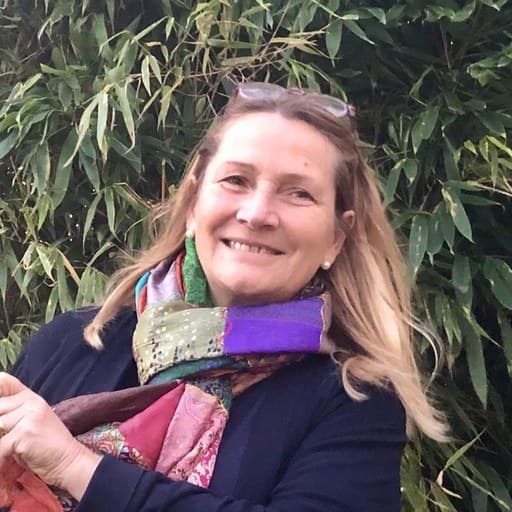
About the author
Valérie Fabre · Founder & Director, Harmonika Institute
Valérie Fabre founded Harmonika Institute in 2025, after a decade seeing clients in private kinesiology practice and, before that, thirteen years in international trade. A French-born polyglot who now splits her time between Dallas and Miami, she sets the school's curriculum and editorial standards and champions ethical, in-person training.
Read more about Valérie Fabre →