Journal · Sound Healing · Choosing a program
How to Become a Sound Healing Practitioner
The practical build-out: which instrument to start with, how many sessions before you can hold a room of twenty, how venues pay, and an eighteen-month sequence.
Valérie Fabre, Founder & Director, Harmonika Institute · July 10, 2026 · 9 min read

Key takeaways
- This is an events business, not a clinic. Most working sound practitioners earn the majority of their income from group sessions of eight to forty people, not from one-to-one bookings. If you dislike logistics, this modality will grind you down.
- Start with two or three instruments, not nine. A single 24-inch bowl set or one 32-inch gong plus two chimes will carry a full hour. People who buy a $4,000 collection in month one usually play all of it badly.
- Roughly forty group sessions is the threshold. That's about how many runs it takes before most practitioners can hold twenty strangers without their timing collapsing when something goes wrong.
- Venue splits are where the money is decided. A yoga studio taking 30–50% of ticket revenue and a corporate office paying a flat $400–$900 are entirely different businesses. Learn both.
- Build the event, don't wait for clients. A fixed monthly slot on a fixed night beats an open calendar every time, because it gives people something to put in a diary.
A gong that fills a room properly weighs about eleven pounds, sits in a stand that weighs more, and will not fit in the back of a Honda Civic without the passenger seat folded flat. Nobody mentions this in the brochure. But if you're serious about becoming a sound healing practitioner, the shape of your car matters roughly as much as the shape of your training, and the sooner you accept that, the faster you'll build something that pays.
This piece is about the build-out: instruments, sequence, venues, money, and the unglamorous mechanics of putting forty people on their backs in a room and getting them home calm. If you want the curriculum side (what a serious program covers, safety screening, contraindications), that's a separate article on what sound healing certification actually covers. Read that one first if you haven't chosen a program yet. This one assumes you have, or are about to.
Choose one instrument family and stay there for a year
The single most common mistake is breadth. New practitioners come out of training excited, and within six weeks they've bought crystal bowls, Himalayan bowls, a gong, koshi chimes, a rain stick, a shruti box, and a set of tuning forks. Four thousand dollars gone. Nine instruments, none of them known well.
Pick one family. Himalayan metal bowls if you want portability and a forgiving learning curve. Crystal bowls if you want volume and a very clean tone that carries in a big room. A gong if you want the thing that produces the strongest audience response and the hardest technical demands. Add two small accent instruments, chimes and a shaker are plenty, and leave it there for twelve months.
What each starting choice actually costs
A workable set of four to six Himalayan bowls runs roughly $500–$1,200 depending on whether they're hand-hammered and where you buy. A single quality crystal bowl is $150–$400 and you'll want three or four, so budget $600–$1,500. A 32-inch symphonic gong plus a stand and two mallets lands around $1,200–$2,200. That's the real entry number, and it sits alongside tuition rather than inside it.
The honest number
Total first-year outlay for most people, tuition aside: $900–$2,500 in instruments, $200–$400 in cases and a trolley, $300–$600 in professional liability insurance, and somewhere between $0 and $1,200 in venue deposits depending on whether you rent or split. Assume $2,000 minimum before you sell a single ticket. Anyone telling you it's a low-capital modality is comparing it to opening a café.
Buy used where you can. Bowls hold their tone and there is a steady secondhand market from practitioners who quit in year two. Gongs are riskier used, because a hairline crack is not always visible and completely changes the sound.
The eighteen-month sequence
The people who make this work tend to follow roughly the same order, whether or not they realise it at the time. Skipping ahead is where it falls apart, usually at the point of standing in front of twenty people with an hour to fill and no muscle memory.
- 1
Months 1–4: train in person, play daily
Twenty minutes a day on your instrument, every day, no exceptions. Not practising a session, just making sound and listening to what your hands do to it. This is the part that separates practitioners who sound intentional from ones who sound like they're stirring soup.
- 2
Months 3–6: ten sessions on one or two people
Friends on the living room floor. Learn what a whole session feels like from the inside: the opening, the twenty-minute sag in the middle, the close. Time yourself. Almost everyone runs eleven minutes short on their first attempt.
- 3
Months 5–9: twelve small group sessions, free
Six to ten people. This is where the real skill shows up, because groups behave differently from individuals. Someone will snore. Someone will leave halfway. Someone's phone will go off at minute thirty-two. Learn to keep playing.
- 4
Months 8–12: find a home venue
One place, one recurring night. Second Tuesday of the month, 7pm, same room. Repetition is what builds an audience; a scattered calendar of one-off events builds nothing.
- 5
Months 10–14: start charging, low
$15–$25 a ticket in most U.S. markets, $25–$40 in New York, Los Angeles, or Boston. Keep the price low long enough to fill the room reliably, then raise it. An empty room at $40 earns less than a full one at $20 and damages you more.
- 6
Months 12–18: add a second venue and a corporate pitch
Once one night fills consistently, the same material sells to an office, a retreat, or a studio in the next neighbourhood with almost no extra preparation. This is the point where the economics start to work.
- 7
Month 18 onward: raise prices, cull venues
Drop the venue with the worst split or the longest drive. Most established practitioners run two or three regular slots, not seven.
The forty-session mark
Ask practitioners who hold big rooms well and you'll hear a similar number: somewhere around forty group sessions is when it stops being frightening. Before that, your attention is on your own hands. After it, your attention is on the room, which is where it needs to be if you're going to notice the person by the radiator who has started crying and decide whether to go over.
Where you'll actually play, and how each one pays
Venue choice determines your income far more than your skill does in the first two years. A brilliant practitioner in a bad venue arrangement earns less than a competent one with a good corporate contact. These are the five settings most practitioners cycle through.
| Venue | Who books you | How they pay | Typical attendance | What they expect |
|---|---|---|---|---|
| Yoga studio | Owner or programming lead | Revenue split, commonly 60/40 or 50/50 in your favour on ticket sales | 10–25 | You bring some of the audience; they list it and take the door |
| Wellness centre / spa | Manager, often on a seasonal calendar | Flat fee $150–$350, or room rent $40–$90 and you keep tickets | 8–18 | Insurance certificate, quiet setup, no incense |
| Community hall / church annex | Booking secretary, weeks ahead | You pay rent, $30–$120, and keep all ticket revenue | 15–40 | Public liability cover, your own chairs and mats, full cleanup |
| Corporate office | HR or a people-ops lead | Flat fee, commonly $400–$900 for 45–60 minutes | 12–30 | Invoice, W-9, punctuality, no spiritual framing at all |
| Festival / retreat | Programmer, booked 4–8 months out | Often unpaid or expenses-only early on; $300–$1,500 once known | 30–150 | Self-sufficiency, own power, a set that works outdoors |
Corporate is the outlier and worth understanding early. An office pays a flat fee, pays on invoice terms, and doesn't care whether twelve or thirty people show up. That predictability is the difference between a hobby and a living. It also demands the most restraint: no chakra language, no talk of clearing anything, a clean forty-five minutes described as a rest and reset session. Practitioners who can't code-switch don't get rebooked.
Community halls are the sleeper. You pay $80 in rent, sell thirty tickets at $20, and keep $520. Compare that to a studio taking 40% of a fifteen-person room. The catch is that you own the marketing entirely, which is real work.
How to talk to a venue without getting brushed off
Studio owners get pitched constantly. The email that works is short, names a specific date, and takes work off their plate: "I run a monthly 75-minute sound session. I'd like to propose the second Tuesday, 7–8:15pm, starting in September. I handle the flyer, the booking link, and setup. 60/40 split on tickets in your favour for the first three months, then we review. I carry $2M liability and can send the certificate."
Offering the studio the better split at the start is counterintuitive and it works. You're buying a recurring slot and a list, both of which are worth more than three months of margin. Renegotiate once you're filling the room.
Scope of practice
No U.S. state licenses sound practitioners, and there's no title protection. Your legal exposure comes from what you say, not what you play. Describe the session as a rest and relaxation experience. Never state or imply that sound treats, cures, or addresses any medical or psychological condition, and never suggest a client change or stop anything prescribed to them. Where you place hands on a body — some practitioners rest bowls directly on clothed torsos — check whether your state's massage statute reaches that, because a few define soft-tissue contact for compensation broadly. Rules differ by state and change; confirm with your own state board before you take money.
The logistics problem, stated honestly
A gong in its stand does not fit through a standard doorway assembled. You will take it apart and rebuild it at every venue, twice, and the whole cycle (load, drive, park, unload, set up, play, break down, reload) runs about three hours around a 75-minute session.
Add the rest of it. Chasing a studio owner who hasn't answered in nine days. Reprinting a flyer with the wrong start time. Discovering the community hall has a booking after you and forty minutes to clear. Buying twenty spare bolsters because the venue's are filthy. Managing a booking link, a refund, and someone who wants to bring their eight-year-old.
People who like this find it satisfying: it's producing, essentially, and there's a real pleasure in a room that fills. People who wanted a quiet one-to-one practice tend to burn out inside eighteen months, not because the sound work is hard but because everything around it is relentless. If that describes you, look seriously at whether a table-based modality suits you better. There's an honest comparison in choosing a modality based on temperament.
The move from free to paid
Most practitioners stall here, and they stall for a specific reason: the free sessions filled easily, so the first paid one feels like a test they might fail. It usually is a slight step down. Expect to lose roughly half your free-event audience when you introduce a ticket. That's normal and it's fine, because the half that pays is the half that comes back.
Two things make the transition cleaner. Announce it in advance, saying "these will be $20 from October", rather than switching quietly. And change something visible at the same time: a longer session, a better room, a hot tea afterwards. People pay more readily for a thing that changed than for the same thing with a price on it.
On numbers: a full 25-person room at $22 grosses $550. After a 40% studio split you keep $330 for roughly four hours of work including transport. That's a reasonable rate and a poor one, depending on how you count. It gets meaningfully better once you own the room or add corporate work, which is why nearly every practitioner who lasts ends up doing both. The fuller income picture is broken down in what sound practitioners actually earn.
Questions on this topic.
Do I need to be musical to become a sound healing practitioner?+
No, and formally trained musicians sometimes struggle more than beginners, because they arrive wanting to play something rather than hold a space. What you do need is a reliable sense of timing and the ability to tolerate long silences without filling them. If you can't sit for ninety seconds without touching an instrument, that's the thing to work on. It's more limiting than a lack of musical background.
How many instruments do I need to run a full session?+
Two or three. One primary voice that can sustain, a set of bowls or a gong, plus one or two accents for punctuation and for signalling transitions. A 60-minute session built from three instruments played well sounds far better than one built from nine played tentatively. Add instruments when you catch yourself reaching for a sound you can't make, not on a schedule.
Can I run sessions in my own home instead of renting venues?+
Sometimes, and it changes the economics considerably since you keep everything. Check three things first: whether your local zoning permits a home-based business receiving visitors, whether your lease or HOA allows it, and whether your homeowner or renter policy covers people injured on your property during a paid activity. Standard policies usually don't. Group sizes also cap out fast; most home rooms hold six to eight comfortably.
How do I get my first corporate booking?+
Through a person, almost never through a cold pitch to a general inbox. The usual route is that someone who attended your public session works somewhere with a wellness budget and mentions you internally. So ask at your community events what people do for a living, and keep a simple one-page PDF with your fee, session length, insurance details, and what you need from the room. Send it the same day someone asks.
Should I get certified, or can I just start running events?+
Legally, nothing stops you from running an event tomorrow. Practically, training buys you three things worth paying for: screening knowledge so you know who shouldn't be in the room, correction from someone watching you play, and a credential venues and insurers ask to see. Community halls and corporate clients in particular will want documentation before they let you in the building.
Tags:
Sound HealingChoosing a program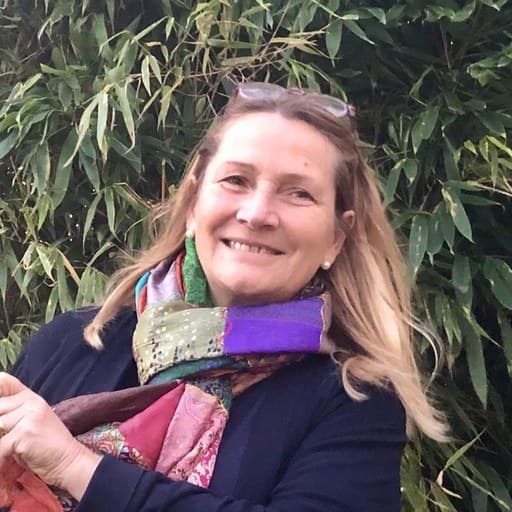
About the author
Valérie Fabre · Founder & Director, Harmonika Institute
Valérie Fabre founded Harmonika Institute in 2025, after a decade seeing clients in private kinesiology practice and, before that, thirteen years in international trade. A French-born polyglot who now splits her time between Dallas and Miami, she sets the school's curriculum and editorial standards and champions ethical, in-person training.
Read more about Valérie Fabre →