Journal · Herbalism · Career path
How to Become a Herbalist in the U.S.: Paths, Hours, Legal Limits
No state licenses herbalists. Three paths (community, clinical, product-maker), 100 to 1,600 training hours, $1,800 to $25,000, the AHG benchmark and DSHEA.
Valérie Fabre, Founder & Director, Harmonika Institute · September 13, 2026 · 9 min read
Key takeaways
- There is no licence to get. No U.S. state licenses herbalists; the profession is self-regulated through the American Herbalists Guild, and the legal boundary is the claim you make, not the credential you hold.
- Three paths, three price tags. Community herbalism from 100 hours and $300; clinical herbalism at 1,200 to 1,600 hours and $3,000 to $25,000; product-making, which adds manufacturing compliance to either.
- The AHG Registered Herbalist benchmark is 400 hours of training plus 400 documented clinical hours. Most people take 3 to 5 years to reach it.
- Our May 2026 survey found a wide spread. The largest online school charges about $2,999 for 1,200 self-paced hours; the best-known in-person clinical program runs 3 years and around $24,000.
- Expect 18 to 36 months before steady work. Foundations take a year, clinical confidence another, and a client base or product line a third.
- A 6-day program is a foundation, not an AHG track. Ours runs 6 live online teaching days (42 teaching hours) for $2,000, and we say plainly that it is the first step, not the last.
There is no exam to pass, no board to apply to and no licence to frame. That is the first thing to know about becoming a herbalist in the United States, and it confuses people in both directions: some assume it means anyone can do anything, others assume it means the field is not real. Neither is true. The absence of a licence means the responsibility for training, scope and honesty sits entirely with you, and the paths that serious practitioners follow are well worn even if no state has paved them.
This article is the map: the paths, the hours, the costs, the legal frame and the timeline. It does not explain what a monograph is or which plants to study first; that is in our note on materia medica for beginners. And it does not help you find a class in your city, which our guide to herbalism classes near you does.
Is there a licence for herbalists in the U.S.?
No, in any state. Herbalism sits alongside nutrition coaching and holistic naturopathy in the category of unregulated wellness practice: nobody licenses it, so nobody can revoke it, and the law reaches you through two other doors instead. The first is the practice of medicine, licensed everywhere, which you enter the moment you diagnose or claim to treat a disease. The second is product law, the Dietary Supplement Health and Education Act of 1994 and the FDA manufacturing rules that follow it, which you enter the moment you sell a tincture.
The American Herbalists Guild fills the gap with a voluntary peer-review credential, Registered Herbalist, and a code of ethics. It has no legal force. It has considerable weight among herbalists, schools and the few clinics that hire, and it is the benchmark every training path is measured against.
Check your state
Unregulated does not mean uniform. A few states have health-freedom laws that explicitly protect unlicensed practitioners who follow disclosure rules; others have prosecuted herbalists for practising medicine after a client was harmed. Selling products adds county and state retail rules. Before your first paid consultation, read your state's medical practice act and, if you make products, the FDA's current good manufacturing practice rules for supplements.
Which of the three paths fits you?
That depends on whether you want to sit across a table from clients, teach a community, or make things. The three paths overlap in the first year and diverge after it, and they carry very different hour counts and costs.
| Path | What the work is | Training hours | Typical cost | Credential that counts |
|---|---|---|---|---|
| Community or folk herbalist | Teaching classes, plant walks, family and neighbourhood care, herb gardens, writing | 100 to 400 | $300 to $3,000 | None required; a reputable school certificate and a visible body of work |
| Clinical herbalist | One-to-one consultations, intake, protocols within scope, follow-up, referral | 1,200 to 1,600 over 2 to 3 years, plus 400 clinical hours | $3,000 online to $25,000 in person | AHG Registered Herbalist (peer-reviewed, voluntary) |
| Product maker or apothecary | Formulating, manufacturing, labelling and selling teas, tinctures, salves, wholesale or retail | Either of the above, plus manufacturing and compliance training | Training plus $2,000 to $20,000 in facility, testing and insurance | FDA cGMP compliance and DSHEA-correct labels; no personal credential |
Most working herbalists end up on two of the three: a clinical practitioner with a small product line, or a community teacher who sells at markets. Our May 2026 survey of U.S. providers found that the schools split the same way. The largest, an online program based in North Carolina, teaches 1,200 self-paced hours over 18 to 30 months for about $2,999. The most respected in-person clinical program, in Vermont, runs three years of evenings and weekends, 1,600 hours, for around $24,000, with a community clinic attached. The lowest-cost serious option, a distance program in Arizona built on a deep materia medica, costs about $1,800.
What does the AHG Registered Herbalist benchmark require?
Documented education and documented practice, reviewed by peers. The Guild's published standard asks for at least 400 hours of herbal education, covering materia medica, botany, physiology, pharmacy and clinical skills, plus at least 400 hours of clinical experience with clients, and an application with case studies and references that a committee of practising herbalists reviews. In practice, the education hours of successful applicants run far above the minimum, because the clinical hours are hard to accumulate without a longer program behind them.
Two things follow. First, no single course grants the credential; it is applied for after training and practice, usually 3 to 5 years in. Second, a short program is not a failed attempt at the benchmark. It is a different product, and an honest school says so. Our own survey concluded that a foundation program covers only a fraction of an AHG-track education and should be sold as a first step, which is how we describe ours.
How many hours does training take, and what does it cost?
Between 100 hours and 1,600, between $300 and $25,000, depending on the path and the format. The range is wider than in almost any other modality we teach, and the reason is structural: the most prestigious in-person schools run as nonprofits and charge by the classroom hour, while the online market competes on price for self-paced content.
The honest number
Tuition is rarely the largest cost. Add a reference library ($400 to $800), a starter apothecary of dried herbs, menstruums and glassware ($300 to $600), liability insurance once you see clients ($300 to $600 a year), and the income you forgo during 400 clinical hours that are mostly unpaid. A realistic all-in figure for a clinical path is 1.5 to 2 times the tuition.
What are the steps, in order?
Seven, and the order matters more than the speed. Students who start selling products before they can identify a plant in the field, or who take clients before they have a referral protocol, are the ones the state medical board hears about.
- 1
Learn 12 plants properly
Identify, taste, prepare two ways, write the monograph. Three months. If you do not enjoy this, stop here; the rest of the path is this, repeated.
- 2
Choose a path and a school to match
Community: a 100 to 400 hour program, in person if you can. Clinical: a 1,200-hour-plus program with a clinic. Products: either, plus a manufacturing course.
- 3
Complete the foundation
Botany, materia medica of 80 to 100 plants, preparations, physiology, safety and interactions, scope of practice. Twelve to eighteen months.
- 4
Log supervised practice
Intakes and follow-ups with peers and members of the public, documented, reviewed. An AHG application needs 400 documented clinical hours.
- 5
Set up the legal frame
Business entity, disclosure forms, DSHEA-correct labels if you sell, insurance, and a written referral protocol for anything that names a disease.
- 6
Start with one income stream
Classes, consultations or products, not all three. Add the second in year two once the first covers its costs.
- 7
Apply for the AHG credential when eligible
Usually year three to five. It is optional, and it is the only credential in the field that other herbalists take seriously.
What can you legally say and sell?
You can describe how a plant traditionally supports normal function, and you can sell it with a label that says so and carries the standard disclaimer. You cannot name a disease. "Chamomile supports restful sleep" is a structure-or-function statement allowed under DSHEA; "chamomile treats insomnia" turns the same tea into an unapproved drug and the seller into a target of the FDA and, if a client is harmed, of the state medical board.
- Consultations: education and support within a wellness scope; no diagnosis, no claim to treat, no advice to stop or change a medication; written referral to a licensed provider for anything clinical.
- Products sold to the public: supplement rules apply, including current good manufacturing practice for anything beyond a very small operation, ingredient labelling, the DSHEA disclaimer and no disease claims.
- Teaching: the freest path legally, provided the classroom does not become a clinic in disguise.
- Wildcrafting: land access, permits on public land and ethical harvest limits; our curriculum devotes part of its sourcing module to it.
How long until you are working?
Eighteen months to three years for most, and longer for a full clinical practice. Year one is the foundation and it produces no income beyond the odd class. Year two is supervised practice and the first paying clients, typically two to five a week at $60 to $120 a consultation, or a stall at a farmers' market. Year three is where the practice either covers its costs or the herbalist keeps it as a serious second occupation, which many do without regret. Our note on what herbalists actually earn puts numbers on each path.
From the training floor
The applicants who finish are usually the ones who already have a garden, a kitchen full of jars and a habit of reading plant books for pleasure. The ones who leave in the first months are often those who wanted to be a herbalist more than they wanted to learn plants. The field rewards the second kind of person slowly and the first kind not at all.
Where does a 6-day program fit?
At the beginning, as the foundation a clinical track builds on or a community practice runs on. Our live online herbal and phytotherapy program runs 6 teaching days in live sessions (42 teaching hours), plus about 38 hours of personal study between sessions, for $2,000, in cohorts of fifteen. It covers botanical identification, a monograph repertoire of 80 to 100 herbs, the major preparations, sourcing and ethical wildcrafting, consultation craft within scope and how to set up a small apothecary. It covers a fraction of an AHG-track education, which is exactly what our survey said it should be called.
I chose to teach it live online in a cohort of fifteen, never as recorded video, and shorter than the multi-year schools, for one reason: plants are learned with the hands and nose, and a student who has identified elder in a hedge, tasted nettle and made calendula oil with fourteen classmates and an instructor watching live is ready to continue anywhere, including the three-year programs. A student who has watched 1,200 hours of recorded video may know more names. Payment plans are described on our tuition and financing page, and the honest timeline above applies to us as much as to anyone.
Questions on this topic.
Do you need a degree to be a herbalist?+
No. No state requires a degree or a licence, and most working herbalists trained through private schools, apprenticeships and self-study. A few universities offer herbal science degrees and one accredited college offers herbal diplomas, which help for research or product-industry jobs. For practice, the American Herbalists Guild's Registered Herbalist credential, based on 400 education hours and 400 clinical hours, carries more weight among herbalists than any degree.
How long does it take to become a clinical herbalist?+
Two to three years of training and another one to two of supervised practice, so three to five years to the point where a peer-reviewed credential is realistic. Clinical programs run 1,200 to 1,600 hours, and the American Herbalists Guild asks for 400 documented clinical hours on top. Shorter foundation programs of 100 to 300 hours take a year or less and prepare you for community work or for entering a clinical track.
What is the difference between a herbalist and a naturopath?+
A herbalist works with plants specifically and holds no licence anywhere in the United States. A naturopathic doctor holds a four-year graduate degree and a state licence in roughly half the states, with prescribing rights in some. A holistic naturopathy practitioner, the unlicensed category, uses lifestyle and natural approaches including herbs and is prohibited in a few states. Herbalists and unlicensed naturopathy practitioners share the same legal limits: no diagnosis and no treatment claims.
Can herbalists make money?+
Yes, modestly, and usually from two streams. Clinical consultations run $60 to $150 for an initial visit; a practitioner seeing eight to twelve clients a week can net $25,000 to $45,000. Product lines add margin but also compliance cost. Teaching adds $40 to $120 a seat. Very few herbalists earn a full-time income from one stream in the first three years, and most who last combine consultations with products or classes.
Is it legal to sell herbal products without a licence?+
Yes, with conditions. Herbal products are dietary supplements under DSHEA and need no practitioner licence to sell, but they must carry compliant labels with ingredients, the standard FDA disclaimer and no disease claims, and any manufacturer beyond a very small operation must follow FDA good manufacturing practice rules. State retail, cottage-food and sales-tax rules also apply. Insurance is not required but is strongly advised before selling to strangers.
What does an AHG Registered Herbalist have to do?+
Document at least 400 hours of herbal education across materia medica, botany, physiology, pharmacy and clinical skills, document at least 400 hours of clinical experience with clients, submit case studies and references, and pass a peer review by a committee of practising herbalists. The credential is voluntary and has no legal force, but it is the one recognition in the field that other herbalists, schools and integrative clinics consistently respect.
Can you learn herbalism online?+
The knowledge, largely yes; the craft, only partly. Materia medica, physiology and safety transfer well through video and reading, and the largest U.S. school is entirely online. Plant identification, taste, preparation and the judgement of a client across a table do not. The serious clinical schools are in person or hybrid for that reason, and even strong online graduates usually seek in-person plant walks and medicine-making before they take clients.
What should I look for in an herbalism school?+
A materia medica of at least 80 plants taught with the plants present, medicine-making by hand, a clear scope-of-practice module, supervised client practice with documentation, instructors who name their own training and lineage, and a straight answer to whether the program is an AHG track or a foundation. Be wary of any school that promises a licence, uses disease language in its marketing or has no plant walks.
Tags:
HerbalismCareer pathCredentials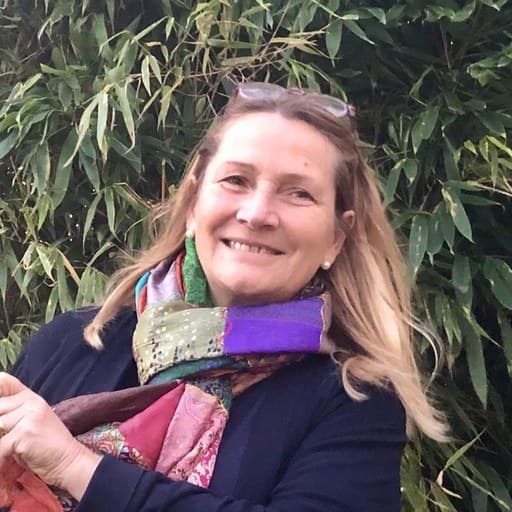
About the author
Valérie Fabre · Founder & Director, Harmonika Institute
Valérie Fabre founded Harmonika Institute in 2025, after a decade seeing clients in private kinesiology practice and, before that, thirteen years in international trade. A French-born polyglot who now splits her time between Dallas and Miami, she sets the school's curriculum and editorial standards and champions ethical, in-person training.
Read more about Valérie Fabre →