Journal · Herbalism · Practitioner income
Herbalist Salary: What Clinical Herbalists and Product Makers Earn
No official herbalist salary exists. Clinical consults net $25,000 to $45,000 a year, product lines carry 50 to 70% gross margin, most combine two streams.
Valérie Fabre, Founder & Director, Harmonika Institute · September 13, 2026 · 9 min read

Key takeaways
- No official figure exists. The Bureau of Labor Statistics has no occupation code for herbalists; every salary you see online is self-reported, modelled or a school's marketing.
- Clinical work nets $25,000 to $45,000 a year at maturity. Eight to twelve consultations a week at $60 to $150 for an initial visit and $50 to $90 for follow-ups.
- Products have the best margin and the worst hours. A tincture that costs $3 to $5 to make sells for $12 to $18; a market weekend grosses $300 to $900 and takes 20 hours.
- Teaching pays by the seat. $40 to $120 a person, 8 to 20 seats, 2 to 4 hours; a monthly class series is $800 to $2,400 a month for many community herbalists.
- Employment is thin. Apothecary and herb-shop jobs pay $15 to $22 an hour; supplement-industry roles pay more but rarely want an herbalist rather than a chemist.
- Most who last run 2 streams. Year one nets $5,000 to $15,000 for most; year two, $15,000 to $30,000; a second stream is usually what makes year three viable.
A four-ounce bottle of tincture costs about four dollars to make and sells for fifteen. A one-hour herbal consultation sells for ninety and takes two hours once intake, research and follow-up are counted. A Saturday at a farmers' market grosses six hundred dollars and takes the whole weekend. Those three numbers are the herbalist economy, and the reason almost every herbalist you meet does at least two of the three. What nobody publishes is how they add up over a year. This article does the sum.
It is about income, not training. The paths, hours and legal frame are in how to become a herbalist, and the cross-modality salary picture is in our holistic practitioner salary by state. What follows is specific to plants.
Why is there no official herbalist salary?
Because the occupation is not counted. The Bureau of Labor Statistics has no line for herbalists; the closest categories are dietitians, who are licensed, and "healthcare practitioners, all other", which is a bucket. Herbalists file taxes as sole proprietors, retailers, teachers or farmers, depending on which stream is largest that year, and none of that reaches an occupational survey.
The self-reported surveys that exist are small and skew toward people who are still practising, which is the survivorship problem that distorts income data across every modality we teach. When a school quotes an average herbalist salary above $50,000, it is usually citing one of those surveys with the part-timers and the leavers removed. We prefer to show the arithmetic by stream and let you build your own year.
The honest number
Across the self-reported surveys we have seen and the graduates we talk to, the full-time median for herbalists with a single income stream sits around $30,000. Practitioners combining two streams report $35,000 to $60,000 at maturity. A small top tier with a product brand, a teaching program or a clinic role exceeds $80,000. Treat all of these as ranges with wide margins.
What does each income path pay?
Four paths, four very different shapes of money. Consultations pay by the hour and cap at the number of hours you can work. Products pay by the unit and scale, but every unit carries compliance cost. Teaching pays by the seat and depends on a following. Employment pays by the hour and is scarce.
| Path | Unit price | Realistic volume at maturity | Annual gross | Annual net (approx.) | What eats the margin |
|---|---|---|---|---|---|
| Clinical consultations | $60 to $150 initial, $50 to $90 follow-up | 8 to 12 consults a week, 46 weeks | $30,000 to $55,000 | $25,000 to $45,000 | Unpaid research and follow-up, room, insurance, no-shows |
| Product line, direct sales | $12 to $18 per tincture or salve; $8 to $14 per tea | 150 to 400 units a month | $25,000 to $70,000 | $12,000 to $35,000 | Ingredients, bottles, labels, testing, cGMP compliance, market fees, hours |
| Teaching and workshops | $40 to $120 per seat | 2 to 4 classes a month, 8 to 20 seats | $10,000 to $40,000 | $8,000 to $32,000 | Venue, materials, marketing, unfilled seats |
| Retail or apothecary employment | $15 to $22 an hour | Full or part time | $31,000 to $46,000 full time | Salary, taxed as wages | Few positions; most shops are owner-run |
| Wholesale to practitioners and shops | 40 to 50% of retail | Depends on capacity | Variable | Thin until volume | cGMP, liability, payment terms |
Our May 2026 survey of U.S. training providers noticed something that shapes this table: the most respected in-person herbal schools run as nonprofits with community clinics attached, and their graduates often begin in low-cost or sliding-scale settings. That keeps consultation prices in the field lower than in hypnosis or coaching. It is a cultural feature of herbalism, not a market failure, and a practitioner who prices far above it needs a reason clients accept.
Why do most herbalists combine two streams?
Because each stream fails in a different way, and two of them together fail less often. Consultations are limited by hours and by referrals, which take years to build. Products scale but demand cash up front and compliance work that nobody enjoys. Teaching depends on a following, which products and consultations happen to build. The combinations that work are the ones where one stream feeds the other.
- Consultations plus products. The classic pairing. Clients buy the tea you formulated; the product table at a market produces consultation enquiries. Typical mature net: $35,000 to $55,000.
- Teaching plus products. The community herbalist's model. A monthly class series and a market stall, often alongside another job. Typical net: $20,000 to $40,000.
- Consultations plus a clinic or shop role. Rarer, because the roles are rare, but the steadiest: wages cover the rent while the practice grows.
- All three at once. The most common cause of burnout in year two. Add the third stream only after the first two cover their costs.
From the training floor
The graduates who report the steadiest income are rarely the best clinicians in the cohort. They are the ones who started a monthly class in month one, kept it running for two years, and let it fill their consultation book. The ones who struggle usually opened a consultation practice alone and waited for it to fill. It fills, but slowly, and slowly is expensive.
How does seasonality shape the year?
More than in any other modality we teach. Herbalism follows the plants and the markets. Harvest and medicine-making run May to October; farmers' markets and fairs cluster in the same months; teaching demand peaks in spring and again in September; consultations rise in autumn and winter, when people are indoors and thinking about colds. Product sales spike in November and December and go quiet in January. A herbalist's income can swing by a factor of three between a strong October and a slow February.
The practical answer is a cash reserve built in the autumn, and a consultation stream that does not depend on the weather. Practitioners who plan on 46 working weeks and treat the winter lull as inventory-building time report far less stress than those who expect every month to look like October.
What does compliance cost?
More than beginners budget, and it is the reason product margins in the table are gross, not net. Selling a tincture to a stranger puts you under the Dietary Supplement Health and Education Act and, beyond a very small operation, under the FDA's current good manufacturing practice rules for supplements: documented procedures, batch records, identity testing of raw material, a clean and separate production space. None of that is optional for a business that ships.
What it costs
A realistic first-year compliance budget for a small product line: business entity and permits $200 to $600; product liability insurance $500 to $1,500 a year; label design and compliant printing $300 to $800; third-party testing of raw materials $50 to $150 per batch; a dedicated production space, even a converted room, $1,000 to $5,000 to set up. Consultation-only practices skip most of this and carry liability cover of $300 to $600 a year instead.
Then there is the claim. A label that says a product supports restful sleep is a structure-or-function statement with the standard disclaimer; a label that says it treats insomnia is an unapproved drug. Our phytotherapy curriculum devotes part of its final module to apothecary setup, labelling and pricing, because the fastest way to lose a year's margin is a warning letter and a reprint.
What do the first two years look like?
Thin, then a little less thin. Year one, for most, is training, a few classes taught to friends and a market stall with more conversation than sales: $5,000 to $15,000 net, and often less. Year two brings the first regular clients, three to six a week, a class series with a following and a product line that has found its two or three sellers: $15,000 to $30,000 net. Year three is the fork: the practice either covers a life or stays a serious second occupation.
- 1
Year one: build the following
One monthly class, one market, one product that sells. Keep the other job. Net $5,000 to $15,000.
- 2
Year two: add the second stream
Consultations from the class attendees, or products from the consultation clients. Net $15,000 to $30,000.
- 3
Year three: choose
Full time at $35,000 to $55,000 net if two streams are working; otherwise a deliberate part-time practice, which many herbalists keep for decades.
What separates the top earners?
A product with a name, a teaching program with a waiting list, or a role inside an integrative clinic, and usually two of the three. The herbalists above $80,000 that we know of share one habit: they stopped selling hours early. A named formula sells while they sleep; a recorded course sells while they harvest; a clinic role pays whether or not the market is rained out. They also, without exception, kept their claims inside the law, because a product brand is the first thing a warning letter destroys.
Pricing discipline matters too. Herbalists undercharge more than any other practitioners we train, partly out of the community ethic and partly because a tincture does not feel like ninety dollars' worth of work. Our note on pricing sessions without undervaluing them applies word for word.
What does training cost against those numbers?
Less than a season of market fees, and it is the wrong thing to worry about. Training in this field runs from about $1,800 for a distance course to $24,000 for a three-year in-person clinical program, according to our survey, with the big online school at roughly $2,999. Paid back against a mature two-stream practice netting $40,000, any of those is recovered in a year; paid back against a first-year net of $10,000, none of them is, and that is the year that matters.
Our live online herbal and phytotherapy program is a foundation for either path: 6 teaching days in live sessions (42 teaching hours) for $2,000, with a monograph repertoire of 80 to 100 herbs and a module on setting up an apothecary at home or in a small clinic. That is about 22 consultations at $90, or 143 tinctures at $14. The income does not come from the certificate. It comes from the second stream, the third year and the cash reserve, and we would rather you planned for those before you enrol. Our broader note on income in the first five years covers the same arc across modalities.
Questions on this topic.
How much does a clinical herbalist make?+
A clinical herbalist seeing eight to twelve clients a week, charging $60 to $150 for an initial consultation and $50 to $90 for follow-ups, grosses $30,000 to $55,000 a year and nets $25,000 to $45,000 after room, insurance and unpaid research time. Practitioners inside integrative clinics or with a product line alongside report $35,000 to $60,000. There is no official salary figure, and the first two years are far below these numbers.
Can you make a living as a herbalist?+
Yes, most often by combining two income streams: consultations with a product line, or teaching with market sales. Single-stream herbalists usually plateau around $30,000. Two streams at maturity reach $35,000 to $60,000, and a small tier with a named product brand, a teaching program or a clinic role exceeds $80,000. It takes two to three years to get there, and many herbalists keep the practice as a deliberate part-time occupation instead.
How much do herbalists charge per consultation?+
Initial consultations of 60 to 90 minutes run $60 to $150 in most U.S. markets, with follow-ups of 30 to 45 minutes at $50 to $90. Sliding-scale and community-clinic rates are common and sit lower, reflecting the nonprofit culture of the field's best-known schools. Practitioners in the ten largest cities and those with a clinical credential sit at the top of the range. Herbs are usually sold separately, at $12 to $18 per tincture.
Is selling herbal products profitable?+
The gross margin is good, typically 50 to 70 percent, since a tincture costing $3 to $5 to make sells for $12 to $18. The net is much thinner once bottles, labels, testing, insurance, manufacturing compliance, market fees and the hours of making and selling are counted. A product line of 150 to 400 units a month nets $12,000 to $35,000 a year. It becomes profitable at scale or when paired with consultations that sell the products.
Are there jobs for herbalists?+
Few. Herb shops and apothecaries hire at $15 to $22 an hour, mostly part time, and most are owner-run. Supplement companies hire formulators and quality staff but usually want chemistry or regulatory backgrounds. Integrative clinics occasionally add an herbalist on contract. Teaching roles at herbal schools exist for experienced practitioners. Most herbalists are self-employed, and the realistic plan is a practice with two streams rather than a job search.
What is the highest-paying herbalist path?+
A product brand with wholesale distribution, or a teaching program with recurring enrolment, each of which stops trading hours for dollars. Herbalists above $80,000 a year almost always have one of those plus a second stream. Both require years of following and strict compliance with supplement labelling rules, because a disease claim on a product can end the brand. Clinical consultations alone rarely exceed $45,000 net regardless of skill.
How much does it cost to start an herbal business?+
A consultation-only practice: $1,000 to $3,000 for insurance, a reference library, intake forms and a room. A product line: $3,000 to $10,000 in the first year for a compliant production space, bottles and labels, raw-material testing, product liability insurance, permits and market fees, before any ingredient costs. Training on top runs from about $1,800 to $24,000 depending on path and format. Most herbalists start the product line only after the first stream pays.
Is herbalist income seasonal?+
Strongly. Harvest, medicine-making and markets run May to October; product sales peak in November and December and drop in January; consultations rise in autumn and winter; teaching demand peaks in spring and September. Monthly income can vary threefold across the year. Herbalists who last budget on 46 working weeks, build a cash reserve in the autumn and use the winter lull for inventory, writing and course preparation.
Tags:
HerbalismPractitioner incomePractice building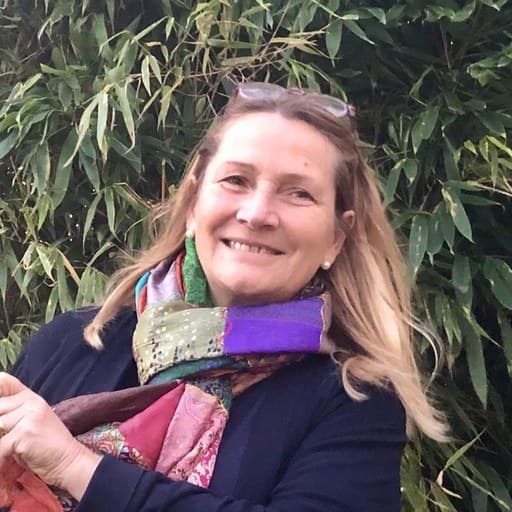
About the author
Valérie Fabre · Founder & Director, Harmonika Institute
Valérie Fabre founded Harmonika Institute in 2025, after a decade seeing clients in private kinesiology practice and, before that, thirteen years in international trade. A French-born polyglot who now splits her time between Dallas and Miami, she sets the school's curriculum and editorial standards and champions ethical, in-person training.
Read more about Valérie Fabre →