Journal · Career change · Holistic practice
Starting a Holistic Practice After 50
What a holistic career after 50 really costs in time and savings, how long break-even takes, which modalities age well, and when not to spend the retirement fund.
Valérie Fabre, Founder & Director, Harmonika Institute · April 21, 2026 · 10 min read

Key takeaways
- Break-even is not year one. Counting tuition, insurance, room rent and the income you gave up, most practitioners who start after 50 recover their cash outlay somewhere between month 20 and month 36. A minority never do.
- Do not fund this from the retirement account. A 401(k) withdrawal at 55 costs you the money, the tax on it, and roughly a decade of compounding you cannot replace. Training is a $3,000 to $12,000 decision; the withdrawal that pays for it can be a $40,000 one.
- Your network is the actual asset. A 52-year-old with thirty years of colleagues, neighbours and school-gate contacts fills a client book faster than a 28-year-old with better technique. This is the real advantage, and it is large.
- Some modalities will hurt. Deep bodywork and long standing sessions punish shoulders, wrists and lower backs. Energy, conversational and group formats have a much longer physical runway.
- Part-time first is usually the right shape. Keeping 60% of your income while you build over two years removes almost all the downside, at the cost of two tiring years.
- Marketing friction is real but fixable. The gap is not intelligence, it is repetition. Budget forty hours of genuinely irritating practice on booking software, a website, and one social platform you would rather ignore.
A woman of 56 sits in an information session and asks the only question that matters: "If I spend eight thousand dollars and eighteen months on this, how long before it pays me back?" The honest answer is that if she works at it properly, she is likely to be cash-positive somewhere in her third year, and there is a real chance she is not. Most schools will not tell her the second half of that sentence. It is the half she is actually asking about.
So this is the version with the arithmetic in it. What starting after 50 genuinely costs, what your age genuinely buys you, and where the risk sits. The advantages are substantial and they get their section. They come after the money, not before it.
Run the break-even before you run anything else
Tuition is the number people fixate on and it is rarely the biggest one. Across the U.S. market, serious in-person practitioner training in the holistic field typically runs somewhere between $3,000 and $12,000, depending on modality, hours and format. Weekend certificates cost a few hundred and buy you a piece of paper. That is the whole spread.
Then come the costs nobody mentions in the brochure. Professional liability insurance. A table, or a room, or both. A website that does not look like it was built in 2011. Business registration and an accountant for the first year of self-employment. And the largest line of all for most people over 50: the income you stopped earning, or the hours you cut back, while you trained and built.
| Line | Typical range | When it hits | Avoidable? |
|---|---|---|---|
| Training tuition | $3,000–$12,000 | Months 0–10 | No |
| Liability insurance | $150–$400 / year | Before first paid client | No |
| Room rent (day rate, shared suite) | $60–$150 / day | From month 8 | Partly |
| Website, booking, basic branding | $300–$2,500 | Months 6–12 | Partly |
| Table, linens, tools, music kit | $400–$2,000 | Months 4–10 | Partly |
| Registration, accountant, first-year admin | $300–$1,200 | Month 10 onward | No |
| Income forgone (hours cut to train) | Often the largest single line | Throughout | Yes, if part-time |
Add those up honestly and a part-time build after 50 commonly puts $6,000 to $18,000 of real money at risk before the practice covers itself. Against that, sessions in most U.S. markets price between $60 and $150, and a practitioner two years in is typically seeing eight to eighteen clients a week rather than the thirty that the spreadsheet in your head assumed.
The honest number
Work it as weeks of clients. If your total outlay is $9,000 and your net margin per session after room, insurance and tax is roughly $55, you need about 165 paid sessions to be square. At six sessions a week, that is around 28 working weeks of a reasonably full book. Nobody has a full book from day one, so the calendar answer lands closer to 20 to 36 months from your first day of training. Anyone promising you a first-year return is selling, not counting.
Retirement money is a different category of risk
This is the section that matters most and gets skipped most often, so read it slowly.
At 30, a training investment that fails costs you money you have twenty-five earning years to replace. At 55, it costs you money plus the compounding that money would have done, and you have far fewer years to make it back through wages. Those are not the same decision wearing different clothes. They are different decisions.
The specific move to avoid is funding tuition from a retirement account. An early withdrawal generally triggers income tax on the amount, often a 10% additional tax if you are under 59 and a half, and the permanent loss of everything that balance would have earned. Pull $12,000 at 55 to cover training and setup, and the true cost by the time you reach traditional retirement age is a multiple of $12,000. Your accountant can put an exact figure on it in about ten minutes, and you should ask for that figure before you enrol anywhere, including with us.
Not financial advice
We train practitioners; we are not licensed financial advisers and nothing here is a recommendation about your accounts. Tax treatment of retirement withdrawals depends on the account type, your age, your state and rules that change. Take the actual decision to a licensed adviser or a CPA. What we can tell you, from watching people do this for years, is that the students who fund training from savings they had already earmarked as discretionary sleep better and quit less often than the ones who dip into the retirement balance.
A safer structure exists and most people over 50 should use it. Keep the job or keep a substantial share of it. Train on evenings, weekends or a compressed schedule. Cap total exposure at a number you could lose without changing your retirement date, and write that number down before you start looking at programs, because it is much harder to write down afterwards. If the honest cap is $4,000, that rules out several tiers of training, and knowing it now saves you a painful conversation later.
One more test. If the practice never earns a dollar, does your retirement plan still work? If yes, proceed. If no, do not proceed on optimism. Change the plan, shrink the outlay, or extend the runway until the answer is yes.
Now the advantages, which are genuinely large
Everything above is the floor. Here is the reason people over 50 succeed in this field at rates that would surprise you.
You already know several hundred people
Client acquisition is the hardest problem in holistic practice and it is mostly a trust problem. A 52-year-old has three decades of colleagues, former neighbours, parents from their children's school, a congregation or a running club, and a reputation attached to all of it. First clients come from that layer almost every time. A younger practitioner with cleaner technique spends eighteen months building what you already have.
Your clients are your peers
A large share of paying holistic clients in the U.S. are women between 45 and 65 dealing with stress, sleep, life transitions and caring for ageing parents. If you are in that band yourself, you understand the texture of it without being briefed. That shows up in the first ten minutes of a session and it is very difficult to fake.
You are harder to rattle
Sessions surface things. Someone cries, discloses something heavy, or tests your boundaries. Thirty years of adult life, difficult meetings and family crises builds a steadiness that is hard to teach in a classroom. Instructors see it constantly: the older students in a cohort of ten are usually the ones who stay composed when a practice session goes somewhere unexpected.
From the training floor
The over-50 students are rarely the fastest to learn a protocol and are very often the first to be booked. What they bring is presence and a phone full of people who already trust them. What they struggle with is charging their friends. Six weeks of free sessions for the whole neighbourhood is the classic pattern, and it quietly delays break-even by half a year. Set your price before your first free session, not after your tenth.
Match the modality to a body that is 55, not 25
This is the practical constraint that people over 50 underestimate. Soft-tissue work is physical labour. Wrists, thumbs, shoulders and lower backs accumulate wear, and a practice built entirely on deep manual work may have a shorter horizon than you want. It also carries the heaviest regulation: most states require a massage licence for soft-tissue work performed for compensation, which is a separate credential on a separate timeline.
| Modality family | Physical load | Typical session posture | Good fit after 50? |
|---|---|---|---|
| Energy work (Reiki, magnetism, energy healing) | Low | Standing or seated, light or no contact | Strong |
| Mind-body conversational (hypnosis, NLP, EFT) | Very low | Seated, no contact | Strong |
| Coaching and consultation formats | Very low | Seated, often flexible scheduling | Strong |
| Expressive arts facilitation | Low | Group room, moving between tables | Strong |
| Sound and group formats | Low to moderate | Standing, plus equipment to carry | Watch the load-in |
| Reflexology and acupressure (digipressure only) | Moderate | Seated, sustained thumb and hand pressure | Cap the daily count |
| Deep manual bodywork | High | Standing, full body mechanics | Licence plus wear risk |
Two notes on the bottom rows. Acupressure in our programs is digipressure only, with no needles, because needling falls under acupuncture licensure in most states. And holistic naturopathy has its own map entirely: it is prohibited in Florida, South Carolina and Tennessee, the title "naturopathic doctor" is not something a private certificate confers anywhere, and the state picture shifts. Check your own state board.
Technology friction, and how much it actually matters
Booking software, a simple website, a payment processor, one social channel, an email list. That is the whole stack, and none of it requires talent. It requires tolerance for being bad at something in public for a few weeks, which is harder at 55 than at 25 for reasons that have nothing to do with capability.
Budget roughly forty hours across your first year. Pick one platform and ignore the rest. If your clients are your peers, the highest-yield channel is often a plain email list and a phone, not the video platform everyone tells you to be on. Older practitioners who try to compete on social output usually lose to twenty-somethings; older practitioners who send a decent monthly email to two hundred people they actually know usually fill their week.
- 1
Months 0–2: cap the risk in writing
Decide the maximum you will spend, confirm it does not come from retirement accounts, and get your accountant's view. Choose part-time or full-time on that basis rather than on enthusiasm.
- 2
Months 2–10: train in person while still earning
Keep the income. Our programs run 1 to 18 full teaching days, depending on the program, which most students fit around their job. Log real practice hours on people who are not your classmates.
- 3
Months 8–14: charge from the first stranger
Free sessions for friends are fine; free sessions as a business model are how the break-even date slips a year. Set the price early and say it without apologising.
- 4
Months 14–24: build regulars, not reach
Eight to twelve people who come monthly is roughly half your income. Retention beats marketing at this stage, and your existing network is where those regulars live.
- 5
Month 24 onward: reassess coldly
If you are not near cash-positive by month 30 with a consistent effort behind you, something structural is wrong: price, city, modality, or the number of hours you can actually give it.
When this is the wrong move
Some honest disqualifiers, because nobody else will list them.
If the training money has to come out of a retirement account, stop and restructure. If you need the practice to replace a full salary within twelve months, the timeline does not support it. If you have a health condition that makes standing for six hours or carrying equipment difficult, rule out the physical modalities before you pay for one rather than after. If you are within three years of a pension milestone, the arithmetic of waiting is often better than the arithmetic of leaving. And if the appeal is mainly wanting out of your current job rather than wanting this specific work, test the modality on a short format first and see whether the reality holds up.
None of that is discouragement. It is the same filter a good business partner would apply, applied early enough to be useful.
Questions on this topic.
Am I too old at 58 to start a holistic practice?+
No, and the age question is usually the wrong one. The right question is your runway: how many years you intend to work, how many hours a week you can give it, and how much capital you can lose without changing your retirement plans. A 58-year-old planning to work until 70 with a paid-off house and a wide local network is in a stronger position than a 40-year-old with debt and no contacts. Age is not the constraint. Runway and capital exposure are.
Can I train while keeping my current job?+
Most people over 50 should. Our programs run 1 to 18 full teaching days, depending on the program, either in person across 32 U.S. cities in cohorts of ten or fully live online in cohorts of fifteen, and many students train while working, then build the practice in evenings and weekends before cutting back. It makes the two years harder and the financial risk far smaller. The main cost is fatigue, which is real, so be realistic about how many evenings you have.
Will clients take me seriously at my age?+
Generally the opposite problem occurs. In this field, grey hair reads as experience, and the largest client segment is roughly your own age. What clients respond to is steadiness, clear boundaries and someone who does not seem thrown by their situation. Older practitioners tend to have more of all three. The credibility risk after 50 is not your age, it is vague positioning: be specific about what you do and who you work with.
How much can I realistically earn part-time?+
Session rates in most U.S. markets sit between $60 and $150, and a part-time practitioner in year two commonly sees six to twelve clients a week. Net of room rent, insurance and tax, that lands many people somewhere in the low four figures monthly rather than a full salary replacement. Treat anything above that as earned, not expected. Our separate piece on practitioner income across the first five years goes through the numbers properly.
Does a holistic certification count as a qualification employers recognise?+
Not in the way a licence or a degree does. Private certification, including ours, is not a state credential and does not grant a legal right to practise a regulated profession. Its value is with clients and with venues such as studios, spas and wellness suites, where documented training and logged practice hours matter. If your plan depends on being hired by a hospital or a clinical employer, verify what that specific employer requires before enrolling anywhere.
Tags:
Career changeHolistic practice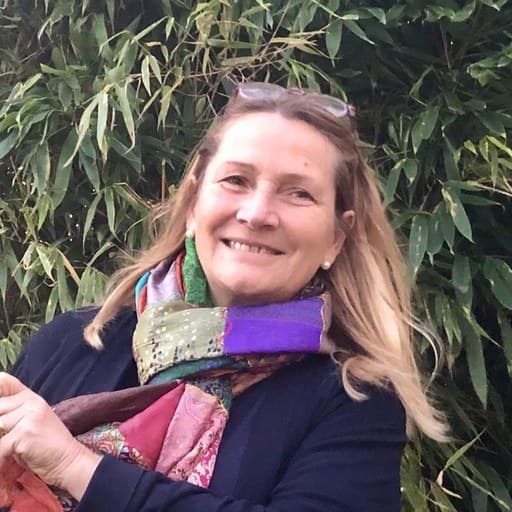
About the author
Valérie Fabre · Founder & Director, Harmonika Institute
Valérie Fabre founded Harmonika Institute in 2025, after a decade seeing clients in private kinesiology practice and, before that, thirteen years in international trade. A French-born polyglot who now splits her time between Dallas and Miami, she sets the school's curriculum and editorial standards and champions ethical, in-person training.
Read more about Valérie Fabre →