Journal · Expressive arts facilitation · What it is
Mandala Meaning: Origins, Why Drawing One Works, and How Sessions Run
Mandala meaning from Sanskrit 'circle' to Jung, why the format calms (containment, repetition, focus), a 60-minute session in 6 steps, materials, limits.
Valérie Fabre, Founder & Director, Harmonika Institute · September 13, 2026 · 9 min read

Key takeaways
- Mandala means 'circle' in Sanskrit. The form appears in Hindu and Buddhist ritual from at least the first millennium, in Tibetan sand painting, Navajo sand painting and Gothic rose windows. It is a cross-cultural shape, not one tradition's property.
- Jung brought it into Western practice around 1916. He drew one most mornings for a period, and later described the circle as an image of the whole self. He read his own; he warned against reading other people's rigidly.
- The format works through 3 mechanisms. A boundary (the circle contains), repetition (the hand settles into pattern), and a centre (attention has somewhere to go). No mysticism required.
- A facilitated session runs 60 to 90 minutes in 6 steps. Frame, centre the page, build outward, colour, title, round. The making phase alone is 35 to 45 minutes.
- The evidence is small but real for one thing: short-term anxiety. A 2005 study found colouring a mandala or a plaid reduced state anxiety more than free drawing. That is a calming effect, not a treatment.
Give ten adults a compass, a pencil and a square sheet of paper, ask them to draw a circle and fill it from the centre outward, and something predictable happens in the room after about eight minutes: the talking stops. Nobody instructed silence. The shape did it. That effect is why mandala drawing sits inside almost every expressive arts program in the United States, and why it needs a facilitator who knows what the circle does and does not do.
This article gives the word's origins, the reason the format calms, a step-by-step 60-minute session, the materials, and the line a facilitator never crosses. It is a companion to our list of 40 art journaling prompts grouped by purpose, which covers page-based work; here the page is a circle.
What does 'mandala' mean, and where does it come from?
The Sanskrit word means circle, or disc, and in Hindu and Buddhist practice it names a geometric diagram used as a support for ritual and meditation. A Hindu yantra is a mandala of triangles and squares inside a circle. A Tibetan Buddhist sand mandala is a palace seen from above, built grain by grain over days by monks and then swept away, the destruction being part of the practice. The form is ancient, cross-cultural and never belonged to one owner: Navajo sand paintings, the rose windows of Chartres and the labyrinth on its floor all use the same logic of a bounded circle with a centre.
Our mandala curriculum opens with exactly this survey, 'history across traditions, the contemplative frame', because a facilitator who presents the mandala as a Buddhist object will lose half a secular room, and one who presents it as a colouring page will lose the other half. It is both, and older than either.
How did Jung use mandalas, and why does it matter?
Jung began drawing circles in a notebook around 1916, during the years of inner crisis that produced his Red Book, and he later wrote that he drew one nearly every morning for a period, noticing that the image changed with his state of mind. Our expressive arts course notes describe the Red Book as a manuscript written and illustrated between 1913 and 1930 and published in facsimile only in 2009, and note that Jung used drawing and painting for his own inner exploration while insisting art was not an end in itself.
Two things in the notes matter for facilitators. First, Jung's method with images was to let the work act rather than to apply a theory to it; the notes say he refused to practise a 'psychoanalysis applied to art' and preferred to let perceptions, sensations and feelings emerge. Second, the notes are explicit that symbols are 'not interpreted rigidly, but in relation to the person's life history'. Jung called the mandala an image of the self and a path to the centre. He did not hand out a symbol dictionary, and neither do we.
Why does drawing a circle calm people?
Three ordinary mechanisms, none of which require belief. Containment: the circle is drawn first, so the page already has a boundary before any content exists, and the fear of the blank page drops. Repetition: filling a circle from a centre invites pattern, and repeating a mark with the hand steadies the breath the way knitting or walking does. Focus: a centre gives attention a home; wandering thought has a place to come back to, which is the same principle as a breath anchor in meditation, as we describe in our note on the difference between mindfulness and meditation.
What the evidence shows
A 2005 study in the journal Art Therapy (Curry and Kasser) induced anxiety in 84 undergraduates and then had them colour a mandala, a plaid pattern or a blank page. The mandala and plaid groups showed a larger drop in state anxiety than free colouring, which suggests the structure does the work, not the symbol. Later replications found similar short-term effects with small samples. Nothing here shows a lasting effect on any condition. We teach it as a calming format, and that is all a facilitator may claim.
How does a facilitator run a 60-minute mandala session?
In six steps, with the making phase protected in the middle. Our curriculum's facilitation module trains a 90-minute arc; the version below is the 60-minute form that fits a lunchtime workshop or a one-to-one session, and it is the one students run first in class.
- 1
Frame (5 min)
State the time, the silence during making, the rule that nobody comments on another person's circle, and the right to pass in the round. Phones away. Say plainly that this is not a test of drawing.
- 2
Draw the circle and find the centre (5 min)
A plate, a compass or a free hand. Mark the centre with a single dot. For a themed session (grief, transition, joy, the three themes in our curriculum), give the one-sentence prompt now, once, and do not repeat it.
- 3
Build outward (15 min)
Pencil or fine-liner only. From the dot, add shapes in rings or rays. Classical construction uses eight or twelve divisions; free-form ignores geometry. Both are taught; the participant chooses.
- 4
Colour (20 min)
Watercolour, coloured pencil or ink. The curriculum's 'colour in service of intention' means one instruction: choose colours by how they feel today, not by what looks right. The room goes quiet here.
- 5
Title and one sentence (5 min)
Turn the sheet over. Write a title and one sentence beginning 'What I notice is…'. This closes the page and prepares the round.
- 6
Round and close (10 min)
Each person shows or does not show their circle and says two sentences about their own process. The facilitator reflects back their words, never a meaning. Sheets go home with their makers.
From the training floor
The step students most often skip in their first practice sessions is the title. They run out of time in the colouring phase and go straight to the round, and the round is flatter for it: people describe their colours instead of their experience. The one sentence on the back is the bridge, and a facilitator who protects those five minutes gets a better round every time.
What materials does a mandala session need?
Square paper, something to draw a circle with, a pencil, and one colour medium. The curriculum's material module compares pencil, ink and watercolour for groups; the table gives our faculty's working choices and costs for ten people.
| Item | Purpose | Approximate cost for 10 | Note |
|---|---|---|---|
| Square paper, 20 to 30 cm, 150 g or heavier | The page; square keeps the circle centred | $15 to $30 | Cut A3 sheets in half, or buy a pad of square paper |
| Compass or a plate | Drawing the outer circle | $10 to $25 | A plate is faster and less intimidating; a compass suits classical geometry |
| Ruler and protractor | Eight- or twelve-fold divisions in classical mandalas | $10 to $20 | Optional; free-form sessions skip them |
| Soft pencil and black fine-liner | Structure and outline | $15 to $25 | Fine-liner over pencil keeps the structure visible under colour |
| Coloured pencils, 12 to 24 colours | Colouring, low mess, portable | $40 to $70 | Best for mixed-skill and mobile groups |
| Watercolour pan set and brush | Colouring, fluid, emotional register | $50 to $90 | Needs water pots and drying time; the curriculum flags it for groups that can handle mess |
| Ink and dip pen or brush pen | Line-based mandalas, high contrast | $20 to $40 | Suits experienced groups; unforgiving of hesitation |
Total for a fully equipped group of ten: roughly $150 to $300, and most of it is reusable. The single best purchase is the paper; thin copier paper buckles under watercolour and reads as failure to the person holding it.
What does a facilitator never do with a mandala?
Read it. A facilitator does not say that a dark centre means depression, that a broken outer ring means a boundary problem, or that red means anger. Symbol-reading systems for mandalas exist, some of them with cards and scoring, and they belong to licensed clinical settings, if anywhere. Our course notes are unambiguous: the medium is 'a means of inner exploration, not a tool of diagnosis', and the facilitator's job is to accompany the process, not to interpret the result.
- Never interpret symbols as findings. 'I notice you used a lot of blue' is an observation; 'blue means you are sad' is a reading the participant did not ask for and you are not licensed to give.
- Never compare circles. Two mandalas on the same table are two people's hours, not a before-and-after or a competition.
- Never require the round. A participant who keeps their circle face down has completed the session.
- Never keep the work. The sheet goes home with its maker unless they choose otherwise, which is also the confidentiality rule in our expressive arts frame.
Scope of practice
Mandala facilitation is non-clinical. It does not assess, diagnose or treat, and a facilitator makes no claim about what a circle reveals. 'Art therapist' is a protected title in many states, held by licensed professionals, and we do not grant it; the legal line is set out in our article on art therapy certification versus expressive arts facilitation. If a participant's words or work indicate acute distress, self-harm or abuse, the facilitator has a private conversation and refers to a licensed professional. Confirm your own state's rules before taking paying clients.
How does mandala work fit inside an expressive arts program?
As a module, not a stand-alone career. Our May 2026 survey of U.S. providers found only three established mandala training providers in the country, one of them Tibetan-Buddhist in framing and one Jungian, with most mandala teaching folded into wider expressive arts or art therapy programs. The market is small, which is why I chose to bundle mandala facilitation as a 2-day, 14-hour module inside our expressive arts facilitation program rather than sell it alone. The full program runs 15 in-person days (105 teaching hours) for $4,200, and the mandala module sits in it alongside creative journaling, collage, clay and the themed studios on grief and transition.
The module's five parts follow the curriculum: history across traditions, geometric construction (classical and free-form), colour and material, the 90-minute facilitation arc, and workshop pricing and scope. For what the wider program covers and who it suits, see our overview of expressive arts facilitation training.
Why does a circle still work when the participant does not believe in any of it?
Because the mechanisms are physical. A boundary, a repeated hand movement and a centre calm a nervous system whether or not the person knows what a yantra is. The skeptic in the room usually produces the most careful mandala, and says so in the round with some surprise. A facilitator's job is to set the frame, protect the making time, keep their interpretations to themselves, and let the shape do what it has done for a few thousand years.
Questions on this topic.
What is the spiritual meaning of a mandala?+
In Hindu and Buddhist traditions a mandala is a diagram of the cosmos or of a deity's palace, used to support meditation and ritual; the practitioner moves attention from the edge to the centre. Jung, writing in the West, called it an image of the whole self. In a facilitated session neither reading is imposed. The circle is offered as a bounded space with a centre, and the meaning is whatever its maker brings to it.
Why are mandalas used in therapy?+
Because the format is calming and structured. Drawing a circle first gives the page a boundary, filling it from the centre invites repetition, and the centre gives attention a place to return. Licensed art therapists use mandalas inside clinical work; expressive arts facilitators use the same format for relaxation and reflection without assessment or interpretation. The best-known study, from 2005, found colouring a mandala reduced short-term anxiety more than free drawing.
How do you draw a mandala for beginners?+
Draw a circle with a plate or compass on square paper and mark a dot at the centre. From the dot, add one simple shape, then repeat it around the centre in a ring. Add a second ring of a different shape, then a third. Outline in fine-liner, then colour by how each colour feels rather than by what looks right. Twenty to forty minutes is enough. Geometry is optional; the repetition is the point.
What is the difference between a mandala and a yantra?+
A yantra is a specific kind of Hindu mandala built from interlocking triangles, squares and a central point, used in tantric ritual and associated with a particular deity. The word mandala is broader and covers any bounded circular diagram, including Tibetan Buddhist sand mandalas, Jung's drawings and the free-form circles made in an expressive arts session. Every yantra is a mandala; most mandalas are not yantras.
Does colouring mandalas actually reduce anxiety?+
In the short term, for most people, yes, according to a handful of small studies. The 2005 Curry and Kasser experiment found that colouring a mandala or a plaid pattern lowered induced anxiety more than free colouring, which points to structure rather than symbolism as the active ingredient. The effect is measured in minutes. It is a calming activity, not a remedy for an anxiety disorder, and no facilitator should present it as one.
How long does a mandala session take?+
A facilitated group session runs 60 to 90 minutes: five minutes of framing, five to draw the circle, fifteen to build the structure, twenty to colour, five to title the page, and ten to twenty for the round. Alone, a full mandala takes twenty to forty minutes, and a daily small one can take ten. Sessions that skip the title step tend to produce a flatter round.
Can a facilitator interpret my mandala?+
A trained one will decline. Reading symbols as findings about your state ('the dark centre means…') is assessment, which belongs to licensed clinicians, and even Jung warned against rigid interpretation. A facilitator reflects back your own words about your circle and adds nothing. If a workshop leader tells you what your mandala reveals, treat it as their projection rather than a fact about you.
Do I need to be religious or Buddhist to make a mandala?+
No. The circle-with-a-centre form appears in Hindu, Buddhist, Navajo and medieval Christian art, and Jung used it with no religious framing at all. The calming effect comes from the boundary, the repetition and the centre, which work on anyone's nervous system. Secular facilitators present the history as history, and the practice as a structured drawing exercise open to everyone in the room.
Tags:
Expressive arts facilitationWhat it isHolistic practice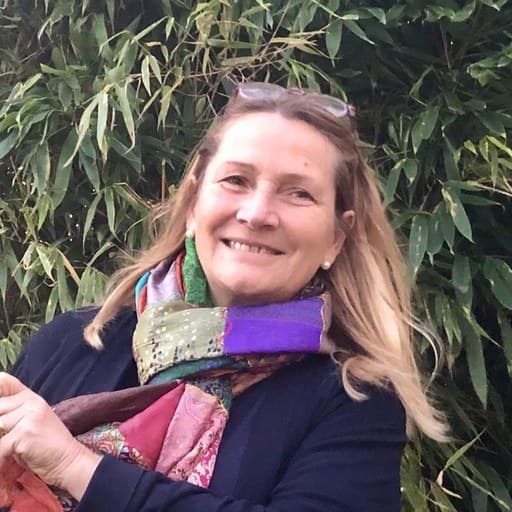
About the author
Valérie Fabre · Founder & Director, Harmonika Institute
Valérie Fabre founded Harmonika Institute in 2025, after a decade seeing clients in private kinesiology practice and, before that, thirteen years in international trade. A French-born polyglot who now splits her time between Dallas and Miami, she sets the school's curriculum and editorial standards and champions ethical, in-person training.
Read more about Valérie Fabre →