Journal · Scope of practice · Certification
Holistic Certification vs Degree: When Each One Makes Sense
A degree is the right instrument for licensed work. A private certification is the right one for unlicensed practice. How to tell which question you are actually asking.
Valérie Fabre, Founder & Director, Harmonika Institute · April 12, 2026 · 10 min read

Key takeaways
- The question is not which is better. It is whether your destination is a state-licensed occupation. If it is, only a degree gets you there, and no certification substitutes for one at any price.
- Licensed destinations are a short, knowable list. Counselling and clinical mental health, nutrition and dietetics, nursing, acupuncture, physical therapy, credentialed clinical art therapy. Everything on that list runs through an accredited degree and a board exam.
- The money gap is not small. A master's route into licensed counselling commonly lands between $35,000 and $80,000 in tuition across two to three years, before supervised hours. Serious private certification in an unlicensed modality typically runs $3,000 to $12,000 across four to twelve months.
- Debt changes what work you can accept. Graduates carrying $60,000 often take agency or insurance-panel roles for years, not because they want to but because the payment has a date on it. A practitioner with no debt can start at six clients a week.
- Ceilings differ by kind, not by height. A degree opens hospital systems, insurance reimbursement, and protected titles. A certification opens private-pay practice, corporate and studio contracts, and teaching. Neither converts into the other later.
A woman in Denver told us she had spent eleven months deciding between a $58,000 master's in counselling and a $6,000 in-person certification, and had made no progress at all, because every article she read was written by someone selling one of the two. She was asking the wrong question. Not "which is worth more", but "what am I legally required to hold in order to do the specific work I picture myself doing on a Tuesday afternoon in three years". That question has an answer. The other one doesn't.
This is the last article in a series of a hundred, and it exists to close a loop the other ninety-nine kept circling. So we're going to be blunt in a direction that costs us money: for a meaningful share of the people reading this page, the correct answer is a degree, and you should stop reading holistic-school marketing, including ours, and go enrol in one.
Start with the destination, not the credential
Credentials are instruments. You choose an instrument by looking at the job it has to do, and the job is defined by the state you live in, not by the school you like the look of.
So picture the Tuesday afternoon. Who is in front of you, what are you doing with them, and what are you calling it? Then ask three questions in this order.
Does the work involve treating, diagnosing, or managing a diagnosed condition? Does it involve a protected title, meaning a word you cannot legally put on a door without a licence? Does it involve billing insurance or working inside a hospital, clinic, or school system that credentials its staff?
Any yes points to a degree. Three noes point to certification. Most people find they are somewhere clean, once they stop describing the work in aspirational language and describe it in verbs.
Go get the degree
If your picture involves sitting with someone's depression, planning a diabetic client's meals, putting needles in skin, or working on a hospital ward, a private certification will not get you there and will not get you closer. Those destinations require accredited graduate or professional education plus state licensure. Buying a certification first is not a stepping stone; it is a detour with a receipt. Confirm the exact requirement with your state's licensing board, since the specifics differ and change.
What a degree actually buys
Four things, and it is worth being precise about them because holistic marketing tends to wave at degrees as if they were merely expensive.
Legal permission. This is the big one. A licence is the state granting you the right to perform activities that would otherwise be illegal for you to perform. Assessment. Diagnosis. Treatment planning for a condition. No private body can grant that, ours included, and any school implying otherwise is telling you something untrue.
Title protection. Words like counsellor, dietitian, nurse, and licensed acupuncturist are fenced. In many states the fence is real and enforced, with penalties attached. The fence works in your favour once you are inside it: nobody can undercut you by claiming your title after a weekend course.
Third-party payment. Insurance panels, employee assistance programs, hospital contracts, and school districts pay licensed providers. Lower per hour than private pay, vastly more stable, and it does not require you to be good at marketing. For a lot of people that last clause is the deciding factor.
Institutional portability. A licence usually moves between states through endorsement or reciprocity with paperwork and a fee. It travels as a recognised thing. We've written elsewhere about how private credentials transfer, and the honest summary is that they travel easily precisely because nobody grants them authority in the first place.
What a private certification actually buys
Also four things, and none of them are consolation prizes.
Competence, if the programme is real. Hours on real bodies, supervised, with someone correcting you. That is what produces a practitioner who can hold a room. It is not a legal permission and it was never trying to be.
Speed to income. A structured program of 1 to 18 teaching days plus personal study between sessions, then clients. Not three years and 3,000 supervised hours. For a 47-year-old with a mortgage and one salary in the household, the compounding difference of starting to earn two and a half years earlier is not a small thing.
Ownership of the work. You set the price, the room, the length of the session, and the client. No panel, no utilisation review, no productivity target. Practitioners who leave licensed roles for unlicensed practice almost always name this first.
A defensible scope, if you stay inside it. Relaxation, stress reduction, self-regulation skills, movement, breath, creative practice, structured attention. This is legitimate work that millions of Americans pay for weekly. It is not medicine and it does not need to pretend to be.
| Dimension | Accredited degree route | Private certification route |
|---|---|---|
| Typical time to first legal paid work | 2-3 years study, plus 1-3 years supervised hours | 4-12 months, then practice hours logged in parallel |
| Typical tuition | $35,000-$80,000 (master's level); more for professional doctorates | $3,000-$12,000 for a serious in-person programme |
| Federal student aid | Usually at accredited institutions | No for most private schools |
| Typical debt carried at year three | $40,000-$90,000 common | Often zero; frequently paid from savings or in instalments |
| Can treat or diagnose a condition | Yes, within licence scope | Never |
| Protected title | Yes | No |
| Insurance reimbursement | Yes, panel-dependent | Rarely; some HSA and FSA use, some corporate contracts |
| Employment inside hospitals and clinics | Yes | Occasionally, in comfort-care or integrative roles |
| Realistic ceiling in private practice | $90,000-$150,000+ in high-fee metros | $45,000-$90,000 full-time, with a long tail below and above |
| What limits you at year five | Caseload, burnout, panel rates | Referral flow and your ability to keep regulars |
Read the last two rows together. The degree's ceiling is higher and its floor is also higher, because employment exists. The certification route has more variance in both directions, which is a polite way of saying that a larger share of people who take it earn very little. Our own accounting of that is in the honest guide to practitioner income, and it does not flatter the field.
The debt question, which nobody asks early enough
The honest number
Compare total cost of arrival, not tuition. For a licensed route that means tuition plus two to three years of reduced or lost income plus supervision fees, which in many states you pay for yourself at $75 to $150 an hour for one to two hours a week over eighteen months. For a certification route it means tuition plus travel plus the twelve to eighteen months of thin income while you build a client base. Both numbers are larger than the sticker price. The degree number is usually three to five times larger.
Debt is not just a number, it's a constraint on future choices. A licensed counsellor carrying $70,000 typically spends the first four years in agency work at $48,000 to $62,000, because the loan payment is due monthly and private practice takes eighteen months to fill. That is a perfectly good life. It is just not the life most people picture when they imagine leaving corporate work.
Conversely, avoiding debt is not free. No federal aid, no deferment, no income-driven repayment, and no institutional safety net if the school closes. Our piece on financing options covers what actually exists.
Where the two routes genuinely overlap
Three modality families sit on the boundary and cause most of the confusion.
Creative and expressive work
Registered art therapy is a credentialed clinical path with its own master's-level education and board registration. It is not something a private school grants, and we do not grant it. What we train is an Expressive Arts Facilitator: someone running structured creative sessions in community, corporate, school, and studio settings without presenting the work as clinical treatment. Both are real. They are different jobs with different clients, and confusing them is the single most common mistake in this corner of the field.
Nutrition and herbal work
Dietetics is licensed or title-protected in most states and runs through an accredited degree and a national exam. Holistic naturopathy taught privately is general wellness education, is not medicine, does not permit the title naturopathic doctor, and is prohibited outright in Florida, South Carolina, and Tennessee. If your Tuesday afternoon involves clinical nutrition for a diagnosed condition, that is the degree column.
Bodywork and Asian traditions
Acupuncture requires licensure everywhere it is practised legally, and needles are the bright line. Digipressure and acupressure work without needles sit outside it in most places. Soft-tissue work for compensation usually requires a massage licence, which is a certificate-plus-state-exam route rather than a degree, sitting somewhere between the two columns. The rules here differ sharply by state.
Common mistake
Buying a certification as a hedge while you decide about a degree. It feels like progress and it is the most expensive form of delay we see. The two routes teach different things for different purposes; the certification hours will not shorten the degree, and the degree admissions committee will not weight them heavily. Decide the destination first, then buy one instrument.
The reverse case: when a degree is the wrong instrument
People overbuy credentials out of anxiety. If your destination is clearly unlicensed work, a degree can be a costly way of buying permission you already have.
Signals that certification is the right instrument: you want private-pay clients and you're willing to learn to find them. You are over 40 and the payback window on $70,000 is uncomfortably short. You want to work part-time alongside another income. Your modality has no licence anywhere in the country, which is true of most of the twenty-nine we teach.
Signals you're overbuying: you cannot name the specific legal activity the degree permits you to perform. You're pursuing it mainly so people take you seriously. You would be doing the same work either way.
How to decide in one afternoon
- 1
Write the Tuesday sentence
One sentence, present tense, with verbs. "I run a ninety-minute breathwork group for eight people in a rented studio in Austin." Vague sentences are the symptom, not the cause, of an undecided reader.
- 2
Call your state board and read the practice act
Ask directly: does the activity I just described require a licence in this state? Boards answer this. It is free, it takes twenty minutes, and it settles the question that a hundred articles cannot.
- 3
Price the arrival, not the tuition
Total cost including lost income, supervision fees, and the thin first year. Put both numbers on one page. Most people know their answer once they see them side by side.
- 4
Interview three graduates who are two years out
Not the school. Graduates. Ask what they earn, how many clients they see, and what they would choose again. Our admissions-call questions apply to universities just as well.
- 5
Buy one instrument and commit for eighteen months
The people who struggle most are not the ones who chose wrong. They're the ones who kept the other option open and never fully committed to either.
Questions on this topic.
Can a holistic certification count toward a degree later?+
Almost never as academic credit, because private certification programmes are not regionally accredited and their hours are not expressed in transferable credit units. Occasionally a graduate programme will treat documented practice hours as relevant experience in an admissions essay, which is worth something but is not advanced standing. Plan on the two routes being financially and academically separate. If you think you may want the degree eventually, the cheaper sequence is usually degree first, certification later as a specialisation.
Is a certification from an accredited school better than one from an unaccredited one?+
Check what the word means in each case. Regional or national institutional accreditation recognised by the U.S. Department of Education is meaningful and applies to degree-granting colleges. Most private holistic schools, ours included, are not accredited in that sense, and any that claims to be should be asked precisely which recognised body, then verified directly with that body. Membership of a modality association is a different and lesser thing. We unpack the distinction in our piece on what counts as a real credential.
Will clients care that I don't have a degree?+
Far less than practitioners fear, and in a specific way. Private-pay clients choosing a breathwork or sound practitioner tend to weigh referral, room, manner, and price above credentials. What they do notice is incongruence: clinical language on a website belonging to someone without a clinical qualification reads as unsafe, and rightly so. Describe what you do plainly and the credential question mostly disappears. Referral partners in medicine are a different audience and will ask about your training in detail.
What if I want to work in a hospital or integrative clinic?+
Some integrative health programmes contract unlicensed practitioners for comfort-focused services, usually through a volunteer pathway that converts to paid work, and usually requiring documented hours, liability insurance, and a background check. It is a genuine route and a narrow one, and the roles are typically part-time. If a salaried clinical position inside a health system is the goal rather than a bonus, that is a licensed-profession answer and the degree column applies.
I already have an unrelated bachelor's degree. Does that help?+
For unlicensed practice it helps indirectly. It signals you can finish long things, and business, education, or communications backgrounds are genuinely useful in building a practice, which is where most practitioners struggle. It grants no scope of practice. For licensed routes it usually satisfies the undergraduate prerequisite, meaning your remaining cost is the master's rather than six years of study, which materially changes the arithmetic above.
Can I start with certification and add a degree if the practice works?+
Yes, and a reasonable number of people do exactly this, typically five to eight years in. Practising first tends to produce better graduate students, since you arrive knowing what you want the qualification for. The caution is arithmetic: you will be older, possibly with a mortgage, and stepping back from a working practice for two to three years is harder than stepping back from a salary. Model that honestly rather than treating it as a door that stays open indefinitely.
Tags:
Scope of practiceCertification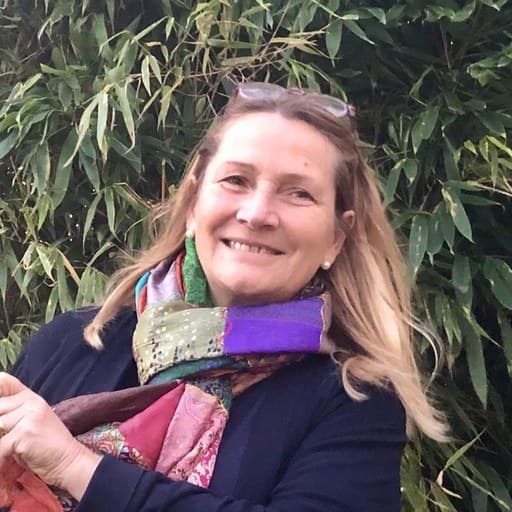
About the author
Valérie Fabre · Founder & Director, Harmonika Institute
Valérie Fabre founded Harmonika Institute in 2025, after a decade seeing clients in private kinesiology practice and, before that, thirteen years in international trade. A French-born polyglot who now splits her time between Dallas and Miami, she sets the school's curriculum and editorial standards and champions ethical, in-person training.
Read more about Valérie Fabre →