Journal · Access Bars · What it is
What Is Access Bars and What Happens in a Session
A light-touch head technique from a trademarked system: what proponents claim, what the research actually amounts to, and what an hour on the table is really like.
Valérie Fabre, Founder & Director, Harmonika Institute · May 3, 2026 · 10 min read
Key takeaways
- It is 32 points on the head, touched lightly. You stay clothed, lie on a table for 60 to 90 minutes, and the practitioner rests fingertips on scalp locations in pairs. Nothing is pressed, manipulated, or adjusted.
- The system is proprietary, and that is the single most important fact for anyone considering training. Access Bars and Access Consciousness are trademarks. Teaching the technique requires certification from that organisation, not from your local school.
- The published research amounts to one small exploratory study. A 2017 pilot with a few dozen participants, no control group, self-reported outcomes. That is not evidence of effect. It is a reason someone might run a real trial.
- The stated mechanism is not testable as written. Proponents describe releasing electromagnetically stored thoughts and beliefs. No instrument has been shown to detect this, and no independent replication exists.
- What is consistently reported is deep relaxation. Many people fall asleep. Whether that comes from the points, the stillness, or an hour of quiet attention has never been separated out.
A friend tells you she had her "bars run" and slept for eleven hours afterwards. You look it up and find a one-day class, a set of 32 head points with names like Money, Control, Aging, Joy, and a lot of language about clearing limitations. You also notice a registered trademark symbol on almost every phrase. Both of those things are real, and neither of them tells you what actually happens when you lie down on the table.
This is a plain description of the technique: where it came from, what the practitioner does with their hands, what proponents say it does, what the published evidence actually amounts to, and what an hour of it feels like. We train practitioners, so we have an interest here. We would rather you know what you are buying.
Where it comes from
Access Bars sits inside a larger body of material called Access Consciousness, developed by Gary Douglas beginning in the early 1990s in the United States, later expanded with Dain Heer. Douglas has described the point system as arriving through a process he characterises as channelled rather than derived from an existing tradition, which distinguishes it from modalities that trace a documented teaching lineage.
That origin story matters less than what came after it. The material was organised into a commercial structure early: standardised one-day classes, a certified facilitator ladder, licensed use of the name, and a published class price that is broadly consistent internationally. Access Bars is not a folk practice that spread informally. It is a trademarked curriculum, distributed the way a franchise is distributed.
You will meet the word "bars" in two senses and it is worth separating them. Each of the 32 points is a "bar". The phrase "running someone's bars" means one full session touching those points. Practitioners often shorten the whole thing to "Bars", capitalised.
What the practitioner actually does
Physically, this is one of the least dramatic hands-on practices you will encounter. Almost nothing happens that a bystander would notice.
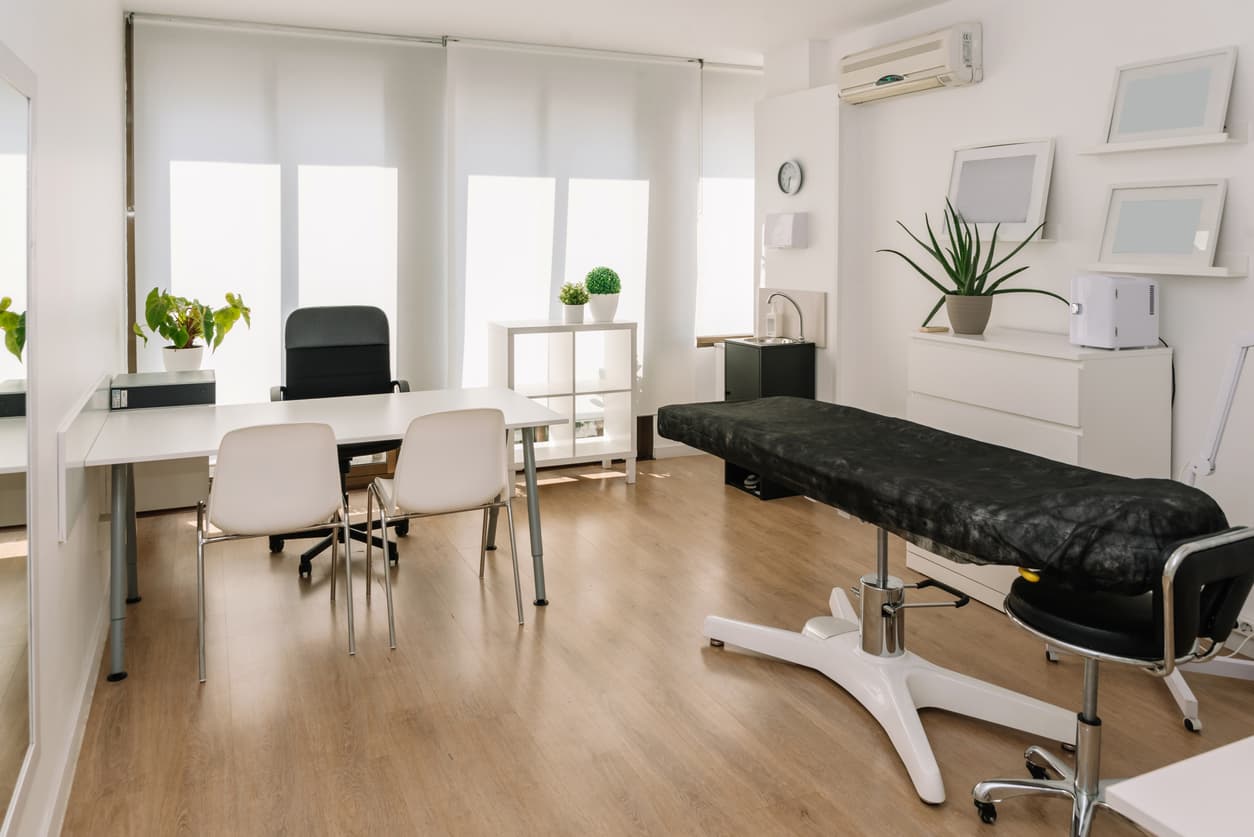
You lie on your back on a massage table, fully dressed, usually with shoes off and a blanket over you. The practitioner sits at the head of the table. They rest the pads of their fingers on two points at once, hold, then move to the next pair. Contact is light. There is no rubbing, no pressure into tissue, no joint movement, no oil.
Points are located across the scalp and around the head: above and behind the ears, along the crown, at the temples, at the base of the skull, above the eyebrows. Each carries a label, and the labels are the part that raises eyebrows. Money. Control. Creativity. Awareness. Body. Sexuality. Aging. Sadness and Joy. Practitioners are taught that touching a point relates to the theme named on it.
The room is usually quiet. Some practitioners talk very little; some open with a scripted set of phrases from the wider Access material. A session runs 60 to 90 minutes, and most practitioners hold every point at least once, which is what distinguishes a full session from a short taster at a wellness fair.
What clients notice
The most commonly reported experience is falling asleep, or drifting in and out of it. After that: heaviness in the limbs, a sense of the head feeling "busy" then quieter, occasional twitching, sometimes tearfulness with no attached story. A minority feel nothing at all and say so, which practitioners should treat as a normal outcome rather than a failure to relax properly.
What proponents claim
The stated model is that thoughts, beliefs, emotions and judgements are stored electromagnetically in the brain, and that touching the points discharges or releases that stored material, loosening whatever fixed conclusion a person has been carrying about money, relationships, their body, and so on. The typical framing is that Bars removes limitation rather than adding anything.
Claims made about outcomes vary a great deal depending on who is making them. Careful practitioners describe relaxation, better sleep, reduced mental noise, and a lighter mood. Less careful marketing extends to anxiety, depression, ADHD, financial circumstances, and physical conditions. That second category is where both the evidence and the law run out.
What the evidence shows
Essentially nothing has been established. The most cited item is a small 2017 exploratory study in which participants received a single session and reported reduced anxiety and depression scores immediately afterwards. It had a few dozen participants, no control group, no sham condition, no blinding, and no follow-up beyond the day of the session. A design like that cannot distinguish the technique from lying still for an hour while someone pays attention to you.
There is no replication, no randomised controlled trial, and no independent verification of the proposed electromagnetic mechanism. The honest summary is: unstudied, not disproven, and currently supported only by what people say afterwards.
Be precise about what "no evidence" means here. It does not mean the technique was tested and failed. It means it has barely been tested at all. Those are different situations.
The proprietary structure, and why it matters
Most holistic modalities are open. Anyone can teach reflexology, write a reflexology manual, and call their course whatever they want. Access Bars is not structured that way, and if you are thinking about training, this is the section to read twice.
| Question | Access Bars | An open modality (e.g. reflexology) |
|---|---|---|
| Can anyone teach it? | No Requires certification as a facilitator through the trademark holder | Yes Any competent practitioner can open a school |
| Is the curriculum standardised? | Yes One-day class, defined content, defined point set | No Hours and content vary widely by provider |
| Can you use the name freely in marketing? | Conditionally Trademarked terms, usage governed by the organisation | Yes Generic term, no owner |
| Typical entry-level class | One day, roughly $300-$400 in the U.S., commonly half price to repeat | 60-300 hours depending on provider and tier |
| Recognised for insurance? | Varies Some energy-practice policies list it, many do not | Usually Widely listed |
| State licensure exists? | No | Some states Registration or certification requirements |
The practical consequence is straightforward. A one-day class is a low-cost way to learn the hand positions and legitimately offer sessions. It is not, by itself, a career. Anyone building a practice around this alone is competing with everyone else who took the same one-day class, on a technique whose name they do not control and whose curriculum they cannot modify or extend.
That is why practitioners who work with it commercially almost always hold it alongside something broader. It becomes one tool in a session, or a low-friction way to introduce new clients to hands-on work, rather than the whole offer. That is also how we position it in our own catalogue: a short, specific technique inside a broader energy practice, not a standalone trade.
Session and class prices
As a client, sessions in U.S. cities commonly run $75 to $150, with New York, Los Angeles and Miami at the upper end and often above it. Many practitioners offer a reduced rate for a block of three or four, since the material is generally presented as cumulative.
As a student, the introductory class sits in the low hundreds and is one of the cheapest entry points in the whole hands-on field. Read that as information about the business model, not about value. Cheap entry, controlled brand, ongoing class economics.
What a first session is actually like, step by step
- 1
Intake, ten to fifteen minutes
A short conversation about what brought you in and what you would like to be different. There is no physical assessment and no health examination. A responsible practitioner asks about medical conditions only to know when to refer you elsewhere, not to form an opinion about them.
- 2
Getting on the table
Shoes off, everything else stays on. On your back, blanket if you want one, head at the practitioner's end. Some people prefer a small bolster under the knees. Say so.
- 3
The hour itself
Fingertips rest on pairs of points, held for a stretch, then moved. You may hear a set phrase repeated. You are not required to do anything, visualise anything, or believe anything. Most people stop tracking time within fifteen minutes.
- 4
Coming back
You are given a few minutes to sit up slowly. Grogginess is common. Practitioners routinely suggest drinking water and not scheduling anything demanding straight afterwards.
- 5
The next day
The most frequently reported aftereffect is unusually deep sleep that night. Some people report feeling flat or emotionally loose for a day. Both are described as normal in the training, and neither is well characterised outside it.
Who should be cautious
The physical risk profile is low, because so little is physically done. The caution list is short and mostly about context rather than technique.
Anyone with a recent head injury, cranial surgery, or a scalp condition should ask a licensed medical professional before having anything touched, however lightly. Anyone in active treatment for a psychiatric condition should treat this as an addition to that care and never a substitute, and should be wary of any practitioner who suggests otherwise. Anyone who becomes distressed by prolonged stillness, which is a real phenomenon for some trauma histories, should say so at the start; a shorter session in a chair is a reasonable adaptation.
Scope of practice
This is not medical treatment and no practitioner offering it is qualified to diagnose, treat, or advise on any condition by virtue of that training. A session should never be presented as a reason to delay, reduce, or stop medical or psychological care.
For practitioners: no U.S. state licenses this specific technique, but hands-on work for compensation can fall within massage regulation in some states, and touching the head and neck is still touching. Claims are the other exposure. Describing what happens in a session is safe. Describing what it cures is not. Rules differ by state and change, so confirm your own with the relevant state board before taking clients.
How to read a practitioner before you book
The variation between practitioners of this technique is wider than the variation in the technique itself, which is nearly fixed. So assess the person.
Good signs: they describe the session in physical terms before metaphysical ones. They tell you plainly that the evidence base is thin when you ask. They have an intake form and a written agreement. They carry professional liability insurance. They mention, unprompted, something they would refer out for.
Signs to slow down on: a promise about a named medical or psychiatric condition. Any suggestion that a course of sessions will change your finances. Pressure to buy a package before you have had one session. Discouragement from asking what the research says. A practitioner who cannot separate what they personally believe from what they can demonstrate.
That last one is the real test, and it applies well beyond this modality. If you want the general version of it, we wrote a longer piece on testing a modality before you commit to training in it.
Where it sits among hands-on practices
If you are trying to place this on a map: it is at the very light end of the touch spectrum, close to Reiki in feel and format but with a fixed point protocol rather than an intuitive one, and without the lineage transmission structure that Reiki carries. It is nothing like bodywork, and someone expecting the physical satisfaction of soft-tissue work will find it underwhelming.
For a curious member of the public, the sensible framing is this: an hour of quiet, undemanding, low-stimulation contact from someone paying attention to you, described by a proprietary theoretical model that has not been demonstrated. Whether the model is true changes very little about whether the hour is worth having. Whether you are told the truth about the model changes a great deal about whether the practitioner deserves your trust.
Questions on this topic.
Does it hurt, and will anything be pressed or cracked?+
No. The contact is light enough that some people describe it as barely feeling like touch at all. Nothing is pressed into muscle, no joints are moved, no adjustment of any kind is performed, and nothing is applied to your skin or hair. If a practitioner is applying real pressure or working into the neck muscles, they have added something from another modality, which they should tell you about beforehand.
How many sessions do people usually have?+
Practitioners commonly suggest a series of three or four rather than a single session, on the basis that effects are described as cumulative. There is no evidence establishing an optimal number, because there is no evidence establishing the effect. As a consumer, one session is enough to know whether you enjoy it and whether you trust the practitioner. Buy the package after that, if at all, not before.
Is it a religion, and do I have to believe in it?+
It is not a religion, and belief is not required for a session. The wider Access Consciousness material does include a body of philosophical teaching, a set of characteristic phrases, and further classes beyond the entry level. Some people find that appealing and go deeper into it. Others take the hand positions, use them, and leave the rest. Both are common. You are entitled to decline the philosophy and keep the hour on the table.
Can a practitioner say it treats anxiety or depression?+
They should not, and in most U.S. states a non-licensed practitioner making that claim is on genuinely risky ground. Describing what happens in a session and what people commonly report is a different act from claiming to treat a diagnosed condition. The safest and most accurate wording is close to the truth anyway: a quiet session, light contact, and most people saying they felt calmer and slept well afterwards.
Is a one-day certificate a real qualification?+
It is a real certificate for a genuinely short, defined technique, which is not the same as a professional qualification. It teaches you where to put your hands. It does not teach you how to hold a session when someone starts crying, how to set a price, when to refer out, or how to keep a client for two years. Those are the things that separate people who practise from people who trained once.
Tags:
Access BarsWhat it is
About the author
Valérie Fabre · Founder & Director, Harmonika Institute
Valérie Fabre founded Harmonika Institute in 2025, after a decade seeing clients in private kinesiology practice and, before that, thirteen years in international trade. A French-born polyglot who now splits her time between Dallas and Miami, she sets the school's curriculum and editorial standards and champions ethical, in-person training.
Read more about Valérie Fabre →