Journal · Access Bars · Choosing a program
Access Bars Training: What Practitioners Should Know Before Enrolling
Access Bars is a proprietary branded system. What that means for your title, your marketing, your website copy, and what happens to the credential if you ever leave.
Valérie Fabre, Founder & Director, Harmonika Institute · June 27, 2026 · 10 min read
Key takeaways
- This is a branded system, not a public-domain technique. "Access Bars" and "Access Consciousness" are names the company behind them claims as trademarks. That single fact governs what you may call yourself and what you may print.
- The entry class is short. Introductory Bars classes are commonly delivered in a single day, typically in the low hundreds of dollars in the U.S. Compare that against the 100–200 hour range of non-branded practitioner tracks before you assume the two credentials are equivalent.
- The evidence base is thin. A small number of small studies exist. There is no body of well-controlled research supporting clinical claims, and you should not make any.
- A branded credential does not port. Leave the system and, in general, the technique knowledge stays with you while the right to use the brand name in your advertising does not. Plan for that before you build a business identity on it.
- Ask about the terms in writing. Listing conditions, renewal, and permitted advertising language change over time. Get the current version from the organisation itself, not from a facilitator's summary.
Most modalities you can train in are, legally speaking, nobody's property. Reiki, reflexology, breathwork, acupressure: the names are generic, the techniques are public, and any competent school can teach them and hand you a certificate. Access Bars is not in that category. It belongs to a company, the name is protected, and the training route runs through that company's own licensed structure. If you are weighing it up, the technique is almost the least important thing to understand.
This article is not about whether Access Bars works. We cover the session experience and the claims separately. This one is about the commercial and legal architecture around branded modalities generally, with Access Bars as the clearest case study in the field, because that architecture is what most people fail to check before they pay.
What Access Bars is, described plainly
Access Bars is a technique within a larger body of material called Access Consciousness, a company founded in the United States in the 1990s. The technique involves light, sustained finger contact on a set of points on the head. Proponents of the system describe these points as relating to accumulated thought, judgement and mental patterning, and describe the touch as releasing or easing that accumulation.
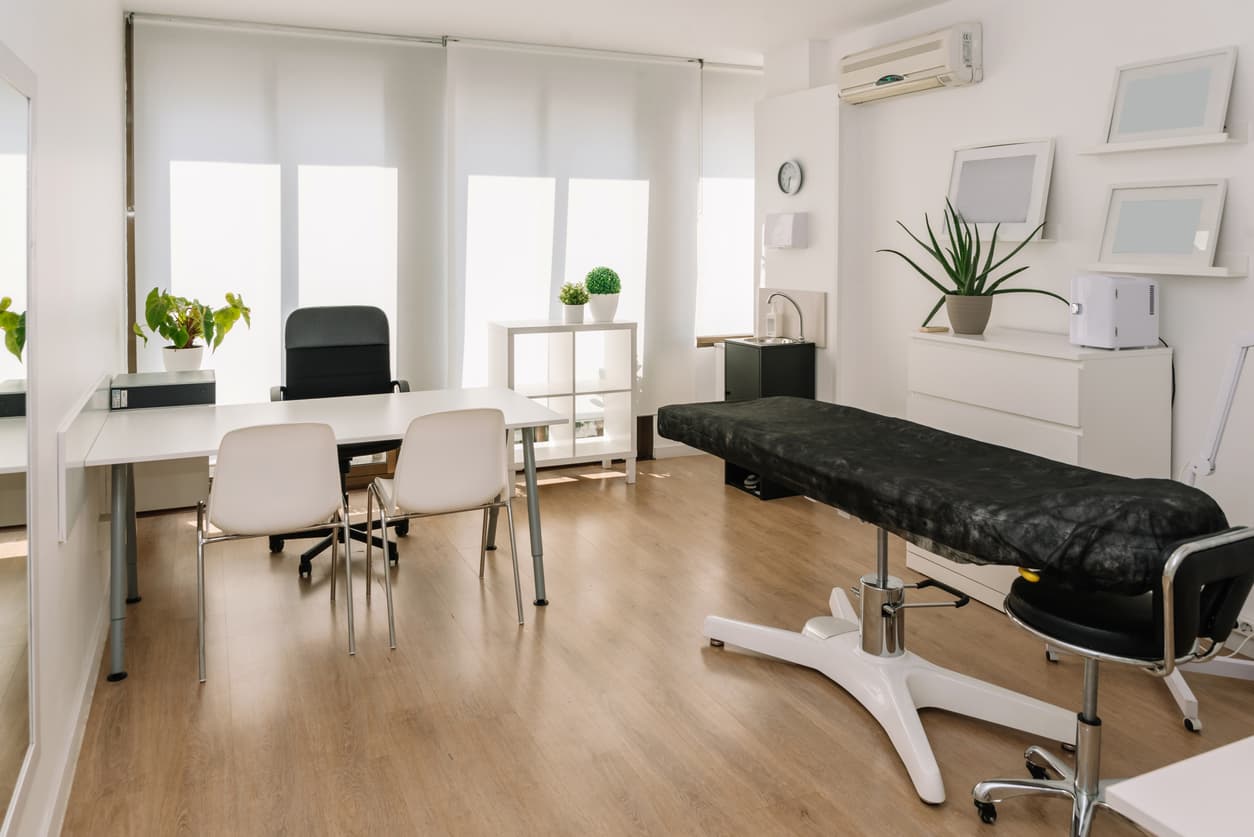
A session typically runs sixty to ninety minutes. The client stays clothed and lies on a table. The practitioner sits at the head, holds pairs of points, and does very little else. Many recipients report deep relaxation or sleepiness. That much is uncontroversial as a description of what occurs in the room.
The claims attached to the technique go considerably further than relaxation in some marketing you will encounter. Those claims are not ours to make, and if you train in this you should be extremely careful about repeating them. We will come back to that.
Where the evidence sits
The published research on Access Bars consists of a small number of small studies, several of them conducted by people connected to the system, generally without the blinding or control conditions that would let you separate the technique from expectation and from an hour of quiet attention. There is no independent body of evidence supporting any clinical claim.
That is a statement about the state of the literature, not a verdict on the practice. Plenty of what people find valuable in this field is under-researched. The working rule is the same either way: describe what happens in a session, never promise an outcome, and never suggest anyone delay medical care.
Why "proprietary" changes everything
Here is the distinction that matters. When you train in a generic modality, you are buying skill. When you train in a branded one, you are buying skill plus a conditional permission to use somebody's name.
Those two purchases behave very differently over time. Skill is yours permanently and travels anywhere. Permission is granted by a private organisation on its own terms, and those terms can be revised, and they end if the relationship ends. Neither arrangement is wrong. But people routinely build a practice identity, a website, a business name and an entire client-acquisition strategy on the second one while quietly assuming they own the first.
Branded modalities are common across the field. Several bodywork systems, several energy systems, several coaching frameworks and a number of personality instruments operate this way. The pattern is consistent enough that you can check for it in ten minutes.
| Dimension | Branded / proprietary system | Non-proprietary modality |
|---|---|---|
| Who sets the curriculum | The owning organisation, centrally | Each school, with lineage variation |
| Who may teach it | Only facilitators licensed by the owner | Anyone competent, quality varies widely |
| Use of the name in advertising | Conditional on current standing | Unrestricted |
| Directory listing | Usually the owner's own directory, often with ongoing conditions | Independent registers, or none |
| Curriculum consistency | High by design | Variable |
| Portability if you leave | Name does not travel | Fully portable |
| Recognition by insurers | Depends on the named modality appearing on the insurer's schedule | Same test applies |
Notice that the branded column is not the losing column. Central curriculum control produces genuine consistency: a Bars session in Denver resembles a Bars session in Austin far more closely than two "energy healing" sessions from unrelated teachers will. If you have ever tried to work out what a stranger's certificate actually taught them, you will see the appeal.
Trademark, licensing and what you may print
Trademark law protects the name, not the movement of your hands. Nobody can stop you from placing your fingers on someone's head. What a trademark owner can control is commercial use of the protected name, and that control is meaningful because the name is what your clients search for.
Before you print anything
Ask the organisation, in writing, for its current guidance on four things: whether you may use the mark in your business name, in a domain name, in social handles, and in paid advertising; what practitioner title you are permitted to use; whether the logo may appear on your materials; and what happens to all of the above if you stop training, stop paying any applicable fees, or leave. Keep the reply.
Terms set by private organisations change. This is not a criticism of any company, it is simply how licensing works, and a screenshot of a web page from three years ago will not help you.
The same logic applies to your marketing claims, and here the exposure is yours alone. If a system's promotional language includes outcomes that sound therapeutic, repeating that language on your own website is your risk, not the brand's. Regulators and state boards look at what the practitioner said to the client. A branded modality gives you a supply of ready-made copy, which is convenient and, occasionally, dangerous.
What a short class can and cannot give you
Introductory Bars classes are typically delivered in a single day and priced in the low hundreds of dollars in the U.S., with reduced rates commonly offered for repeat attendance. You leave able to perform the technique on a friend.
That is a real thing to be able to do. It is not a practitioner education, and the gap is not in the hand positions.
The arithmetic nobody runs
One day of instruction is roughly seven contact hours. A practitioner-level programme in a non-branded energy modality typically runs 100 to 200 hours across several months and costs several thousand dollars. Per hour, the branded day is not cheap. It is short. Those are different things, and a low sticker price on a one-day class tends to get read as the first when it is really the second.
What the extra hours buy, in any modality, is supervised work on people who are not your classmates, plus intake, boundaries, documentation, referral and pricing. Those are the things that decide whether you have a practice in eighteen months.
If a branded system is what you want, the honest structure is usually to treat the branded class as a technique module and build the practitioner competence around it separately. That is a legitimate plan. What does not work is assuming that a day of training plus a directory listing constitutes a business.
The part people skip: what happens if you leave
Consider a practitioner three years in. Her business is called something containing the brand name. Her domain matches. Around half her enquiries arrive through the organisation's practitioner directory. Her Instagram bio, her flyer, her Google listing and her word-of-mouth all run on that one word.
Then life changes. She moves, or the annual conditions stop making sense, or she simply drifts toward other work. What she keeps is everything she knows how to do. What she loses, potentially, is the name on all of it and the referral flow attached to it.
This is not a hypothetical peculiar to one company. It is the structural feature of every licensed brand in every industry, and franchisees have understood it for a century. Holistic practitioners tend not to think of themselves as franchisees, which is precisely why it catches people.
- 1
Own your own name first
Register a business name and a domain that describe you, not the brand. Your own name plus a plain description of the work, in your own city, survives any change of affiliation. A brand-derived domain does not.
- 2
Build a client list you control
Emails and phone numbers in your own system, with consent. If your only route to your clients runs through somebody else's directory, you do not have a client list.
- 3
Describe the service, not just the label
Your page should explain what happens in the session in ordinary language. Clients who booked because of what you described will follow you. Clients who booked a brand name will not.
- 4
Keep a second, non-branded competence
Not to dilute your focus, but so that your practice has a floor that nobody else licenses. Sequence it after your first modality reaches working competence rather than stacking both at once.
- 5
Get the exit terms before you enter
Ask what happens on withdrawal, non-renewal or lapse, and how much notice applies. If nobody will put it in writing, that is your answer.
Scope: what you may say to a client
None of this work is medical. It does not diagnose, treat or cure anything, and no state licenses it. That means your legal exposure comes almost entirely from your claims rather than your technique.
The safe framing is descriptive. You offer a quiet, structured session in which you hold points on the head with light contact; most people report feeling deeply relaxed; some fall asleep; it is not a treatment for any condition and does not replace medical or psychological care. If a client is under care for anything, you encourage them to keep it.
Two further constraints are worth stating. Light contact to the scalp is still touch for compensation, and a few states define massage broadly enough that hands-on work can fall inside the licensed activity. Our massage licensure guide covers the analysis. And a session that produces emotional release is not permission to work with the material. Ground the person, close cleanly, refer.
From the training floor
The most common failure we see with any head-contact modality is the closing. A client who has been horizontal and half-asleep for eighty minutes needs five minutes of sitting up, water and ordinary conversation before they walk to a car. Practitioners trained only in the technique tend to end the session when the hands come off. That is not the end of the session.
How to decide
Train in a branded system if you value curriculum consistency, you want a defined community and a ready-made explanation of what you do, you have checked the current terms in writing, and you are building your business identity on your own name rather than the brand's.
Choose a non-proprietary route if you want a credential nobody can condition, you intend to teach eventually without seeking permission, or you expect to move states and want the fewest possible moving parts. Our own energy work sits in that second category, and we would rather you understood the trade-off than took our word for it.
The honest answer for many people is both, in order. A short branded class is a low-cost way to find out whether hands-on quiet work suits you at all, which is a genuine use for it. Just do not mistake the certificate for a career.
Questions on this topic.
Do I need a licence to practise Access Bars in the U.S.?+
No state licenses this specific technique, so there is no licence to obtain. The questions that do apply are whether your state's massage practice act sweeps in hands-on work for compensation, whether your municipality has rules about seeing clients at home, and whether your claims stray into regulated territory. The third catches more practitioners than the first two combined. Check with your state board before you take paying clients, and carry professional liability insurance.
Can I teach Access Bars after taking the class?+
Not on the basis of an introductory class. Branded systems reserve teaching rights for facilitators licensed by the owning organisation, and reaching that status involves its own prerequisites, application and ongoing conditions. Those requirements are set by the company and change over time, so ask the organisation directly rather than relying on a summary from a class or a third-party site. If teaching is your goal, establish the full route and its cost before you begin.
Will an insurer cover me for a branded modality?+
Sometimes, and the test is mechanical rather than philosophical: the insurer needs the modality to appear on its schedule of covered activities, and it usually wants evidence of documented training hours. Some branded modalities are listed by name, others are covered under a general energy-work heading, and a few are not covered at all. Ask a broker before you enrol, not after. Insurability is one of the few genuinely objective signals in an unaccredited field.
What is the difference between a practitioner and a facilitator?+
In most branded systems, practitioner means you may deliver sessions and facilitator means you may also teach the material to others. The second is a licensing relationship with the owning organisation and typically carries conditions the first does not, including standing requirements and permitted use of the name. The terminology varies between systems, so confirm what each word means in the specific programme you are considering rather than assuming it matches another one you have seen.
Is the technique itself protected, or just the name?+
Broadly, trademark protects the name and branding, not the physical actions. In practice the distinction matters less than it sounds, because the name is what clients search for and what your marketing depends on. You may retain the ability to do the work without retaining the ability to say what it is called. Anyone relying on that gap should take proper legal advice for their own circumstances rather than a general article like this one.
Tags:
Access BarsChoosing a program
About the author
Valérie Fabre · Founder & Director, Harmonika Institute
Valérie Fabre founded Harmonika Institute in 2025, after a decade seeing clients in private kinesiology practice and, before that, thirteen years in international trade. A French-born polyglot who now splits her time between Dallas and Miami, she sets the school's curriculum and editorial standards and champions ethical, in-person training.
Read more about Valérie Fabre →