Journal · Sound Healing · What it is
Sound Healing Frequencies: 432 Hz, 528 Hz and Solfeggio, Sorted
Solfeggio frequencies, 432 vs 440 Hz, singing bowl frequencies: where each claim came from, what acoustics and trials support, how to say it honestly.
Valérie Fabre, Founder & Director, Harmonika Institute · September 13, 2026 · 9 min read

Key takeaways
- The solfeggio frequencies are a 1970s invention. The six numbers (396 to 852 Hz) were published by Joseph Puleo, not recovered from medieval chant, which had no fixed pitch at all.
- 432 Hz versus 440 Hz is a tuning preference, not a physiology. A=440 became the international standard in 1955. No controlled study shows a reliable bodily difference between the two.
- What the research does support is modest and real. Slow tempo and low volume lower heart rate and self-reported anxiety; music before medical procedures has Cochrane-level evidence. None of it depends on a specific hertz value.
- Binaural beats have small, inconsistent effects. Meta-analyses find slight changes in anxiety and attention; the hype outruns the data by a wide margin.
- A singing bowl is not one frequency. It produces a fundamental plus partials; a “528 Hz bowl” is a manufacturing choice, not a discovery. We teach students to say so.
Search “528 Hz” and you will find bowls, playlists and pendants promising DNA repair. Search “432 Hz” and you will find claims that the whole music industry is tuned wrong. Both numbers sell, and both sit at the front of nearly every sound-healing brochure our faculty has been handed. This article separates the three layers that get mixed together: where each frequency claim came from, what acoustics says about it, and what the clinical research on sound and relaxation actually shows.
For a plain description of what a sound session is and what happens in it, start with our piece on what sound healing is. This page is about the numbers on the brochure.
What are the solfeggio frequencies and where did they come from?
They are six tones, 396, 417, 528, 639, 741 and 852 Hz, introduced in the 1970s by a naturopath named Joseph Puleo and popularised through a 1999 book he co-wrote with Leonard Horowitz. Puleo said he derived the numbers from a pattern in the Book of Numbers. Three more (174, 285 and 963 Hz) were added later by other authors. Each was assigned a benefit: 396 for liberating guilt, 528 for “transformation and DNA repair”, 852 for intuition, and so on.
The name borrows from real music history. Solfège, the do-re-mi system, comes from Guido of Arezzo around 1025, who used the syllables ut, re, mi, fa, sol, la from a hymn to Saint John to teach singers intervals. But Guido's system named relative steps in a scale, not absolute pitches. There was no hertz in the eleventh century, no standard pitch, and no instrument to measure one. A chant sung in Cluny and the same chant sung in Canterbury could sit a third apart. The claim that medieval monks sang at 528 Hz is not a disputed reading of the evidence; it is an anachronism.
432 Hz versus 440 Hz: what is the debate actually about?
It is about which frequency the note A above middle C is tuned to. A=440 Hz was adopted as an international standard in 1955 (ISO 16), after decades of orchestras drifting anywhere between 415 and 460 Hz. A=432 Hz is 8 Hz lower, about a third of a semitone flat of 440. Its advocates call it “Verdi's A” (Verdi did lobby for a lower Italian standard in the 1880s), “the natural tuning”, and sometimes “the frequency of the universe”, on the grounds that 432 divides neatly into various numbers.
Acoustically, nothing special happens at 432. The ratios between notes in a scale are identical whatever the reference pitch, so a piece in 432 sounds the same as the same piece in 440, only fractionally lower. A handful of small studies have compared the two: one 2019 pilot with 33 participants reported a slightly lower heart rate with 432 Hz music, with no blinding of the researchers and an effect within measurement noise. That is the strongest evidence in favour, and it is weak. Our faculty's position: if you or your clients prefer the sound of 432, tune to it. Say it is a preference.
What the evidence shows
The National Center for Complementary and Integrative Health summarises music-based interventions as having some evidence for reducing anxiety and pain perception in clinical settings, with effects that depend on tempo, familiarity and the listener's choice rather than on a particular frequency. Its overview is at nccih.nih.gov. No review from NCCIH, Cochrane or a peer-reviewed journal supports a specific therapeutic frequency.
What do acoustics and the research actually support?
Three things, each ordinary and each well documented. The first is the relaxation response: slow, predictable, low-volume sound lowers sympathetic arousal in most people within a few minutes. Heart rate, breathing rate and self-rated tension all drop. This is the mechanism behind every sound bath that has ever worked, and it is indifferent to hertz.
The second is rhythmic entrainment: bodies synchronise to a steady external pulse. Walking to a beat is the clearest example; breathing tends to slow toward a slow drone. This is real, measurable and useful in a session. The stronger claim, that brain waves “entrain” to a tone's frequency and shift you into a theta or delta state on demand, is far less supported. EEG changes during sound sessions are small and inconsistent.
The third is binaural beats: play 200 Hz in one ear and 210 Hz in the other and the brain perceives a 10 Hz beat that is not in either signal. It is a genuine perceptual effect. Whether it changes mood or cognition is where the research thins out: meta-analyses of the randomised trials find small average effects on anxiety and attention, with wide variation between studies and no clear dose. A practitioner can use them honestly as a focusing aid. Marketing them as a “brainwave technology” overstates what the trials show.
| Frequency or claim | What is claimed | Origin | Evidence status |
|---|---|---|---|
| 528 Hz (“love frequency”) | Repairs DNA, transformation | Puleo and Horowitz, 1970s-1999 | No support |
| 396, 417, 639, 741, 852 Hz (solfeggio set) | Guilt release, change, connection, expression, intuition | Same source | No support |
| 432 Hz tuning | More natural, calmer than 440 | 19th-century pitch debates; revived 1980s onward | One weak pilot study |
| Binaural beats (e.g. 10 Hz difference) | Induces alpha or theta brain states | Heinrich Dove, 1839; Oster, 1973 | Small, inconsistent effects |
| Slow tempo, low volume, steady drone | Lowers arousal and self-rated anxiety | Relaxation-response research from the 1970s | Consistent |
| Music before medical procedures | Reduces pre-procedure anxiety | Randomised trials, Cochrane review 2013 | Consistent |
| Rhythmic entrainment of breath or gait | Body synchronises to an external pulse | Movement science | Consistent |
| “Chakra frequencies” (e.g. 256 Hz root, 480 Hz crown) | Each chakra resonates at a fixed pitch | 20th-century authors; several competing tables | No support; tables disagree |
What frequencies do singing bowls actually produce?
Several at once. A struck metal bowl produces a fundamental (typically somewhere between 100 and 800 Hz depending on size and thickness) and a series of higher partials that are not simple multiples of it, which is why bowls sound shimmering rather than pure. Rim a bowl with a mallet and the partial that dominates can change with pressure and speed. A hand-hammered Himalayan bowl is therefore never “a 432 Hz bowl”; it is a cluster of frequencies, slightly different every time it is played.
Crystal (quartz) bowls are different. They are manufactured to a note, stamped with it, and sold in sets labelled by chakra: C for root, D for sacral, up to B for crown. The note is a factory decision, and the maker chooses whether to tune the set at 440 or 432 reference. The stamp usually adds a tolerance such as “C +20”, meaning 20 cents sharp, because quartz bowls drift. When a supplier tells you a bowl “is 528 Hz”, ask which reference pitch, which partial, and measured how.
- Tibetan-style metal bowls: complex spectrum, long sustain, warm beating between partials; the sound most people mean by a sound bath.
- Quartz crystal bowls: near-pure tone, very loud, tuned to a named note; overwhelming in a small room.
- Weighted tuning forks: single frequency, most commonly 128 Hz for on-body use; the number is a convention from clinical forks, not a healing constant.
How does a practitioner talk about frequency honestly?
By describing the instrument and the experience, and leaving the physiology to the physiology. Our course manual asks students, from Module 1, to be able to say what each instrument is and where its tradition comes from without a single medical verb. Here is the language we drill.
- 1
Name the instrument, not the number
“This is a quartz bowl tuned near C” rather than “this is your root-chakra frequency”. If a client asks about 528 Hz, say where the number came from and that you use the bowl because you like the sound.
- 2
Describe the effect you can actually observe
“Most people's breathing slows in the first five minutes” is true and checkable. “This tone repairs cells” is neither.
- 3
Use the word “relaxation”, not “treatment”
A sound session accompanies a person into a resting state. It does not treat a condition, and the word treatment has legal weight in most states.
- 4
Say what you don't know
“There is some research on music and anxiety, and very little on specific frequencies” is a sentence a client trusts more than any promise.
- 5
Refer when the request is medical
If someone books a sound bath for tinnitus, migraine, or a diagnosed condition, the honest answer starts with “that's a question for your physician; here's what a session can offer alongside that”.
Scope of practice
Sound practitioners are unlicensed in every U.S. state. That freedom holds only as long as no medical claim is made: no frequency “for” a condition, no promise of outcomes, no advice about medication. Contraindications still apply (sound near the body with a pacemaker, loud gongs with sound sensitivity or epilepsy, on-body bowls in pregnancy), and the FTC treats health claims in marketing as claims that need evidence. Check your state's rules on bodywork before placing instruments on a client's body; some states read on-body contact as massage.
What do we teach, and what does the market teach?
Our May 2026 survey of U.S. providers found the credentialing market consolidating around a 200-hour standard, with the most credible in-person program (Globe Institute in Sausalito) at 186 hours for $2,600 and a benchmark of $2,000 to $2,800 for a serious certification. Many shorter online courses lead with the solfeggio narrative, because it is easy to teach from slides and sells well.
We chose the opposite. In our in-person Sound Healing program, 4 classroom days (28 teaching hours) for $2,400, the first module puts a tuner app and a spectrum analyser next to every bowl in the room so that students hear and see what their instruments actually produce. From the course manual: “working with crystal singing bowls, Tibetan bowls and gongs” and “body tuning forks and how to apply them safely” are the first two listed skills, and safety comes before any frequency talk. Students learn to lead sound baths for groups of 10 to 50, and they learn, in the same week, why the brochure numbers are not the reason those sessions work.
If the business side is your question, our article on sound healing practitioner income from sessions, events and corporate work gives the ranges, and our guide on how to use a singing bowl covers the striking, rimming and placement technique this page leaves out.
From the training floor
Every cohort has one student who arrives certain that 528 Hz is different, and one who arrives certain it is all nonsense. We put them at the same bowl with a spectrum analyser. The first discovers that her “528 bowl” peaks at 531 and has a louder partial near 1,400. The second discovers that the room's breathing has slowed anyway. Both leave with a better sentence for their clients.
Questions on this topic.
Is 528 Hz really the frequency of love or DNA repair?+
No. The claim comes from a 1999 book by Leonard Horowitz drawing on Joseph Puleo's 1970s numerology, not from biology. No peer-reviewed study shows any effect of a 528 Hz tone on DNA. A 528 Hz tone is simply a C slightly sharp of standard pitch, and it is as pleasant to listen to as any other steady note. Practitioners who like the sound can use it; the origin story should be described as a modern belief, not a fact.
Is 432 Hz better than 440 Hz for relaxation?+
There is no reliable evidence that it is. The two tunings differ by 8 Hz, roughly a third of a semitone, and the intervals within the music are identical. One small 2019 pilot reported a slightly lower heart rate with 432 Hz music, without blinding and with an effect inside measurement error. If you or your clients prefer the slightly lower sound, tune to it. Presenting 432 as physiologically superior is not supported.
What frequency is a singing bowl?+
A metal singing bowl has no single frequency. It produces a fundamental, usually between about 100 and 800 Hz depending on size, plus several partials that give it the shimmering quality. Quartz crystal bowls are manufactured to a named note such as C or F and stamped with a tolerance in cents. Any “528 Hz bowl” label means the maker aimed near that pitch for one partial; a tuner app will show the rest.
Do binaural beats actually work?+
The perceptual effect is real: two tones a few hertz apart, one in each ear, produce a beat the brain hears that is not in the audio. Whether that changes mood or thinking is less clear. Meta-analyses of randomised trials find small average effects on anxiety and attention with large variation between studies. They are a reasonable focusing aid and a poor basis for medical claims. Keep the volume low and skip them for anyone with epilepsy.
What are the chakra frequencies?+
There is no agreed set. Several 20th-century authors published tables assigning a pitch to each of the seven chakras, and the tables contradict each other: one gives the root chakra 256 Hz, another 396 Hz, another 194 Hz. Crystal bowl makers sell chakra sets tuned to the notes C through B as a convention. Treat the note-to-chakra pairing as a teaching map used within a tradition, not as a measured property of the body.
Is there any scientific evidence for sound healing?+
There is consistent evidence that slow, quiet, predictable sound lowers physiological arousal and self-reported anxiety, and that music before medical procedures reduces pre-procedure anxiety, including a 2013 Cochrane review. There is very little evidence for specific frequencies, and none for claims of cellular or DNA effects. Honest practitioners describe a session as accompanying relaxation, not as treating anything, and point clients with medical questions back to their physician.
Which frequency is best for sleep?+
None in particular. What helps most people toward sleep is tempo, volume and predictability: slow rhythms under about 60 beats per minute, low volume, and sounds without sudden changes. Whether the track is labelled 174 Hz, 432 Hz or nothing at all matters far less than those three properties. Pink noise and slow drones have some research behind them for sleep onset; the frequency labels on playlists are marketing.
Can a sound healer legally say a frequency heals a condition?+
Not safely. Sound practitioners are unlicensed, which means they must avoid medical claims entirely: no frequency “for” anxiety, pain, or any diagnosed condition, and no promises of outcomes. The FTC requires health claims in advertising to be backed by evidence, which these are not. The workable language is descriptive: what the instrument is, what a session involves, and that most people find it relaxing. Anything beyond that belongs to a licensed professional.
Tags:
Sound HealingWhat it isScope of practice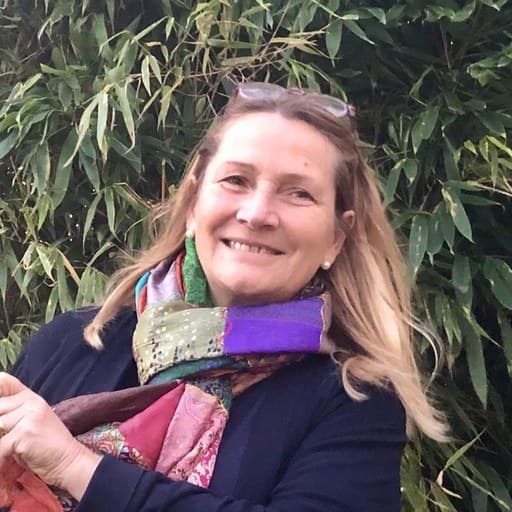
About the author
Valérie Fabre · Founder & Director, Harmonika Institute
Valérie Fabre founded Harmonika Institute in 2025, after a decade seeing clients in private kinesiology practice and, before that, thirteen years in international trade. A French-born polyglot who now splits her time between Dallas and Miami, she sets the school's curriculum and editorial standards and champions ethical, in-person training.
Read more about Valérie Fabre →