Journal · Reiki · What it is
Does Reiki Work? What the Research Shows and What It Does Not
An honest look at the Reiki evidence: why sham controls are so hard to build, what reviews conclude about anxiety and pain, and where the research stops.
Valérie Fabre, Founder & Director, Harmonika Institute · May 10, 2026 · 10 min read

Key takeaways
- The honest one-line answer. People consistently report feeling calmer and less tense after a session. There is not enough good evidence to say Reiki treats any medical condition, and no serious body claims otherwise.
- The sham problem is the whole story. You cannot build a convincing fake Reiki session, which means most trials cannot separate the technique from the setting, the attention, and the expectation.
- Small and unblinded means inflated. Studies with a few dozen participants, self-reported outcomes, and no blinding reliably produce larger apparent effects than better-designed work. That pattern is well established across the whole of medicine, not just this field.
- Placebo is not an insult. Expectation, ritual, touch and unhurried attention produce measurable changes in reported pain and anxiety. That is a real mechanism, and it is a poor reason to overclaim a different one.
- Nothing here is a reason to skip a doctor. Reiki is a comfort practice alongside medical care, never instead of it. If something is wrong, get it looked at.
Someone gets off the table after an hour, opens their eyes slowly, and says they haven't felt that relaxed in months. That happens often enough that practitioners stop being surprised by it. The interesting question is not whether it happened. It's what caused it, and whether anyone has managed to design a study capable of telling us.
This is a school that trains Reiki practitioners, so you can reasonably expect us to argue that it works. We're going to do something less convenient instead, which is walk through what the research actually supports, where it falls apart, and what a reasonable person should conclude. If you want the description of what physically happens in a session, that's covered in what Reiki is and what happens in a session. This piece is about the evidence.
What "does it work" is really asking
Three quite different questions hide inside that phrase, and most arguments about Reiki are really people answering different ones at each other.
First: do people feel better afterwards? That one is easy and the answer is usually yes. It is measurable, repeatable, and nobody seriously disputes it.
Second: does Reiki change the course of a disease, speed healing, or reduce a clinical outcome that matters medically? That is a much harder claim and the evidence does not support it.
Third: is the mechanism the one Reiki describes, a universal energy directed by a trained practitioner? That question is not resolved by the outcome data at all, and it is the one people most often assume they've answered when they say "it worked for me."
Keep those separate and the field becomes much easier to read. A great deal of Reiki marketing quietly slides from the first question to the third.
Where the evidence sits
Randomised trials of Reiki exist, and there are enough of them to have generated several systematic reviews. The reviews tend to say versions of the same thing: some studies report reductions in self-reported anxiety and pain, the studies are mostly small, the methodological quality is mixed to poor, blinding is weak or absent, and the results cannot be pooled with confidence. U.S. federal health information sources describe the evidence as insufficient to conclude that Reiki is effective for any specific health condition.
Not proven. Not debunked. Under-evidenced, with a persistent signal in the comfort and anxiety domain that keeps showing up and keeps failing to be cleanly attributed.
The sham-control problem, in plain terms
To test a pill, you make an identical pill with nothing in it. Neither the participant nor the person handing it over knows which is which. Whatever difference remains between the groups is attributable to the drug.
Now try that with Reiki. The standard approach is "sham Reiki": someone untrained holds their hands in the same positions, for the same time, in the same quiet room, while the participant lies still under a blanket. Everything is preserved except the claimed active ingredient.
Look at what that control actually contains. An hour of lying down. Silence. A darkened room. A calm person paying close attention to you and nothing else. Warm hands near or on your body. The expectation, planted by the consent form, that something restful is about to happen.
That is not an inert placebo. That is a substantial intervention in its own right, and it is precisely the set of ingredients most likely to lower reported anxiety in an hour. So when a trial finds no difference between real and sham Reiki, it is genuinely ambiguous. It may mean the technique adds nothing. It may also mean the comparison is too demanding, because the control does most of what the treatment does.
There is a second layer. Blinding the practitioner is impossible. A trained practitioner always knows which arm they're in, and their behaviour, posture, confidence and warmth differ accordingly. In a practice where the human relationship is a large part of what's delivered, that leak is not a footnote.
| Design requirement | Drug trial | Reiki trial | Consequence |
|---|---|---|---|
| Inert control | Identical placebo pill | Sham hands, same room, same hour | Control is active |
| Blind the participant | Routine | Possible, if they are naive to Reiki | Workable |
| Blind the provider | Routine | The practitioner always knows | Impossible |
| Objective primary outcome | Blood marker, imaging, event rate | Usually a self-report scale | Expectation-sensitive |
| Sample size for a modest effect | Hundreds to thousands | Commonly tens | Underpowered |
| Standardised dose | Milligrams, fixed | Varies by lineage and practitioner | Hard to replicate |
Read that table as a difficult research problem rather than a verdict. Some of these limits are practical and might improve with money and effort. The provider-blinding row is not one of them. It is structural to any hands-on practice delivered by a human being who knows what they are doing.
Why small unblinded trials overstate things
This part is not specific to Reiki. It applies to acupuncture, physiotherapy, surgery, psychotherapy, and plenty of pharmaceutical research too, and knowing it will make you a better reader of every health headline you see.
Small studies are noisy, and the noisy ones get published
With thirty participants, the result swings wildly on chance alone. Run the same tiny study twenty times and you will get a spread of outcomes, some impressively positive. The impressive ones get written up and published. The flat ones tend to sit in a drawer. The published literature therefore looks better than the underlying reality, and small-study fields look best of all.
Self-report responds to context
Most Reiki outcomes are rated on scales: how anxious do you feel, from zero to ten. Those numbers are sensitive to who is asking, how the room felt, whether the participant liked the practitioner, and whether they want the nice person who just spent an hour with them to have helped. None of that is dishonesty. It's how self-report behaves.
Unblinded means expectation is loose in the system
If a participant knows they got the real thing, expectation is doing work you cannot subtract. Add an unblinded assessor and the effect grows again. Reviews across many fields find that unblinded outcome assessment inflates apparent benefit substantially, and the softer the outcome, the worse it gets.
Put those three together and you have a field that will reliably generate encouraging small studies whether or not the underlying technique does anything specific. Which is why the correct response to "a study found Reiki reduced anxiety" is not celebration or dismissal. It's asking how many people, how measured, compared with what.
Taking placebo seriously
Calling something a placebo response is often heard as calling it fake. That is a misunderstanding worth correcting, because the honest case for practices like this depends on getting it right.
Placebo effects are real, measurable, and partly biological. Expectation changes reported pain. Ritual and context change how symptoms are experienced. Being touched carefully by someone who is unhurried changes physiological arousal. These responses have been studied for decades and they are not confined to gullible people or imaginary complaints.
What placebo effects generally do not do is shrink a tumour, clear an infection, or repair a fracture. They act strongly on the experience of symptoms and weakly or not at all on the underlying pathology. That distinction is the entire ethical line for a practitioner.
The reframe that holds
If an hour of structured, attentive, quiet contact reliably leaves someone calmer, that is a genuine service with a genuine effect, and it does not require anyone to prove a novel form of energy. Practitioners who can say that sentence out loud tend to last. The ones who need the metaphysics to be literally true tend to crack the first time a well-informed client asks them a direct question.
What the research does not say, and what nobody should say either
There is a set of claims that appear in Reiki advertising which the evidence does not support and which can also put a practitioner on the wrong side of the law.
Never say these
That Reiki treats, heals, or cures any named condition. That it is an alternative to medication, surgery, chemotherapy, or psychiatric care. That a client can safely postpone a medical appointment. That it corrects a diagnosis you have made yourself, since making a diagnosis at all is outside a non-licensed practitioner's scope.
Claims, not techniques, are what turn unregulated practice into practising medicine without a licence. Rules differ by state and change over time. Confirm your own with the relevant board.
Say this instead, and you are on solid ground both factually and legally: you offer a quiet, structured session; most people report feeling calmer and less tense afterwards; it is not a treatment for any medical condition and does not replace medical care.
The stronger version of that position is active, not passive. A good practitioner asks whether a client has seen a doctor about the thing they just described, and encourages them to if they haven't. When something surfaces that belongs to someone else, they hand it over. We've written about that judgement separately in when to refer out, and it's the single most important professional habit in this work.
So should you believe any of it?
Here's a defensible position, held by plenty of thoughtful people inside and outside the field.
The relaxation response is well attested and probably not in dispute. Whether it is specific to Reiki is unresolved and, on current evidence, unlikely to be settled soon, because the study design required to settle it may not be buildable. The energetic mechanism is unverified. The practice is very low risk, which is a genuine point in its favour and often forgotten in these arguments: it is non-invasive, it has no pharmacology, and adverse events are rare and mild.
Low risk plus reliable comfort plus unproven mechanism is a coherent thing to offer, provided you describe it accurately. It becomes indefensible the moment it is sold as medicine.
How to read the next Reiki study you see
Headlines about this field are usually written from a press release rather than a paper. Five questions will tell you more than the headline ever will.
- 1
How many people?
Under fifty and you're reading a pilot, whatever it calls itself. Treat it as a suggestion for further research, not a finding.
- 2
Compared with what?
Against a waiting list, almost anything wins. Against sham Reiki, the comparison is meaningful but brutal. Against nothing at all, there is no comparison and the study cannot support a causal claim.
- 3
Who knew what?
Were participants blinded? Was the person recording the outcome blinded? If the answer to either is no, expect the effect to be overstated.
- 4
What was measured?
A self-rated mood scale immediately after a restful hour is close to guaranteed to move. A physiological marker or a follow-up at three months is far more informative.
- 5
Was it pre-registered?
If the outcome measures were chosen before the data came in, the result means considerably more. If they weren't, the researchers had room to find the number that worked.
Apply those five to any wellness study and you'll be ahead of most of the commentary about it.
Questions on this topic.
If it's mostly placebo, is it worthless?+
No, and that framing does a lot of damage. Placebo responses are real physiological and psychological events, not imaginary ones. An hour of unhurried attention, quiet and careful touch reliably lowers reported tension in most people, and that has value on its own terms. What it doesn't do is act on underlying disease. So the honest offer is comfort and relaxation, delivered well, with no medical claim attached. Sold that way, it's a legitimate service. Sold as treatment, it isn't.
Can Reiki replace my medication or treatment?+
No. Nothing in this article should be read as a reason to stop, reduce, delay or skip any medical care, and no responsible practitioner will suggest it. If you're managing a diagnosed condition, keep your prescribing doctor in charge of it. Reiki sits alongside medical care as something you might find restful. If a practitioner ever advises you to come off medication or postpone an appointment, that is a serious red flag and a reason to leave.
Why do so many hospitals offer it if the evidence is weak?+
Because hospitals are usually offering it as comfort care rather than treatment. Integrative medicine departments frequently include volunteer Reiki or similar touch practices for anxiety, sleep and general distress in patients undergoing difficult procedures. The bar for a low-risk comfort measure is much lower than the bar for a therapy, and staff often value it precisely because it gives someone unhurried human attention that a busy ward cannot. Presence in a hospital is not a claim of clinical efficacy.
Does distance Reiki have any evidence behind it?+
Less than in-person work, and in-person work is already thin. Distance studies also lose the ingredients that most plausibly explain the in-person effect, which are touch, proximity and the felt presence of another person. Some people report a strong subjective experience from distance sessions and that report is real. There is no good evidence of an effect beyond expectation, and anyone presenting distance work as clinically effective is going well past what is known.
My session helped me enormously. Doesn't that count as evidence?+
It counts as evidence that you felt better, which matters and which nobody is disputing. What a single experience can't tell you is what caused it, because you have no version of that afternoon where you didn't have the session. People improve for many reasons at once, including time, mood, weather and regression toward the mean. Your experience is a good reason to go back. It isn't a good reason to make claims to other people about what Reiki treats.
Are there people who shouldn't have Reiki?+
Risk is low, but a few sensible cautions apply. Anyone with an acute or undiagnosed symptom should see a doctor first rather than instead. People with a trauma history may find lying still under light touch activating rather than calming, and a good practitioner will ask about that beforehand and offer a no-touch option. And anyone who feels pressured by a practitioner to buy packages, stop treatment, or accept a diagnosis should walk away.
Tags:
ReikiWhat it is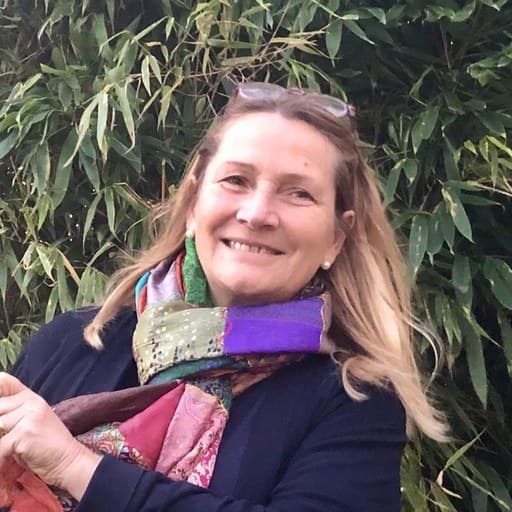
About the author
Valérie Fabre · Founder & Director, Harmonika Institute
Valérie Fabre founded Harmonika Institute in 2025, after a decade seeing clients in private kinesiology practice and, before that, thirteen years in international trade. A French-born polyglot who now splits her time between Dallas and Miami, she sets the school's curriculum and editorial standards and champions ethical, in-person training.
Read more about Valérie Fabre →