Journal · Credentials · Holistic practice
Cohort of Ten: Why Class Size Decides Whether Skill Transfers
The arithmetic of attention in a training room, what a cohort of ten actually buys you, and the three real costs of learning in a small group.
Valérie Fabre, Founder & Director, Harmonika Institute · May 21, 2026 · 11 min read

Key takeaways
- Attention divides, it doesn't scale. In a 40-person weekend with one teacher, each student gets roughly six minutes of individual observation per day. At ten students the same day yields about 24 minutes, and it arrives in usable blocks rather than seconds.
- The number that matters isn't hours, it's turns. Being watched through a complete session, start to finish, needs 45 to 60 uninterrupted faculty minutes. A large room cannot produce that for anyone. A cohort of ten produces it four to six times per student.
- Peer practice has its own arithmetic. Ten people generate 45 unique pairings and can work through the whole matrix in nine rotations. Everyone practises on everyone, which means nine different bodies, nervous systems, and difficult moments.
- It costs more, structurally. Splitting a faculty day and a room across ten people instead of forty multiplies the per-student delivery cost by roughly four. Most of the tuition gap between formats is that division, not margin.
- The trade-offs are real. Fewer seats, rigid dates, no catching up by video, and no back row to hide in when the group dynamic is difficult. Small cohorts also do not rescue a weak teacher.
A holistic training school selling a 40-person weekend and a school selling a cohort of ten are both charging you for the same nominal thing: contact hours. The brochures will both say 16 hours, or 120, or 300. But contact hours are a measure of how long you were in the room, and nobody learns to put their hands on a stranger by being in a room. What you are actually buying is the number of minutes a competent person spends watching you work and telling you what you just did wrong. That number is arithmetic, and you can do it yourself before you pay anyone.
We run in-person cohorts of ten (fifteen in our live online programs). That is a positioning claim, and positioning claims deserve suspicion, so this article does the maths in public and then lists the things a small cohort costs you.
Do the arithmetic on a single teaching day
Take a realistic six-hour teaching day: 360 minutes on the floor. Some of that is whole-room time that doesn't divide at all. Demonstration, theory, anatomy, the ethics discussion, the debrief. Call it 120 minutes. That portion is genuinely the same whether there are eight people watching or eighty, and any school that tells you otherwise is overselling.
The remaining 240 minutes are practice, and this is where class size stops being a marketing detail. During practice the faculty member circulates. Every minute they spend beside one student is a minute they are not spending beside another. It is a fixed pool being divided.
| Format | Students | Faculty on floor | Individual attention per student, per day | Full sessions observed end to end |
|---|---|---|---|---|
| Large weekend workshop | 40 | 1 | 6 min | None |
| Mid-size training | 24 | 2 | 20 min | Rarely |
| Small cohort | 10 | 1 | 24 min | 4 to 6 |
| One-to-one apprenticeship | 1 | 1 | 240 min | Continuous |
Two things in that table are worth sitting with. The first is that a mid-size room with two instructors gets close to a small cohort on the raw minute count, which is a fair point and one we won't pretend away. The second is that the apprenticeship column beats us outright on attention. It loses on something else, which we'll get to.
Six minutes a day, in a 40-person room, is not six usable minutes. It arrives as four separate 90-second visits, each one interrupting you mid-technique, each one delivering a single correction you then have no time to rehearse. Twenty-four minutes arrives as two twelve-minute stretches, or one long one. That is the difference between being told something and being coached through it.
Run it over a programme
Multiply by the length of the training and the gap widens rather than closes. Twenty teaching days at 24 minutes is 480 minutes, or eight full hours in which a faculty member is watching you specifically. The same twenty days in a 40-person room yields 120 minutes. That is the entire difference between a practitioner who has been corrected roughly two hundred times and one who has been corrected about thirty.
These are our operating assumptions, not published research. Change the inputs to match the school you are considering and run them again. The ratio is what matters, and the ratio doesn't move much.
Why correction has to happen in the moment
The reason attention minutes matter more in this field than in, say, a business course is that most of what you are learning is not verbal. You are learning pressure, pacing, where to stand, when to stop talking, how long a silence can run before it stops being spacious and starts being awkward.
None of that survives being written down and handed to you later. A teacher who watches a recording of your session and emails notes on Tuesday is giving you accurate information at a useless moment. You cannot feel on Tuesday what your hands were doing on Saturday.
Correction works when it lands inside the movement. Your shoulders climb, someone says "shoulders", you drop them, and you feel the difference in the same breath. That loop takes about four seconds and it has to be repeated dozens of times before the new pattern holds. It requires a person standing near you, watching, not managing thirty-nine other people.
The thing nobody self-reports
The most common correction faculty give in the first month has nothing to do with technique. It's that the student is talking too much. People fill silence when they are nervous, and every one of them believes they were quiet. You cannot notice this in yourself, a classmate is too polite to say it, and a recording won't show you the client's face going flat. It takes someone whose job is to watch, with enough time to watch you rather than sample you.
The pairing matrix, and why ten is a workable number
Faculty attention is only half the arithmetic. The other half is who you practise on, and here small groups produce something that isn't obvious until you count it.
Ten students generate 45 unique pairings. Rotate properly and the cohort works through the entire matrix in nine rounds: by the end, every person has worked with every other person. Nine different body types, nine breathing patterns, nine ways of receiving touch or instruction, nine people who react differently when something surfaces.
Now scale it. Forty students generate 780 unique pairings and would need 39 rounds to exhaust them. No weekend programme runs 39 rounds. What happens instead is that people pair with whoever is sitting near them, repeatedly. Students routinely leave a large training having practised on three or four people, usually the ones they liked, usually the ones who told them it felt lovely.
That's the quiet failure. You don't graduate having practised on forty people. You graduate having practised on four, in a room that contained forty.
This is also the answer to why we don't run one-to-one apprenticeships, despite the attention column favouring them. An apprentice gets endless correction from a single pair of eyes and practises almost exclusively on their teacher, who is the easiest client they will ever have. They also never see how another beginner solves the same problem badly, which turns out to be one of the fastest ways to learn.
What ten makes possible that twenty-five doesn't
Everyone is observed working, repeatedly
Watching a complete session from opening to close takes 45 to 60 minutes of a faculty member's undivided attention. It cannot be sampled. The whole point is the arc: how you begin, what you do at minute 30 when the energy in the room changes, whether you close cleanly or let it dribble out.
In a group of ten, across a programme built on full teaching days, that is schedulable. Everyone gets several. In a group of thirty it is arithmetically impossible without adding faculty days nobody has budgeted for, which is why large programmes assess by written test or by a short technique demonstration instead.
Nobody disappears
Large rooms let people opt out invisibly. The student who is struggling sits at the back, nods, gets a certificate, and discovers eight months later with a real client that they cannot hold a session. At ten, that is not available. Faculty know within two weeks who is uncertain about what, and it becomes the shape of the teaching rather than a private problem.
A local network that persists
Nine people who trained beside you is a practical asset, not a sentiment. It's who you swap sessions with when you need practice hours, who you refer to when someone asks for a modality you don't offer, who covers a client when you're ill, and who you call in month three when the enthusiasm has worn off and you have four clients. Cohorts of ten produce these relationships reliably because you worked with all nine. Large rooms produce a group chat that goes quiet by week six.
What class size doesn't change
Being closely supervised does not expand what you are legally allowed to do. A private certification is not a licence, a degree, or a government credential, however small the group that earned it. If your modality involves soft-tissue work for compensation, most states require a massage licence regardless of how you trained. Rules differ by state and change. Check with your own state board before you enrol.
The three costs of a small cohort, stated plainly
Small groups are not free advantages. They move cost around, and you should see where it lands before you decide the model suits you.
| Trade-off | How it shows up | Who it rules out |
|---|---|---|
| Higher cost per student | The same faculty day and room split ten ways instead of forty. Roughly four times the delivery cost per person before anyone's margin. | Anyone whose budget only stretches to a weekend course this year |
| Rigid scheduling | Fixed dates, sequential content, no recorded catch-up. Miss a weekend and you are genuinely behind, because the group moved on together. | Rotating shift workers, frequent travellers, unpredictable caregiving |
| Fewer seats | A city might run one or two cohorts a year. Waiting is normal and can mean months. | People who need to start immediately |
| No back row | Group dynamics are unavoidable at ten. One dominant person, or one person going through something hard, reshapes the room for everyone. | People who want to learn privately and leave |
Where the money goes
Across the U.S. market, weekend certificate courses commonly run a few hundred dollars, while long-form mentored programmes with supervised hours run into the thousands. The gap looks like a quality premium. Much of it is simple division: an experienced faculty day plus a suitable room costs about the same whether ten or forty people are in it, so the per-student figure moves by a factor of four purely on group size.
That's worth knowing in both directions. It explains why serious small-group training costs what it does, and it means you should ask any expensive large-group programme where the extra money is going, because it isn't going into the ratio.
What small cohorts do not fix
Ten students and a mediocre teacher is worse than thirty students and an excellent one. Class size is a multiplier on teaching quality, not a substitute for it. A faculty member who cannot see what a student is doing wrong will fail to see it with more time available.
Small groups also don't fix a thin curriculum. If the programme never covers what to do when a client cries, contraindications, referral, note-keeping, or how to say a price out loud, an intimate room simply means fewer people learn less.
And they don't fix the third-month problem. Attention during training produces competence, not clients. Plenty of well-trained people stop practising because nobody taught them the business, or because they never tested whether they wanted the work at all. If you haven't done that test, do it before you shortlist schools: we've written separately on how to test a modality before you commit.
How to check what a school's class size actually is
Advertised maximums are aspirational at a surprising number of schools. Ask instead in a way that produces numbers.
- 1
Ask for the last three cohorts, by the numbers
"How many students were enrolled in your last three groups in this city, and how many faculty were on the floor?" Vagueness here is the answer. A school that runs small groups knows these figures immediately because they are small enough to remember.
- 2
Ask what happens at seat eleven
Is the cap real, or does it bend when demand is high? "What do you do when an eleventh person wants in?" A school with a genuine cap has a waitlist policy and will describe it without hesitating.
- 3
Ask how many complete sessions you'll be observed delivering
Not practice hours, not contact hours. Complete sessions, watched start to finish, with feedback. If the answer is zero or unclear, the group size doesn't matter much.
- 4
Ask who you practise on
Classmates only, or people from outside the course? Classmates are forgiving and already believe. A programme that arranges practice with strangers is telling you something about its seriousness.
- 5
Ask to sit in on a session
Twenty minutes at the back of a live cohort tells you more than any brochure. A school confident in its room will let you. That's roughly the same test as our 12-point checklist for evaluating programmes, applied to one variable.
Questions on this topic.
Isn't a small cohort just a way to charge more for the same content?+
The content is often similar. What differs is how much of it reaches you. Two schools can teach identical material and produce very different practitioners, because in one of them somebody watched you work eight times and in the other nobody watched you work at all. The fair test is not to compare syllabi, which will look alike, but to compare observed sessions and student-to-faculty ratio. If a small-group programme can't beat a large one on those two numbers, then yes, you're paying for atmosphere.
What happens if my cohort has a difficult person in it?+
At ten people, this affects everyone and there is nowhere to sit it out. Well-run programmes address it directly rather than hoping it settles, which is one of the things to ask about when you interview a school: what have you done when a group dynamic went wrong? Honest answers exist. Schools that say it never happens either run rooms too large to notice or haven't run many.
Can I get the same result from private one-to-one training?+
You'll get more faculty attention and less of everything else. One-to-one means you practise almost exclusively on your teacher, who is unusually easy to work with, and you never watch a peer make the mistake you were about to make. You also finish with no cohort, which matters more than people expect in the first year, when you need practice bodies and referrals. It suits people who already have a professional network in the field.
Does class size affect whether my certification is taken seriously?+
Not directly. No U.S. body accredits holistic certifications against a ratio, and nobody checking your credential will ask how many people were in your room. It matters indirectly, through competence: clients, referring professionals, and insurers respond to how you actually work. A small cohort makes you better, and being better is what gets taken seriously. The certificate itself is a private document either way.
How do you keep a cohort of ten filled in 32 cities?+
Slowly, and not every city runs every programme every year. That's the honest operational consequence of the cap. Some markets run a cohort once and then wait until there's demand for the next; others run several. It means the answer to "when can I start" depends on your city and modality rather than on a rolling enrolment page, and it means waiting lists are a normal part of the process rather than a scarcity tactic.
Tags:
CredentialsHolistic practice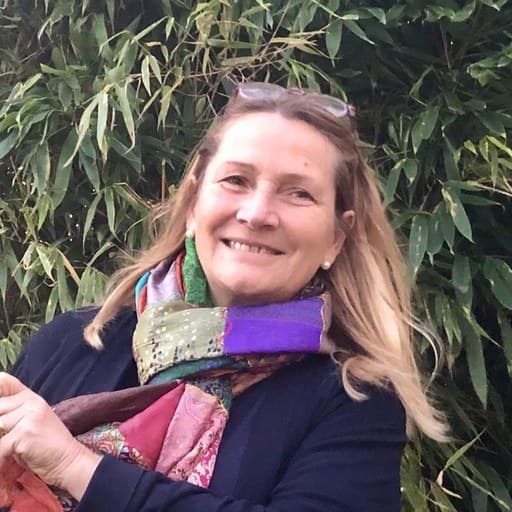
About the author
Valérie Fabre · Founder & Director, Harmonika Institute
Valérie Fabre founded Harmonika Institute in 2025, after a decade seeing clients in private kinesiology practice and, before that, thirteen years in international trade. A French-born polyglot who now splits her time between Dallas and Miami, she sets the school's curriculum and editorial standards and champions ethical, in-person training.
Read more about Valérie Fabre →