Journal · Credentials · Certification
What Makes a Holistic Certification Legally Valid in the U.S.
No state licenses most holistic modalities, so no certificate grants permission. What legally valid really means here is defensible, and that is testable.
Valérie Fabre, Founder & Director, Harmonika Institute · May 26, 2026 · 12 min read

Key takeaways
- No holistic certificate is "legally valid" in the sense you mean. For most modalities no permission is required, so nothing can grant it. Where permission is required, a private certificate cannot supply it. Both halves of that sentence matter.
- Legitimacy is a defensibility question, not a legal one. Four tests decide it: documented contact hours, competence someone actually assessed, insurability, and written scope language that does not overclaim.
- Insurance is the nearest thing to an external audit. If no professional liability carrier will list your modality and your training on a policy, that is a signal worth more than any logo on the certificate.
- "Accredited" is an unowned word in this field. Private registers exist and can be genuinely useful, but none of them is the U.S. Department of Education, and any school implying otherwise has told you something about itself.
- Roughly 16 hours versus 200 is the real fault line. Weekend certificates and mentored programs produce documents that look identical and defend very differently under scrutiny.
A woman in Denver emailed us last spring with a reasonable question and a bad premise. She had paid $1,900 for an online certification, finished it in eleven days, and wanted to know whether the certificate was "legally recognized in Colorado" before she started taking clients. The honest answer took three paragraphs to write and it was not what she expected: nothing about her certificate is recognized in Colorado, and nothing about anyone else's is either, including ours. That is not a defect in her school. It is how the field is built, and once you see it clearly, the question you should be asking changes shape entirely.
So let's take it apart. What a certificate is in law. Where the law genuinely does appear, and why a certificate is powerless there. What "valid" has to mean instead if the word is going to be useful to you. And how to check any program against that standard before you hand over money.
Why the question is built on a false premise
"Is holistic certification legitimate" almost always means one of two different things, and people conflate them.
Meaning one: does this document give me legal permission to practise? For Reiki, sound work, breathwork, mindfulness instruction, most coaching, Enneagram work, and a long list of others, the answer is no, because permission was never required. Anyone in the United States may offer a Reiki session tomorrow morning with no training whatsoever. The certificate is not what makes it lawful. Its absence would not make it unlawful.
Meaning two: is this school real, and will the certificate hold up when a client, an insurer, a landlord, or a state investigator looks at it? That is a completely answerable question, and it is the one worth your attention.
Confusing the two is how people get sold things. A provider who tells you their certification is "legally recognized" is either using words loosely or counting on you not to check. There is no registry that recognizes it. What there is, in the better cases, is a documented curriculum, a real assessment, and a paper trail that stands up.
The two-sided rule
Where no licence is required, no certificate is required either, so none can be "the valid one". Where a licence is required, no private certificate substitutes for it, at any price, from any provider, regardless of what their marketing says. There is no third category in which a certification quietly confers legal authority. If a school suggests there is, treat everything else they say with the same suspicion.
Rules differ by state and change. Confirm your own situation with the relevant state board before you enrol or take a paying client.
What a certificate actually is, in law
Strip the calligraphy off and a holistic certificate is a private assertion. School X states that person Y completed program Z to X's own standard. It is closer in legal character to a reference letter than to a driver's licence.
That sounds deflating. It is less deflating than it sounds, because private assertions carry real weight in the places where your working life actually happens. An insurer reads it. A wellness studio deciding whether to rent you a treatment room reads it. A client's sceptical husband reads it. A state investigator responding to a complaint reads it, and in that room the question is never "was your certificate valid" but "what did you claim you could do, and what were you trained to do".
The certificate's job, in other words, is evidentiary. It exists to show that what you offered a client sat inside something you were genuinely taught. A 16-hour online certificate and a 200-hour supervised program do that job very differently, even though both are printed on the same weight of paper.
Where a licence is required, nothing private substitutes
The other half of the rule bites harder, and it is where people get hurt.
Some activities are regulated regardless of what you call yourself or what you trained in. Manipulating soft tissue for compensation falls inside massage licensure in most states. Inserting needles is acupuncture and requires acupuncture licensure everywhere it is permitted; pressure-based work on points, digipressure, is the non-needle path and stays outside that. Diagnosing, treating, or claiming to cure any condition is practising medicine. Providing psychological treatment is regulated under mental health licensure in every state. Holistic naturopathy is prohibited outright in Florida, South Carolina and Tennessee, and the titles "naturopathic doctor" and "ND" are protected in the states that license them.
In none of those situations does a certificate help. It does not create an exemption. Occasionally it makes things worse, because a program that trained you to do a regulated thing has documented that you knew what you were doing.
| Category | Typical examples | What the law requires | What your certificate does |
|---|---|---|---|
| Unregulated activity | Reiki, sound work, breathwork, mindfulness instruction, most coaching | Nothing specific. General business, tax and consumer law still apply | Signals only Establishes competence for insurers, venues and clients. Confers no permission because none is needed |
| Title protected | "Hypnotherapist" in some states, "naturopathic doctor", "counselor" and "psychotherapist" widely | You may do the work under a different title, but not use the protected word | Does not protect you A certificate naming a restricted title does not entitle you to use it in a state that restricts it |
| Licensed activity | Soft-tissue massage for compensation, needling, diagnosis, psychological treatment | A state licence, obtained through the state board | Nothing No private certification substitutes, and practising anyway is unlicensed practice |
That table is a map of categories, not a statement of current law in your state. Boards revise rules, and the borders between these categories move. We have written about the general shape of state variation in our state-by-state regulation guide, and about where your own limits sit in scope of practice for non-licensed practitioners.
Four tests that make a certification defensible
If "legally valid" is the wrong frame, here is the right one. A certification is defensible when it survives four questions from someone who is not on your side.
One: are the hours documented, and by whom? Not "approximately 60 hours of content" on a sales page. An actual record, held by the school, of dates attended and hours completed, that they will produce on request years later. Ask directly whether they issue transcripts. Many do not, which tells you how seriously they take their own document.
Two: did a human assess you? Watching video and clicking a quiz is completion, not assessment. Assessment means someone qualified observed you working with a person who was not your classmate, and could have failed you. Ask what the failure rate is. A program that has never failed anybody has not assessed anybody.
Three: is it insurable? Covered in the next section, because it does more work than the other three combined.
Four: is the scope language honest? Read your own certificate wording. If it says you are qualified to "treat anxiety" or describes you as a therapist, the document is a liability, not an asset. Good programs write conservative certificates on purpose.
| Test | Weak signal | Strong signal | How to check before paying |
|---|---|---|---|
| Documented hours | Self-paced, hours "estimated", no records kept | Attendance logged per session, transcript available on request | Ask for a sample transcript for a past graduate, redacted |
| Assessed competence | Multiple-choice quiz, automatic pass, certificate on payment | Observed live sessions with non-classmates, written feedback, possible to fail | Ask how many students failed or were held back last year |
| Insurability | Modality not on any carrier schedule; school has never been asked | Graduates routinely insured; school names the training hours carriers look for | Call a carrier yourself and describe the program before enrolling |
| Honest scope | Certificate uses "therapy", "treat", "heal", or a protected title | Conservative wording, explicit non-clinical statement, taught referral protocol | Ask to see the exact certificate text, not the marketing page |
Insurance is the closest thing this field has to an audit
Here is the practical shortcut nobody tells beginners. Before you enrol anywhere, phone a professional liability carrier that writes policies for holistic practitioners, describe the exact program you are considering, and ask whether a graduate of it would be covered for that modality.
Carriers are not sentimental. They price risk, and to do it they maintain schedules of modalities they will cover and minimum training expectations for each. If your intended modality is not on anybody's schedule, that is information. If it is on the schedule but your program falls short of the training they expect, that is information too, and you have learned it for the cost of a phone call rather than the cost of tuition.
This one test quietly answers most of the others. A carrier that will list you has effectively decided your training is real enough to bet money on.
What defensibility costs
Across the U.S. market, weekend certificate courses commonly run $300 to $900 and produce 12 to 20 hours. Mentored, in-person practitioner programs with supervised client hours generally run $3,000 to $9,000 and produce 150 to 400 hours. Both issue a certificate. Only the second reliably clears the insurance and assessment tests above.
The gap in price is not the technique, which is often the same technique. It is the hours somebody spent watching you work and correcting you, which is the expensive part of any training and the part that cannot be recorded in advance.
We go further into the money side of this trade-off in are holistic certifications worth the money, which puts numbers against the return rather than the cost alone.
"Accredited" is a word with no owner here
In U.S. higher education, accreditation has a precise meaning: recognition by an accreditor that the Department of Education itself recognises. It gates federal financial aid and credit transfer. Almost no holistic certification program has it, and most do not claim to.
What circulates instead is a set of private membership and registration bodies. They verify that a course exists, that it meets their own published criteria, and they list it. That has genuine uses. Some insurers like to see membership. Some venues and directories ask for it. Consumers read the logo as a signal, imperfectly but not irrationally.
None of it is government accreditation, and the honest schools say so unprompted. The word to watch for is unqualified: "accredited" with no named body after it. Ask which body, then look the body up and read what it actually requires. Sometimes the answer is a reasonable curriculum review. Sometimes it is a fee and a form.
From the training floor
Students arrive at our cohorts with prior certificates roughly a third of the time. The pattern is consistent: they can perform the sequence and they cannot hold a session. They do not know how to open, how to respond when someone starts crying, when to stop, or how to say "this is outside what I do" to a client who wants them to keep going. None of that was on the certificate, and none of it can be assessed by a quiz. It is also, invariably, what the person actually needed.
State authorization: the one government stamp that does exist
There is a narrow exception worth knowing about, and it is frequently misunderstood in both directions.
Many states regulate private post-secondary schools as businesses. Depending on the state, a school teaching above a certain hour threshold or charging above a certain tuition may need to register with, be licensed by, or obtain exemption from a state agency overseeing private career schools. This is oversight of the school as an educational institution: bonding, refund policy, truth in advertising, sometimes curriculum filing.
What it is not: an endorsement of the modality, a licence for graduates, or accreditation. A state-authorized school teaching crystal work has not caused the state to take a position on crystals. It has satisfied a consumer-protection regulator that it keeps proper records and honours refunds. Still worth asking about, though, because it is the only place a government agency has looked at the school at all. Ask which agency, in which state, and under what status. Then verify it with the agency rather than with the school.
How to check any program before you pay
- 1
Name the category first
Decide which of the three rows in the table above your intended work falls into, in the state where you will practise. Do this before comparing schools. If the work is a licensed activity, no program on your shortlist can solve that and you need a different plan.
- 2
Call a carrier, not the school
Describe the exact program and modality to a professional liability insurer and ask whether a graduate would be covered. Ten minutes, no cost, and it filters more programs than any amount of website reading.
- 3
Ask for the certificate text
Not the brochure. The literal wording printed on the document. If it contains a protected title or a treatment claim, you are being handed a problem rather than a credential.
- 4
Ask about failure
How many students were held back, asked to repeat hours, or failed in the last twelve months? A specific number is a good sign. Discomfort at the question is a better indicator than any answer.
- 5
Find two graduates independently
Not the ones on the testimonials page. Search the modality plus a city, find people practising, and ask them where they trained and what they wish they had known. Practitioners answer this question generously more often than you would expect.
- 6
Read the refund policy before the curriculum
It is the shortest document and the most revealing one. A school confident in its program writes a clear withdrawal policy. A school that is not writes a maze.
If you want the longer operational version, our 12-point evaluation checklist covers the curriculum questions this list skips.
What we do and do not claim
Applying our own standard to ourselves: Harmonika Institute awards private certifications. They are not licences, not degrees, and not government credentials, and we will not tell you otherwise in a sales conversation or anywhere else.
What they are is documented. Cohorts are capped at ten students in person and fifteen online, with 1 to 18 teaching days depending on the program, taught in person across 32 U.S. cities or, for 7 programs, fully live online. Faculty observe you working, repeatedly, and correct you while it is happening. Teaching hours are stated because they have to be, both for your insurance conversation and for the day someone asks. The path is deliberately slow: apply, train live with faculty, study and practise between sessions, certify and practise.
That model costs more and moves slower than an eleven-day online certificate. It produces a document that answers the four questions above. You can read more about how we think about this on our approach.
Questions on this topic.
Can I be prosecuted for practising with a certificate that turns out to be worthless?+
The certificate is rarely the issue. Enforcement in this field is almost always triggered by what you claimed or what you physically did, not by which school trained you. Telling a client you can treat their condition is the exposure. Performing soft-tissue work for compensation in a state that licenses massage is the exposure. A weak certificate makes a bad situation harder to defend, because you cannot show the work sat inside your training, but it is not usually the offence itself.
Does a certification from another country count in the United States?+
It counts exactly as much as a domestic private certificate, which is to say it is evidence rather than permission. Foreign training is often substantial, and insurers will generally look at documented hours and content rather than the country of origin. Where it fails is the same place domestic certificates fail: it cannot substitute for a U.S. state licence in a regulated activity, and hour documentation from overseas programs can be harder to obtain years later.
If nothing is legally required, why pay for a long program at all?+
Because permission and capability are separate problems. You may lawfully offer sessions with no training, and you will struggle to get insured, struggle to rent clinical space, struggle to hold a session when something difficult surfaces, and struggle to keep clients past the second visit. The certificate buys you very little. The hours behind it buy you a practice that survives its first year.
My certificate says "therapist". Is that a problem?+
Potentially, yes, and it is worth fixing before you print business cards. Several titles containing or resembling "therapist" and "counselor" are protected under state mental health licensure, and using one without the licence is a title violation independent of what you actually do in sessions. Choose a non-clinical descriptor of your work, use it consistently across your website, invoices and intake forms, and do not rely on your school's wording to protect you.
Do certifications from bigger, better-known schools carry more legal weight?+
No legal weight, because none of them carries any. Practical weight, sometimes: a name a carrier recognises can shorten an insurance application, and a well-known program may open a rental conversation faster. But size correlates poorly with assessment rigour. Some of the largest providers in this field are the ones running the shortest, least supervised courses, precisely because that model scales.
Can I transfer hours from one certification to another?+
Sometimes, and it is entirely at the receiving school's discretion since there is no credit system to appeal to. Programs that keep proper attendance records and issue transcripts transfer far more easily than self-paced online courses, which frequently cannot document anything at a level a second school will accept. Ask about this before you enrol anywhere if you think you may build further later.
Tags:
CredentialsCertification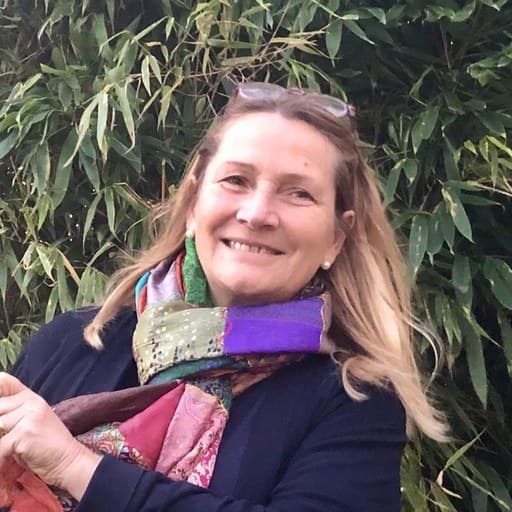
About the author
Valérie Fabre · Founder & Director, Harmonika Institute
Valérie Fabre founded Harmonika Institute in 2025, after a decade seeing clients in private kinesiology practice and, before that, thirteen years in international trade. A French-born polyglot who now splits her time between Dallas and Miami, she sets the school's curriculum and editorial standards and champions ethical, in-person training.
Read more about Valérie Fabre →