Journal · Credentials · Holistic practice
Lineage in Holistic Training: Why Who Taught Your Teacher Matters
What lineage really means in a field with no accreditation, how to verify a teacher's transmission chain in ten minutes, and when a lineage calcifies.
Valérie Fabre, Founder & Director, Harmonika Institute · May 20, 2026 · 10 min read

Key takeaways
- Lineage is a paper trail, not a mystery. Who taught your teacher, in person, for how many hours, and were they still seeing clients. Checkable in ten minutes.
- Two hops is the honest limit. Past your teacher's teacher you are trusting a story. Six-generation charts sell romance, not evidence.
- Drift is fast when nobody practises. Three consecutive links who taught full-time and saw almost no clients will strip out the judgment layer entirely.
- Lineage also calcifies. The same chain that preserves technique preserves 1970s assumptions about consent, trauma, and touch. Reverence is the failure mode on the other side.
- It is not a credential. No lineage confers a licence, and no state board has ever asked to see one. It is a buying signal for you, nothing more.
Ask a holistic training provider who taught their lead instructor and you get one of three answers. A name, a year, and a city. A vague gesture at a tradition. Or a chart with seven generations of teachers on it, half of them dead, presented with the gravity of a royal succession. Only the first answer is useful, and you would be surprised how rarely you get it.
This matters here more than in almost any other field, for a structural reason. In U.S. holistic practice there is no accreditation body with teeth, no state exam, no curriculum standard. When quality control is absent at the institutional level it has to happen at the personal level, which makes the chain of people who taught each other one of the few signals you can actually inspect. So let's inspect it, including the part where it goes wrong.
What lineage means, stripped of the incense
Strip away the language and lineage is a supply chain for skill. Somebody worked something out. They taught it to a person who watched them do it. That person taught somebody else. Each link is a transfer, and like any transfer it loses something.
Notice what that definition leaves out. It says nothing about spiritual authority, and it does not imply the originator was right about mechanism or that older material is better material. A four-generation lineage of a technique that never worked is a four-generation lineage of a technique that never worked.
What it does tell you is whether the person teaching you learned in a room with someone who could see their hands. That is the whole value. In a field where the fastest-growing training format is a video course assembled by someone who took a video course, a verifiable chain of in-person instruction is a real differentiator, and unlike "20 years of experience" it can be checked.
So here is the practical test. If your teacher's training was recordings and a quiz, they have a certificate but not a lineage, because nobody ever corrected them. Correction is the thing being transmitted. Everything else is documentation.
The question that works
"Who taught you, where, in what year, and how many hours were you physically in the room with them?" It is a normal question that any working teacher answers in fifteen seconds. Hesitation, redirection to a tradition rather than a person, or a shift into the value of the teachings, is itself the answer.
Three things that turn lineage into a checkable fact
Most lineage claims collapse into vapour when you ask for specifics, so ask for specifics. There are three, ranked by how much they tell you.
1. Was the teacher's teacher practising at the time?
This is the strongest signal and the least discussed. Someone who trains instructors full-time and has not sat with a paying client in four years can still transmit a technique flawlessly. What they cannot transmit is what happens when the technique meets a real person on a bad day. That knowledge is perishable, and it only regenerates in the client chair.
Trainer-only teaching also compounds. If your teacher learned from a trainer-only teacher who learned from another, you are three removes from anyone who has felt the work land badly and had to recover the session.
2. How many contact hours, and were they assessed?
A teacher who spent 200 hours with their teacher and was watched working, repeatedly, has something different from a teacher who attended a four-day master intensive. Both may hold the same title. Ask for the number and ask whether anyone ever failed them on anything.
3. How far is the material from its source, and who changed it?
Modalities mutate, and sometimes the changes are improvements. What matters is whether the school can tell you what changed and why. "We added a trauma-informed intake step in 2018 because the original protocol had none" is a true and useful answer. A claim that nothing has changed since 1954 means they are either not paying attention or not being straight with you.
| What the school says | What it might actually mean | How to verify | Signal strength |
|---|---|---|---|
| "Trained directly by [named person], 2011, Chicago, 180 hours" | A checkable, falsifiable claim | Search the named person for their own site, students, or published work. Email them. | Strong |
| "Our faculty are certified by three international bodies" | Private membership organisations, usually fee-based | Read the body's own criteria. Ask what it required beyond payment. | Weak |
| "Direct lineage to the founder" | Could mean one hop, could mean five | Ask for the intermediate names. Count them yourself. | Depends |
| "An ancient tradition passed down for centuries" | Frequently a 20th-century synthesis with a long backstory | Ask when the current protocol was written down and by whom. | None |
| "Master Teacher, level 3" | An internal rank from the same school issuing it | Ask who granted it and what the assessment was. | None |
| No named faculty at all on the website | Rotating contractors, or a course sold under a brand | Ask for the name of the person who will actually be in your room. | Walk away |
Run that table against any school you are considering and you will know more in an afternoon than most applicants learn in a year. The wider due-diligence procedure sits in our checklist for evaluating training programs.
How fast material drifts
Do the arithmetic and the case for lineage stops sounding sentimental.
Say each teaching generation passes on 90% of what it received, which is generous. After three hops you are at 73%, after five at 59%. That decay is not evenly spread. What survives best is the visible, nameable part: the sequence, the hand positions, the script. What goes first is the judgment layer, because it was never written down. When to slow down. When to stop. What a client's shoulders are doing three minutes before they say anything.
Now add the accelerant. A link who trained mostly from recordings, or taught 200 students a year while seeing four clients a month, or compressed a 200-hour transmission into a weekend so it would sell at volume, does not lose 10%. That link loses most of the judgment layer in one step.
Read this carefully
The 90% figure above is an illustration, not a finding. Nobody has measured transmission fidelity in holistic training, because nobody funds that research, and anyone quoting you a hard number for skill decay across teaching generations is inventing it. The defensible version of the claim is narrower: across skill domains generally, tacit judgment transfers poorly without observation and correction.
When lineage becomes the problem
Now the uncomfortable half, because a page that only praised lineage would be marketing.
Lineage preserves. That is its function, and it does not distinguish between what is worth preserving and what is not. A chain that faithfully carries a technique from 1975 also carries 1975's assumptions about consent, about touch, and about what to do when a client dissociates on the table. Plenty of transmitted protocols contain no intake step, no contraindication list, and no exit conversation, because the originator did not think in those terms.
Second failure mode: lineage becomes an argument-stopper. In calcified schools, "that is how it was taught" ends the discussion. Students learn that questioning the protocol marks them as insufficiently devoted, which is exactly the training environment that produces practitioners who cannot answer a sceptical client, cannot adapt to someone with a mobility limitation, and cannot say "I do not know."
Third: lineage becomes a status ladder. Once proximity to a founder confers rank, you get a market in proximity. Expensive intensives with the last surviving direct student. None of it improves anyone's hands.
And a fourth, quieter one. Long lineages tend to absorb nothing from outside themselves. Twenty years of work on trauma responses, informed consent, and boundaries has changed how careful practitioners operate, and a school whose only quality reference is its own chain will miss all of it.
Lineage is not permission
No transmission chain, however distinguished, grants legal authority to do anything. Where a state licenses an activity, such as soft-tissue work for compensation or the use of needles, your teacher's teacher is irrelevant to whether you may perform it. Where no licence exists, none is needed and lineage confers nothing legally either. Rules differ by state and change; confirm yours with the relevant board before taking clients.
Lineage-aware, not lineage-worshipping
Between the two failure modes sits a posture worth naming, and the distinction is simple.
A lineage-aware teacher can tell you where their material came from, what they kept, what they dropped, and why. They will name the parts of the original they consider dated or unsafe, they can describe what their own teacher was weak at, and they are comfortable with you training elsewhere afterwards.
A lineage-worshipping teacher treats the chain as authority. Its age is the argument. Deviation is a lapse, other schools are dilutions, and their teacher had no weaknesses worth mentioning.
You can usually tell in one conversation. Ask what they would change about how they were taught. The first type has an answer ready. The second hears a slightly rude question.
| Type of modality | Examples | Why lineage weight differs |
|---|---|---|
| Hands-on, tacit, hard to write down | Bodywork-adjacent technique, reflex zone work, movement re-education | High Pressure and timing transfer only by touch and correction |
| Ritual or transmission-based | Reiki and related energy systems | High The form is defined by the chain, so drift is the main risk |
| Protocol-based with published manuals | Structured coaching and communication frameworks | Medium Content is documented; lineage adds live judgment |
| Knowledge-heavy, externally sourced | Plant and nutrition-oriented study | Lower Current sources matter more than who taught whom |
How to check a school's chain without being combative
None of this requires confrontation. It requires four emails and a willingness to be slightly persistent.
- 1
Get the name of the person who will teach you, then ask them the four-part question
Not the founder, not the brand: the human in your room for the next several months. Who taught you, where, what year, how many hours in the room. Write the answer down. You want specificity, not prestige.
- 2
Go one hop further
Search the teacher's teacher. Do they exist independently of this school's website? Do they have their own students, writing, or practice? A name that appears nowhere except in one school's marketing is worth a raised eyebrow.
- 3
Ask what they changed
"What do you teach differently from how you were taught?" This single question separates lineage-aware from lineage-worshipping faster than anything else you can ask.
- 4
Ask two graduates, found independently
Not the ones the school gives you. Search for practitioners in your city who list that training, and email them cold. Ask whether their teacher was actually seeing clients.
What it is worth paying for
Traceable lineage sits at the higher end of the market, because in-person hours with an experienced practising teacher cost more to deliver than recorded content. Serious in-person practitioner programmes across this field commonly run from the low thousands to around ten thousand dollars depending on length. But price does not verify a chain: some of the most expensive programmes are selling proximity to a famous name. Verify the chain first, then look at the number.
What we do with this
We describe our faculty as lineage-aware, and it is fair for you to press on what that means, so here it is without decoration.
Every person teaching a Harmonika cohort trained in person, with a named teacher, and keeps their own client practice while they teach. Where a modality has an identifiable transmission chain, we can tell you what ours is and where our version departs from what our teachers taught us. Where a modality has none, we say so rather than manufacturing a heritage.
What we do not do is treat the chain as an authority that ends conversations. Protocols get revised when practice or evidence says they should, and any instructor who cannot answer "what would you change about how you were taught" would not be teaching for us. You can see how the faculty is put together on our faculty page. And the reason we run in-person cohorts of ten rather than large rooms is the same reason lineage matters at all: correction only happens when someone is watching you work.
Questions on this topic.
Can I verify a lineage claim if the original teacher has died?+
Partly. You can usually verify that the person existed, taught in the years claimed, and had other students, through their own published material, obituaries, or the sites of contemporaries who trained alongside your teacher. What you cannot verify is the depth of that particular relationship. In practice, if two or three independent people name the same teacher for the same period, the claim is probably sound. If the only source is the school selling you the course, treat it as unconfirmed.
Does a longer lineage mean better training?+
No, and often the reverse. Every additional link is another opportunity for the judgment layer to thin out. What you want is a short, verifiable chain in which each person was practising rather than a long one full of names you cannot check. Six generations back to a founder tells you the modality is old. It tells you nothing about whether the person in front of you can teach.
What if my modality has no lineage to speak of?+
Several do not, particularly newer synthesised approaches and knowledge-led fields where the current literature matters more than transmission. That is not a defect. In those cases shift your due diligence to other evidence: documented contact hours, whether you are assessed on live work, whether the instructor has an active client practice, and what sources the curriculum draws on. Absence of lineage is only a problem when a school invents one anyway.
Should I choose a school because a famous teacher is associated with it?+
Only if that person is actually teaching your cohort, in your city, for a stated number of hours. Name association is one of the more common forms of soft misrepresentation in this field. A founder who designed the curriculum in 2009 and now appears for a one-hour video address is not your teacher. Ask, in writing, how many hours of your program that named person will be in the room.
Tags:
CredentialsHolistic practice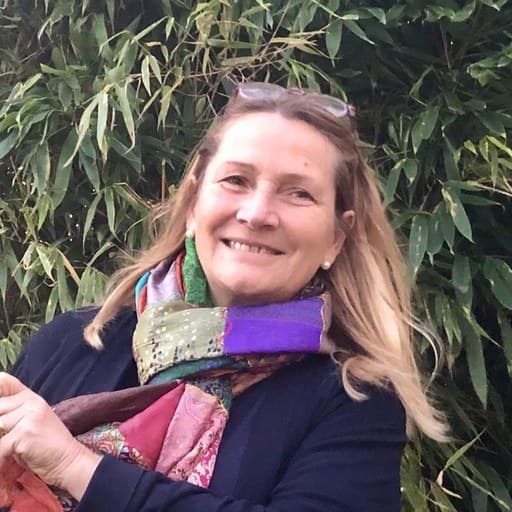
About the author
Valérie Fabre · Founder & Director, Harmonika Institute
Valérie Fabre founded Harmonika Institute in 2025, after a decade seeing clients in private kinesiology practice and, before that, thirteen years in international trade. A French-born polyglot who now splits her time between Dallas and Miami, she sets the school's curriculum and editorial standards and champions ethical, in-person training.
Read more about Valérie Fabre →