Journal · Career change · Holistic practice
Best Modalities If You Want to Work With Children
Safeguarding rules first, then the modalities that genuinely adapt to minors, what you may never claim, and how the money actually works with young clients.
Valérie Fabre, Founder & Director, Harmonika Institute · April 19, 2026 · 11 min read

Key takeaways
- Safeguarding is the qualification. A background check, written consent from a parent or legal guardian, an adult present or the door open, and dated session notes. Without all four, no modality on this page is safe to offer to a minor.
- Touch is the highest-risk choice you can make. The workable default with under-18s is no hands on the body at all. Most practitioners who work with children successfully do so through breath, voice, art materials, movement, and conversation.
- Four modalities adapt cleanly. Expressive arts facilitation, mindfulness instruction in school settings, carefully adapted breathwork, and NVC for families. Most of the rest do not.
- Nothing may be framed as treatment for a child's condition. Not anxiety, not ADHD, not sensory processing, not trauma. If a parent asks you to fix a diagnosis, that is a referral, not a booking.
- The money comes from institutions, not families. Schools, after-school programmes, camps, and libraries pay $75 to $250 per group hour. Private one-to-one work with kids is a slow, small, referral-dependent market.
A parent emails you. Her nine-year-old has been having panic attacks before school, the pediatric waitlist is eleven weeks, and she read that breathwork helps. Can you see him Thursday? Everything in you wants to say yes, because you can picture exactly what a calm forty minutes would do for that kid. Say yes and you have just taken on a distressed minor with an unmanaged medical situation, no guardian consent in writing, and no idea whether anything else is going on at home. That email is the whole subject of this article.
Working with children is one of the most common reasons adults enter this field and one of the least honestly written-about. So this piece starts where it has to start, with what you must have in place before a child is ever in the room, and only then gets to which modalities actually work with young people and which ones quietly do not.
Safeguarding, before anything else
Everything below is non-negotiable, and none of it is optional because you are "not really doing anything clinical". The moment a minor is in your care, you are in a different category of responsibility from every other client you will ever see.
- 1
Background check, current and on file
A state criminal background check plus a national fingerprint-based check where your state offers it. Schools, camps, and after-school programmes will demand this before they let you through the door, and many require re-checks every two or three years. Get it before you market yourself as working with children, not after somebody asks.
- 2
Written consent from a parent or legal guardian
Signed, dated, specific about what you do and what you do not do, and renewed if the arrangement changes. Note who has legal custody. In separated families this matters enormously, and a consenting parent is not always the consenting parent. If a grandparent, aunt, or family friend brings the child, you need documented authority from the guardian, not a verbal assurance at the door.
- 3
An adult present, or visible
The standard that protects both the child and you: a parent in the room, or the session happening behind glass, or a door left open with another adult within sight. In school settings, an employee of the school stays present. Never a closed door alone with a minor. Not once, not for a good reason, not because the child says it's easier without mom.
- 4
Notes for every session
Date, duration, who was present, what was done, anything the child said that concerned you, in their words rather than your interpretation. Stored securely. These notes are the only evidence you will have if an account of a session is ever disputed, and they are the reason you can say what actually happened rather than what you remember.
- 5
Know your mandated-reporter status
Reporting duties are defined by state and the categories of person named vary. A number of states name any adult who suspects abuse or neglect as a reporter, regardless of profession. Others list specified occupations and may or may not reach an unlicensed practitioner. You must find out which applies to you, in your state, in writing, before you see a child. Then act as though you are covered whichever way it reads.
Read this twice
Nothing you offer may be presented as treatment for a child's condition. Not anxiety, not ADHD, not autism, not selective mutism, not sensory processing differences, not trauma, not sleep disorders. You may describe an activity and an experience. You may not attach it to a diagnosis, promise an outcome, or position yourself as an alternative to the care that child is receiving or waiting for.
A child showing signs of distress or harm is a referral, and possibly a report. It is never a session topic. If a child discloses something, or you see marks, or the picture they draw stops the room, your job is not to explore it, process it, or hold space around it. Your job is to stay calm, not to question the child further, write down exactly what was said, and follow your state's reporting route. Curiosity here is harm.
Touch requires extreme caution and is best avoided entirely. Any hands-on work with a minor requires explicit written guardian consent for that specific contact, an adult watching, and in most cases a licence you probably do not hold. Soft-tissue work on a child for compensation is regulated in most states. The clean answer is no touch.
Reporting duties, consent rules, and background-check requirements differ by state and change. Verify yours with the relevant state agency and your own attorney before you begin.
Why the no-touch default is not overcaution
Practitioners who come from bodywork find this the hardest rule to accept, because touch is their instrument. Here is the reasoning, plainly.
A child cannot give informed consent, cannot always name discomfort in the moment, and may not report something days later in a way an adult would recognise. You lose the feedback loop you rely on with adult clients. Meanwhile the consequences of an allegation, even an entirely unfounded one, are permanent and immediate: you are removed from the setting, your background check now carries an entry, and the school system in your city talks.
There is also the licensure question. Most states require a massage licence for soft-tissue work for compensation, and that applies to a nine-year-old's shoulders exactly as it applies to an adult's. Reflexology on a child sits in the same grey zone it does for adults, with the stakes raised.
The practitioners who build durable work with children almost all arrived at the same setup independently. Materials on a table between you. Movement the child leads. Voice, breath, drawing, sound. Your hands stay visible and stay to yourself.
Common mistake
New practitioners assume the parent in the room is the obstacle. The parent in the room is the product. Guardians who watch a session are the ones who rebook, who explain it correctly to the other parent, and who recommend you to three families at pickup. Practitioners who push for privacy with a child lose bookings and gain risk. Build the parent in from the start and the whole model gets easier.
Which modalities actually adapt
Adaptation is not the same as dilution. A modality suits children when it works through materials, breath, voice, movement, or play, needs no touch, tolerates a short attention window, and does not depend on the client narrating their inner state.
| Modality | Works with kids? | Best format | Typical setting that pays | Main constraint |
|---|---|---|---|---|
| Expressive arts facilitation | Strong | Small group, 45–60 min | Schools, libraries, camps | Never framed as art therapy or ATR work |
| Mindfulness instruction | Strong | Classroom, 10–25 min | Schools, districts, sports programmes | Secular framing required in public schools |
| Breathwork, adapted | Conditional | Short, gentle, seated | Schools, family sessions | No cathartic or hyperventilatory protocols, ever |
| NVC and communication work | Strong | Whole family together | Private families, parent groups | You are teaching a skill, not mediating a crisis |
| Sound and gong work | Conditional | Short, low volume, group | Schools, sensory-friendly events | Volume and duration; some kids find it distressing |
| Mandala and creative journaling | Strong | Group or family | After-school, camps | Reading age; keep instructions concrete |
| Reiki and energy work | Limited | Hands-off, parent present | Private, referral only | Touch expectation is hard to manage |
| Hypnosis practice | Avoid | Not applicable | Not applicable | Consent, suggestibility, and state title rules |
| Massage and bodywork | Avoid | Not applicable | Not applicable | Licensure plus touch risk |
| Holistic naturopathy | Avoid | Not applicable | Not applicable | Anything ingested by a minor is a hard no |
Expressive arts facilitation
The strongest fit in the whole catalogue. Children express through making before they express through speaking, the materials do the work, and the format is naturally hands-off. A facilitator sets up a structure, offers the materials, and stays out of the way.
The line you must hold: you are an Expressive Arts Facilitator running a creative session. You are not an art therapist, you do not interpret what a child draws, and you do not treat a condition through image-making. Registered art therapy (ATR, through the ATCB) is a separate licensed path we do not grant and cannot prepare you for. Interpreting a child's drawing is exactly the behaviour that gets a facilitator removed from a school.
Mindfulness instruction
The most institutionally accepted option, and the one with the clearest route to paid group work. Districts run programmes, sports organisations buy sessions, and the vocabulary is already familiar to administrators.
Two practical rules. Keep it secular and keep it short. In a public school, anything that reads as religious practice will end the contract, so drop the Sanskrit, the altars, and the chanting. And a ten-minute practice with second-graders is long. Twenty-five minutes with teenagers is ambitious.
Breathwork, and where it stops
Gentle, short, seated breath practices are fine and genuinely useful for a kid trying to settle before a test. Slow exhales, counted breathing, a hand on their own belly.
Everything else is off the table. No connected or circular breathing protocols, no holds, no cathartic sessions, nothing that induces tetany, altered states, or emotional release. Those methods are contraindicated for minors and can produce a frightening experience in a body that has no framework for it. If your breathwork training was built around catharsis, the children's version of your practice is a different practice.
NVC for families
Underrated and steady. You work with the whole family in the room, which solves the supervision problem completely, and you are teaching a communication skill rather than doing something to a child. Parents pay for it because it changes the dinner table. It also sidesteps almost every scope issue on this page, because nothing about it resembles treatment.
The honest number
Group work in institutional settings across U.S. markets commonly pays somewhere between $75 and $250 per contact hour, with school districts at the lower end and private schools and corporate-run camps at the upper. That sounds decent until you count the unpaid hours: proposals, background-check paperwork, insurance certificates, and the six to nine months it often takes a school to move from interest to a purchase order. Private family sessions typically run $60 to $120, and the referral flow is slow because parents mostly ask other parents.
Training investment in this field generally sits in the low thousands for a serious in-person programme, plus a few hundred a year for liability cover that explicitly names work with minors. Confirm that last point with your insurer in writing. Some policies exclude it.
Where the work actually is
Almost nobody builds a children's practice on private one-to-one bookings. The volume is in institutions, and the institutions have their own logic.
Public schools buy through districts, run on an academic calendar, and want a W-9, a certificate of insurance, and a cleared background check before a conversation gets serious. Private and independent schools decide faster and pay more. After-school programmes and camps are the easiest entry point because they need programming and have discretionary budget. Libraries pay modestly and are excellent for building a reputation. Pediatric practices and community organisations refer, but only to people they have met.
In bigger markets like New York, Chicago, or Atlanta, there is an established vendor circuit and you are competing with organisations that already have contracts. In Denver, Austin, or Seattle, the door is often opened by one enthusiastic school counsellor. Either way, the first contract takes far longer than anyone expects, and the second one takes a tenth as long.
This may not be for you
Be honest with yourself about a few things before you build a practice around children.
If you are drawn to this work because a child in your own life struggled and nobody helped, that motivation is real and it is also a liability. It pulls practitioners across the line into wanting to fix something. The children you see will remind you of that child, and the temptation to do more than your role allows will be constant.
If you dislike administration, this is the wrong audience. The paperwork-to-session ratio with minors is worse than anywhere else in the field. If you dislike being watched while you work, likewise, because you will always be watched.
And if what you actually want is to do depth work on someone's inner life, children are not the population for that. The appropriate ceiling for an unlicensed practitioner with a minor is low by design. The people who thrive here are the ones who find a room of eleven-year-olds learning to breathe before a spelling test genuinely satisfying, rather than a lesser version of the real thing.
Questions on this topic.
Do I need a special certification to work with children?+
No U.S. body issues a general licence for holistic work with minors, and any school claiming to grant one is overstating things. What settings actually check is different: a current background check, proof of liability insurance that covers work with minors, and a certification in the modality itself. Some school districts and camps also require a short child-protection or mandated-reporter training, which is usually inexpensive and completed online. Ask each setting what they require, because it varies more than you would expect.
Can I see a child without a parent in the room?+
Treat the answer as no. Some settings will offer you a closed office and some teenagers will ask for privacy, and both are situations where the safe answer costs you nothing. Keep a parent present, or a school employee, or a door open with an adult in sight. If a setting cannot provide any of the three, that setting is not workable. This protects the child first and you second, and both matter.
What do I do if a child tells me something worrying?+
Stay calm, do not question them further, and do not promise to keep it secret. Write down what was said in the child's own words as soon as the session ends, with date and time. Then follow your state's reporting route, which you should have identified in writing before you ever saw a child. Do not investigate, do not confront a parent, and do not decide for yourself whether it was serious enough. That judgment is not yours to make.
Is it legal to offer breathwork or energy work to a minor?+
In most states these are unregulated activities and there is no specific prohibition, but that is the wrong question. The risk sits in touch, in claims, and in consent rather than in the technique. Hands-on work may require a massage licence, presenting anything as treatment for a diagnosed condition can constitute unlicensed practice, and proceeding without documented guardian consent exposes you regardless. Rules differ by state and change. Ask your state board.
Can I work with children in schools without a teaching credential?+
Generally yes, as an outside contractor or vendor rather than as staff. What you need is the district's vendor paperwork, the background clearance, insurance, and a school employee present during sessions. You will not be left alone with a class, and you should not want to be. The gatekeeper is almost always a counsellor, wellness coordinator, or principal rather than a procurement office, so that is where a first conversation belongs.
How many clients can a children's practice realistically support?+
If you build it around groups, one school contract running two mornings a week can carry a meaningful share of a part-time income, and three or four such contracts is a full schedule. Built around private one-to-one work, the numbers are difficult: families cancel more, seasons are disrupted by school holidays, and retention depends on a parent's perception rather than the child's. Most practitioners who last end up group-weighted within two years.
Tags:
Career changeHolistic practice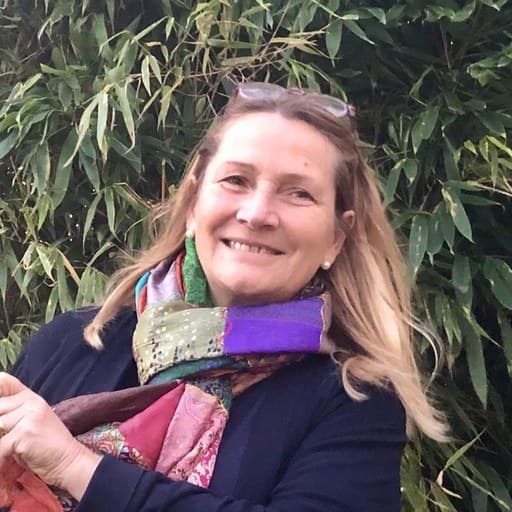
About the author
Valérie Fabre · Founder & Director, Harmonika Institute
Valérie Fabre founded Harmonika Institute in 2025, after a decade seeing clients in private kinesiology practice and, before that, thirteen years in international trade. A French-born polyglot who now splits her time between Dallas and Miami, she sets the school's curriculum and editorial standards and champions ethical, in-person training.
Read more about Valérie Fabre →