Journal · Modality selection · Healthcare
Best Holistic Modalities for Healthcare Professionals in Transition
Nurses, physicians, therapists, and other healthcare professionals add holistic credentials all the time. Which modalities integrate best, and what to consider.
Valérie Fabre, Founder & Director, Harmonika Institute · February 22, 2026 · 5 min read

Healthcare professionals — nurses, physicians, physical therapists, occupational therapists, social workers, dietitians, mental-health counselors — make up roughly 30% of our incoming students at Harmonika Institute USA. They arrive with significant clinical training, deep familiarity with patient relationships, and often intense burnout from conventional healthcare environments. The transition into holistic practice can be transformative for them, and the credentials they bring transfer remarkably well into many holistic modalities.
But the path is not symmetric across modalities. Some integrate cleanly with existing healthcare credentialing; others would require effectively starting over. Some produce stronger income trajectories than continued conventional healthcare practice; others produce weaker. Healthcare professionals considering this path benefit from clear-eyed analysis before choosing where to invest training time and money.
This article walks through the modalities that work best for healthcare professionals, the specific transfer benefits of clinical training, and the income-and-practice trajectories that typically result.
What healthcare training transfers
Healthcare professionals transfer several skills directly into holistic practice. Clinical assessment — the ability to read symptoms, ask diagnostic questions, and form working hypotheses about what's going on with a client. Patient communication — managing difficult conversations, explaining complex information, setting realistic expectations. Documentation discipline — record-keeping, follow-up, treatment planning.
Healthcare professionals also transfer scope-of-practice discipline that many holistic-only practitioners take years to develop. Nurses know what they can and can't say about diagnoses; physicians understand differential diagnosis; therapists know when to refer out. These habits become enormous assets in holistic practice where scope-of-practice errors are one of the most-common career-ending mistakes.
What doesn't transfer automatically: the specific energetic and felt-sense skills central to many holistic modalities. Healthcare professionals often initially struggle with felt-sense work because their training emphasized objective, quantifiable assessment. Most adapt within six to twelve months of training, but the adaptation is real and the early phase can be uncomfortable.
Modalities that integrate cleanly with healthcare backgrounds
Holistic naturopathy and clinical nutrition integrate cleanly for healthcare professionals because the diagnostic-and-recommendation structure matches existing clinical patterns. Nurses with naturopathy training often build practices that operate similarly to nurse-practitioner consultations but in a holistic frame. The credentials are typically additive rather than replacing existing licenses.
Hypnosis integrates well for mental-health-adjacent professionals (LCSWs, LMFTs, psychologists, counselors). Many states allow licensed mental-health professionals to use hypnosis within their existing scope without separate credentialing. For others, hypnosis credentialing typically requires 200-400 hours and produces a clean addition to clinical practice.
EFT integrates particularly well for healthcare professionals working in stress, trauma, or chronic-condition settings. The protocol is contained, evidence-based research is growing, and the technique can be deployed within existing clinical sessions. Many nurses and therapists add EFT as a tool within their primary practice rather than as a separate practice.
Reiki and Energy Healing fit healthcare professionals working in oncology, palliative care, and integrative medicine. Hospital integrative-medicine programs often welcome credentialed Reiki practitioners with healthcare backgrounds because they can navigate the hospital environment.
Hospital and clinical integration paths
Healthcare professionals have unique access to hospital and clinical-setting holistic practice that pure career-changers typically don't have. Hospital integrative-medicine programs hire nurses with Reiki credentials, oncology nurses with healing touch certification, and physicians with naturopathic training to build supportive-care offerings.
These positions are typically part-time and modestly paid ($40-$80/hour), but they provide credentialing, predictable schedule, ongoing patient relationships, and a credibility marker for independent practice. Many healthcare professionals use 1-2 days per week of hospital integrative work as foundation while building independent practice.
Build the relationship through your existing healthcare network. Talk to integrative-medicine directors at hospitals where you've worked or whose physicians you know. The pathway is typically network-driven rather than open-application-driven; healthcare professionals often have direct access that pure career-changers don't.
Hybrid practice: keeping the healthcare license
Many healthcare professionals build hybrid practices that maintain their primary license while adding holistic credentialing. Common configurations: nurse practitioner with naturopathy practice, LCSW with hypnosis specialty, physical therapist with bodywork specialization.
The hybrid approach has several advantages. Existing license carries higher hourly rates ($80-$200+) than holistic-only practice in most cases. Insurance coverage of conventional services produces stable income. Credibility transfer from licensed practice supports the holistic practice's market position.
The trade-off is complexity. Two practices to manage, two sets of credentialing to maintain, two scope-of-practice frameworks to navigate, often two billing systems. Most successful hybrids design the integration carefully — not running two separate practices but one integrated practice that uses both credentials.
Full transition: leaving the healthcare license behind
Some healthcare professionals choose to fully transition out of conventional practice into holistic-only work. The reasons are often emotional as much as economic — burnout, values misalignment with healthcare systems, desire for less administrative overhead, longing for slower-pace work.
Full transition requires more financial preparation than hybrid. Holistic practice income typically takes 3-5 years to match prior healthcare income. Many transitioning professionals maintain part-time conventional work for 2-4 years while building holistic practice, then phase out conventional work as holistic income reaches sustainable levels.
Some transitioning professionals never fully match their conventional healthcare income. This is a real trade-off and worth being honest about. The non-financial gains (autonomy, work satisfaction, sustainable pace) often justify some income reduction, but transitioning professionals should plan for the possibility rather than assuming income will match.
Specific modality recommendations by healthcare role
Nurses: Reiki and Energy Healing for oncology and palliative care, hypnosis for behavior-change practice, holistic naturopathy for primary-care-style consultation, aromatherapy for sensory and stress applications. Many nurses add Reiki I-II in their first year of holistic study and progress to broader credentials over time.
Physicians: holistic naturopathy and functional medicine for clinical depth, mind-body medicine certification for integrative practice, herbal medicine for prescribing-adjacent work. Some physicians transition fully to integrative or naturopathic medicine after additional training; others maintain conventional practice with holistic specialization.
Mental-health professionals (LCSWs, LMFTs, psychologists, counselors): hypnosis as direct extension of clinical work, EFT for trauma and anxiety applications, expressive arts and breathwork for somatic-emotional integration. The clinical credential typically allows broader use of these modalities than non-licensed practitioners can claim.
Physical therapists and occupational therapists: bodywork specializations (CranioSacral, MyoFascial Release, Visceral Manipulation), Reiki and Energy Healing for somatic-energy integration, yoga therapy for clinical-yoga applications. The hands-on training transfers directly into bodywork modalities.
Dietitians and nutritionists: holistic nutrition and clinical nutrition advanced credentials, herbal medicine for nutrition-and-herbs integration, naturopathy for broader clinical scope. The conventional nutrition credential is a strong foundation for holistic credentials.
Income trajectories for healthcare-to-holistic transitions
Hybrid practitioners (maintaining healthcare license + adding holistic credential): typical year-three income $90,000-$170,000, with the hybrid integration producing income above either license alone. The premium reflects the unique market positioning.
Full-transition practitioners (leaving healthcare for holistic-only): typical year-three income $55,000-$110,000, with year-five income $80,000-$160,000. The income is typically below prior conventional healthcare income but with substantially better work-life balance and lower administrative burden.
The financial calculus is genuinely complex. Some transitioning healthcare professionals end up earning more than they did in conventional practice; many earn less but report substantially higher quality of life. The income trade-off is real and should be planned for honestly.
Questions on this topic.
Will my nursing license cover energy work?+
Energy work like Reiki is typically not covered under nursing scope but is allowed as a separate modality with appropriate credentialing. Many states have specific provisions allowing nurses to offer Reiki and similar energy work as part of supportive care. Check your state nursing board's policy on integrative modalities.
Can I bill insurance for holistic services?+
Most holistic services are not covered by insurance. Some hybrid practices bill insurance for the conventional component (medical evaluation, mental-health treatment) and self-pay for the holistic component. Some integrative-medicine clinics have insurance contracts for specific services. Plan financially for largely self-pay structure.
Will my colleagues think I've gone too 'woo'?+
Some will, some won't. Most healthcare colleagues we hear from become more accepting once they see the credibility-conscious way most healthcare-trained holistic practitioners work. Your scope discipline and clinical training transfer well; you'll likely earn respect from colleagues who initially worry about the transition.
Should I keep practicing healthcare while training?+
Almost always yes. The income produces stability during training; the ongoing clinical work keeps your skills sharp; the connection to the healthcare system maintains referral and credentialing access. Most successful transitions happen alongside continued healthcare practice for 2-5 years before any reduction in conventional work.
What if I have a malpractice case in my history?+
Disclose to credentialing bodies and insurance providers as required, but a malpractice case typically does not prevent holistic credentialing or practice. Be transparent about scope of practice in your holistic work. Consult a licensure attorney before transitioning if you have any active or unresolved disciplinary issues.
Tags:
Modality selectionHealthcareCareer changeAdjacent credentials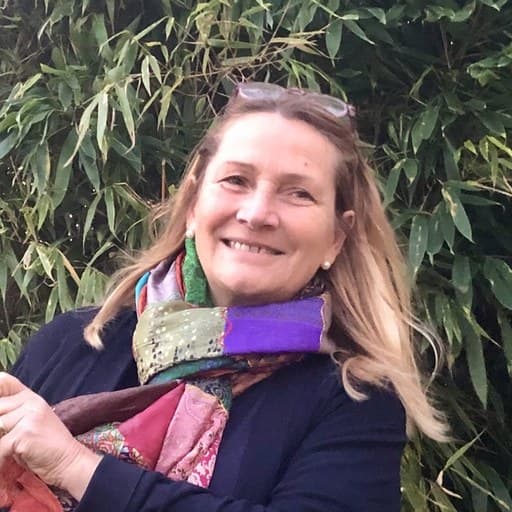
About the author
Valérie Fabre · Founder & Director, Harmonika Institute
Valérie Fabre founded Harmonika Institute in 2025, after a decade seeing clients in private kinesiology practice and, before that, thirteen years in international trade. A French-born polyglot who now splits her time between Dallas and Miami, she sets the school's curriculum and editorial standards and champions ethical, in-person training.
Read more about Valérie Fabre →