Journal · Ayurveda · Choosing a program
Ayurveda Certification in the U.S.: Programs, Scope and Limits
No U.S. state licenses Ayurveda. Here is what the tiers actually mean, what a serious program teaches, and the hard line between tradition and legal practice.
Valérie Fabre, Founder & Director, Harmonika Institute · June 25, 2026 · 10 min read

Key takeaways
- No state licenses Ayurveda. Not one. Every U.S. credential in this field is a private certificate issued by a school or a membership body, and none of them authorises you to assess or treat a health condition.
- The gap between India and here is enormous. An Ayurvedic physician in India completes a five-and-a-half-year university degree with hospital rotations. A U.S. certificate holder with 600 hours is doing a different job, and should describe it differently.
- Herbs are the sharpest edge. Recommending specific herbal formulas to a specific person for a specific complaint runs into supplement rules, dietetics and nutrition licensure in several states, and unlicensed-practice statutes everywhere.
- Tiers run roughly 600, 1,500 and 4,000 hours. Membership-body standards describe an entry counsellor level, a practitioner level, and a top tier whose title should never be used in public in the U.S.
- Product contamination is a real, documented problem. Independent testing has repeatedly found lead, mercury and arsenic in a meaningful share of Ayurvedic products, including ones bought in the United States. A responsible program teaches you this.
- The workable U.S. positioning is education, not clinical work. Daily routine, sleep, food patterns, seasonal adjustment. That is a real service people pay for, and it stays inside the law.
Ayurveda is the oldest continuously practised medical system on earth, taught in Indian universities as a five-and-a-half-year degree, with teaching hospitals and a national regulator behind it. In the United States it has no licence, no board, no exam, and no legal standing whatsoever. That is not a small difference of degree. It means the thing you would be trained in and the thing you are legally permitted to do are two different sizes, and nobody selling certification is especially eager to explain where the edge is.
So that's what this piece does. What the tiers mean, what a serious curriculum contains, what the evidence supports and doesn't, and precisely where the American legal line sits. If you want the comparison against a neighbouring field, we've written Ayurveda vs. Holistic Naturopathy separately.
Two systems, one word
In India, Ayurveda sits inside the state. Practitioners hold a BAMS degree, take formal examinations, register with a council, and work in hospitals with inpatient wards and operating theatres. They diagnose. They prescribe. Some perform surgery.
None of that transfers. A U.S. certificate confers no diagnostic authority, no prescribing authority, and no protected title. Someone who finished a 200-hour online course and someone who finished 1,500 supervised hours occupy identical legal ground in every U.S. state, which is exactly none.
People find this deflating. It shouldn't be. It just means your credential has to earn its value through what you can actually do with a client rather than through what a regulator says about it. Clients notice the difference within one session. Regulators never will.
The title trap
The field's own tier structure includes a top level whose name contains a doctoral-sounding word. It refers to a private membership standard, not a medical qualification, and using it on a business card, a website or a door in the United States can be read as holding yourself out as a physician. Several states treat that as a criminal matter rather than a paperwork one. Whatever your training says on the certificate, describe yourself in public as an Ayurvedic practitioner or an Ayurvedic lifestyle educator. Rules differ by state and change over time. Ask your own state board.
The tier structure, in general terms
American membership bodies have spent two decades building voluntary standards for a field that nobody is obliged to join. Those standards converged on three levels, with hours in roughly these ranges. Schools describe them slightly differently, so read the hours rather than the name.
| Tier | Typical hours | Typical U.S. cost | What it covers | Legal to diagnose? |
|---|---|---|---|---|
| Weekend or short online course | 16–100 | $200–$1,500 | Dosha framework, basic diet and routine. Personal interest level | No |
| Health counsellor level | ~600 | $4,000–$9,000 | Diet, daily and seasonal routine, basic assessment, client education for generally healthy people | No |
| Practitioner level | ~1,500 cumulative | $10,000–$20,000 | Adds herbal materia medica, deeper traditional assessment, supervised client hours, case work | No |
| Top tier | ~4,000 cumulative | $25,000+ | Extended study, often with clinical observation in India | No |
Look down that last column. Four rows, four identical answers. The hours change what you know and how safely you work. They do not change your legal position by a single inch, and any school that implies otherwise is misleading you.
What the hours do change is insurability, credibility with venues and referral sources, and whether you can hold a complicated client without improvising. Those are worth paying for. A legal upgrade is not on offer at any price.
What a serious curriculum actually contains
Strip away the marketing and a real program has a recognisable shape. If a school's syllabus is missing three or more of these, you are buying a dosha quiz with a certificate stapled to it.
- Foundational theory. Samkhya philosophy, the five elements, the three doshas and the twenty gunas. The conceptual grammar everything else is written in. If you want the plain-English version first, see what the doshas actually are.
- Prakriti and vikriti. Constitutional pattern versus current state. This distinction is the working core of client sessions and the part short courses flatten into a personality quiz.
- Traditional assessment. Observation of tongue, pulse, skin, digestion and sleep. Taught as a traditional framework for understanding pattern, never as diagnosis.
- Ahara. Food qualities, combinations, timing, agni and digestive strength. In the U.S. this is the commercially central skill and also the one that collides with nutrition law.
- Dinacharya and ritucharya. Daily and seasonal routine. Unglamorous, legally safe, and the part clients most often stick with.
- Dravyaguna. Herbal materia medica, including safety, contraindications and interactions with prescription medication. A curriculum that teaches herbs without teaching interactions is dangerous.
- Western anatomy and physiology. Enough to recognise a red flag and refer out. Non-negotiable.
- U.S. scope, ethics and business. Consent, records, referral, advertising language, insurance.
- Supervised client hours. Real people, observed, with feedback. This is the single largest quality differential between programs at similar prices.
Ask about panchakarma
Panchakarma is the traditional purification sequence, and parts of it involve induced vomiting, purgation and medicated enemas. In India it happens under medical supervision, often as an inpatient. In the U.S., a non-licensed practitioner performing those procedures is exposed on every front at once: unlicensed practice, physical harm, and an insurer who will not cover the claim. Ask any school directly whether it trains you to perform panchakarma and what it tells you about doing so here. A good answer is detailed and cautious. A vague one tells you everything.
Where the U.S. legal line actually falls
Three separate bodies of law touch this work, and they bite in different places.
Unlicensed practice of medicine. Triggered by what you claim, not by what you know. Assessing a condition, naming it, or offering something as a treatment for it puts you inside the definition regardless of your training. The traditional vocabulary offers no shelter here; saying a client has excess pitta "causing" their skin condition is still an assessment claim in the eyes of a regulator reading plain English.
Nutrition and dietetics licensure. A number of states restrict who may provide individualised nutrition advice, particularly where a health condition is involved. Others have opened up considerably over the past decade, and the picture keeps moving. Since food is most of what Ayurveda does, this is not a side issue for this modality. It is the main event.
Supplement and herb rules. Herbs sold in the U.S. are regulated as dietary supplements, which means claims about treating, preventing or curing anything are prohibited on the product and in your mouth. Selling herbs you also recommend adds a conflict of interest that some professional bodies restrict outright.
| What practitioners often say | Safe? | Say this instead |
|---|---|---|
| "Your pitta imbalance is causing your eczema." | No | "Here is what the traditional framework notices in your pattern. Your skin condition is something to discuss with your physician." |
| "Take ashwagandha for your anxiety." | No | "Ashwagandha is used traditionally in this pattern. Check with your prescriber before adding anything, particularly if you take medication." |
| "This protocol will heal your gut." | No | "We'll work on eating rhythm and food qualities and see how your digestion responds over six weeks." |
| "Let's build a daily routine around your sleep and meal timing." | Yes | No change needed. This is the core of the U.S. offer. |
| "I'll do abhyanga massage in the session." | Depends | Oil massage for compensation requires a massage licence in most states. Check before you offer it. |
Notice the pattern in the safe column. You describe, you educate, you observe over time, and you refer. That framing is not a defensive crouch. It's an accurate account of what a non-licensed practitioner can genuinely offer, and clients who are managing real conditions alongside their doctors tend to trust it more than the bolder version.
What the evidence supports, and what it doesn't
Where the evidence sits
Ayurveda as a whole system has barely been tested in the way Western trials test things, partly because individualised protocols resist standardisation. Individual components have more behind them: certain herbs have accumulated meaningful trial literature, and yoga and meditation, which sit inside the tradition, have a substantial body of research. U.S. federal health bodies describe the overall evidence for Ayurvedic practice as limited.
Separately and more urgently, published testing of Ayurvedic products has repeatedly found lead, mercury and arsenic at concerning levels in a meaningful minority of samples, including products purchased in the United States and online. Some traditional preparations contain metals deliberately. This is documented, not speculative, and any program worth its tuition covers sourcing and testing in detail.
Hold both of those honestly and you can still build a practice. The dietary and routine framework is coherent, personalised, and asks people to change things that plausibly matter: when they eat, how much they sleep, whether they move. Nobody needs a randomised trial to justify recommending a regular bedtime.
What you cannot do is present a 3,000-year lineage as though age were evidence. Clients who work in healthcare will catch it, and you'll lose the referral.
Who this actually suits
Ayurveda rewards people who like systems. There is a great deal to learn, it interlocks, and the pleasure of the work is in pattern recognition across a long client relationship rather than in a dramatic single session. If you want a modality where something visibly happens in the room, this is the wrong family; look at bodywork or breath instead.
It suits people who are comfortable working slowly. Results in dietary and routine work show up over eight to twelve weeks, not in ninety minutes, which means your business model is packages and follow-ups rather than one-off appointments. That's commercially better once it's running and considerably harder to start.
It suits people who can hold a boundary. You will be asked medical questions constantly, by clients who genuinely want your opinion, and the answer has to be a referral even when you privately suspect you know what's going on. If saying "that's outside what I do" feels like failure to you, this modality will grind on you. Our scope of practice guide covers the mechanics of that conversation.
It suits you badly if you are hoping the U.S. picture will change soon. There is no licensure bill moving toward passage in any meaningful way, and there has not been for years. Train for the field as it is.
The honest number
Ayurveda sessions in U.S. cities typically run $90 to $200 for an initial consultation of sixty to ninety minutes, less for follow-ups, with package pricing common. Practitioners who make a living at it almost always combine consultation with something else: cooking classes, corporate workshops, retreats, or a second modality. A consultation-only Ayurveda practice supporting a full income is rare, and you should plan on the assumption that yours will need a second leg.
How to vet a program before you pay
- 1
Ask for the hour breakdown in writing
Not total hours. Hours by subject, and separately, how many are contact hours with an instructor present versus self-study recordings. The ratio is usually where the surprise lives.
- 2
Ask how many supervised client sessions you will deliver
On people who are not your classmates. If the number is zero, you are buying a reading list.
- 3
Ask what they teach about U.S. scope
A program that cannot describe the nutrition licensure question or the herb claim rules has not thought about the country it's operating in.
- 4
Ask about herb sourcing and heavy metals
If the contamination literature comes as news to the person selling you the course, close the tab.
- 5
Ask what graduates are doing now
Specifically: how many are seeing paying clients, and how many sessions a week. Vague answers here are the most reliable warning sign in the whole process.
Questions on this topic.
Can I call myself an Ayurvedic practitioner without certification?+
Legally, in most places, yes. The title is not protected in any U.S. state, which is precisely why the certificate matters so little as a permission and so much as evidence. What certification does is give an insurer something to underwrite, give a wellness centre a reason to rent you a room, and give you the hours that separate confident practice from improvisation. It grants you nothing you didn't already have the right to do.
Is Ayurveda certification recognised by any U.S. authority?+
No government body recognises or accredits Ayurvedic certification, because there is no licensure to accredit against. Voluntary membership organisations publish standards and maintain registers, which carries genuine weight with insurers and referral partners but no legal force. Be sceptical of any school describing its program as accredited or licensed without naming exactly which body and what that body requires.
Can I recommend herbs to clients?+
This is the question to take seriously before you enrol. General education about traditional herb use is broadly defensible. Telling a specific person to take a specific herb at a specific dose for a specific complaint moves toward practising medicine and, in some states, toward regulated nutrition practice. Training that covers interactions with prescription medication is essential regardless, because clients will take things without telling their prescriber unless you insist otherwise.
How long does Ayurveda certification take?+
At the entry counsellor tier, most programs run twelve to eighteen months part-time to accumulate roughly 600 hours, though intensive formats compress this. The practitioner tier commonly adds another year or two. Weekend courses issue certificates in days, and there is nothing stopping them, but a two-day certificate and an 1,800-hour one carry the same legal weight and radically different competence.
Do I need to travel to India?+
Not to certify. Many U.S. programs include an optional clinical observation trip, which is valuable for seeing the tradition operate at full scale and useless as a credential here. Weigh it as education rather than as a line on your website. If the cost of the trip is what tips a program out of your budget, skip the trip and keep the hours.
Can I combine Ayurveda with another modality?+
It combines unusually well, because it supplies a framework for the between-sessions part of a client's life that most hands-on modalities lack. Common pairings are bodywork, aromatherapy, yoga teaching and breath practice. Be careful not to blur scopes in your marketing; each modality carries its own rules and the strictest one governs the session.
Tags:
AyurvedaChoosing a programCertification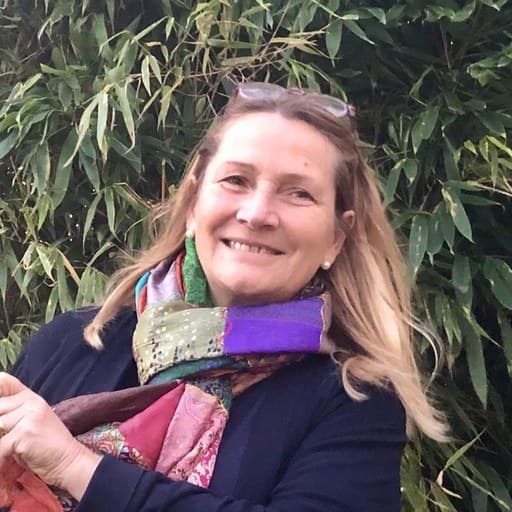
About the author
Valérie Fabre · Founder & Director, Harmonika Institute
Valérie Fabre founded Harmonika Institute in 2025, after a decade seeing clients in private kinesiology practice and, before that, thirteen years in international trade. A French-born polyglot who now splits her time between Dallas and Miami, she sets the school's curriculum and editorial standards and champions ethical, in-person training.
Read more about Valérie Fabre →