Journal · Magnetism · What it is
What Is Magnetism as a Hands-On Practice
The European magnetisme tradition explained for U.S. readers: what a session involves, how it differs from Reiki, and why it has nothing to do with magnets.
Valérie Fabre, Founder & Director, Harmonika Institute · April 27, 2026 · 10 min read
Key takeaways
- No magnets are involved. Not one. This is a hands-on European practice whose name is a 240-year-old historical accident, and it has nothing to do with the magnetic bracelets sold for joint pain.
- It is enormous in France and almost invisible here. French surveys have repeatedly found that a large minority of adults have consulted a magnetiseur at least once. In the U.S., most people have never heard the word.
- It is closer to hands-on work than Reiki is. Where Reiki is often taught as light or hovering contact with a fixed hand sequence, magnetism typically uses firmer contact, long sweeping passes, and no set protocol at all.
- There is no attunement and no lineage certificate. Practitioners are trained, or self-taught, or say they inherited it. There is no equivalent of the Reiki master chain.
- The evidence for the proposed mechanism is essentially nonexistent. What holds up is narrower and still real: people report less pain and less distress after an hour of calm, confident, attentive touch.
A French friend mentions, in passing, that she saw a magnetiseur about her shingles pain, the way an American might mention a chiropractor. You picture someone waving magnets. She means something else entirely, and the gap between those two pictures is why this page exists. Magnetism as practised in France, Belgium, Switzerland and Quebec is a hands-on tradition with roots in the 1770s, no devices, no magnets, and no relationship whatsoever to the copper bracelet aisle at the pharmacy.
It is also, for a U.S. reader, genuinely unfamiliar territory. So this is a plain description: where the name came from, what a practitioner actually does with their hands, how it differs from the energy modality Americans do know, and what can honestly be said about whether any of it works.
First: this is not magnet therapy
Two completely separate things share a root word, and the confusion sends a lot of people to the wrong page.
Magnet therapy means physical magnets. Bracelets, insoles, mattress pads, adhesive discs placed over a sore knee. It is a product category, sold at scale, and it has been studied reasonably well because it is easy to study: you can make a sham bracelet that looks identical to a real one and nobody can tell. Reviews of static magnets for pain have consistently found no meaningful benefit over placebo. That question is about as settled as this field gets.
Magnetism, in the sense used across the French-speaking world, is a person, two hands, and an hour. No object is used at any point. The name is inherited from Franz Anton Mesmer, an 18th-century Viennese physician who proposed an invisible fluid he called animal magnetism, initially using actual lodestones before dropping them and working with his hands alone. A French royal commission investigated him in 1784, concluded that the fluid did not exist and that the effects came from imagination, and the term stuck to the practice anyway.
So when a French practitioner says magnetisme, they mean the hands. When an American says magnet therapy, they mean an object. Neither group is being unclear on purpose. They just inherited the same word from different branches of the same 1780s argument.
The 1784 verdict
The commission that examined Mesmer included Benjamin Franklin, then in Paris, and Antoine Lavoisier. It ran what were arguably the first blinded control experiments in medical history, and its finding was blunt: the magnetic fluid could not be detected, and people responded to what they believed was happening rather than to any transmitted force.
That report is 240 years old and nothing since has overturned it. Anyone training you in this work should be able to tell you about it without flinching.
What actually happens in a session
You stay dressed. You lie on a table or sit in a chair, sometimes both across one appointment. Shoes off, usually. No oils, no undressing, no draping.
Most practitioners begin with a conversation of ten or fifteen minutes. What brought you, where it hurts, how long, what else is going on. Then a short scan: hands held a few inches from the body, moving slowly from head to feet, the practitioner reporting what they notice as heat, density, or a pull in one region. Take that description as their working vocabulary rather than as a measurement of anything.
The hands-on part usually combines two things. Long sweeping passes, palms moving down the length of the body or along a limb, sometimes touching and sometimes an inch above the clothing. And static holds, one or both hands resting with real weight on a specific area for two to five minutes at a stretch.
The contact is heavier than most Americans expect from energy work. Not massage, no kneading or soft-tissue manipulation, but a firm, settled, deliberate pressure. Many practitioners also shake their hands out between passes, a habit inherited from the idea of clearing what has been drawn off.
Sessions run 30 to 60 minutes. What people commonly report: warmth spreading from the contact point, heaviness in the limbs, a strong drop into drowsiness, occasionally tingling. Some feel very little and say so. Tiredness that evening is the most frequently mentioned after-effect.
Practitioners in this tradition frequently work in short series rather than as a one-off. Three sessions across three weeks is a typical suggestion. Be alert if anyone proposes twenty.
How it differs from Reiki
Americans who know one energy modality know Reiki, so that is the useful comparison. They overlap in what a bystander would see, and diverge in almost everything structural.
| Magnetism (European tradition) | Reiki | |
|---|---|---|
| Origin | France, 1770s onward, out of the Mesmer controversy | Japan, 1920s, Mikao Usui |
| Entry ritual | None. You train, or you don't | Attunement by a master, at each level |
| Structure of a session | Improvised, led by what the practitioner reports noticing | Usually a set sequence of hand positions |
| Quality of touch | Firm contact, sweeping passes, weight in the hands | Light contact or hands held just off the body |
| Levels and titles | No standard levels; no master grade | Three or four levels, master and master-teacher |
| Stated source of the effect | The practitioner's own capacity, transmitted personally | Universal energy channelled through the practitioner |
| Distance work | Practised by some, contested within the tradition | Standard from Level II onward |
| Recognition in the U.S. | Marginal; often taught inside broader energy programs | Widely known |
| Licensed anywhere in the U.S.? | No | No |
The row that matters most is the sixth. Reiki teaches that the practitioner is a conduit and the energy is not theirs, which is partly a protective doctrine: it discourages practitioners from believing their personal power is at stake. Magnetism makes the opposite claim. The practitioner is understood to be giving something of their own, which is why magnetiseurs talk so much about fatigue, about not working when depleted, and about how many people they can see in a day.
Whatever you make of the metaphysics, that difference produces a different working life. Reiki practitioners routinely book ten or twelve sessions a week. Traditional magnetiseurs often cap themselves at four or five a day and refuse to work when unwell.
The French context, and why it does not transfer
In France the practice sits in an unusual social position: not medical, not illegal, quietly ubiquitous. Practitioners advertise in local papers. Older rural traditions overlap with it, particularly the coupeurs de feu, people called on to reduce the pain of burns, whose numbers are sometimes kept informally by hospital burn units and called on request. French health authorities do not endorse the practice and are periodically critical of it.
None of that infrastructure exists here. There is no U.S. register of magnetism practitioners, no cultural default that your neighbour has seen one, and no hospital list. Someone offering this work in Denver or Atlanta is offering something their clients have to be taught about from scratch, which is a real business consideration and not just a curiosity.
What may honestly be said
No U.S. state licenses this work, and no state recognises it as a form of care. That cuts both ways: there is no barrier to practising, and no protection if a claim goes wrong. Describing a session as treating, healing, or curing any condition is where practitioners get into trouble, because that is the language of unlicensed practice of medicine regardless of the technique used.
Because magnetism involves sustained firm contact, it also sits closer to the massage licensure line than lighter energy work does. Several states define soft-tissue work for compensation broadly. Rules differ by state and change over time. Confirm with your own state board before you take a paying client.
What the evidence supports, and what it does not
Be clear about which question is being asked, because two get muddled constantly.
Does a transmissible force pass from practitioner to client? There is no good evidence for it. The 1784 commission found none. Modern attempts to test whether practitioners can even detect a human energy field under blinded conditions have not gone well for the field; the best-known of these, published in JAMA in 1998, found that experienced therapeutic touch practitioners could not tell which of their hands a hand was being held near at better than chance. Nothing in the intervening decades has produced a mechanism that survives scrutiny.
Do people feel better after a session? Frequently, yes, and that is a separate and less mysterious finding. Trials of hands-on biofield practices generally report modest short-term reductions in self-reported anxiety and pain, in studies that are small, hard to blind, and often run by enthusiasts. Federal health bodies characterise the evidence as insufficient to support any specific clinical use.
The honest reading is not flattering to the theory and not dismissive of the experience. An hour in which someone asks how you are, listens, and then places warm steady hands on you without hurrying is not nothing. Sustained non-medical touch is scarce in adult life, particularly for people living alone, and its effect on distress is real without requiring an invisible fluid to explain it.
Practitioners who can say that sentence out loud tend to have longer careers than the ones who cannot.
A useful test
Ask a practitioner what they would do if you told them you had a lump you hadn't shown a doctor. The right answer takes about four seconds and involves the words "see your doctor first". Anyone who hesitates, or who suggests a series of sessions instead, has told you everything you need to know about their judgement.
If you are considering a session
Practical guidance, since almost nobody in the U.S. will have given you any.
- 1
Do not stop or delay anything medical
This is the single rule. A session is something you add alongside your care, never instead of it. Anyone who encourages you to skip an appointment or stop a medication should be left immediately.
- 2
Ask what they say they do, in their own words
You are listening for restraint. "I do relaxation work and people often report less pain afterwards" is a good answer. "I remove blockages causing your illness" is not.
- 3
Ask about touch before you book
Contact is firmer here than in most energy work, and it is on a clothed body. If you have pain conditions, recent surgery, or a history that makes sustained touch difficult, say so at the start and agree what is off limits.
- 4
Agree the number of sessions up front
Three, then reassess. Open-ended plans and prepaid packages of ten are a commercial structure, not a clinical one.
- 5
Expect to feel tired that evening
It is the most commonly reported after-effect. Don't schedule anything demanding for the same night, and drink water, which is the one piece of folk advice here that costs nothing.
Training in this, in the U.S.
Almost nobody in the States trains in magnetism alone, and for good reason: you would be selling a word your market does not recognise. Where it fits is as a component of broader hands-on energy training, alongside modalities the public can already name.
What a serious program adds to the technique is the part that has nothing to do with the hands. How to take an intake without straying into medical territory. What to say when a client discloses something heavy mid-session, which happens more than beginners expect during sustained touch. Where the massage licensure line sits in the state you'll actually work in. How to close a session so that someone can drive home. And how to keep working for years without the depletion the tradition itself warns about.
Our own magnetism training runs in person, in cohorts of ten, for the same reason all our hands-on programs do: the quality of touch is the whole craft here, and nobody has ever corrected a pair of hands through a screen.
Questions on this topic.
Is magnetism the same as therapeutic touch or healing touch?+
Not the same, but they are cousins. Therapeutic Touch and Healing Touch are American systems developed in nursing contexts in the 1970s and 1980s, with formal curricula and organisations behind them. Magnetism is the older European folk and salon tradition they partly resemble, with no central organisation and no standard training. In practice the physical work looks different too: magnetism uses firmer, longer contact, while the American systems tend to work off the body.
Do I need to believe in it for anything to happen?+
You don't need to believe in a mechanism, and any practitioner who insists you must is protecting their theory rather than helping you. Relaxation and reduced distress from calm attentive touch do not require belief. What belief plausibly does is amplify what you notice and report, which is exactly the finding the 1784 commission landed on. Going in openly sceptical but willing is a perfectly reasonable stance.
Can a session make anything worse?+
Directly, rarely. The real risks are indirect and serious: delaying medical care, spending money on an open-ended series, or receiving firm sustained pressure over an area where it isn't appropriate, such as recent surgery, acute inflammation, or a suspicious lump. Some people also find prolonged touch distressing for reasons that surface unexpectedly. Say up front what you don't want touched, and expect that to be respected without discussion.
What does a session cost in the U.S.?+
Where it is offered at all, it is priced with other hands-on energy sessions, commonly $70 to $150 for an hour depending on the city, with New York and Los Angeles at the top of that band and smaller markets well below it. Nothing here is covered by insurance. Be wary of prepaid blocks sold before you have had a single session, and of anyone whose pricing assumes you'll be coming weekly for a year.
Why is it called magnetism if there are no magnets?+
Because Mesmer originally used actual magnets in the early 1770s, believing he was correcting the flow of a fluid he named animal magnetism. He abandoned the magnets within a couple of years, having concluded his hands worked just as well. The theory was demolished in 1784, but by then the word had spread across Europe and into a practical tradition that outlived the idea it was named for. The name is a fossil.
Tags:
MagnetismWhat it is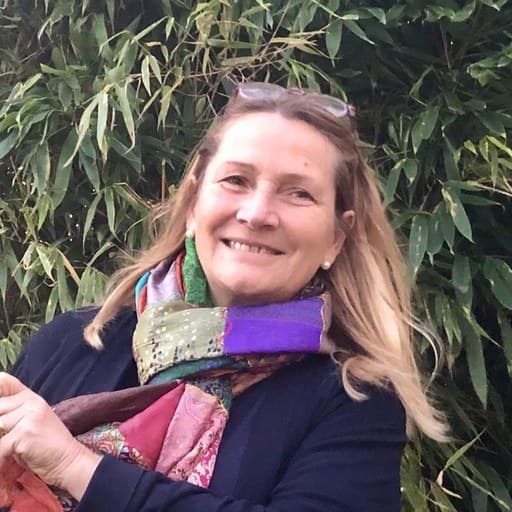
About the author
Valérie Fabre · Founder & Director, Harmonika Institute
Valérie Fabre founded Harmonika Institute in 2025, after a decade seeing clients in private kinesiology practice and, before that, thirteen years in international trade. A French-born polyglot who now splits her time between Dallas and Miami, she sets the school's curriculum and editorial standards and champions ethical, in-person training.
Read more about Valérie Fabre →