Journal · Bach Flowers · What it is
What Are Bach Flower Remedies and How Are They Selected
The 38 remedies, how a practitioner picks them by emotional state, how dilute the bottles really are, what the trials found, and the alcohol caution nobody mentions.
Valérie Fabre, Founder & Director, Harmonika Institute · May 1, 2026 · 10 min read
Key takeaways
- Thirty-eight remedies, sorted by feeling. Edward Bach finished the set in 1936 and grouped it into seven emotional families. Selection is based on how you describe your state of mind, never on a physical symptom.
- The trials are not kind. Controlled studies, including several placebo-controlled trials and the systematic reviews that pooled them, have generally found no effect beyond placebo. That is the honest summary and it has not changed in twenty years.
- The dilution is extreme. A stock bottle is roughly one part mother tincture to 240 parts preservative, and a client's dosage bottle dilutes that again by another factor of several hundred.
- Stock bottles are mostly brandy. Around 27 percent alcohol by volume, which matters for anyone in recovery, pregnant, giving drops to a child, or on medication where alcohol is discouraged.
- The consultation is the substantive part. A careful practitioner spends 45 to 90 minutes helping someone name what they are feeling with unusual precision. That conversation has value whatever the bottle does.
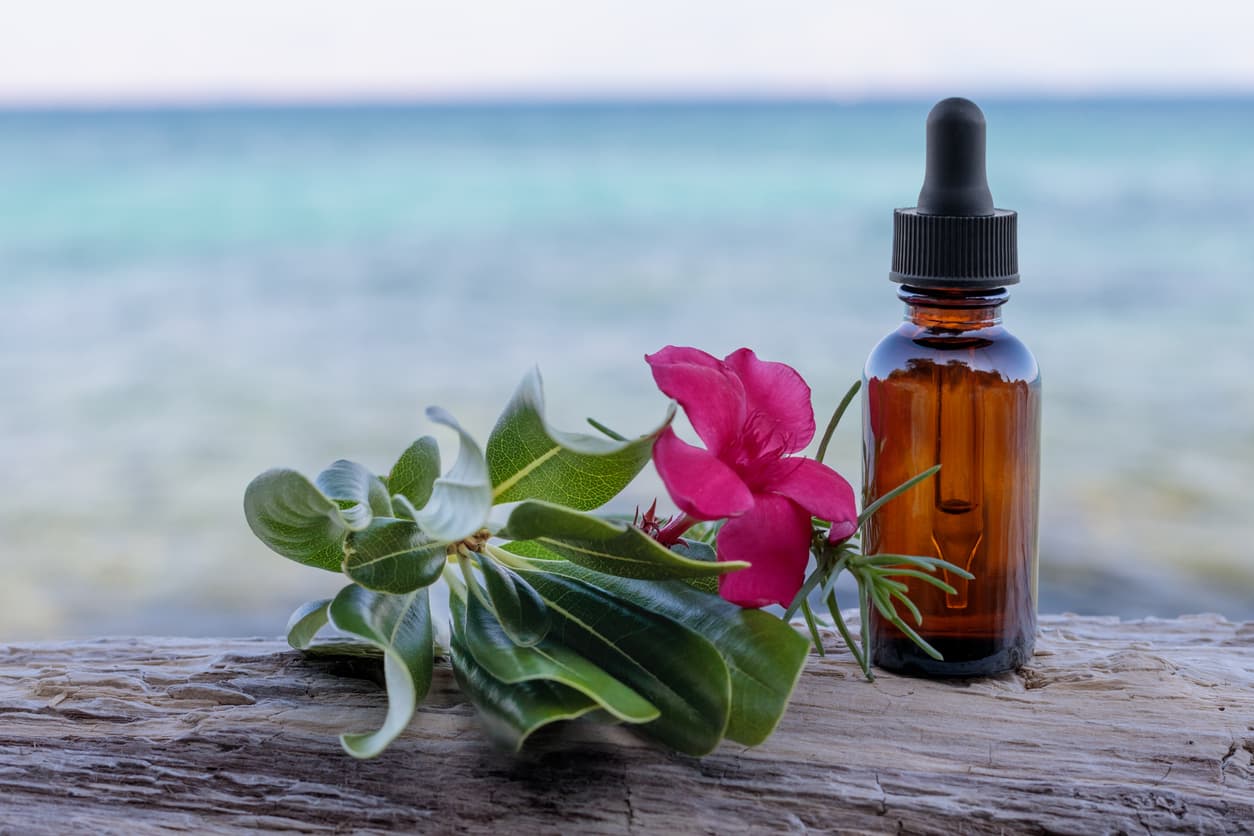
A small brown dropper bottle, a yellow label, four drops under the tongue. You have probably seen one in a health shop next to the till, or in a friend's handbag before a job interview. Bach flower remedies are among the most widely sold and least understood things in the wellness aisle, partly because the packaging looks medicinal and the contents are not. This is a plain account of what they are, how a practitioner chooses one, what the research found, and what is actually in the bottle.
We train practitioners in this method, so you should know our bias up front. We also think you are owed the unflattering evidence before anyone sells you anything, which is why the section on trials is not buried at the bottom.
Who Edward Bach was and what he was reacting against
Bach was a British physician, born 1886, who worked as a bacteriologist and pathologist in London and had a respectable research career before he abandoned it. By the late 1920s he had become convinced that the medicine of his era treated diseases and ignored the people carrying them. He gave up his practice in 1930, moved to the countryside, and spent the last six years of his life walking through fields and hedgerows working out a system based on emotional states rather than physical complaints.
His logic ran roughly like this. Fear, resentment, indecision and grief were, in his view, the primary disturbances. Physical illness followed from them. If you could address the emotional state, the rest would settle. Modern medicine does not accept that causal chain, and neither should you, but the framework explains why the system is organised the way it is. Every one of the 38 remedies is named for a mood, not an organ.
By 1936 he had finished the set and declared it complete. He died that November, aged 50, and nobody has added a thirty-ninth remedy since, which is unusual in a field where most methods accumulate additions for decades. Other flower essence traditions exist, but they are separate systems rather than extensions of this one.
Why the set stayed at 38
Bach designed the system to be finishable by an ordinary person without a practitioner. That was the point. Thirty-eight states, learnable in an afternoon, chosen by the person feeling them. The professional consultation grew up afterwards, and some purists still consider it a departure from what he intended.
The seven groups, and what each one covers
Bach sorted his 38 into seven families. If you have ever looked at a wall chart in a shop and found it incomprehensible, this is the structure it was organised on.
| Group | Number of remedies | The state it addresses | Examples |
|---|---|---|---|
| Fear | 5 | From vague dread to known, named fears and panic | Mimulus, Aspen, Rock Rose, Cherry Plum, Red Chestnut |
| Uncertainty | 6 | Indecision, discouragement, not knowing your direction | Cerato, Scleranthus, Gentian, Gorse, Hornbeam, Wild Oat |
| Insufficient interest in the present | 7 | Daydreaming, living in the past, resignation, mental fog | Clematis, Honeysuckle, Wild Rose, Olive, White Chestnut, Mustard, Chestnut Bud |
| Loneliness | 3 | Aloofness, impatience, needing an audience | Water Violet, Impatiens, Heather |
| Oversensitivity to influences | 4 | People-pleasing, hiding distress behind cheerfulness | Agrimony, Centaury, Walnut, Holly |
| Despondency or despair | 8 | Guilt, self-reproach, exhaustion, feeling contaminated or overwhelmed | Larch, Pine, Elm, Sweet Chestnut, Star of Bethlehem, Willow, Oak, Crab Apple |
| Overcare for others | 5 | Rigidity, intolerance, wanting to control or convert | Chicory, Vervain, Vine, Beech, Rock Water |
Read the group names and something becomes obvious. This is a vocabulary of feeling, arranged with real care. Whatever you conclude about the bottles, a lot of what happens in a consultation is a client discovering that the distinction between Larch and Pine, between not thinking you can and thinking it is your fault, is one they had never made about their own life.
Rescue Remedy, the one most people have met
The combination sold as Rescue Remedy is five of the 38 premixed: Rock Rose, Impatiens, Clematis, Star of Bethlehem and Cherry Plum. It is marketed for acute moments, exams, flying, bad news, and it accounts for a large share of all Bach product sold worldwide.
It has also been tested more than the rest of the system, because acute anxiety is easy to study. A double-blind placebo-controlled trial on university students facing exams, published in 2007, found no significant difference between the remedy and placebo on measured anxiety. Others have reported similarly. If any part of the system were going to show an effect, this would have been the part.
What the evidence actually found
Where the evidence sits
Systematic reviews of controlled trials of Bach flower remedies have reached a consistent conclusion: the most reliable studies show no benefit over placebo. A 2009 review in BMC Complementary and Alternative Medicine assessed the randomised controlled trials available and concluded that the hypothesis of an effect beyond placebo was not supported. Earlier reviews by Edzard Ernst reached the same place. The trials that did report positive results were generally small, unblinded, or uncontrolled.
This is a firmer negative than you find for most modalities in this field. It is not a matter of thin or missing evidence. Studies were done, they were reasonably designed, and they came back null.
Two things follow from that, and both matter.
First, nobody should be told that these remedies affect any medical condition, mental or physical. Not anxiety disorders, not depression, not sleep problems, not anything with a diagnostic name. A practitioner who says otherwise is making a claim the research does not support and, in most U.S. states, is edging toward unlicensed practice.
Second, placebo is not a synonym for nothing. Placebo responses are real, measurable, and reliably larger for subjective outcomes such as distress and comfort than for objective ones. Saying that the effect of the drops is a placebo effect is a description of mechanism, not a dismissal of the client's experience. What it does mean is that the ritual, the attention and the expectation are doing the work, and that you should be honest about which part of the encounter is carrying the weight.
How the bottles are made, and how dilute they are
Two preparation methods, both from Bach. The sun method: flower heads floated in a bowl of spring water in direct sunlight for a few hours. The boiling method, used for remedies from trees and woodier plants that flower before the sun is strong: material simmered in water for half an hour. The liquid is then filtered and mixed roughly half and half with brandy. That is the mother tincture.
What reaches a shop shelf is several dilutions down from there.
| Stage | What it is | Dilution applied | Alcohol content |
|---|---|---|---|
| Mother tincture | Filtered infusion preserved in brandy | Baseline | About 50% |
| Stock bottle | What you buy retail, 10 or 20 ml | About 1 part in 240 | About 27%Note |
| Dosage bottle | Mixed by practitioner or client, 30 ml | 2 drops per remedy into water | Trace, unless brandy is added as preservative |
| Single dose | 4 drops under the tongue | Further dilution in saliva | Negligible |
Practitioners of the method describe the remedies as working by an imprint or vibrational quality of the plant rather than by any chemical constituent. There is no accepted physical mechanism for that, and no measurement has demonstrated one. You are entitled to hold it as a belief. You are not entitled to present it to a client as established science, and a good training programme will drill that distinction until it is automatic.
The alcohol caution
A stock bottle is roughly 27 percent alcohol by volume, comparable to a mid-strength spirit. The per-dose quantity is tiny, but it is not zero, and it is a genuine issue for four groups of people: anyone in recovery from alcohol dependence, for whom the taste alone can be a problem; pregnant clients; parents giving drops to a young child; and anyone taking a medication where alcohol is discouraged. Alcohol-free versions preserved in glycerine exist and any practitioner should offer them without being asked.
Nothing here is medical advice. If a client is on prescribed medication or managing a diagnosed condition, the answer is a conversation with their own prescriber, not with you.
How a remedy is actually selected
This is the part people are curious about, and it is less mystical than expected. There is no muscle test, no pendulum, no device in the orthodox method. There is a conversation.
- 1
The practitioner asks what is going on, and then stops talking
Open questions, long silences. What has been hardest this month. What you find yourself thinking about at three in the morning. Most of the first half hour is listening.
- 2
Feelings get separated from circumstances
A client says they are stressed about work. That single word can unpack into resentment at being passed over, dread of a specific meeting, and exhaustion that predates the job. Three different remedies in the Bach vocabulary. This sorting is the technical skill.
- 3
Present state is separated from long-standing temperament
The system distinguishes what you are feeling this week from what you have always been like. Both can be addressed, but not with the same remedy, and mixing them up is the commonest beginner error.
- 4
A short combination is agreed, out loud
Typically up to six or seven remedies in one dosage bottle. The practitioner names each choice and says why, and the client confirms or corrects it. This is the moment the conversation does most of its work.
- 5
The client takes it, and reports back
Four drops, four times a day, for two to four weeks. The follow-up is another conversation, and the selection usually changes because the person has moved.
What the consultation offers, regardless
Now hold the two halves together. The trials found nothing beyond placebo. And a client sits for an hour with someone whose entire job in that hour is to help them find the right word for what they are feeling.
That second thing is not nothing. Naming an emotional state precisely is a recognised part of how people regulate themselves, and it is exactly what the 38 categories force. You cannot choose between Impatiens and Vervain without deciding whether your problem is irritation at other people's pace or your own overzealous drive. Most people have never been asked to make that distinction about themselves by anyone.
Add the follow-up structure. Someone reviews your emotional state with you every three or four weeks and asks whether it has shifted. Very few adults have that in their lives.
So the honest framing for a practitioner is this: you are offering a structured reflective conversation with a physical token attached to it. Sell the conversation. Do not oversell the drops. Practitioners who get that order right tend to keep clients and stay out of trouble, and the ones who get it backwards eventually meet a client who read the research.
Who it suits, and who should look elsewhere
As a practice to train in, this suits people who like language, patience and detail, and who are comfortable working in a modality whose evidence base is weak and being asked about it. The overheads are among the lowest in the field. A set of stock bottles, a room, and a notebook.
It suits you badly if you need to feel that you are producing a measurable outcome, or if you would find yourself tempted to imply more than the evidence supports when a client in real distress is sitting in front of you. That temptation is the professional hazard here, more than any legal one. It is also why we teach it alongside consultation skills and referral practice rather than as a standalone technique. You can see how it sits in our Bach flowers program, and how to sanity-check any modality before committing in our guide to testing a modality before you train.
Questions on this topic.
Can I choose Bach flower remedies for myself without a practitioner?+
Yes, and Bach designed the system so that you could. The full descriptions of all 38 states are freely published, the remedies are sold over the counter, and self-selection is the original intended use. A practitioner offers two things you cannot easily give yourself: an outside reading of what you are describing, and a structured follow-up. If you are curious and the budget matters, start by reading the 38 descriptions and choosing your own.
Are Bach flower remedies the same as homeopathy?+
No, though they are often shelved together and both involve heavy dilution. Homeopathy rests on a like-cures-like principle and on succussion, with remedies matched to symptom pictures. Bach's system has neither. It is organised entirely around emotional states, uses a much shorter dilution chain, and was developed independently. They are separate traditions that happen to share a shelf and a bottle shape.
How long before anything is noticed?+
Practitioners typically ask clients to take the drops for two to four weeks before reviewing. In practice, what people report noticing early is usually the effect of having articulated something clearly, not the bottle. Given what the trials found, that is the reasonable expectation to set. If someone promises you a result on a timeline, treat the promise sceptically.
Are they safe for children and pets?+
The remedies themselves are inert at these dilutions, so the safety question is entirely about the alcohol carrier and about what is being skipped. Use a glycerine-preserved version for children, or dilute stock drops in water. For animals, ask a veterinarian. The real risk in both cases is a child or an animal not receiving proper care because drops are being used instead, and that risk sits with the adult making the decision.
Do I need a licence to practise this in the United States?+
No state licenses flower essence practice as such, and no state protects the title. That is not the same as no legal exposure. The exposure comes from what you claim: describing your work as treating anxiety, depression or any diagnosed condition can put you inside unlicensed practice of medicine or psychology. Rules differ by state and change. Check with your own state board before you take a paying client.
Tags:
Bach FlowersWhat it is
About the author
Valérie Fabre · Founder & Director, Harmonika Institute
Valérie Fabre founded Harmonika Institute in 2025, after a decade seeing clients in private kinesiology practice and, before that, thirteen years in international trade. A French-born polyglot who now splits her time between Dallas and Miami, she sets the school's curriculum and editorial standards and champions ethical, in-person training.
Read more about Valérie Fabre →