Journal · Sound Healing · Training near you
Sound Healing Classes Near Me: What to Expect Session by Session
What a sound bath is physically like, minute by minute, who should ask questions before booking, and how to tell a local taster from real practitioner training.
Valérie Fabre, Founder & Director, Harmonika Institute · June 15, 2026 · 10 min read

Key takeaways
- Most local listings are sessions, not classes. Roughly speaking, for every listing that trains you to run a sound bath, you will find a dozen inviting you to lie down at one. The word "class" is doing a lot of work in these results.
- A sound bath is 45 to 75 minutes on the floor. You stay clothed, nobody touches you, and the loudest moment is usually a gong sweep somewhere in the middle third. Volume is a real safety variable, and earplugs in your pocket are not overcautious.
- Four groups should ask before booking: people with epilepsy or a recent concussion, people with tinnitus or sound sensitivity, people in the first trimester of pregnancy, and anyone with a history of dissociation or panic in unstructured quiet.
- Taster to practitioner is a $30 to $6,000 spread. A drop-in runs $20 to $45 in most U.S. cities. A weekend "certification" runs $300 to $900. A supervised in-person practitioner track runs into the thousands, and the difference is contact hours, not instruments.
- No state licenses this work. That cuts both ways: nothing stops you practising, and nothing stops anyone teaching.
You typed "sound healing classes near me" and got a yoga studio in Bushwick, a Saturday event at a crystal shop, a Meetup at somebody's loft, and one page offering a "certification" for $497 over two days. Those four things have almost nothing in common except the words. Three of them want you to lie on the floor for an hour. One of them wants to make you a practitioner in a weekend. This is the guide to telling them apart, and to knowing what actually happens once you are lying there.
We will do the experience first, in physical detail, because most people searching this phrase have never been to one and are quietly wondering whether they will be expected to chant. You will not be. Then the training question, which is a different decision with different stakes.
What the search results are actually offering
Local results for this phrase collapse four distinct products into one list. Reading the listing carefully will tell you which one you are looking at, if you know the tells.
| What it is | Tells in the listing | Typical length | Typical U.S. price | Trains you? |
|---|---|---|---|---|
| Group sound bath | "Bring a mat and blanket", ticketed by date, capacity 15 to 60 | 45 to 75 min | $20 to $45 | No |
| One-to-one session | Booked by appointment, "intake", sometimes bodywork add-ons | 60 to 90 min | $90 to $200 | No |
| Playing workshop or taster | "Learn to play the bowls", instruments provided, single date | 3 hrs to 2 days | $60 to $350 | Partly |
| Practitioner track | Application, cohort, logged practice hours, multi-month calendar | 4 to 10 months | $2,500 to $6,000+ | Yes |
The third row causes the most confusion. A two-day workshop with a certificate at the end is sold in the same visual language as the fourth row, at a fifth of the price, and the certificates look identical because no body decides what a sound healing certificate may say. If a page uses the word "certification" and the whole thing fits in a weekend, you are buying an introduction with a nice PDF attached.
The room, and what you will lie on
Sound baths happen wherever there is floor. In our ten primary markets you will most often find them in yoga studios after the last class of the day, in the back rooms of crystal and apothecary shops, in rented church halls, and in a growing number of dedicated sound rooms in Los Angeles, Denver and Austin.
Practically, this means the room is rarely designed for the job. Yoga studios have hard floors, mirrors and high ceilings, which makes gongs ring longer and louder than the facilitator may realise. Church halls swallow sound. Shop back rooms are small and often too warm.
You lie on a yoga mat, usually your own. Bring a blanket and something under your head. This is not a comfort nicety: your body temperature drops noticeably when you lie still for an hour, and a good third of the people who report not enjoying a sound bath were simply cold.
You keep your clothes on. Nobody touches you. If a listing offers hands-on work alongside the sound, that is a separate service with separate rules, and in most states soft-tissue work for compensation requires a massage licence. Ask before you book.
Pick your spot
Arrive early enough to choose where you lie. Directly in front of a large gong at three feet is a very different experience from the far corner. If you are unsure how you will react, take a position near the door and near a wall, with your head away from the instruments. Nobody will notice and you can leave without stepping over eleven people.
Session by session: what actually happens
Formats vary, but the shape is remarkably consistent across cities and lineages. Here is the arc of a typical group session.
- 1
Minutes 0 to 10: settling and a short talk
People arrange mats, the facilitator says what the instruments are and how long it will run, and usually asks whether anyone has ear sensitivity, is pregnant, or has a seizure history. If nobody asks that question, note it. It is the single clearest marker of a facilitator who has been trained rather than self-taught from videos.
- 2
Minutes 10 to 20: entry
Quiet instruments first. Usually a few crystal or metal bowls played slowly, sometimes chimes, sometimes a simple breath instruction. This stretch is the one people find boring, and boredom is the point. Your nervous system is being given nothing to do.
- 3
Minutes 20 to 45: the loud middle
Layered bowls, then generally the gong. This is where the volume peaks and where the strange sensations happen. Sound arrives as pressure in the chest and belly rather than as music. Many people lose track of time here or fall briefly asleep.
- 4
Minutes 45 to 60: descent
Instruments thin out, one at a time, back down to a single bowl or chimes. A responsible facilitator does not stop abruptly. Being pulled out of that state fast is unpleasant and, more to the point, unsafe when people then drive home.
- 5
Minutes 60 to 70: coming back
Silence, then an invitation to move fingers and toes, roll to one side, sit slowly. Expect to feel heavy and slightly stupid for ten minutes. Do not schedule anything sharp immediately after. Drink water and let your eyes adjust before you get behind a wheel.
Common sensations, none of which mean anything is wrong: heat in the hands, tingling around the mouth or scalp, involuntary twitches as the body lets go, colours behind closed eyes, a strong urge to cry with no sad thought attached, and time distortion in both directions. Someone will fall properly asleep and snore. This is considered a success.
When it becomes too much, and what to do
Nobody tells you this part, so here it is plainly. A sound bath can become unpleasant, and the two ordinary reasons are volume and stillness.
Volume first. Gongs are percussion instruments capable of substantial sound pressure, and in a small room with hard walls a hard sweep can be genuinely loud. Hearing protection is not an insult to the facilitator. Put foam plugs in your pocket; you will still feel everything, because at those frequencies most of what you receive arrives through your chest rather than your ears.
Stillness second. An hour of dark, unstructured quiet is not neutral for everyone. If you have a history of panic, dissociation, or intrusive imagery, lying immobilised in a dim room while a large metal disc roars can go somewhere you did not plan. That is a mismatch worth knowing about in advance, not a defect in you.
If it turns: open your eyes. Look at a fixed point on the ceiling. Put a hand flat on the floor and feel it. Bend your knees so your feet are on the ground. If that does not settle it within a minute, sit up, and if you still want out, leave. Any facilitator worth booking has told the room at the start that leaving is fine.
Ask before you book
Sound work is not a medical treatment and no session should be described to you as one. Speak to your own physician first, and tell the facilitator in advance, if any of these apply: a seizure disorder, a recent head injury or concussion, tinnitus or diagnosed sound sensitivity, an inner-ear condition, a cochlear implant or hearing device, pregnancy, or a mental health condition where extended unstructured quiet has been difficult for you before. None of these is an automatic exclusion. All of them change how a session should be run for you, and a facilitator who waves the question away has told you something useful.
What the evidence supports, and what it does not
Where the research sits
The published work on singing-bowl and gong sessions is small in scale and mostly relies on self-reported mood and tension scores before and after. Those studies fairly consistently show people report feeling calmer and less tense afterwards. What they cannot separate is the sound from the hour of lying down with nothing demanded of you, which is itself a potent intervention. Claims you will see locally about specific frequencies repairing tissue, altering DNA, or dissolving particular conditions have no serious support and should make you close the tab.
Say that out loud before you train, because it decides how you will describe your work later. The honest version stands up: an hour of structured quiet with sustained tones, after which most people report feeling calmer. That sentence is legally safe and factually true. It is also a better sales pitch than the frequency mythology, because the people paying $150 an hour in Boston and Seattle are not credulous.
If you are thinking about training, not attending
The instrument is not the skill. Anyone can make a crystal bowl sound good in four minutes; that is what the instrument is engineered to do. The skill is everything around the sound: reading a room of twenty bodies and adjusting volume, noticing the person whose breathing has changed in the wrong direction, screening beforehand, and bringing people down safely at the end.
None of that transmits well through a screen, which is why our sound healing program runs fully in person, in cohorts of ten. You have to be in a room where the ceiling height changes the decay of a gong and someone experienced can tell you that you just played twenty per cent too hard for that space.
Questions that separate a real track from a weekend
Take these to any local provider and listen to how fast the answers come.
- How many hours will I spend playing for people who are not in my cohort, and does anyone observe and correct me?
- What do you teach about contraindications and screening, and how long is that section?
- Do I own instruments by the end, and are they included in the fee or an extra $800 to $3,000?
- How do you teach closing a session and returning people to the room safely?
- How many paying sessions did you personally deliver last month?
- What do you tell students they may and may not claim to a client?
The last one is the sorter. A provider who has never thought about scope of practice will give you a vague, warm answer. A serious one will have a written position, because they know what happens to a graduate who tells a client their tinnitus will resolve.
The unlisted costs
Tuition is not the whole number. Budget separately for instruments, which is where sound work differs from most modalities: a starter set of quality metal or crystal bowls runs $600 to $1,500, and a 32-inch gong with a stand adds $1,200 to $2,500. Then travel to a physical room. In-person training in Houston or Los Angeles can mean 40 minutes each way, twice a month, for the better part of a year. Count the hours honestly before you enrol, along with childcare if that applies. People drop out over logistics far more often than over content.
Attending first is the cheapest test you will ever run
Go to three sessions with three different facilitators before you spend anything on training. Not one. Three, because the variation between facilitators in this field is enormous and one bad room will convince you the whole practice is not for you.
Pay attention to what you notice about the facilitator rather than what you feel during the gong. Did they screen the room? Did they explain what was coming? Did they end well? Could you have left without embarrassment? Those four observations are your syllabus, and $90 spent on three tickets tells you more about whether you want this life than any brochure.
Then, if the answer is yes, look at what a serious in-person programme covers before you compare prices. Our own sound healing program is one option among many, and you should be able to hold any of them against the same list of questions. Our locations page shows where cohorts run across 32 U.S. cities.
Questions on this topic.
What should I wear and bring to a sound bath?+
Loose, warm layers you can lie in for an hour, and socks. Bring a mat unless the listing says they are provided, plus a blanket and something for under your head. Your body cools noticeably when you lie still that long and cold is the most common reason people report not enjoying a session. Leave jewellery that presses on you at home, arrive ten minutes early to pick your spot, and eat something light beforehand rather than nothing at all.
Can I bring my child, or attend while pregnant?+
Many facilitators run family or gentler sessions where volume is kept deliberately low, and those are the ones to look for with a child. During pregnancy, most facilitators will ask you to avoid lying directly beside a large gong, particularly in the first trimester, and some will ask you to sit rather than lie later on. This is a caution, not a prohibition. Speak with your own physician and tell the facilitator when you book, not when you arrive.
Is a sound bath the same as a meditation class?+
No, and the difference matters if you are choosing between them. A meditation class teaches you a technique you can then use alone. A sound bath gives you an experience that requires the facilitator and the instruments to happen at all. Both can leave you calmer. Only one leaves you with a portable skill. If you want something you can practise at home on a Tuesday, start with a mindfulness or meditation course instead.
Do I need any musical training to become a practitioner?+
No, and most people arriving in a cohort have none. Metal and crystal bowls are forgiving instruments and the gong is played by touch and timing rather than by notes. What helps far more than musical training is a steady sense of pace, comfortable hands, and the ability to sit in silence without rushing to fill it. If you cannot tolerate a twenty-second pause, that is the thing to work on, not scales.
Can I run sessions in a rented studio without a licence?+
No U.S. state licenses sound practitioners, so there is no professional licence to obtain for the work itself. That is not the whole answer. You will still need business registration, professional liability insurance that names sound work specifically, and whatever the venue requires as a hirer. If you add any hands-on element, massage licensing rules may apply in your state. Confirm your own situation with the relevant state board and your insurer before you take money.
Tags:
Sound HealingTraining near you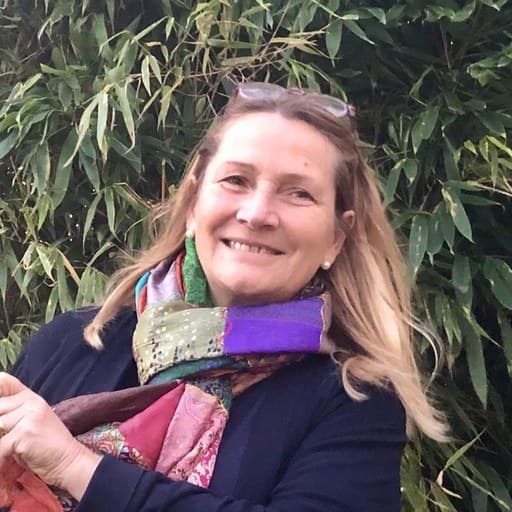
About the author
Valérie Fabre · Founder & Director, Harmonika Institute
Valérie Fabre founded Harmonika Institute in 2025, after a decade seeing clients in private kinesiology practice and, before that, thirteen years in international trade. A French-born polyglot who now splits her time between Dallas and Miami, she sets the school's curriculum and editorial standards and champions ethical, in-person training.
Read more about Valérie Fabre →