Journal · Career change · Holistic practice
Portable Careers for Military Spouses: Holistic Certification Paths
Private holistic certifications cross state lines intact. State-regulated practice does not. Which modalities survive a PCS, which break, and how to plan.
Valérie Fabre, Founder & Director, Harmonika Institute · April 20, 2026 · 10 min read

Key takeaways
- The certificate always travels. A private certification is a document from a school, not a grant of authority, so no state can invalidate it. What changes at the state line is whether the activity it describes is legal to sell there without a licence.
- Two families of modality are genuinely risky for a moving household. Anything involving soft-tissue work for money can fall inside massage licensure, and holistic naturopathy practice is prohibited outright in Florida, South Carolina and Tennessee. Both are common duty-station states.
- The safest portable options are conversational and group-format. Coaching, mindfulness instruction, expressive arts facilitation, NVC and Enneagram work carry almost no licensure exposure in most states, and they rebuild a client base faster after a move.
- Rebuild time is the real cost, not tuition. Budget four to eight months per relocation before session income returns to where it was. Practitioners who plan for that survive the second PCS. The ones who assumed a clean transfer usually stop after it.
- Spouse licensure-transfer support generally targets licensed professions. Most holistic certifications are not licences, so those routes typically do not apply. Ask the installation office directly rather than assuming either way.
You have eighteen months at this duty station, possibly twenty-four, and the orders after that are a rumour. You want work that comes with you instead of being abandoned in a box with the curtain rods. Holistic practice looks like an obvious fit, and in one important sense it is: the credential is portable by construction. But the legal permission to use it is not, and the difference between those two things is where military spouses in this field lose money.
So this article is about portability, specifically. Not about whether holistic work suits you, and not about how to start a practice. It is about which of these modalities still function after a PCS to a state you did not choose, and which ones quietly become unsellable the week the moving truck arrives.
Why a private certification cannot be revoked at a state line
Start with the mechanism, because it explains everything downstream.
When a state licenses a profession, it does two things at once. It defines an activity, and it makes performing that activity for compensation without permission illegal. A licence is permission from that specific state. Cross the border and the permission stops, which is why nurses, counsellors and massage therapists face a transfer process every time they move.
A private certification does none of that. Harmonika Institute, or any other private school, is attesting that you completed a defined curriculum. Nobody granted you a right, so nobody can withdraw one. Your certificate is exactly as valid in Killeen as it was in Tacoma.
That sounds like unambiguous good news, and for the paperwork it is. The complication is that many of the activities these certifications describe sit close to activities that are licensed somewhere. The certificate travels. The lawfulness of what you do with it does not.
Check before the move
Three questions, asked of the new state's boards before you list services: is this modality licensed here in its own right; does this state's massage practice act define the regulated activity broadly enough to include what I do; and does anything on my website describe an outcome that only a licensed professional may promise? The third one is what actually generates complaints. Rules differ by state and change, so verify each time rather than relying on what a colleague told you two duty stations ago.
The modalities that can stop working after a PCS
Two categories, and they are worth naming precisely rather than gesturing at.
Anything adjacent to massage licensure
Most states license massage, and their practice acts define the regulated activity in terms of manipulating soft tissue for compensation. Some states write explicit exemptions for energy-based or clothed practice. Others do not, and a few define the activity broadly enough that hands-on work of almost any kind for money sits inside it.
The modalities exposed here are reflexology, acupressure and digipressure, Chi Nei Tsang, and to a lesser degree hands-on energy work such as Reiki where contact is involved. Reflexology is the sharpest case: a handful of states regulate it in its own right, several fold it into massage licensure, and others are silent. Move from a silent state to a folding state and your practice needs a licence you do not have, which in most places means several hundred classroom hours and an exam.
That is not a reason to avoid these modalities. It is a reason to know, before you enrol, that they carry a relocation tax that conversational modalities do not.
Holistic naturopathy
Sharper still, and geographically specific. Naturopathy practice is prohibited in Florida, South Carolina and Tennessee. Those are not obscure states for a military family: Florida alone hosts a large share of U.S. installations, and it is one of the most common places for a household to land.
Understand also that two different things share this name. Licensed naturopathic doctors complete four-year accredited programmes and are licensed in a number of states. Holistic naturopathy is a private certification with no licence attached, which is what schools like ours train. Never present yourself as a naturopathic doctor or use "ND", anywhere, under any circumstances.
| Modality family | Licensure exposure | Survives a PCS? | What to check before you move |
|---|---|---|---|
| Coaching (life, wellness, holistic consultation) | None in any state | Yes | Business registration and local permits only |
| Mindfulness instruction | None | Yes | Nothing legal. Find a venue and a group. |
| Expressive arts facilitation | None, provided you never call it art therapy | Yes | Language on your site and intake forms |
| NVC, Enneagram, transactional analysis (non-clinical) | None | Yes | Nothing legal |
| Sound work, group format | Minimal | Yes | Venue insurance and noise ordinances |
| Energy work with hands-on contact | Massage acts in some states | Usually, with care | Whether the new state exempts energy practice |
| Aromatherapy, Bach flowers | Supplement and dietetics rules in several states | Usually, with care | What you may say about products, not the products |
| Reflexology, acupressure, Chi Nei Tsang | Massage licensure, sometimes standalone rules | Check every time | Whether a licence with hundreds of hours is required |
| Holistic naturopathy | Prohibited in FL, SC and TN | Not everywhere | Whether practice is lawful there at all |
What actually makes a modality portable
Licensure exposure is only half of it. The other half is how fast the work rebuilds, and that has nothing to do with the law.
A one-to-one practice built on regular clients is a slow asset. It takes a year to accumulate ten people who come monthly, and every one of them stays behind when you move. A group-format practice is a faster asset, because a sound bath or a six-week mindfulness course fills from a venue's existing audience rather than from your personal network. You can be teaching within six weeks of arrival if you find the right studio, community centre or family readiness group.
Then there is the portion of your work that does not need geography at all. Coaching is delivered by video routinely, which means a client acquired in San Diego can stay with you in Norfolk. That single fact makes the coaching and communication families the most genuinely portable work in this field, and it is why they come up repeatedly in the recommendations below.
The retained third
Practitioners who move well tend to carry roughly a third of their income across a relocation, and it is almost always the remote-compatible third. Build that deliberately. If your practice is 100% in-person one-to-one, every PCS resets you to zero. If a third of it is coaching or group programmes you can run by video for a transition period, you land with something already running while you rebuild the local half.
What to train in, and why
Three recommendations, with the reasoning rather than a list.
Holistic life coaching or wellness coaching. No licensure anywhere, remote-compatible, and the client relationship survives a move intact. It also matches a skill many military spouses already have in quantity: managing uncertainty and helping other people manage theirs. The honest downside is that this is the most crowded corner of the field and client acquisition is the hard part.
Mindfulness instruction. Group format, venue-based, rebuilds fastest of anything here. Installations, schools and employers near bases run wellness programming and buy this externally. The caution is that credible mindfulness teaching demands a sustained personal practice and supervised teaching hours, which a short certificate does not supply.
Expressive arts facilitation. Strong fit for family and children's programming, group format, no licensure exposure. Be scrupulous about language: this is facilitation, never art therapy, and the ATR credential is a separate licensed path that no private school grants.
The relocation line item
Tuition for a serious in-person certification in this field commonly runs from the low thousands to around ten thousand dollars, depending on modality and hours. Budget separately for what a move costs a working practice: new business registration, a fresh liability insurance schedule, a website rewrite for the new market, and four to eight months of reduced session income while you rebuild locally. Practitioners who price only the tuition are surprised twice.
Timing the training against the orders
The scheduling problem is real, and worth being blunt about. Cohort programmes run on a fixed calendar. Ours combine 1 to 18 teaching days depending on the program, each taught either fully in person or fully live online, with personal study between sessions. Check the cohort dates against the time you have left at a station before you enrol; if the orders move mid-program, you are the one who absorbs it.
- 1
Count backwards from the expected transfer
Take the programme length, add two months of buffer, and compare that against your remaining time. If it does not fit, wait for the next station rather than starting something you will abandon at module four.
- 2
Ask what happens if you have to stop
Before enrolling anywhere, ask directly: if orders come mid-programme, can I complete at another location, defer to a later cohort, or receive a partial refund? Get the answer in writing. A school that has thought about this will answer immediately.
- 3
Log every practice hour with documentation
Hours are the portable proof of competence in an unlicensed field. Record date, session length, client type, supervisor if any. A logbook that crosses three states is more persuasive to an insurer or a venue than any certificate.
- 4
Set up the remote third before you need it
Start at least one coaching or group offering that works by video while you still have a stable local base. It becomes your income floor during the next transition.
Licensure-transfer support and why it usually does not apply here
Spouse employment programmes and state-level licensure-transfer arrangements exist, and they are genuinely useful. They are also, by design, aimed at licensed professions: nursing, teaching, cosmetology, counselling, real estate. The whole point of those arrangements is to shorten the process of getting a new state's licence.
Most holistic certifications are not licences, so there is generally nothing to transfer and nothing for such a programme to expedite. That is not a loss. It reflects the fact that you did not need permission in the first place.
Where it does matter is the exception: if you train in a modality that a particular state licenses, such as massage, then you are in licensed territory and those routes may become relevant. Rules, eligibility and coverage vary and change, so ask your installation's spouse employment office about your specific situation rather than working from a forum post. Do not assume coverage, and do not assume its absence.
When this is not the right plan
An honest section, because the alternative is selling something to someone it will not serve.
If your household needs your income to be predictable month to month, this is a poor fit. Holistic practice is self-employment with a slow ramp, and a relocation cycle interrupts the ramp before it completes. Two years in one place is roughly the minimum for a practice to become properly profitable, and a faster rotation may never clear it.
If you are also the primary parent during deployments, look hard at the hours. Evening and weekend sessions are when clients want to come, and that is exactly when a single-parenting stretch has no slack in it.
And if what you want is a credential an employer will recognise on a résumé at any base in the country, a private certification is the wrong instrument. It is a strong basis for self-employment and a weak one for hiring.
Questions on this topic.
Does my holistic certification need to be renewed when I move states?+
No. A private certification is not issued by a state, so no state renews or recognises it. Nothing about the document changes when you cross a line. What can change is whether the work it describes requires a licence where you now live, and whether your liability insurance covers you in the new state. Check the insurance, since some policies are written by state schedule and need updating after a move.
Can I keep clients from my previous duty station?+
For conversational modalities, yes, and many practitioners do. Coaching, NVC work and Enneagram sessions transfer to video without much loss. Hands-on modalities obviously cannot. This is the single strongest practical argument for including at least one remote-compatible modality in your training plan if you expect to move repeatedly.
Is it worth training if we move again in a year?+
It depends on the programme length more than anything else. A four-month in-person certification with a year on the clock is reasonable. A ten-month one is not, unless the school will let you complete at another location. The bigger risk is not the training but the practice: a year is rarely long enough to reach a stable client base, so plan on the first station being where you train and the second being where you build.
Which single modality is the most portable?+
Holistic life coaching, on the narrow question of portability. No licensure exposure in any state, works by video, and clients follow you. That said, portability is one criterion among several, and the coaching market is crowded. A less portable modality you are genuinely suited to will usually outperform a portable one you are not.
What if I train in a state where a modality is legal and move somewhere it is not?+
Your training is not wasted, but you may have to stop selling that specific service. Holistic naturopathy is the clearest case, since practice is prohibited in Florida, South Carolina and Tennessee. Most practitioners in that position pivot the adjacent skills into an unregulated framing such as lifestyle and dietary-pattern education, which is a genuine option but a smaller one. Confirm the boundaries with the new state's board before you advertise anything.
Tags:
Career changeHolistic practice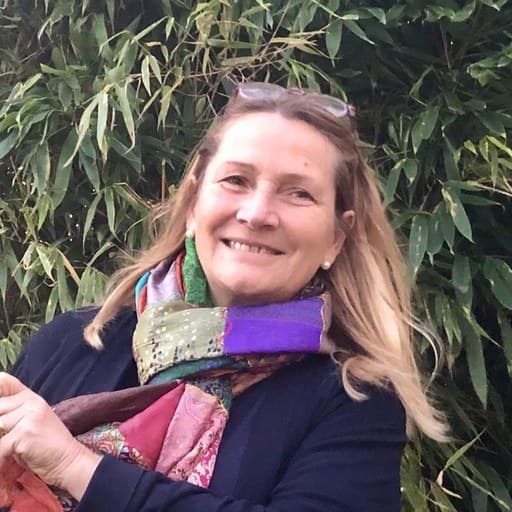
About the author
Valérie Fabre · Founder & Director, Harmonika Institute
Valérie Fabre founded Harmonika Institute in 2025, after a decade seeing clients in private kinesiology practice and, before that, thirteen years in international trade. A French-born polyglot who now splits her time between Dallas and Miami, she sets the school's curriculum and editorial standards and champions ethical, in-person training.
Read more about Valérie Fabre →