Journal · Reflexology · Career path
How to Become a Reflexologist in the U.S.: Steps, Hours, Rules and Pay
How to become a reflexologist in the U.S. in 6 steps: state category, 110 to 300 training hours, supervised practice, insurance, first clients and real pay.
Valérie Fabre, Founder & Director, Harmonika Institute · September 13, 2026 · 9 min read
Key takeaways
- Six steps, roughly a year. Decide your scope, find your state's category, train (110 hours minimum for the national exam, 200 to 300 is the standard), log supervised practice, insure yourself, then book your first ten clients.
- Your state decides whether the certificate is enough. About 10 states have reflexology-specific rules, a larger group treats reflexology as massage and requires that licence, and the rest say nothing.
- Training costs $1,800 to $4,500. Our May 2026 survey of U.S. providers found full certifications averaging about $2,500 over 12 to 28 contact days. Ours is 9 classroom days, 63 teaching hours, $3,500.
- Pay depends on the setting more than the certificate. A spa employee earns an hourly wage plus tips; a solo practitioner with 15 sessions a week at $80 grosses about $55,000 a year before rent and tax.
- Most reflexologists are part-time. Plan for a second income during the first 12 to 18 months, and for the third month, when the launch energy is gone and you have four regular clients.
About 90,500 people a month search the word “reflexologist”, and only 110 search “how to become a reflexologist”. Read that gap as a market: plenty of people want a session, very few are planning to give one. If you are one of the 110, here is the path as we lay it out for our own students, with the hours, the state rules as categories, the cost of training, and the income you can honestly expect at each stage.
We keep the state-by-state detail out of this article; it changes, and we maintain it separately in our guide to reflexology certification state rules, hours and cost. What follows is the sequence, in order.
What does a reflexologist actually do, and not do?
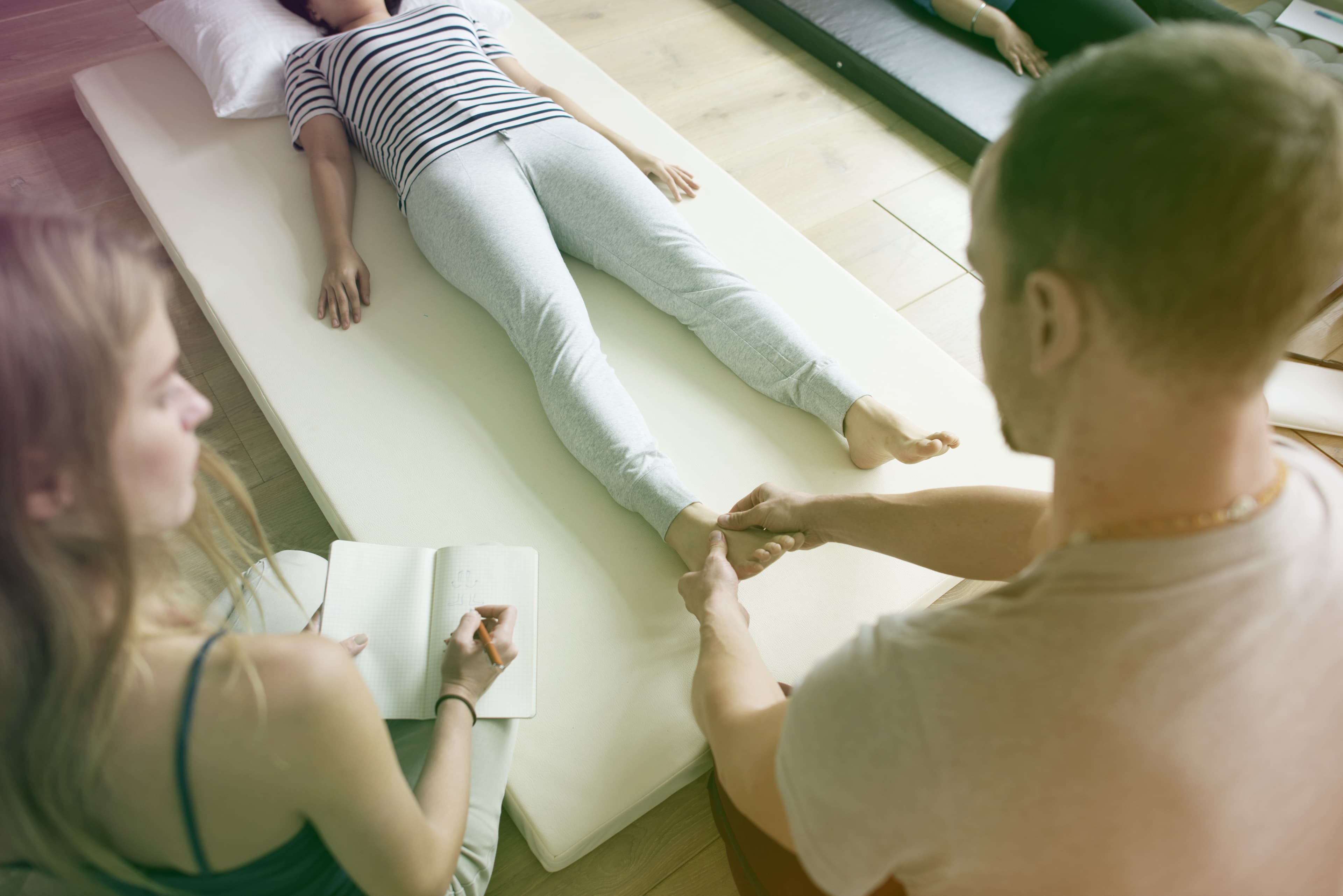
A reflexologist gives structured pressure sessions on the feet, hands and ears, following a chart, for relaxation. That is the job. It is touch-based, clothed except for feet, 45 to 60 minutes, usually on a reclining chair or a table. A reflexologist does not diagnose, does not treat a condition, does not work soft tissue above the ankle or wrist (that is massage, and licensed), and uses fingers only. Our program sheet lists what a graduate has learned in six lines, and the first three are maps, technique and a full one-hour foot protocol; the last three are hand and ear protocols for clients with foot contraindications, “reading state-by-state regulation in the U.S.”, and building a practice. That is a fair summary of the trade.
Step by step: how do you become a reflexologist?
- 1
Decide your scope before you choose a school
Feet only, or feet, hands and ears? Standalone, or added to a massage licence or another modality? A reflexology-only practitioner in a state that treats reflexology as massage has a licensing problem; a massage therapist adding reflexology does not. Settle this first, because it decides the next step.
- 2
Find your state's category
Three categories exist: states with a reflexology-specific registration or exemption (North Dakota, Tennessee and Washington are long-standing examples), states that fold reflexology into massage law, and states with no rule. Write to your state board and keep the reply. It decides whether a certificate alone lets you take paying clients.
- 3
Choose training by hours and supervised practice
The American Reflexology Certification Board (arcb.net) requires a minimum of 110 hours of reflexology-specific training to sit its exam; the schools our survey rated highest teach 200 to 300 hours. Ask how many of those hours are supervised sessions on real feet. Below 50, walk away.
- 4
Log the practice
Sessions on classmates, then on members of the public, recorded in a session journal with what you observed and what you adjusted. In our program that practice starts in class with an instructor correcting you and continues in personal study between sessions. This is where technique becomes competence; it cannot be shortened.
- 5
Certify, then insure
Your school's certificate first; the ARCB exam if you want the national credential (some states and many employers value it). Then liability insurance, which is inexpensive for reflexologists and non-negotiable before your first paid session.
- 6
Book the first ten clients
Friends of classmates, a spa that needs a Saturday practitioner, a workplace wellness morning. Ten paid sessions, with feedback, before you print a price list. The first ten teach you more about your own practice than the last twenty classroom hours did.
Which state category are you in?
One of three, and the difference is not small. In the first category, states with a reflexology-specific pathway, a registration or an exemption from massage law lets you practise on your certificate, sometimes with an hours threshold or the ARCB exam as the condition. In the second, reflexology is massage in the eyes of the law, and a foot session for money without a massage licence is unlicensed practice, whatever your certificate says. In the third, nothing is written, which means your certificate and your insurance are your only credentials and the situation can change with one bill. Our May 2026 survey put the first category at roughly ten states; the second is larger.
Check your state
The category is the single fact that most changes your plan, and it is the one prospective students most often skip. Get it in writing from the state board, not from a school's admissions page, including ours. If you are in a massage-law state and do not hold a massage licence, your realistic options are a dual path or a move. Our program teaches the categories in Module 5, but the board is the authority.
How many training hours do you need, and what do they cost?
Between 110 and 300 hours, and the number that matters is the supervised share. Our May 2026 survey of U.S. providers found the leading programs ranging from about 85 workshop hours in a fragmented four-phase model to 315 hours in a continuous program, with full certifications that prepare for the national exam priced from $1,800 to $4,500 and averaging about $2,500 over 12 to 28 contact days. The survey's own note on format is worth repeating: the market is “predominantly in-person or hybrid” because “hands-on practice is required for ARCB candidacy”, and pure-online programs are weaker positioning. Reflexology is a touch skill, and a screen cannot correct your thumb.
| Tier | Typical hours | Price range | Supervised practice | Sits the ARCB exam? |
|---|---|---|---|---|
| Weekend or online introduction | 12 to 30 | $200 to $700 | None | No |
| Fragmented workshop series | 85 to 130 | $1,800 to $2,800 plus exam fee | Some, between workshops | Usually |
| Continuous practitioner program | 200 to 315 | $2,400 to $4,500 | 50 to 100 hours | Yes |
| Reflexology added to a massage licence | 100 to 200 on top of 500+ | $1,500 to $3,000 | Within the clinic | Yes |
What it costs
Our in-person reflexology program is built around live classroom teaching: 9 classroom days (63 teaching hours), plus about 58 hours of personal study between sessions, for $3,500, in cohorts of ten. Add travel to one of our 32 U.S. cities, a kit (a reclining chair or a portable table, $300 to $800), insurance, and a year of reduced income while you build. The tuition is the smaller half of the real cost; the full arithmetic is in our note on tuition versus total investment.
What does a reflexologist actually earn?
Less than the brochures imply, and it depends almost entirely on the setting. The Bureau of Labor Statistics does not track reflexology as an occupation; the nearest tracked trade, massage therapy, had a median wage in the mid-$50,000s in its most recent survey, and most reflexologists earn below that because most work part-time. The table gives the ranges we characterise for students, from practitioner reports and job listings in our ten primary cities; they are ranges, not quotes, and the top of each is rare.
| Setting | How you are paid | Typical range | What it takes |
|---|---|---|---|
| Spa or salon employee | Hourly wage plus tips, sometimes commission | $16 to $28 per hour | A massage licence in massage-law states; weekends |
| Contractor in a massage or wellness clinic | 40 to 60 percent of the session fee | $35 to $60 per session | Referrals from the clinic; your own insurance |
| Solo practice, home or rented room | Full session fee, minus rent and marketing | $60 to $120 per session; 8 to 20 sessions a week | 12 to 18 months of building; a second income meanwhile |
| On-site chair sessions for employers | Hourly or per event | $75 to $150 per hour | One employer contact and a portable chair |
| Mobile sessions in homes and care settings | Per session plus travel | $50 to $90 per session | A car, flexibility, and patience with scheduling |
The honest number
A solo practitioner with 15 sessions a week at $80, 46 weeks a year, grosses about $55,000 before rent, insurance, supplies and self-employment tax. Fifteen sessions a week is a full practice that takes most people more than a year to reach. In our cohorts, the third month is when most people wobble: the launch adrenaline is gone and they have four regular clients. The ones who planned for that month keep going.
Session pricing itself, city by city, is a separate subject and we keep the figures current in our reflexology session rate benchmarks by U.S. market.
How do you find your first clients?
Through the people who watched you train. Classmates' families and the members of the public who came to your practice sessions. Then one institutional door: a spa that needs a Saturday, a gym, an employer's wellness morning, a care home that wants a monthly visit. Reflexology has one advantage over most modalities here: everybody understands what a foot session is, and almost everybody wants one. What you are selling is relaxation, priced like a massage, and your marketing copy should say exactly that and nothing about conditions.
- Month 1 to 3: ten paid sessions from your training network, feedback after each, one price.
- Month 4 to 6: one institutional setting, a simple booking page, liability insurance certificate on the wall.
- Month 7 to 12: rebooking rate above 50 percent, a second setting, first price increase.
- Month 12 to 18: the decision: stay part-time, go full-time, or add a second modality.
How long does it take from zero to paying clients?
Around a year, if the training is continuous. A 200 to 300 hour program with supervised practice takes four to ten months depending on format; insurance takes a day; the first ten clients take a month or two. Fragmented workshop models stretch the same hours over two or three years, which is why our survey flagged the “continuous-cohort structure” as a differentiator. A weekend course gets you a certificate in two days and no clients, because nobody rebooks a practitioner whose thumb has never been corrected.
The step most people underestimate is the second one. Find your state's category before you pay a deposit anywhere, ours included. If you are in a massage-law state, read our note on whether you need a massage licence for touch-based work before you plan anything else.
Questions on this topic.
How long does it take to become a certified reflexologist?+
Four to ten months for a continuous program of 200 to 300 hours with supervised practice, plus a few weeks for the final evaluation and a month or two to book your first paying clients, so about a year from first class to a working practice. Fragmented workshop models spread the same hours over two or three years. Weekend courses hand out a certificate in two days, without the supervised practice that makes a practitioner bookable.
Do you need a licence to be a reflexologist?+
It depends on your state. About ten states have a reflexology-specific registration or an exemption from massage law; a larger group treats reflexology as massage, so a massage licence is required to take paying clients; the rest have no rule. A school certificate is private and is not a licence anywhere. Ask your state board in writing before you enrol, because the answer decides whether a reflexology-only path is viable where you live.
How much does a reflexologist make per hour?+
As a spa employee, roughly $16 to $28 an hour plus tips. As a contractor in a clinic, 40 to 60 percent of a $70 to $110 session. In solo practice, $60 to $120 per session before rent, insurance and tax, with the number of sessions per week deciding the year. On-site chair sessions for employers pay $75 to $150 an hour but are occasional. These are characterised ranges from practitioner reports, not official statistics; the Bureau of Labor Statistics does not track reflexology.
Is reflexology a good career?+
It is a good part-time practice and a hard full-time one. Demand is broad because everyone understands a foot session, training is shorter and cheaper than most bodywork, and the work is physically sustainable. Against that: most states offer no licence, income is capped by the number of hours your hands can work, and a full practice of 15 to 20 sessions a week takes over a year to build. Many practitioners pair it with massage or a second modality.
What qualifications do you need to be a reflexologist?+
No degree and no prerequisite in most states; a high-school education and the ability to work on your feet for hours are the practical requirements. The credential that matters is a training certificate from a program with supervised practice, ideally 200 hours or more, and, if you want the national credential, the ARCB exam, which requires at least 110 hours of reflexology-specific training. Some states add their own registration. Liability insurance is expected before you take paying clients.
Can you become a reflexologist online?+
You can buy a certificate online; you cannot learn the trade that way. Reflexology is a pressure skill, and the calibration of your thumb on a stranger's foot has to be corrected by someone in the room. The national board requires hands-on training for exam candidates, and our May 2026 survey found the U.S. market predominantly in-person or hybrid for that reason. Theory, anatomy and state rules can be studied at home; the sessions cannot.
What is the difference between a reflexologist and a massage therapist?+
Scope, licence and hours. A massage therapist is licensed in almost every state after 500 hours or more of training and may work soft tissue anywhere on the body. A reflexologist works the feet, hands and ears only, with finger pressure following a chart, after 110 to 300 hours, and holds a private certification rather than a licence in most states. In states that treat reflexology as massage, a reflexologist needs the massage licence too.
Do reflexologists need insurance?+
Yes, before the first paid session. Professional liability insurance for reflexologists is available through the same providers that cover massage and bodywork, is inexpensive, and is required by most spas, clinics and employers before they let you work on their premises. It covers claims arising from a session; it does not make an unlicensed practice legal in a state that requires a massage licence, so it is a complement to checking your state category, not a substitute.
Tags:
ReflexologyCareer path
About the author
Valérie Fabre · Founder & Director, Harmonika Institute
Valérie Fabre founded Harmonika Institute in 2025, after a decade seeing clients in private kinesiology practice and, before that, thirteen years in international trade. A French-born polyglot who now splits her time between Dallas and Miami, she sets the school's curriculum and editorial standards and champions ethical, in-person training.
Read more about Valérie Fabre →