Journal · Crystal Healing · Choosing a program
Crystal Healing Certification: What It Covers, What It Does Not
What crystal healing training actually teaches, where the evidence stops, the mineral safety nobody mentions, and how to practise this work without overclaiming.
Valérie Fabre, Founder & Director, Harmonika Institute · June 28, 2026 · 10 min read

Key takeaways
- Start with the hard part. There is no credible evidence that a mineral produces a physiological effect in the body. The controlled work that exists points at expectation and suggestibility, not at the stone.
- The training still teaches something real. Session structure, a shared language for intention, grounding, boundaries, and a ritual frame that reliably slows people down. That is a genuine skill set, and it is what you are buying.
- Cost spread is enormous and mostly meaningless. Online certificates run $50 to $300. In-person practitioner tracks run roughly $1,200 to $4,000. Price predicts supervision, not accuracy.
- Some stones are genuinely hazardous. Malachite, cinnabar, galena and stibnite carry heavy metals. Water and salt methods dissolve or degrade a long list of common minerals. Most cheap courses skip this entirely.
- Sourcing is the ethical problem nobody advertises. Much of the retail crystal supply comes through artisanal mines with documented labour and safety concerns, and the trade has almost no traceability.
A woman in Denver emailed us last year asking a question we wish more people asked: "If I train in this, am I going to end up saying things I don't actually believe?" She had been to two crystal workshops. One told her amethyst regulates the nervous system. The other told her to place a stone on someone's abdomen to address digestive issues. She is not a sceptic. She is someone who found the work calming and wanted to offer it honestly, and she could feel the gap between those two things widening.
This article is written for her. It covers what a crystal healing certification actually contains, where the evidence stops and why that matters practically rather than philosophically, the mineral safety content most courses leave out, the sourcing question, and how to run sessions that hold up when a sceptical client, a family member, or a regulator asks you what you are doing.
Where the evidence actually stands
Let's be direct, because everything else in this article depends on it. No mineral has been shown to emit anything that measurably affects human physiology at the distances and durations used in a session. Quartz is piezoelectric under mechanical stress, which is why it appears in watches and sensors, and that property does not transfer to a stone resting on someone's sternum. The frequently repeated claim that each stone has a characteristic vibrational frequency matched to an organ has no source behind it that survives checking.
The most-cited experimental work is a small study run by a British psychology team in 2001, in which participants handled either genuine quartz or an indistinguishable fake while primed to expect sensations. Both groups reported tingling, warmth and a sense of wellbeing at similar rates. What predicted the reported effect was not the material in the hand but how suggestible the participant was and how much they had been primed to expect.
What the evidence shows
Read that result carefully, because it is more interesting than "crystals don't work". People reliably reported real sensations. The sensations were real. The stone was not their cause.
Research on ritual and expectation has moved a long way since then. Open-label placebo studies, where participants are told outright that they are receiving an inert intervention, have still found improvements in self-reported symptoms in conditions like chronic back pain and irritable bowel. Ritual, attention and a plausible frame do something measurable. That is the mechanism you are working with, and it is not nothing.
A school that hides this is not protecting you. It is setting you up to be a person who cannot answer a direct question. You will meet a client's husband who works in engineering. You will meet a nurse at a wellness fair. If your only available response is that they are closed-minded, your practice is fragile, and it will crack somewhere around month eight.
So what does the training actually give you
Strip out the metaphysics and there is a real curriculum underneath. Most of a good crystal healing course is transferable session craft wearing a mineral costume.
You learn how to open a session so that a stranger lying on a table with their eyes closed feels safe. You learn a consistent intake: what brought them, what they want from the hour, what is off limits. You learn a physical grammar of placement, timing and stillness, and how to sit through eight minutes of silence without filling it. You learn how to close, which is the part beginners butcher, because someone who has been deeply still for fifty minutes needs a deliberate return before they drive home.
You also learn a vocabulary. Stones give clients a concrete object to attach an intention to, and that turns out to matter. "I want to be less reactive with my daughter" is abstract. Choosing a specific stone, naming the intention over it, and carrying it in a pocket for three weeks is a behavioural anchor that people actually use. Anthropologists would recognise this immediately. It works the way a wedding ring works.
From the training floor
The students who struggle most are not the sceptics. Sceptics adapt fast once they see the session craft. The ones who struggle are students who arrived certain, learned only the correspondence tables, and have no fallback when a client says "I felt nothing at all." Certainty is brittle. Craft is not.
The geology most courses skip
A serious programme spends real hours on mineralogy, and it is one of the fastest ways to sort providers. Ask what the course teaches about crystal systems, hardness, formation environment, and treatment identification. If the answer is a blank, you are looking at a correspondence-chart course.
The practical content includes the seven crystal systems and why habit and cleavage differ; the Mohs scale and what a hardness of 2 means for a stone you plan to handle and clean weekly; formation categories, since a hydrothermal quartz and a metamorphic garnet arrive by very different routes; and treatment identification, which is where a lot of buyers get quietly defrauded.
That last one is worth spelling out. Most commercial citrine is heat-treated amethyst. Goldstone and cherry quartz are manufactured glass. Aqua aura is quartz coated with vaporised metal. Much bright blue and green "howlite" and "turquoise" is dyed magnesite. None of this is a scandal if disclosed, and almost none of it is disclosed. A practitioner who cannot tell a dyed agate from a natural one is not in a position to advise anyone about what they are buying.
Safety: the part that is actually medical
Here is the irony. The genuinely physical risks in this modality come from the minerals themselves, and they are almost never covered in weekend courses.
Hard safety rules
Never make a stone infusion for drinking. Direct-immersion "elixirs" are the single most dangerous practice in this field. Malachite is a copper carbonate, cinnabar is mercury sulfide, galena is lead sulfide, stibnite is antimony, realgar and orpiment are arsenic sulfides. Suggesting a client ingest anything at all also puts you well outside a non-licensed scope.
Water and salt destroy stones. Selenite and halite dissolve. Pyrite oxidises and can weep sulfuric acid. Malachite, azurite, turquoise, lapis and hematite degrade. Salt burial pits polished surfaces. If a course teaches salt-water cleansing as a universal method, it has not done its homework.
Handle raw specimens with respect. Cutting, grinding or tumbling raw material releases silica dust. Some collectors' pieces are mildly radioactive. Wash your hands after handling raw sulfides, and keep them off skin during long placements.
Rules on what a non-licensed practitioner may do or say differ by state and change. Confirm yours with the relevant state board before you take a paying client.
Notice that everything in that box is falsifiable, teachable, and useful. It is also the content that distinguishes a practitioner from a person with a certificate.
Where your stones came from
This is the question the industry least wants asked. The retail crystal supply chain has almost no traceability, and investigative reporting over the last several years has repeatedly traced popular stones back to artisanal and small-scale mines with serious labour and safety problems. Rose quartz and much of the tumbled stone market flow through Madagascar. Amethyst comes largely from Brazil, Uruguay and Zambia. Lapis is concentrated in Afghanistan, where control of mine revenue has been a documented conflict issue. Jade from Myanmar has been linked to landslide deaths at scale.
None of that means you cannot practise. It means you owe your clients an honest answer when they ask where a stone came from, and it means sourcing is a professional competency rather than a mood. In practice: buy from dealers who name a mine or a region rather than "ethically sourced" with no detail; prefer U.S. material where you can get it, since Arkansas quartz and Oregon material have documented origins; ask at gem shows, where you are often two steps from the miner rather than eight; and be willing to say "I don't know" out loud when you don't.
What certification costs, and what it buys
| Format | Typical hours | U.S. price range | Mineralogy taught? | Supervised client sessions |
|---|---|---|---|---|
| Online self-paced certificate | 6–20 | $50–$300 | Rarely | None |
| Weekend workshop | 12–18 | $250–$600 | Minimal | Classmates only |
| Multi-module in-person course | 60–120 | $1,200–$2,800 | Varies widely | Some, usually classmates |
| Cohort practitioner track | 150–300 | $2,500–$4,500 | Expected | Logged hours on real clients |
| Add-on within a broader energy programme | 20–40 | Bundled | Varies widely | Shared with the main modality |
The honest number
Very few people in the United States earn a full living from crystal work alone. Session rates run roughly $60 to $120 in most markets, and the practitioners who make it work almost always pair it with something else: sound work, bodywork, coaching, or retail. Budget your training decision on that assumption rather than on a projection where crystal sessions carry the whole practice. Add $400 to $1,500 for a working stone collection, which nobody mentions in the brochure.
There is no licence to buy here and no government body accrediting anything, so the certificate itself carries no external weight. What it can carry is documented hours, a named teacher, and a curriculum you can show an insurer or a studio manager. If you want the broader argument about which credentials mean anything in this field, we've written that up in what counts as a real credential.
What you may say, and what you may not
Language is where non-licensed practitioners get into actual trouble, and crystal work attracts sloppy language more than most modalities. The test is simple: describe the experience you offer, never a mechanism and never an outcome for a named condition.
| What people say | Safe? | What to say instead |
|---|---|---|
| "Amethyst helps with insomnia." | No | "Many clients use a bedside stone as part of a wind-down routine." |
| "This will rebalance your immune system." | No | "This is a rest and reflection session. It doesn't act on the body." |
| "Crystals vibrate at frequencies that match your organs." | No | "Stones are a focus for attention and intention. That's how I work with them." |
| "Stop taking your medication and try this instead." | Never | Refer out, immediately, and document that you did. |
| "Most people describe the session as deeply calming." | Yes | Keep it. It's accurate and it sells honestly. |
| "I offer a structured hour of quiet with guided intention-setting." | Yes | Keep it. Put it on your website verbatim. |
The scope rules that apply to any non-licensed practitioner apply here in full, and they are worth reading properly in our scope of practice guide. One addition specific to this modality: if your sessions involve resting stones on a clothed body, several states define hands-on work for compensation broadly enough that it can brush against massage licensure. Check before you charge.
Practising with integrity, concretely
- 1
Write your one-paragraph answer, now
Before you enrol, draft what you will say when someone asks whether this is real. Something like: "There's no evidence a stone acts on the body. What I offer is a structured hour of stillness with a focusing object, and people find that useful." If you cannot say that comfortably, this modality will be uncomfortable for you.
- 2
Learn the minerals as minerals
Know hardness, solubility, toxicity and treatment for every stone you put in a client's hand. This is study, not vibes, and it is the fastest credibility you will ever earn.
- 3
Build a written client agreement
State plainly that sessions are not medical care, do not replace it, and do not address any diagnosed condition. Have people sign it. It protects them and it protects you.
- 4
Get the hours on strangers
Twenty sessions with people who did not sign up for a course. Friends will tell you it was lovely. Strangers will tell you the truth.
- 5
Pair it with something structural
Very few practices run on crystal sessions alone. Decide early what the second thing is, whether that's sound, breath, coaching or retail, and train for it deliberately rather than drifting into it.
Working this way costs you nothing that matters. You lose the claims you were never entitled to make. You keep the session, the ritual, the attention and the object, which is what clients came for anyway. Our crystal healing program is built on that footing: in person, small cohorts, mineralogy taught properly, and no sentence in the curriculum you would be embarrassed to defend.
Questions on this topic.
Is crystal healing certification recognised anywhere?+
Not by any government body, in any U.S. state. There is no board, no exam, no licence, and no accreditation standard to measure a course against. Private schools and membership associations issue certificates, and their value is entirely reputational. What a certificate can do is document hours and curriculum for a liability insurer or a studio that wants to see training before letting you rent a room. Treat any provider advertising an "accredited" or "licensed" crystal certification with real suspicion, and ask exactly who the accrediting body is.
Can I get insured as a crystal healing practitioner?+
Usually yes. Several U.S. insurers write general and professional liability policies covering energy-based practice, and crystal work is commonly listed. They will typically want to see a training certificate with hours, and they will exclude anything that looks like medical treatment or manipulation of soft tissue. Read the exclusions before you assume you are covered for the way you actually work, especially if you use touch or if you sell stones alongside sessions.
Do I need to buy an expensive collection to start?+
No. A working set of fifteen to twenty stones covers almost everything a beginner does, and tumbled material is inexpensive. What costs money is the drift into collecting: large display specimens, rare localities, museum pieces. That is a hobby expense, not a business one. Spend on a few well-documented pieces from dealers who can name the mine rather than on volume, and be honest with yourself about which purchases are for clients and which are for you.
What if a client asks whether I actually believe in this?+
Answer honestly and specifically. Something close to: "I believe the session works. I don't claim the stone is doing something to your body, and I'd be careful of anyone who does." Most clients respect that far more than certainty, and the ones who wanted certainty were going to be a difficult fit anyway. Practitioners who rehearse this answer before their first paying client have a much easier first year than those who improvise it under pressure.
Can I combine crystal work with another modality in one session?+
Yes, and most working practitioners do. Stones pair naturally with sound, breath and other energy-family work, and combining gives you a fuller hour and a better rate. Two cautions. Keep the scope rules of the strictest modality you are combining, and be clear in your session description about what the client is actually buying, so nobody books expecting one thing and receives another.
Tags:
Crystal HealingChoosing a programCertification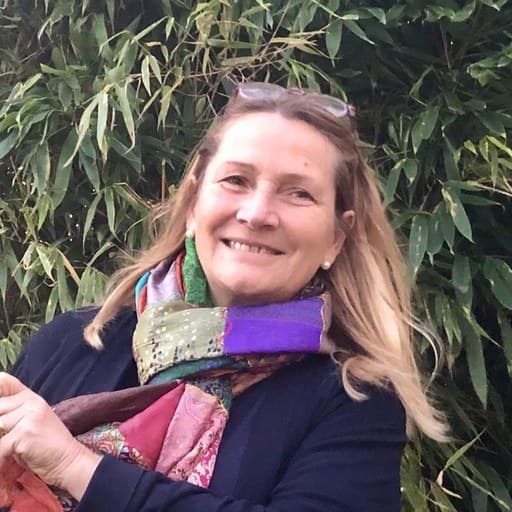
About the author
Valérie Fabre · Founder & Director, Harmonika Institute
Valérie Fabre founded Harmonika Institute in 2025, after a decade seeing clients in private kinesiology practice and, before that, thirteen years in international trade. A French-born polyglot who now splits her time between Dallas and Miami, she sets the school's curriculum and editorial standards and champions ethical, in-person training.
Read more about Valérie Fabre →