Journal · Cost · Certification
Cheap vs Credible: Why a $199 Certification Costs More Long-Term
What $199 can and cannot buy in faculty time, the situations where a cheap course is genuinely the right purchase, and the costs that arrive later.
Valérie Fabre, Founder & Director, Harmonika Institute · June 6, 2026 · 10 min read

Key takeaways
- The arithmetic is the argument. At $199 with 40 people enrolled, a course collects about $8,000 in total. That has to cover filming, platform, marketing, refunds and profit. Roughly two to six hours of real instructor time per cohort is what's left, shared by everyone.
- Cheap isn't the problem. What cheap forbids is. Observed practice, small groups, individual correction and honest assessment all cost faculty hours per student, and no price point below a few hundred dollars can carry them.
- Sometimes $199 is the correct decision. Testing whether you actually like the work, adding one technique to a practice you already run, or learning something for your own use. In all three cases you are buying information, not a career.
- The later costs are the real ones. Insurance refusals, retraining when you discover the certificate doesn't hold, and the twelve to eighteen months of a stalled launch are where the money actually goes.
- If cash is genuinely tight, sequence rather than downgrade. A cheap taster now plus a serious programme in eighteen months beats a mediocre $1,200 course that leaves you neither trained nor curious.
There's a version of this article that sneers at people who buy a $199 certification, and it would be both unfair and wrong. Most people who buy one are not naive. They have looked at a $6,000 programme, looked at their bank balance, and made a rational decision with the money in front of them. The problem isn't the buyer's judgement. It's that the price tag hides what it is physically impossible to include at that price, and nobody selling it has any reason to tell you.
So let's do the arithmetic out loud, in both directions. What $199 can genuinely deliver, where it runs out, and the cases where it is the smartest purchase available to you.
What $199 buys in instructor hours
Start from the seller's side, because that's where the constraint lives.
A typical low-cost online certification enrols somewhere between 30 and 200 students per intake. Take a friendly case: 40 students at $199 is $7,960 gross. Now subtract what comes off before anyone teaches anything. Payment processing and platform fees run 3 to 8 percent. Paid acquisition, which is how most of these courses find buyers, commonly eats 20 to 40 percent of revenue. Refunds under a money-back guarantee take another slice. Video hosting, email systems and a support inbox all cost something.
Call it 50 percent gone, generously. That leaves roughly $4,000 for content, teaching and profit, across 40 students.
An experienced practitioner-instructor in the U.S. bills between $75 and $250 an hour. Even at the low end, and even assuming zero profit, that's about 50 hours of instructor time per cohort of 40. Seventy-five minutes per student, and it has to include building the course in the first place.
In practice, the way that maths gets solved is obvious: the teaching is recorded once and sold many times, and live instructor contact drops to zero or near it. That is not a scam. It's an entirely coherent product. It just means you are buying a library, not a training.
The honest number
One hour of an instructor watching you work, stopping you, and making you do it again costs the school $75 to $250. If your programme includes ten such hours, that single line is already $750 to $2,500 before rent, admin, or anyone's salary. Any price that sits below that number is telling you, arithmetically, that those hours are not in the box.
The four things price makes impossible
Cheap training is not worse because it is cheap. It is worse when it needs to contain things that only faculty hours can buy. There are four of them, and they're the same four in every modality.
Being observed working
You cannot see your own hands, your own pacing, or your own face when a client says something heavy. Someone else has to. The single largest difference between a practitioner who is competent at month six and one who is still guessing at month eighteen is how many times a knowledgeable person watched them work and interrupted.
Being corrected in the moment
Feedback three days later on a video you uploaded is not the same instrument. The correction has to land while your hands are still in position, because what you are learning is partly non-verbal and doesn't survive translation into a written note.
Working with people who are not your classmates
Classmates are forgiving, motivated, and already convinced. A stranger who is sceptical, uncomfortable, or in pain behaves completely differently, and everything difficult about practice lives in that gap.
Real assessment
A multiple-choice quiz you can retake until you pass is a completion record, not an assessment. Assessment means someone with judgement decided you were ready, and was willing to decide you weren't. That decision is expensive because it requires a qualified person to spend attention on you specifically, and because it costs the school revenue every time the answer is no.
From the training floor
People who arrive with a cheap certificate and then train properly almost never say the cheap course taught them wrong information. They say something more specific: they knew the sequence perfectly and froze the first time a real person cried. The theory transferred. The composure didn't, because composure is built by being watched and surviving it.
When a cheap course is the right purchase
Now the other side, and it matters, because there are at least four situations where spending $199 is the better decision and spending $6,000 would be a mistake.
You are testing whether you like the work. This is the strongest case. You think you might want to do breathwork facilitation, but you have never facilitated anything. A cheap structured course plus a few in-person sessions as a client will tell you more in six weeks than a year of reading. Roughly a third of people who investigate a modality seriously discover they like receiving it and don't like giving it. Finding that out for $199 rather than $6,000 is a good trade, and it is information you cannot get any other way.
You already hold a licence and want one technique. A licensed massage therapist adding a specific stretch protocol, or a nurse learning a breathing sequence for their own patients within their existing scope, is not buying a career. They are buying a technique to bolt onto a platform that already has clients, insurance, a room, and supervised clinical judgement. The expensive parts are already paid for.
You want it for yourself. Plenty of people take a Reiki Level I or an EFT course with no intention of practising professionally. For personal use, self-regulation, or working with your own family, a short course is proportionate and the certificate is irrelevant.
You need a specific gap filled. You trained properly three years ago and want a focused twelve-hour course on note-taking, contraindications in pregnancy, or one instrument you never learned. Narrow, cheap, and correct.
What these four have in common: none of them is trying to convert the certificate into income from strangers. The moment that is the goal, the arithmetic above starts to bite.
The costs that arrive eighteen months later
The reason a cheap certificate can end up more expensive is not moral. It's that several bills are deferred rather than avoided, and they land at the point where you have the least tolerance for them.
| Deferred cost | When it lands | Typical size | Avoidable? |
|---|---|---|---|
| Insurance refused or restricted | Before your first paying client | Blocks practice entirely, or forces retraining | Check first |
| Retraining with a credible provider | Month 8 to 24 | $2,000–$8,000, plus the original fee written off | Partly |
| Venue or clinic declines to rent to you | When you look for a room | Home practice only, lower rates, zoning limits | Partly |
| Slow client acquisition from low confidence | Months 3 to 12 | The largest cost of all, and invisible | No |
| Underpricing because you doubt your own training | Year 1 to 2 | $10,000+ in forgone revenue at 8 sessions a week | No |
| Scope mistakes from thin legal training | Unpredictable | Complaint, insurer dispute, or an ended practice | Yes |
Rows four and five dwarf everything else, and they never appear on anyone's comparison spreadsheet because they aren't invoices. A practitioner who charges $70 instead of $110 for two years, because privately they aren't sure they're any good, has spent more than the difference between any two training programmes in the country.
Check insurability first
Professional liability insurers usually want a named modality and documented training hours before they will write a policy. A certificate with no stated hours, or hours below what an insurer expects, can leave you uninsurable in that modality. Do this check before you enrol anywhere, at any price. Rules and insurer criteria vary and change, and a private certificate never functions as a licence where a state requires one.
A fair test for any low-cost course
Not all cheap courses are the same, and some are honestly built and honestly described. Here is how to tell within about ten minutes.
- 1
Does it state contact hours as a number?
An honest cheap course says "14 hours of recorded instruction". A dishonest one says "comprehensive professional training" and never gives a figure. The absence of a number is the signal.
- 2
Does it claim you'll be ready for paying clients?
A $199 course that says "a solid introduction, and you'll want supervised hours before you charge" is being straight with you. One that promises a full practice is selling something the price cannot contain.
- 3
Is there a named human teaching it?
Named, with traceable training and a practice you can look at. "Our expert team" is not a name.
- 4
Does it tell you what it doesn't cover?
Scope limits, contraindications, when to refer out, what you may not legally say. Any course that omits this entirely is leaving out the part that keeps you safe, whatever it costs.
- 5
Is there a level ladder waiting?
If the $199 is clearly the entry rung of a stack that reaches $4,000 across five tiers, you are not buying a cheap course. You are buying the first payment of an expensive one.
If the money genuinely isn't there
This is the part that most articles on this subject skip, and it's the only part that helps if you're the person actually short of cash.
The worst outcome isn't buying cheap. It's buying in the middle: $900 to $1,800 for a programme that has neither the honesty of a $199 taster nor the faculty hours of a serious one. That range is where the most disappointment lives, because the price is high enough to feel like a commitment and low enough to guarantee the four missing things.
Better strategies, roughly in order of how often they work:
Sequence deliberately. Take the cheap course now, explicitly as reconnaissance. Give yourself a decision date twelve to eighteen months out. Save toward the real programme in the meantime. You'll arrive knowing the vocabulary, which makes the serious training land harder.
Ask about instalments before assuming you can't afford it. Most in-person schools structure payment across the length of the programme. Ask what the terms are, what the refund policy is, and what happens if a cohort is postponed. Ask before you decide the number is out of reach.
Train in one thing, not two. The instinct when money is short is to buy several cheap certificates to look more employable. It has the opposite effect. One credential with real hours behind it outperforms four thin ones every time.
Count the opportunity cost honestly, in both directions. A serious programme costs time you could be earning. So does a stalled launch after a weak one. Neither is free.
The comparison that actually works
Forget total price for a moment. Divide the fee by the number of hours in which a qualified person will watch you work and correct you. That number, cost per observed hour, is the only figure that predicts whether you can do the job at the end.
A $199 course with zero observed hours has an undefined cost per observed hour. Not a low one. Undefined, because the denominator is zero. A $5,500 programme with 60 observed hours costs about $92 per observed hour. A $2,400 programme with 4 observed hours costs $600 each, which is why the middle band is a trap.
Ask any school this directly: how many hours will I be observed working, by whom, and on people who are not my classmates. Schools that have the answer give it immediately. Schools that don't will talk about their curriculum instead.
Questions on this topic.
Is a $199 certification a scam?+
Usually not. Most are exactly what they appear to be: recorded instruction with a completion certificate at the end, sold at a price that reflects the absence of live teaching. The dishonesty, where it exists, is in the marketing rather than the content. A course becomes a problem when it implies the certificate makes you ready to take paying clients, or uses the word "accredited" without naming who accredited it and against what standard.
Will anyone check where I trained?+
Clients rarely will. Insurers often do, venues and clinics sometimes do, and other practitioners who might refer to you almost always do. Referrals from other practitioners are one of the most reliable sources of clients in this field, and they come from people who ask about your training and your judgement. That's the audience your certificate is really for.
Can I upgrade a cheap certificate later instead of retraining?+
Occasionally, but don't count on it. Some schools will grant limited credit for prior study after assessing you. Most won't, because they can't verify what you covered or how you were assessed, and because their liability rests on their own evaluation of your competence. Assume you'll repeat the material and treat any credit you get as a bonus.
How much should a credible in-person certification cost in the U.S.?+
Across the field, in-person programmes with supervised practice typically run from around $3,000 for a short focused track to $12,000 or more for a long multi-module one. What moves the number is contact hours, cohort size, and how much of the teaching is delivered live by experienced practitioners. Two programmes at the same price can differ enormously, which is why hours and cohort size are better comparison points than the fee itself.
Is an expensive course automatically better?+
No, and this is worth being blunt about. Price sets a ceiling on what a course can include, not a floor. Plenty of expensive programmes have large classes, thin supervision and a lot of recorded content, and charge a premium for branding or a level ladder. High price makes quality possible. It doesn't make it likely. Verify hours, cohort size and observation the same way at every price point.
Tags:
CostCertification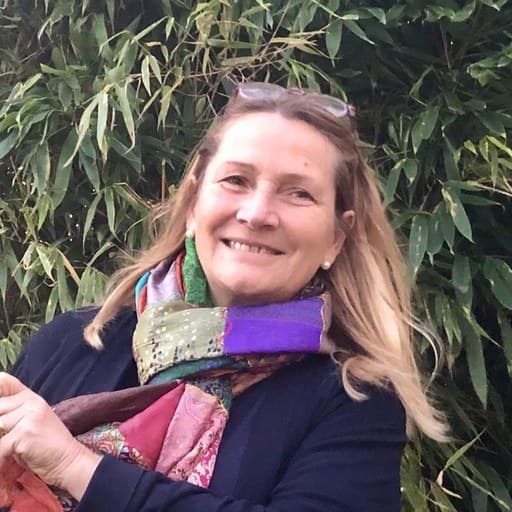
About the author
Valérie Fabre · Founder & Director, Harmonika Institute
Valérie Fabre founded Harmonika Institute in 2025, after a decade seeing clients in private kinesiology practice and, before that, thirteen years in international trade. A French-born polyglot who now splits her time between Dallas and Miami, she sets the school's curriculum and editorial standards and champions ethical, in-person training.
Read more about Valérie Fabre →