Journal · Acupressure · Choosing a program
Acupressure Certification Without Needles: Scope Explained
Acupressure uses the same point system as acupuncture without the needles. Here is where the legal line sits, what training covers, and who actually hires you.
Valérie Fabre, Founder & Director, Harmonika Institute · June 23, 2026 · 11 min read

Key takeaways
- The needle is the whole legal story. Insert one and you are practising acupuncture, which is licensed in every state that permits it and typically requires a three to four year master's-level program plus national board exams. Acupressure sits entirely outside that route.
- Massage law is the boundary nobody expects. Acupressure is unlicensed almost everywhere, but a majority of states license massage, and several define it broadly enough that sustained manual pressure for compensation can land inside it. Check that before you check anything else.
- Point location is the hard part, not the pressure. Anyone can press. Finding LI4 on a wrist you have never touched, reliably, in three seconds, takes several hundred repetitions on different bodies.
- Programs range from a $79 online course to 500-hour Asian bodywork tracks. Serious standalone acupressure training in the U.S. commonly runs $1,500 to $6,000 and 100 to 300 hours. Below about 60 hours you have an introduction, not a practice.
- Contraindications are taught first for a reason. A short list of points is traditionally avoided in pregnancy, and there are conditions where you keep your hands off entirely and refer.
A woman in Austin emails us roughly once a month with the same question, phrased slightly differently each time. She has read that acupressure is "acupuncture without needles", she likes the sound of that, and she wants to know whether she can train in it and see clients in eight months rather than four years. The short answer is yes. The longer answer involves two separate legal lines, and most of the schools selling acupressure certification online mention neither of them.
So here is the map. Where the needle line sits and why it is absolute. Where the massage line sits and why it is genuinely murky. What a real curriculum contains. And what the work looks like once you are doing it for money, which in this modality is a stranger picture than you would guess.
Same points, different act, different law
Acupressure and acupuncture share a map. Both work from the classical Chinese system of channels, usually rendered in English as meridians, and from the several hundred named points located along them. LI4 in the web of the hand is LI4 whether you needle it or press it. The theory is common property.
What separates them, legally, is a single physical act: breaking the skin.
Acupuncture is a licensed profession. Every state that permits it regulates it, and the standard route runs through an accredited master's-level program of roughly three to four years, followed by national board examinations and a state application. Dry needling has been fought over in state legislature after state legislature precisely because it touches the same nerve.
Acupressure is not licensed anywhere in the United States as a profession in its own right. No board, no exam, no title protection. Which means the certificate you earn is a private one. It documents training. It does not grant permission, because none is required and none can be granted.
The needle line
No needles. Not filiform needles, not press tacks, not ear seeds with a needle component, not lancets, not anything that penetrates skin. This is not a house rule we impose out of caution. In every state with an acupuncture practice act, insertion by an unlicensed person is a prosecutable offence, and the fact that you were trained in point location makes your position worse rather than better.
The grey zone people ask about most is adhesive ear seeds. They do not penetrate, and many practitioners use them. Some state boards have still taken the view that selecting and applying them constitutes acupuncture practice. Ask your board directly rather than reasoning from first principles.
The boundary that actually catches people
Almost every prospective student worries about the needle rule and almost none of them worry about massage licensure. That is backwards.
Most U.S. states license massage therapy, and the definitions in those statutes were written to be broad. A typical one covers the systematic manual manipulation of soft tissue for compensation. Sustained thumb pressure into the trapezius is manual manipulation of soft tissue. Whether your intention is to move qi through a channel or to release a muscle is not a distinction the statute makes, and it is not one an investigator is likely to entertain.
States fall into rough categories rather than a clean list, and the categories move.
| State approach | What it means in practice | Typical route for an acupressure practitioner | Can you charge without a massage licence? |
|---|---|---|---|
| Broad massage act, no exemption | Any soft-tissue work for compensation falls inside the definition | Get the massage licence, or work only in non-compensated or clearly exempt settings | Usually no |
| Massage act with a named exemption for Asian bodywork or energy practice | Statute or board rule carves out traditional Asian bodywork, sometimes conditioned on hours or membership of a named body | Meet the stated condition, document it, keep the paperwork | Conditionally |
| Massage act that turns on technique rather than on touch | Definition hinges on manipulating tissue for its own sake; point pressure through clothing may sit outside | Work clothed, describe your work in point-and-channel language, avoid muscle vocabulary | Often, with care |
| No state massage licence, local rules only | Regulation happens at city or county level, often via business licensing | Check the municipal code, not the state one | Usually |
Two practical consequences follow. First, your website copy is a legal document whether you think of it that way or not. "Deep tissue release", "therapeutic massage", "muscle tension work" are phrases that invite a regulator to read you into the massage category. "Point work", "channel work", "pressure applied at classical points, client clothed" describe the same hour without doing that.
Second, if you live in a state with a broad act and you intend this to be your income, the honest calculation may be that you need the massage licence anyway. That is 500 to 750 hours in most states and a real expense. Better to know in month one than in month fourteen. Our companion piece on massage licensure for energy and bodywork practitioners goes through the mechanics.
What the training actually covers
A serious acupressure curriculum has four blocks, and you can judge a program quickly by whether all four are present with time attached to each.
Channel theory and pattern language
The twelve primary channels, their pathways, the two extraordinary vessels most commonly used, and the classical categories that organise them. Alongside this sits the diagnostic vocabulary: the eight principles, qi and blood, the zang-fu organ relationships. You are learning a self-consistent descriptive system that predates Western physiology and does not map onto it. Programs that try to translate every term into anatomical equivalents produce students who can speak neither the classical language nor the medical one.
Point location, and lots of it
This is the block that separates real training from a PDF. Most curricula teach between 80 and 200 points to working competence. Location is taught by proportional measurement, using the client's own body units rather than inches, and by palpation, because the anatomical description gets you close and your fingers find the actual point.
Locating a point correctly on a slim classmate in a well-lit room means very little. You need larger bodies, older bodies, bodies with scar tissue and asymmetries, and you need to find the point without staring at a chart. That takes hundreds of repetitions across many people, which is a fair test of whether a program is in person and cohort-based or a video library.
Technique and dosage
Thumb, finger, knuckle, elbow. Sustained static pressure, circular pressure, plucking, gliding along a channel. How deep, how long, in what order, and how to read the response so you back off before the client tenses. Also body mechanics for you, which sounds like an afterthought and is the reason practitioners leave the field with thumb arthritis at forty-five.
Contraindications and referral
Taught early in any program worth paying for. A short list of points is traditionally avoided during pregnancy on the grounds that they were historically associated with promoting labour, and while the evidence for that is thin, the professional standard is to avoid them regardless. Beyond pregnancy: no work over open wounds, acute inflammation, recent surgical sites, suspected fractures, or areas of unexplained swelling; caution with anticoagulant use and fragile skin; hands off entirely and refer when someone describes chest pain, sudden severe headache, a new neurological symptom, or unexplained weight loss.
The question to ask
Ask any program: "How many points will I have located on how many different bodies by the end?" A confident answer with two numbers in it tells you the training is structured around repetition. A vague answer about comprehensive coverage tells you it is structured around content delivery. The first produces practitioners. The second produces certificate holders.
What it costs, and what the tiers buy
The honest number
Introductory acupressure courses sell for $79 to $400 online and teach perhaps twenty points. Standalone in-person certification programs in the U.S. commonly run $1,500 to $6,000 across 100 to 300 hours. Full Asian bodywork therapy tracks at 500 hours and up, the tier that qualifies for the national bodywork association's higher membership grades, run $8,000 to $15,000 and overlap heavily with massage school.
The price difference is not the theory. It is supervised hands and how many bodies you touched.
Worth saying plainly: the $79 course is not a fraud. It will teach you a handful of points you can use on yourself and your family, and for a lot of people that is exactly what they wanted. The problem starts when the same course is marketed as a route to paying clients. Twenty points and no supervised practice does not make a practitioner, and the certificate will not survive contact with an insurer or a clinic manager who knows the field.
Where practitioners actually work
This is where acupressure differs from most modalities in our catalogue, and it is the argument for training in it.
Because it needs no table, no oil, no undressing, and no private room, acupressure travels into settings that closed-door bodywork cannot reach. Chair sessions in corporate offices. Hospice and palliative volunteer programs, where light hand and foot point work is often welcomed by staff who would never approve deep tissue. Community clinics. Sports and event tents. Integrative practices where an acupuncturist wants clothed, needle-free sessions offered between appointments. Add-on work inside an existing yoga, reflexology, or coaching practice, which is how a large share of the students in our acupressure program use it.
The income pattern reflects that spread. Very few people in the U.S. earn a full living from acupressure sessions alone. The ones who do well combine it: two days of clinic-adjacent contract work, a corporate chair contract that pays a flat day rate, and a private client list of fifteen or twenty regulars. Stacking is normal in this modality rather than a sign of failure, and we discuss the economics of that in our piece on why multi-modality practitioners earn more.
What you can and cannot say
Acupressure has a research literature, and it is uneven. The strongest signal appears in nausea, where wrist point pressure has been studied fairly extensively including in pregnancy and post-operative settings, with results that are positive but contested on trial quality. Studies also exist for labour pain, low back pain, and fatigue. Blinding is the perpetual problem, since a sham that convinces a participant is hard to build and harder to standardise.
Where the evidence sits
Reviews generally describe the acupressure literature as promising in a few narrow areas and insufficient overall, with recurring criticism of small samples and weak sham controls. That is the accurate summary, and it is the one to give a client who asks.
The practical rule is simpler than the literature. Describe what happens in the session rather than what it treats. You applied pressure at specific points for an hour, the client was clothed, most people report feeling more settled afterwards. Every sentence containing the words treat, cure, or heal is a sentence that moves you toward practising medicine without a licence, and no amount of citation protects you there.
Is it the right fit for you
Acupressure suits people who like a system. If you found reiki frustratingly unstructured, the channel map gives you something to reason with: a named point, a stated function, a defensible reason for touching that spot rather than another. It suits people who want low overhead and portability, and people who intend to work inside institutions rather than a private room.
It suits you less well if you dislike memorisation, because there is a lot of it, or if you want a protected title and a credential a hospital HR department already recognises. And it is a poor fit if your real interest is needles, in which case the honest advice is to go and do the four-year program properly rather than looking for a shortcut that does not exist.
- 1
Call your state board first
Two calls, actually: the massage board and the acupuncture board. Ask specifically whether clothed manual point pressure for compensation falls under either act in your state. Write down who you spoke to and when.
- 2
Decide your setting before you pick a program
Corporate chair work, hospice volunteering, and private practice have different hour requirements, different insurance needs, and different vetting. The setting should choose the tier of training, not the other way round.
- 3
Count the hands-on hours in the syllabus
Not total hours. Hours with your hands on a body that is not your own reflection in a screen, with someone watching and correcting.
- 4
Get insured before your first paying client
Professional liability for clothed point work is inexpensive, and the application will ask about your training hours. That question alone tells you what the industry considers a credible number.
Questions on this topic.
Can I call myself an acupressurist?+
There is no protected title, so nothing stops you, but be careful about anything that sounds adjacent to acupuncture. "Acupressure practitioner" and "Asian bodywork practitioner" are both safe and both descriptive. Avoid constructions that a member of the public could misread as a licensed acupuncture credential, and never abbreviate to something that resembles LAc. If your state licenses massage, also avoid describing yourself with any term the massage act defines.
Do I need to know Chinese medicine theory, or can I just learn the points?+
You can learn points alone, and plenty of short courses teach exactly that. It works for self-care and for a narrow protocol like wrist pressure for nausea. It falls apart the moment a client presents with something your protocol does not cover, because you have no framework for choosing points and no way to explain your reasoning. Theory is what lets you build a session for a person rather than run a recipe at them.
Is acupressure covered by health insurance?+
Essentially never as a standalone service from an unlicensed practitioner. Some clients access it indirectly when it is delivered inside a licensed acupuncturist's or massage therapist's session and billed under that licence. What you do need is professional liability insurance of your own, which is a different product and readily available. Our overview of liability cover for holistic practitioners explains the categories.
How long does certification take?+
Online introductions take a weekend. Credible in-person certification runs anywhere from a few months to a year depending on hours, and the variable that matters is how many supervised sessions you deliver on people who are not classmates. Our acupressure program runs 10 in-person teaching days (80 hours), plus about 64 hours of personal study between sessions (on average). Anyone promising practitioner-level acupressure competence in under 60 hours is selling you an introduction under a bigger name.
Can I practise acupressure on pregnant clients?+
Many practitioners do, and pregnancy is one of the settings where the technique is most commonly used, particularly for nausea. It requires specific training. A short list of points is traditionally avoided during pregnancy, positioning needs adapting by trimester, and you should be working with the knowledge and ideally the awareness of whoever is providing prenatal care. If your program covers pregnancy in a single slide, treat that population as outside your scope until you have trained properly.
Tags:
AcupressureChoosing a programCertification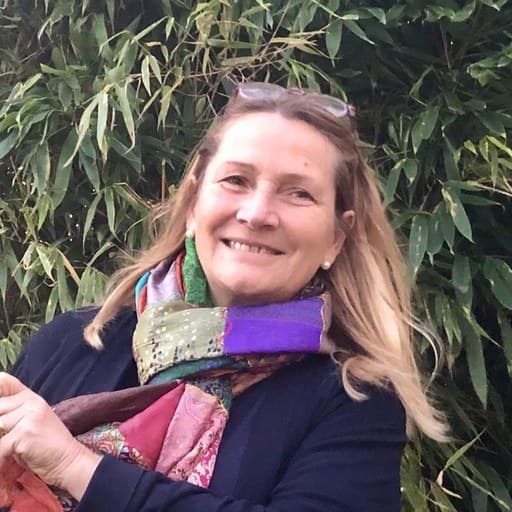
About the author
Valérie Fabre · Founder & Director, Harmonika Institute
Valérie Fabre founded Harmonika Institute in 2025, after a decade seeing clients in private kinesiology practice and, before that, thirteen years in international trade. A French-born polyglot who now splits her time between Dallas and Miami, she sets the school's curriculum and editorial standards and champions ethical, in-person training.
Read more about Valérie Fabre →