Journal · Energy Healing · Training near you
Energy Healing Classes Near Me: A Vetting Checklist
Energy healing is the least standardised corner of the field. Here is a working checklist for vetting a local class, the questions that expose a weak one, and the red flags.
Valérie Fabre, Founder & Director, Harmonika Institute · June 13, 2026 · 10 min read

Key takeaways
- "Energy healing" is not one thing. The phrase covers Reiki, magnetism, polarity, chakra-based systems, Access Bars, biofield work and a dozen house methods invented by whoever is teaching. No shared syllabus exists, so the listing tells you almost nothing until you ask.
- Three different products share the same search result. A client session, a two-hour taster or share circle, and an actual practitioner track. Local prices for those three can differ by a factor of thirty.
- Supervised hands-on time is the single best proxy for quality. Ask what percentage of contact hours you spend working on someone who is not a classmate. Under a third, treat it as a demonstration, not training.
- Four red flags end the conversation: guaranteed outcomes, pressure to buy all levels on day one, discouraging or spiritualising your questions, and any claim about curing a named condition.
- The legal question is about touch and claims, not the technique. Energy work itself is unregulated almost everywhere. Hands-on work for money, and what you say it does, are where regulators appear.
Type "energy healing classes near me" and you'll get a yoga studio offering a $45 chakra balancing session, a Facebook event for a Sunday afternoon share circle, a metaphysical shop running a $199 weekend, and a school somewhere in your metro charging $4,000 for a programme that runs half a year. Nothing in the search result distinguishes them. There is no accrediting body sorting them, no state board policing the word, and no standard curriculum any of them are measured against. So the sorting is yours to do, and this is the checklist for doing it.
We'll go in the order the decision actually happens. What the phrase covers. What you're looking at when a listing appears. The questions to ask before you pay. The red flags. And what changes when you're not attending a class but training toward a practice.
Why this corner of the field is the messiest
Reflexology has a foot map and a voluntary national board exam. Hypnosis has recognisable curriculum families. Massage has state licensure and required hours. Energy healing has none of that.
Part of the reason is historical. Reiki arrived in the West through a personal transmission chain rather than an institution, and most of the systems that followed copied that model: a founder, a method, a set of levels, students who become teachers. Every branch is free to define its own levels and its own hours. When two people both hold a "Level 2 Energy Healing" certificate, the only safe assumption is that they each paid someone.
Part of it is that the label is commercially useful. "Energy healing" is broader and softer than any specific tradition, so it gets used as an umbrella by teachers who want the reach of the search term without committing to a lineage. That is not automatically dishonest. But it does mean the burden of asking specific questions falls entirely on you.
The practical consequence: two classes with identical titles, identical prices and identical five-star reviews can be genuinely different products. One is an experience. One is vocational training. Neither will say which on the flyer.
Name the system
Before anything else, ask: "Which specific system is this, and who taught you?" A confident answer sounds like "Usui Reiki, and my teacher trained under so-and-so in Chicago." A weak answer sounds like "it's my own blend of everything I've studied." House methods are not disqualifying, but a teacher who cannot name what they were trained in has nothing behind them but their own personality.
The three things your search will return
Sort every result into one of three buckets before you compare anything else. Most confusion in this search comes from comparing across buckets without noticing.
| What it is | How it reads in the listing | Typical U.S. price range | Time | Leaves you able to practise? |
|---|---|---|---|---|
| Client session | "Book a healing session", "60 min energy balancing", individual booking calendar | $60–$180 per session | 60–90 min | No |
| Taster, share circle or workshop | "Intro to energy healing", "community share", "chakra workshop", drop-in, no prerequisites | $0–$75 | 2–4 hours | No |
| Level class (single weekend) | "Level 1 certification", "attunement included", certificate on completion | $150–$600 | 1–2 days | Technically |
| Practitioner track | Application or interview, cohort dates, logged practice hours, supervision | $2,500–$8,000 | 4–10 months | Yes |
That "technically" in row three is the one worth staring at. A single-weekend level class will issue you a certificate, and since no state licenses this work, that certificate is legally as valid as any other. What it does not give you is the ability to run a session with a stranger who cries, or dissociates, or asks what your insurance covers. The certificate is real. The readiness is not.
If you're only trying to find out whether the work suits you, the taster is the right purchase and you should not spend more. We've written separately about testing a modality before committing to training, and the short version is: go to three different practitioners as a client first. It costs less than any course and tells you more.
The vetting checklist
Ask these before you pay. Ask them by phone or email, not by reading the website, because the website is written by someone who wants your money and the answers are not.
- 1
What percentage of the hours are hands-on, on someone who isn't a classmate?
The most useful single question in this article. Classmates are a forgiving population: they believe, they want you to succeed, and they won't tell you your hands felt hesitant. Real practice means members of the public, supervised, with feedback afterwards. If the honest answer is "we pair up in class", you're buying a demonstration.
- 2
How many people are in the room?
Twelve is the point past which a teacher stops being able to watch individual hands. Above twenty, nobody is correcting anyone. Ask for the actual number in the last cohort, not the maximum.
- 3
What do I leave with, in writing?
Certificate wording, hours stated on it, whether the hours are documented anywhere, and whether the school will confirm your attendance to an insurer later. Vague answers here predict vague answers when you need a letter in two years.
- 4
How many client sessions did you personally deliver last month?
Teachers who only teach can transmit technique. They cannot transmit practice. A working practitioner will answer with a number without hesitating.
- 5
What do you teach us to say when someone asks if this treats their illness?
The best answer we've heard from a good teacher: "we drill it, because you'll get asked in your first month." A shrug here is a serious warning sign, and not only ethically. It means the programme has never thought about your legal exposure.
- 6
What happens if a session brings up trauma?
Bodies release things. A responsible programme teaches you to ground, close, and refer out, and gives you the names of the professions to refer to. One that treats emotional release as proof the work is going well is teaching you to stay in the room when you should be handing over.
- 7
Can I speak to two people who finished more than a year ago?
Recent graduates are still in the glow. Ask for people at the eighteen-month mark and ask them one question: are you actually seeing clients? The answer tells you what the training was worth after the excitement faded.
Check your state
No U.S. state licenses energy healing as such, and no state protects the title. The exposure comes from two other directions. First, touch: several states define massage broadly enough that hands-on work for compensation can fall inside the definition, while others have written explicit exemptions for energy-based practice. Second, claims: telling a client you can treat, cure or diagnose anything is what turns an unregulated activity into unlicensed practice of medicine.
Rules differ by state, differ sometimes by city, and change. Confirm your own situation with the relevant state board before you take a paying client, and ask a prospective school directly what they teach about it. A programme that has no answer has not thought about the state you live in.
Red flags that should end the conversation
Some warning signs are worth a follow-up question. These four are not.
Guaranteed outcomes. Any claim that graduates will be able to relieve a named condition, or that clients will experience a specific result, is both untrue and legally reckless. Nobody can guarantee that. A school promising it will also teach you to promise it, and you are the one whose name goes on the website.
Buy all the levels today. Discounts for bundling every level before you've attended a single hour of the first are a financing tactic, not a pedagogical one. Serious programmes want you to complete a stage and demonstrate something before you advance. Pressure applied on the enquiry call is a preview of the culture.
Questions treated as low vibration. If asking about hours, evidence or insurance is reframed as scepticism, resistance or an energetic blockage, leave. This is the most reliable single tell in the whole field, because it is a defence mechanism that has to be taught. Good teachers enjoy the questions.
Curing language. "Heals cancer", "clears disease", "removes trauma from the cells", "replaces medication". Beyond being unsupportable, this creates a real risk of a client delaying medical care, which is the way people in this field cause actual harm rather than merely wasting money.
What the evidence shows
Trials of biofield and energy-based practices are mostly small, and they run into a hard design problem: building a convincing sham condition is close to impossible when both parties know whether hands were placed. Reviews tend to report modest improvements in self-reported anxiety, tension and comfort, alongside firm cautions about study quality. U.S. federal health bodies describe the evidence as insufficient to conclude that these practices are effective for any specific condition.
You can hold that honestly and still train. What you cannot do is describe an under-evidenced practice as a treatment. Describe the experience instead: a quiet, structured hour of attention, after which most people report feeling calmer. That framing is both the legally safe one and the accurate one, and a teacher who won't give it to you is leaving you exposed.
What a good local class actually looks like
Concretely, from the inside. The room is small enough that the teacher says your name. There are tables, and you spend most of the day at one, either working or being worked on. Somebody walks past and adjusts your posture, tells you your shoulders are up around your ears, tells you that you're rushing the close.
There's a written intake form you're taught to use, and a conversation about what you may and may not write on it. There's a section on contraindications and on when to refer out, and it happens early rather than as an afterthought on the last afternoon. There's at least one exercise where someone plays a difficult client so you get the experience of the session going sideways with a safety net.
You leave tired. Good in-person training is physically tiring in a way that watching video is not, and that's a feature.
What in-person costs you in time and travel
The honest arithmetic, because "near me" is rarely as near as you'd like. Outside the ten largest markets, a genuine practitioner track may be an hour or two away rather than in your neighbourhood. Budget for the drive, the parking, the occasional overnight, and above all the calendar: a cohort with fixed dates is a real constraint on a family and a job, and people underestimate it.
Weigh that against the alternative. The correction you get from a teacher standing behind you does not exist online, and it is the part you're paying for. We teach energy healing fully in person, in cohorts of ten, across 32 U.S. cities including New York, Los Angeles, Chicago, Miami, Houston, Boston, Atlanta, Seattle, Denver and Austin. You can check what runs closest to you on the locations page.
Questions on this topic.
Is a free or donation-based class worth attending?+
Yes, as an experience. Share circles and community practice nights are one of the better parts of this field: low pressure, no sales, and a chance to feel what the work is like from both sides. Treat them as exposure rather than training. What they won't give you is correction, documented hours, or anything you can show an insurer. Go to two or three before you spend money on a course, and pay attention to how the organisers answer questions.
Do I need to be attuned before I can take a class?+
It depends entirely on the system. Reiki-derived lineages build attunement into each level and it happens during the class, so no prior step is needed. Other systems have no equivalent ritual at all. If a local provider tells you that you must buy a separate attunement before you can enrol, ask specifically what it is, how long it takes, and why it isn't included. Sometimes the answer is sound. Sometimes it's an extra invoice.
How do I check a teacher is who they say they are?+
Ask for the name of their own teacher and the year they trained, then look that person up independently. Ask which membership or insurance body they belong to and verify it with the body rather than trusting a logo on the site. Search their name alongside the city they claim to have trained in. This takes about twenty minutes and it eliminates the small number of people who have invented their background outright.
Can I take classes in one state and practise in another?+
Generally yes, because private certifications aren't state-issued and don't transfer or expire the way a licence does. What changes when you move is the surrounding law: whether your new state's massage definition captures hands-on work for compensation, what your city requires for a home-based practice, and whether your insurer covers you there. Check those three before you move, not after. Your certificate travels; your permission to trade on it may not.
Should I train in energy healing or something more structured?+
If ambiguity about mechanism bothers you, or you want a credential a hospital HR department recognises, this is the wrong family and you'll be happier in something with clearer scaffolding. Energy work suits people comfortable with stillness, silence and unresolved questions. If you like the human contact but want more to hold onto as a beginner, sound work and bodywork give you tools and technique that are easier to point at.
Tags:
Energy HealingTraining near you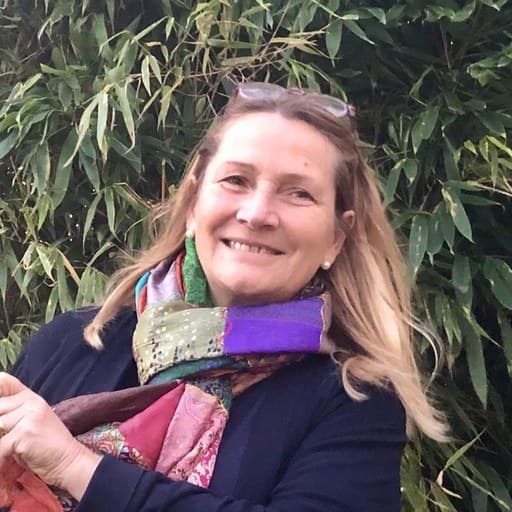
About the author
Valérie Fabre · Founder & Director, Harmonika Institute
Valérie Fabre founded Harmonika Institute in 2025, after a decade seeing clients in private kinesiology practice and, before that, thirteen years in international trade. A French-born polyglot who now splits her time between Dallas and Miami, she sets the school's curriculum and editorial standards and champions ethical, in-person training.
Read more about Valérie Fabre →