Certified Expressive Art Facilitator · Baltimore, MD
Expressive Arts Facilitation training in Baltimore.
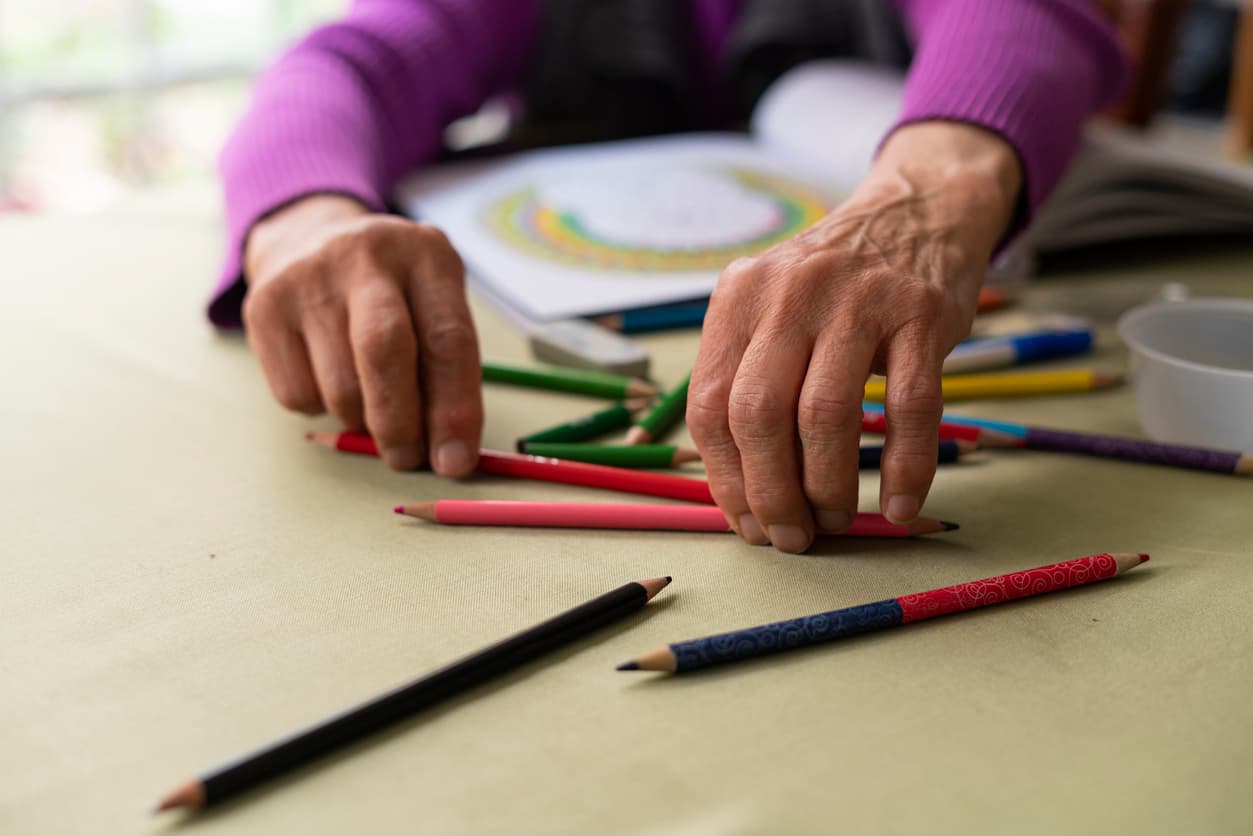
Train as a Certified Expressive Art Facilitator (CEAF) with Harmonika Institute in Baltimore, MD. A deep training in expressive arts facilitation — drawing, painting, collage, sculpture — for wellness and personal-development settings. Not a clinical art therapy degree.
Baltimore cohort at a glance
- Tuition
- $6,500
- Format
- 100% in person
- In-person teaching
- 15 days · 120h
- Personal study
- ~96h
- Cohort size
- 10 students
- Credential
- CEAF
Same tuition in every city
In Baltimore, MD
8-hour days, two 4-hour half-days
Between sessions, on average
Fixed cohort, start to finish
Private certification, not a state license
PDF — modules, hours, faculty notes, and a typical week's schedule.
Jun 4 – Oct 3, 2027
Fri–Sun · 9 am–6 pm · 15 teaching days in 5 monthly modules · 10 seats per cohort
- Module 1Jun 4–6
- Module 2Jul 9–11
- Module 3Aug 6–8
- Module 4Sep 10–12
- Module 5Oct 1–3
Every teaching day runs 9 am to 6 pm, in two four-hour half-days. You receive the Baltimore venue and the full timetable with your enrolment agreement.
Seats
10 students
Enrolment closes
May 14, 2027
Two minutes, no payment today. Our admissions team contacts you within two business days.
Why Expressive Arts Facilitation in Baltimore?
Baltimore's wellness market is shaped by Johns Hopkins University and Hospital — one of the world's preeminent academic medical centers. Our cohorts here include researchers, healthcare workers, and educators with strong scientific literacy. The city's broader community-organizing tradition also shapes a wellness culture oriented toward practical service.
For students of Expressive Arts Facilitation specifically, Baltimore's scene is a particularly good match: johns hopkins academic-medical pipeline. community-oriented practitioner culture. The local cohort runs in venue partners around Hampden, Federal Hill, Mount Vernon, with public transit and parking accessible from across the metro.
Baltimore students are often 30-55, with backgrounds in healthcare (Hopkins, Sinai, UMMC nurses and PAs are well-represented), education, social services, and family-business roles. They ask careful evidence-based questions and value scope-of-practice clarity.
What you'll be training in.
For a deeper introduction to Expressive Arts Facilitation as a practice tradition, see the full program page.
Expressive arts facilitation is the practice of supporting other people in using creative process — drawing, painting, collage, sculpture, mixed-media — for wellness, personal growth, and self-knowledge. The facilitator is not a therapist (and the work is not therapy in the clinical sense). The facilitator is more like a thoughtful host: designing prompts, choosing materials, holding the time and the room, and supporting the participant's own process while the meaning stays with its maker.
The work happens in three main formats. Group studios are 90- to 180-minute facilitated sessions for groups of six to twenty participants, working with shared materials around a theme (grief, transition, identity, embodiment, joy). One-on-one expressive arts sessions are 60- to 90-minute private appointments, often part of a longer arc, where the facilitator works with a single participant on more personal material. Themed retreats are multi-day or weeklong intensives, often residential, that braid expressive arts with movement, meditation, or contemplative practice.
The Expressive Arts Facilitation curriculum in Baltimore: 15 in-person days.
Fifteen days in the studio, from your first brushstroke to groups you lead with ease.
- Teaching days
- 15
- Teaching hours
- 120h
- Cohort size
- 10
days, 7h each
in the room
in your Baltimore cohort
| Day | Theme |
|---|---|
| Chapter 1 · Days 1–4The studio | |
| 01 | Making before facilitating |
| 02 | The facilitator's stance |
| 03 | Drawing and painting: mark, gesture, color |
| 04 | Image and word: your first observed facilitation |
| Chapter 2 · Days 5–8Materials | |
| 05 | Collage and the group studio |
| 06 | Clay, found objects and three dimensions |
| 07 | Body mapping and movement |
| 08 | Writing, voice and story |
| Chapter 3 · Days 9–12Deep water | |
| 09 | Themed studios: grief and life transitions |
| 10 | Themed studios: identity and embodiment |
| 11 | One-on-one: from intake to integration |
| 12 | Trauma-informed practice |
| Chapter 4 · Days 13–15Your practice | |
| 13 | Ethics, scope and the sustainable facilitator |
| 14 | Building your practice |
| 15 | Showcase and certification |
Signature moment of the program
When Expressive Arts Facilitation cohorts run in Baltimore.
Baltimore cohorts run year-round with January, May, and September starts. The fall cohort is the strongest. Summer humidity is real but indoor venues are well-equipped.
Who this Baltimore cohort is for.
Career-changers, artists, and wellness practitioners who want to facilitate creative process without confusing it with clinical art therapy.
Where your Baltimore training leads.
- Open a private expressive arts facilitation practice (CEAF)
- Lead studios in retreats, wellness centers, and community spaces
- Specialize in grief, transition, or women's circles
- Add expressive work to a coaching, yoga, or somatic practice
$6,500 for the full 15-day Expressive Arts Facilitation program in Baltimore.
Same tuition whether you study in Baltimore or any of our other U.S. cities. Monthly payment plans without interest. A 25% deposit confirms your spot in the Baltimore cohort.
Tuition and financing details$6,500
120h of teaching · 15 in-person days
Expressive Arts Facilitation: questions students ask first.
- 40 Art Journaling Prompts Facilitators Use, Grouped by Purpose40 art journaling prompts in 5 groups (arrival, emotion, memory, body, future), how facilitators sequence them in 90 minutes, and the no-interpretation rule.10 min read
- Mandala Meaning: Origins, Why Drawing One Works, and How Sessions RunMandala meaning from Sanskrit 'circle' to Jung, why the format calms (containment, repetition, focus), a 60-minute session in 6 steps, materials, limits.9 min read
- Art Therapy Certification vs Expressive Arts Facilitation: The Legal Line"Art therapist" is a protected professional identity in the U.S., reached through a master's degree and a board credential. Here is what a short course can and cannot give you.12 min read
Expressive Arts Facilitation certification in other Harmonika cities.
Next step
Become a Certified Expressive Art Facilitator in Baltimore.
Talk with our admissions team about the next Expressive Arts Facilitation cohort starting in Baltimore, MD. Free, online, one hour.