Journal · Hypnosis · Timeline
How Long Does It Take to Become a Certified Hypnosis Practitioner?
From start to first paying client, here is the honest timeline for becoming a Certified Hypnosis Practitioner — including the differences between weekend certifications and structured programs with supervised practice.
Valérie Fabre, Founder & Director, Harmonika Institute · March 25, 2026 · 3 min read

How long does it take to become a competent, paid hypnosis practitioner in the United States? The internet will tell you anywhere from a weekend to several years, depending on whose program is being marketed. Here is the honest answer based on five years of Harmonika Institute graduate-tracking data.
The shortest plausible path: a structured program
A structured program with live, corrected practice is the shortest training that consistently produces practitioners who can run a clean 90-minute hypnosis session on a paying client without supervision. Our Certified Hypnosis Practitioner (CHP) program is taught fully in person: 6 teaching days (48 hours), plus about 38 hours of personal study between sessions (on average).
That structure covers foundational theory and ethics, induction practice with multiple styles, suggestion-craft and session-arc development, specialization protocols for common applications like smoking cessation and sports performance, and the in-class practice, corrected by faculty, that builds session confidence.
Programs claiming to certify in less time — weekend intensives, two-week programs, three-month online courses — typically produce graduates who can describe hypnosis but cannot reliably run a session on a non-rapport-built client. They certify; they do not produce practitioners.
From certification to first paid client: weeks, not months
Once certified, the gap to first paying client is unusually short for hypnosis compared to most modalities. The credential is non-medical and non-state-regulated in most states, so there is no licensing delay between graduation and practice.
Most graduates have their first independent paying client (no faculty in the room) within 1-3 months of certification. This is faster than reflexology, energy healing, or naturopathy, where the building of a referral pipeline takes longer.
From first client to a sustainable practice: 18-36 months
Building from a first paying client to a practice that pays your bills takes 18-36 months for most graduates. The trajectory is typically: 5-10 paid sessions per month at the end of year one, 20-40 paid sessions per month by month 18, 40-60 paid sessions per month by month 24-30, plateauing somewhere in the 50-80 monthly range for established practitioners.
Pricing typically grows from $80-$120 per session at certification to $180-$300 per 75-minute session by year 3, depending on city and specialization. Smoking cessation specialists in major metros (New York, San Francisco, Los Angeles, Boston, Chicago) routinely charge $300-$450 per first session and $200-$280 per follow-up.
Specializations that accelerate the path
Some hypnosis specializations build practices faster than others. The fastest-building, in our graduate data, are smoking cessation (huge demand, high willingness-to-pay, strong referral patterns from successful sessions), public-speaking and presentation anxiety (strong corporate-adjacent referrals), sports performance (athletes refer aggressively), and study habits and test anxiety (parent-driven referrals through middle and high school networks).
Slower-building specializations include weight management (lower per-client retention, higher session-to-result ratio) and sleep work (higher demand but more multi-session arcs needed). Both are viable but typically require 24-36 months to reach full-practice density.
The complete timeline, summarized
Month 0: Enroll in the CHP program (6 in-person teaching days, 42 hours).
Month 6: Graduate.
Month 9: Independent paying clients are the norm. 5-10 paid sessions per month.
Month 18: Practice approaching $30,000-$50,000 annual gross run-rate.
Month 30: Sustainable practice. $60,000-$120,000 annual gross run-rate.
Month 60: Established practice. $100,000-$250,000+ annual gross for graduates who specialized and marketed consistently.
If you are starting from zero with no adjacent credentials and no existing professional network, plan on roughly 3 years from program start to financial sustainability from practice income alone. If you have an adjacent credential (coaching, NLP, healthcare licensure) or existing professional network, expect 18-30 months instead.
Questions on this topic.
Can I do this part-time while keeping my current job?+
Yes — and most of our students do exactly this. The program combines 6 in-person teaching days with personal study between sessions, so it fits around a job. Most graduates continue at their existing job for 12-24 months while building their hypnosis practice on the side.
What if I want to specialize in PTSD or other clinical conditions?+
Clinical PTSD is restricted to licensed mental-health practitioners. As a CHP your scope is non-clinical — smoking, weight, sleep, performance, stress, study habits. We are explicit about this throughout the program. Graduates who want to work clinically with diagnosed conditions need separate clinical credentialing (typically a master's in counseling or clinical psychology).
Is online hypnosis certification ever valid?+
Skeptically. Hypnosis is a real-time interpersonal craft. The calibration that distinguishes a competent hypnotist from someone reading scripts develops through hours of supervised practice on real people, which cannot be replicated online. That is why our hypnosis program is taught fully in person (6 teaching days of 8 hours each), with no online days and no self-paced video.
Tags:
HypnosisTimelineCertification path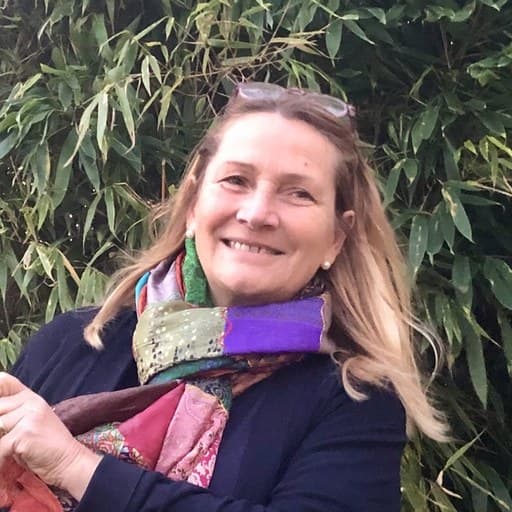
About the author
Valérie Fabre · Founder & Director, Harmonika Institute
Valérie Fabre founded Harmonika Institute in 2025, after a decade seeing clients in private kinesiology practice and, before that, thirteen years in international trade. A French-born polyglot who now splits her time between Dallas and Miami, she sets the school's curriculum and editorial standards and champions ethical, in-person training.
Read more about Valérie Fabre →